


 2 Photos
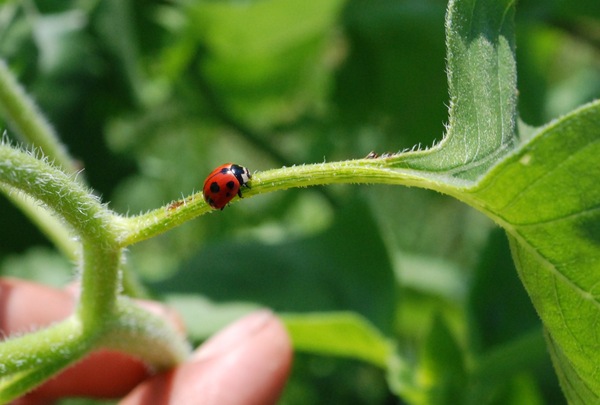
A nine-spotted ladybug

thought to be extinct in this area
A type of ladybug thought to be locally extinct was discovered on a sunflower at Quail Hill Farm in Amagansett on July 30. Peter Priolo made the find during a Lost Ladybug Project ladybug hunt sponsored by the Peconic Land Trust, which owns the farm.
“It’s really significant for this project,” Mr. Priolo said Friday. Led by scientists from Cornell University, the Lost Ladybug Project asks citizens to look for rare native species of ladybugs and collect information about them.
This particular lady, called the native nine-spotted lady beetle, is the New York State insect. It was the most common ladybug in the Northeast until the mid-1980s, according to Cornell University, and it was an important consumer of aphids on farms.
Possibly because imported ladybugs were more adaptive, the nine-spotted ladybug declined to the point that the last one seen in the Northeast—and entomologists were looking—was in Maine in 1992. The U.S. Department of Agriculture conducted a survey in 1993 and found none whatsoever in 11 northeastern states.
Mr. Priolo, who works for Cornell Cooperative Extension’s agricultural stewardship program, thought Quail Hill would be a good place to stage a ladybug hunt, he said. “The ladybug is like a celebrity for kids,” he said, so it makes a good mascot to underscore the effects of human activity, like farming, on biodiversity.
Fifteen people from 6 to 81 years old turned out for the hunt, walking, with containers and “little butterfly nets,” through rows of crops. Mr. Priolo had printed out pictures of different kinds of ladybugs, including Mexican bean beetles, which are considered pests, for them to refer to. “The kids felt really successful about the numbers” they were finding, whether good or bad beetles, he said.
It was Mr. Priolo who found the elusive nine-spot. The ladybug was on the petiole of the sunflower, or the stem of the leaf, near where the flower was at the top. After taking a few photos, he captured the ladybug in a glass jar, ultimately taking it home to Moriches with him. “I didn’t quite know and wanted to make sure,” he said. To confirm his identification, he showed the ladybug to Dan Gilrein, an entomologist at Cornell Cooperative Extension, and emailed photos to John Losey, an entomology professor at Cornell University.
“He was excited and wanted to come down,” Mr. Priolo said of Mr. Losey, who will visit Quail Hill next week, perhaps with other entomologists, to look for more ladybugs and collect data. “I’m going to meet with them and show them where I found it,” Mr. Priolo said.
After keeping the ladybug in a Petri jar for a couple of days, he released it in his own vegetable garden.
“The one thing I sort of regret,” Mr. Priolo said, “is not having been able to release it where I found it.”
However, he said, there is a great deal of land on eastern Long Island on which sunflowers are grown, “and if this is a niche for the C-9 locally, then there may be more out there.” C-9 is the abbreviation for the ladybug’s Latin name, Coccinella novemnotata.
Mr. Priolo said it was interesting that the ladybug was found at an organic farm, “because many organic farms in general and especially Quail Hill have a very high level of biodiversity when compared to conventional farms.”
“I’m feeling really, really happy lately,” he said. “It’s just wonderful to find something that I thought was extinct.”


