


 2 Photos
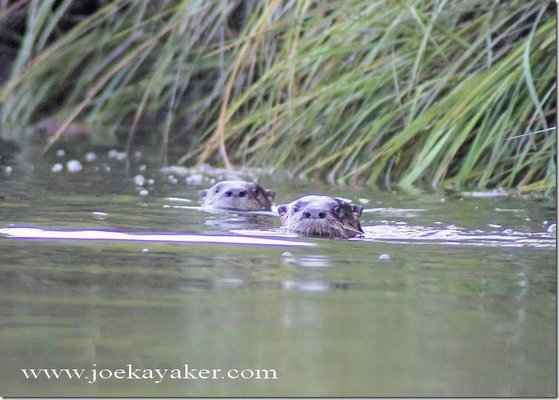
Learn about research being done on Long Island’s river otters
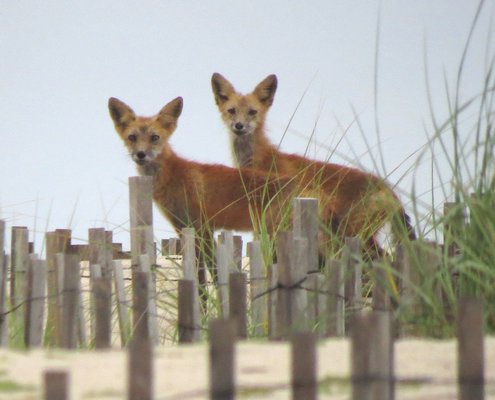
red fox
“Whales of New York City and the Return of the Humpback Whale” by Paul L. Sieswerda, president of Gotham Whale, is the sixth annual Long Island Natural History Conference’s lead presentation. The conference is slated for March 23 and 24 at Brookhaven National Lab.Since 2011, Gotham Whale has been documenting the return of humpback whales and other marine mammals to the waters around New York City. Paul will discuss some of the reasons for the return of these marine mammals and the potential issues facing them as they return to one of the world’s most concentrated areas of human activity.
Kim McKown, a marine biologist with the State Department of Environmental Conservation, will discuss the natural history of the Atlantic sturgeon, as well as her current research with this fascinating animal and the management issues it faces.
Atlantic sturgeon is one of the largest fish on the East Coast and has a surprisingly long lifespan. This is an anadromous fish: Adults return to fresh water in the spring to spawn. Early life stages remain in freshwater, while juveniles through adults spend much of their life in estuarine and marine waters.
Local artist and naturalist Callie Velmachos will lead a limited-enrollment concurrent workshop titled “Nature Observation, Journaling and Citizen Science.” This hands-on, outdoor program will demonstrate that there is never “nothing to see.” How skilled we are as naturalists and how effective we are as citizen scientists depends on our observation skills, understanding what is important to record, and our efficiency in recording what we see.
Callie has provided important field observations to the Long Island River Otter Project, and is living proof that a keen sense of awareness and observation skills, plus a passionate curiosity, can make credible contributions to local naturalist lore.
Steve Young, chief botanist with the New York Natural Heritage Program, will discuss Long Island’s Coastal Plain Ponds, a unique ecosystem that supports an assemblage of rare plants and animals. These ponds rely on fluctuating groundwater levels to maintain their unique ecology but face mounting threats from climate change, pollution and neglect that allowed invasive species to gain a foothold. Today, one of the best examples of this ecosystem is found in Southampton’s Long Pond Greenbelt.
You might be surprised to learn that Long Island was once the haunt of the timber rattlesnake. You’ll be even more surprised to learn when the last official state-sanctioned record from Long Island was recorded. Ted Levin, author of “America’s Snake: The Rise and Fall of the Timber Rattlesnake,” will discuss the trials and tribulations of finding Long Island’s only known specimen.
Two marine-oriented topics, both involving citizen science projects, are scheduled for Friday afternoon. The DEC’s Soren Dahl will present on eelgrass management and conservation activities, while James Browne, biologist with the Town of Hempstead, will present on his work restoring oyster reefs, a valuable ecotype that has been lost from Long Island.
Friday’s program wraps up with a series of interesting conservation updates on topics that have been presented in past conferences. DEC biologist Kevin Jennings will update us on the status of the bald eagle as a breeding bird on Long Island. I will provide an update to my work with river otters that began with a Long Island-wide survey in 2008, while Leslie Lupo will present on DEC’s current statewide otter survey, with a focus on their findings here on Long Island. And Frank Vincenti of the Wild Dog Foundation will brief us on the circumstances surrounding the first known breeding of coyotes on Long Island, which occurred in 2016.
Christopher Aigner, president of the Long Island Chapter of Trout Unlimited, will lead off Saturday’s program with a summary of a plan to restore brook trout habitat on Long Island, the tools available to all interested parties who would like to get involved, and the projects currently under way by various conservation and environmental groups.
White-tailed deer biology, their potential impacts on the forest ecosystem, and methods for monitoring those impacts are the subjects that DEC biologist Sue Booth-Binczik will tackle. Included in her talk are details about a smartphone app developed by Cornell for assessing vegetation impacts from deer.
Speaking of smartphones, the second of our hands-on, limited-enrollment workshops will be led by Erin Gettler, author of the “Birdwatcher’s Digest Butterflies Backyard Guide,” in which participants will learn how to use a photographer’s techniques and a naturalist’s eye to take better pictures with your smartphone, as well as how to edit your photos for quality and appeal with free apps.
Bat conservation, including encouraging research being done right here on the South Fork, is the subject of DEC’s Samantha Hoffs’s talk. Despite an overall population decline of 99 percent in New York State due to the fungal infection called white-nose syndrome, capture rates of the endangered long-eared bat here on Long Island have not declined. It appears that crawl spaces here mimic the environmental conditions of caves that serve as winter hibernacula for these bats.
Next up is the second of our short conservation update presentations. Saturday’s topics and speakers are: diamondback terrapins, by Russ Burke of Hofstra University; horseshoe crabs, by John Turner of Seatuck; Frank Quevedo from the South Fork Natural History Society will update us on the popular shark research projects implemented here on Long Island; and Louise Harrison from Save the Sound will update us on the campaign to establish a wildlife refuge on Plum Island.
Rounding out Saturday are talks on red foxes, goatsuckers and spotted turtles. Sarah Karpanty, associate professor at Virginia Tech, will discuss her research on Fire Island looking at the ecology of red foxes and their impacts as a predator on piping plover nesting success. John Turner will present on the natural history of the three “goatsucker” species found on Long Island: whip-poor-will, chuck-will’s-widow and common nighthawk. And, last but not least, I will present my radio-tracking research project on one of our most handsome turtles: the spotted turtle.
Hope to see you there. Register online at www.longislandnature.org.


