


 3 Photos

Disgusting gloppy mess left by small hive beetles on the bottom board. LISA DAFFY
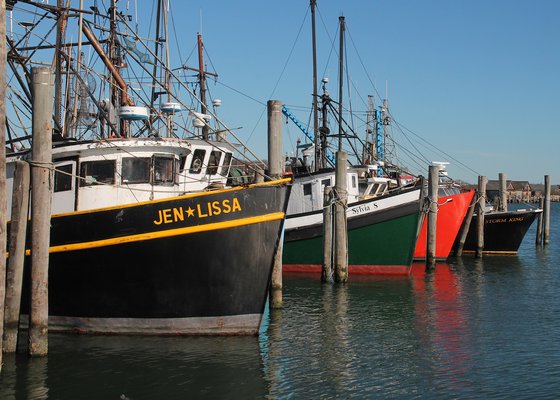
Advocates for fishing reform recently met in Montauk to discuss their plans to rewrite a set of laws that they say has been hurting the fishing industry for years.
As part of their tour of American port cities, the Center for Sustainable Fisheries stopped in Montauk to draw support for their cause. The group wants to rewrite the Magnuson-Stevens Fishery Conservation and Management Act (MFCMA), which governs marine fisheries management in the country.
The law was introduced in 1976 to reduce fishing in foreign waters and to give those in the industry more of a say in the direction of fishery management, according to Dr. Brian Rothschild, the president and CEO for the Center for Sustainable Fisheries. Over the years, the act has been amended to include standards that focus on reducing the instances of overfishing.
It is the greater focus on overfishing that the advocates and some fishermen say has really screwed things up for the industry. Instead of keeping fishing in check with the economic conditions of the industry, they say the law too heavily regulates fish populations and has caused a decrease in the number of trips that boats and fishermen take, Dr. Rothschild said.
One unidentified fisherman at the meeting held on November 15 said he’s had enough of what he described as ill-conceived regulations.
“I’m sick of seeing more and more fish in the ocean,” he said. “I’m the last of six fishing partners. I’m 57 years old and I am the last of them.”
Scott Lang, an attorney and former mayor of New Bedford, Massachusetts, has represented many people and businesses in the fishing industry since 1978 and, in 2006, he founded the Oceans and Fisheries Council. Mr. Lang said at the meeting that the term “overfishing” is not an accident.
“It’s a very discriminatory type of term, a loaded term designed to have you on your heels rather than being able to stand toe-to-toe with environmental conservationists,” he said. “We’ve got dozens and dozens of boats tied up, not having gone out in years.”
He said rewriting the MFCMA would level the playing field between fish populations and those who make a living from harvesting them. There are a number of standards within the law, the first of which is to restore depleted stocks and manage healthy stocks while maintaining optimum yield, and another to take into account the economic and social fabric of fishing communities, according to Dr. Rothschild.
The goal of the group is to rewrite the standards so that the regulations also consider the health of fishing communities. A major part of the effort, advocates say, is using the best science available before decisions are made regarding which species of fish need to be protected.
Commercial fisherman Hank Lackner, who works on the Jason and Danielle boat out of Montauk, said the science just isn’t there at the moment.
“The science should be first and foremost—it goes hand in hand with the Magnuson-Stevens Act,” he said. “Getting the right data to work with is critical and the government just can’t handle the task at hand. The act just doesn’t work very well for what it’s intended to do.”
Dr. Rothschild said that getting all the facts on the table would help change what is allowed and also assist in finding a balance between the fishing industry and those who are regulating it. He noted that, for example, the mortality rates caused by seals and dog fish exceed the rates caused by fisheries.
Mr. Lang noted that most fishermen would be willing to utilize tracking devices to monitor their catches in order to provide information of what’s going on in the ocean.
“Fishermen are really the conservationists of the sea,” Mr. Lang said. “They really are interested in the environment and perceive changes far sooner than any entity that you could have.”
Bonnie Brady, the executive director of the Long Island Commercial Fishing Association and a member on the Center for Sustainable Fisheries Board of Directors, said the Magnuson-Stevens Act has to be fair or fisheries will continue to fish less and hurt more financially.
“We’ve been given the brunt of these regulations, to carry it all on our backs,” she said. “The center’s goal to work on the science and rewrite the Magnuson-Stevens Act is going to actually be effective.”
The center, in its tour of port cities, is hoping to secure support from additional fishing communities and government officials. Mr. Lang noted that he is hopeful that support from the government will mount.
“There’s somebody on the Hill that likes us,” he said, referring to Capitol Hill in Washington, D.C. “I don’t know who, but they’re looking for a way to open the door to get us more fish. The House [of Representatives] is completely non-functional, but it will be functional on something that says we need to reform government in a way to help people. We have green alliances on both sides of the aisle.”
U.S. Representative Tim Bishop said Tuesday that he is on board with what the Center for Sustainable Fisheries is doing.
“The rigid timelines and requirements under the Magnuson-Stevens Act have resulted in overly restrictive quotas that have hurt Long Island’s fishing communities,” he said. “I commend the Center for Sustainable Fisheries for stepping up their advocacy and look forward to working with them as Congress works to reauthorize Magnuson-Stevens.”


 Shaye Weaver on Nov 26, 2013