


 5 Photos
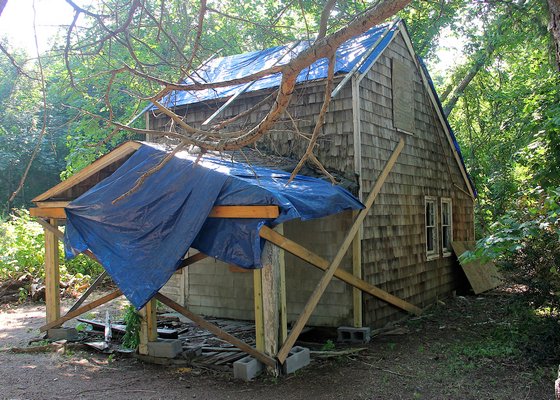
The Fowler House is crumbling. KYRIL BROMLEY
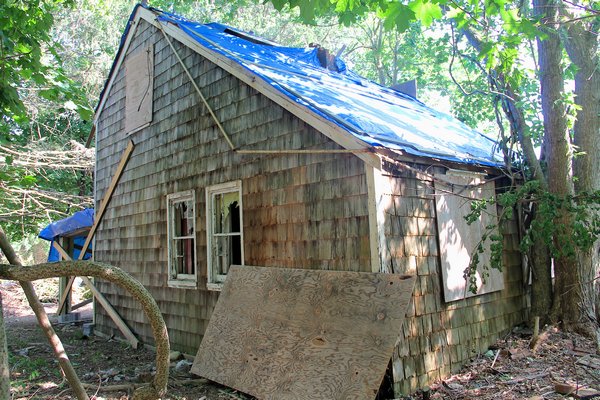
The Fowler House is crumbling. KYRIL BROMLEY
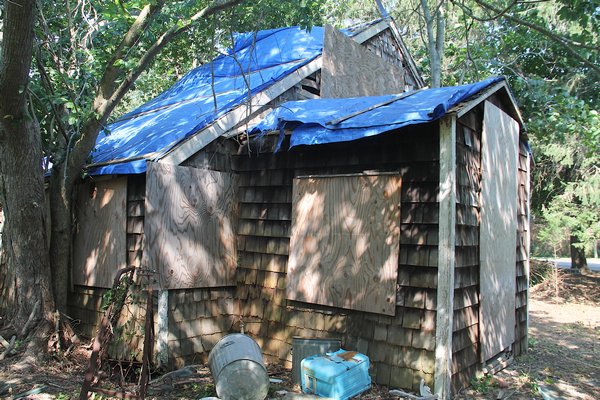
The Fowler House is crumbling. KYRIL BROMLEY
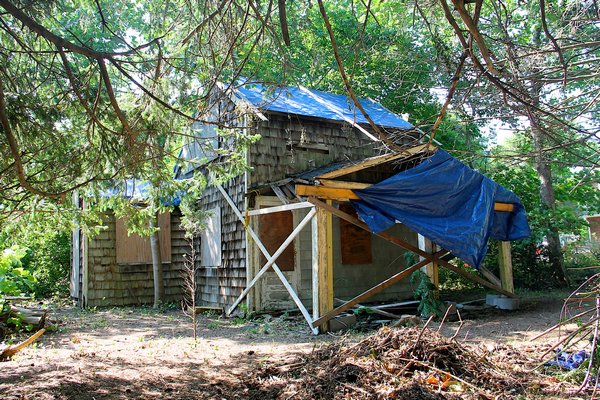
The Fowler House is crumbling. KYRIL BROMLEY
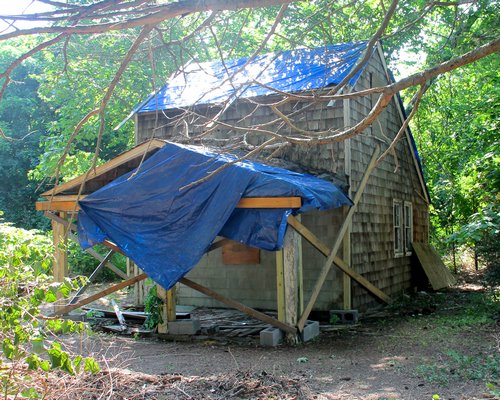
The Fowler House is crumbling. KYRIL BROMLEY
East Hampton Town will landmark and rehabilitate a 19th Century home in the East Hampton neighborhood known as Freetown that once stood on the last remnant of the Montaukett Indians’ native lands in Montauk.
The house, which was originally owned by a Montaukett couple, George and Sarah Fowler, was moved from Indian Field in what is now part of Theodore Roosevelt County Park, in the late 1800s when the state “relocated” the Montauketts.
Descendants of Mr. Fowler lived in the tiny saltbox style home, in its new location off Springs Fireplace Road, until the 1980s. Historians have told the town that the structure is the only remaining known structure to have been owned by a member of the Montauketts.
“It is an important symbol of Montaukett history,” Town Planning Director Marguerite Wolffsohn told Town Board members in a letter recently. “History tends to record the wealthy and the powerful. George Fowler was neither and we have much less information about the ordinary people in our history. [The house] could be an interpretive tool for understanding the history of Freetown.”
The Freetown neighborhood was largely African-American until members of the Montaukett’s were “relocated” from their aboriginal lands when a state court ordered the last members of the Montauketts off the east end of the hamlet and allowed it to be sold.
“From a Montaukett perspective … this is the last vestige of a community,” said James Devine, a descendant of George and Sarah Fowler. “All of those people who were moved to East Hampton … in 1879.”
The house was donated to the town for historic preservation by Suffolk County, which had seized it more than a decade ago for non-payment of taxes. Originally the 1.7-acre property was given to the town to be used for affordable housing, but when the historical significance of the structure was discovered the county took back ownership and re-donated it with a new purpose.
“It was headed for destruction,” Supervisor Larry Cantwell said. “The connection of history here between the Montaukets and Freetown and Eastville and the Indian culture and the black culture in this community is incredible. It connects our community socially and economically in so many different ways.”
Mr. Cantwell said that the structure is “woefully deteriorated” and will need about $40,000 in repairs just to shore it up, while a more comprehensive rehabilitation and management plan is devised.


 Michael Wright on Jul 26, 2016