


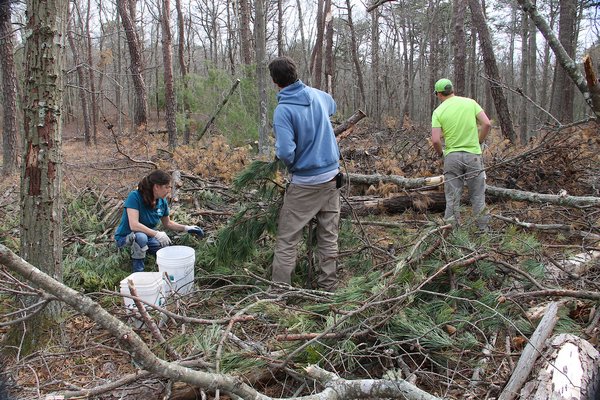
 10 Photos
Members of the East Hampton Town Land Management Department picking up pitch pine cones from the Edward's Hole Nature Preserve
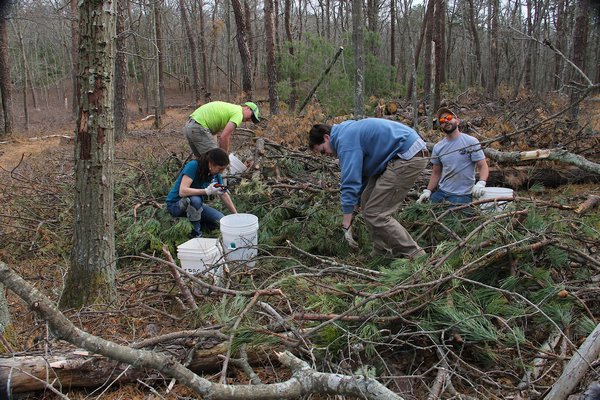
where many trees were cut down after being infested with southern pine beetles. KYRIL BROMLEY
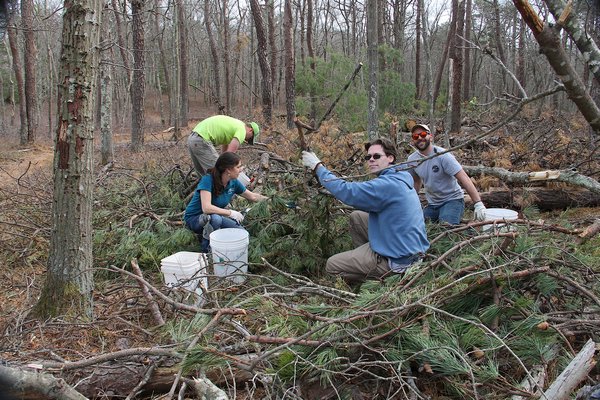
Members of the East Hampton Town Land Management Department picking up pitch pine cones from the Edward's Hole Nature Preserve
where many trees were cut down after being infested with southern pine beetles. KYRIL BROMLEY
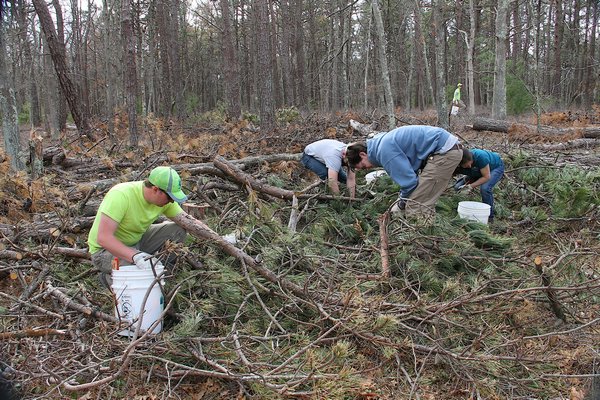
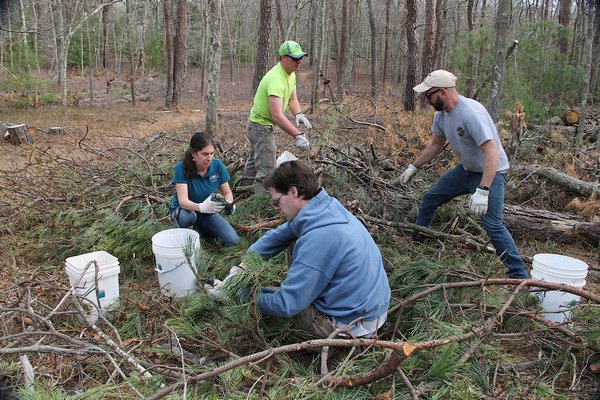
Members of the East Hampton Town Land Management Department picking up pitch pine cones from the Edward's Hole Nature Preserve
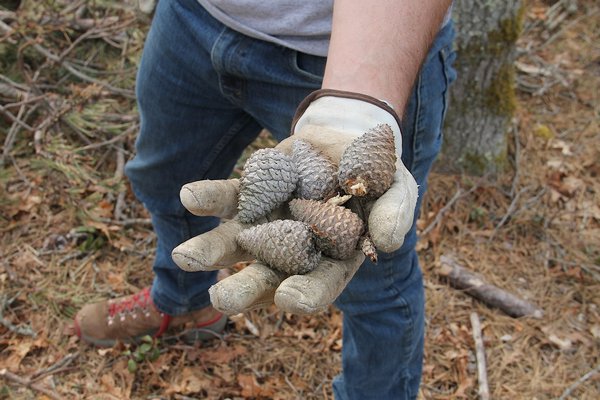
where many trees were cut down after being infested with southern pine beetles. KYRIL BROMLEY
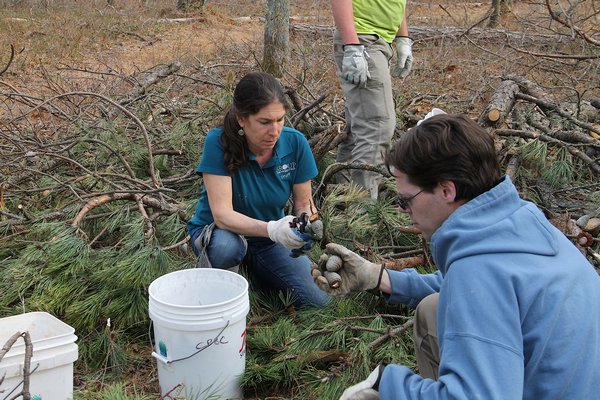
Members of the East Hampton Town Land Management Department picking up pitch pine cones from the Edward's Hole Nature Preserve
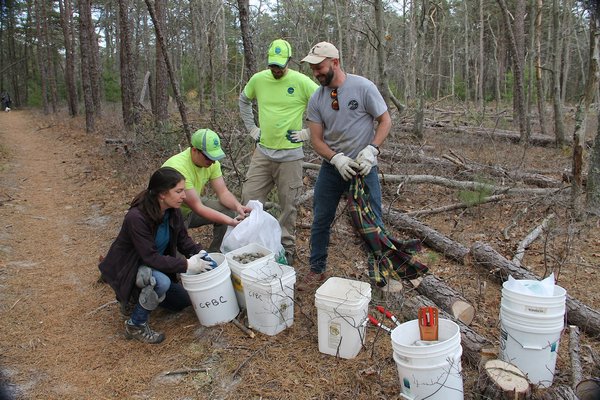
where many trees were cut down after being infested with southern pine beetles. KYRIL BROMLEY
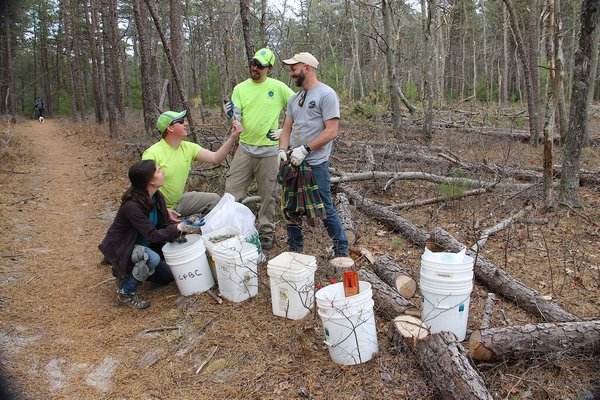
Members of the East Hampton Town Land Management Department picking up pitch pine cones from the Edward's Hole Nature Preserve
where ma
Six months after southern pine beetles were found to have burrowed their way into the pitch pine trees of East Hampton, local and state environmental officials are starting to pick up the pieces to restore the trees.
On Tuesday, April 24, members of the Group for the East End, East Hampton Town’s Land Management Department and the State Department of Environmental Conservation collected pitch pine cones from Edwards Hole Nature Preserve on Two Holes Water Road. The preserve was one of many locations in East Hampton that had pitch pine trees infested with southern pine beetles last October. The beetles burrow into pitch pine trees and prevent nutrients from entering the trees, creating a fungus that the insects eat but that kills the trees.
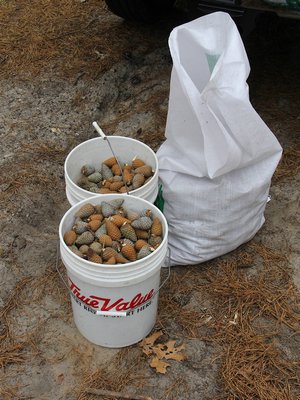
According to East Hampton Town Environmental Analyst Andy Drake, three bushels, or approximately 28 gallons, of pine cones were collected from the 57-acre preserve on Tuesday afternoon. The cones are being sent to the DEC’s Saratoga Tree Nursery for seed cleaning and plant propagation, allowing genetically native pitch pine saplings to be grown, which will be replanted in East Hampton areas where the infestation had spread.
At the recommendation of the DEC, the town’s Land Management Department spent nearly three months this winter inspecting private and public properties where signs of the beetles had been reported before cutting down nearly 10,000 marked pitch pine trees to curb the infestation.
“Long Island pitch pine forests are a globally unique and fragile ecosystem,” Mr. Drake said. “And pitch pine trees are the only truly pre-colonial native pine trees on Long Island.”
The Land Management Department will continue its efforts to rehabilitate the affected areas—collecting more pine cones and distributing saplings to be planted—throughout this week and next week.
On Thursday, April 26, Mr. Drake said the department, along with the East Hampton Trails Preservation Society, planned to collect as many pitch pine cones again on Tuesday, May 1, on town-owned preserved land near Route 114 and Swamp Road in East Hampton, where many of the infested trees were originally found.
Mr. Drake said that East Hampton Town had already purchased 500 white pine saplings from the state this week to give to private landowners whose infested trees had been cut down.
It’s “too early to tell” if more southern pine beetles have emerged from winter dormancy, Mr. Drake said, but the Land Management Department is still responding to requests from landowners to help identify infestations on their properties.
“Andrew [Gaites, the town’s senior environmental analyst] and I took down all the trees necessary on our town-owned properties, so we’re currently in a ‘wait-and-see’ period,” Mr. Drake said. “The State DEC usually begins cutting trees in June, and we’re trying to follow their lead.”
The DEC said in a statement issued Thursday that the pine beetle program is being funded by its $64,000 Open Space Southern Pine Beetle grant issued to the town this winter.
“DEC is working closely with the Town of East Hampton to suppress the spread of southern pine beetles and restore the Pine Barrens to their former glory prior to the arrival of this expanding pest,” the statement said.


 Jon Winkler on Apr 27, 2018