


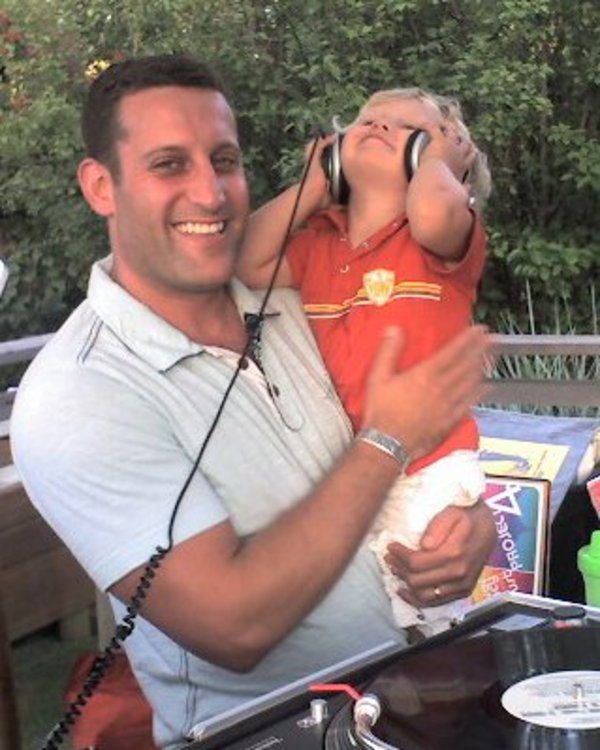
 1 Photo
The Centers for Disease Control has confirmed that the sudden death of a 35-year-old Montauk man on Friday night—a little more than a week after he began suffering from muscle pain and flu-like symptoms—was caused by hantavirus, an extremely rare rodent-borne virus.
Dr. David Hartstein, a local chiropractor and father of three, died at Southampton Hospital on Friday evening, June 17, after being brought in by ambulance earlier in the day with a high fever and difficulty breathing. He had been intermittently ill for several days prior, according to his wife.
A family friend said that doctors at the hospital, in searching for a possible cause of Dr. Hartstein’s acute illness, suspected that he had contracted hantavirus from mouse droppings in the basement of his home, which he had been cleaning recently. On Wednesday, Dr. Hartstein’s widow, Heather Hartstein. said that hantavirus had been confirmed as the cause of his cascading illness.
On June 3, Dr. Hartstein started feeling pain and stiffness in his muscles and told his wife he feared he might have Lyme disease. One week later, he fell suddenly ill, with a high fever and nausea.
“He had a strong fever and was sweating profusely,” Mrs. Hartstein, said this week. “He had felt fine the whole day, it was just when we were getting ready to go out to dinner, it was both our birthdays the day before, that he got sick. He took some aspirin and felt a little better. He went home early that night and when he woke up Saturday he was feeling fine again.”
But the fever returned the next day, accompanied by shooting pains in his hands, and persisted, briefly diminishing at times, throughout the week. On Wednesday, Dr. Hartstein’s fever spiked to 104 degrees and, still suspecting Lyme disease, he went to a doctor who took blood samples and suggested that if the fever persisted he go to the hospital. Late on Thursday night, the fever spiked again and he started suffering from shortness of breath. At about 3 a.m., an ambulance brought him to Southampton Hospital, where doctors tried a wide range of treatments, to no avail. He died shortly before 7:30 p.m.
A close family friend, Shira Barzilay, said that as doctors tried to determine the source of Dr. Hartstein’s rapidly worsening illness, they raised the possibility of hantavirus and asked if he had been doing anything in a basement or shed recently.
“All the symptoms went along with the hantavirus theory and he had been cleaning out his basement,” Ms. Barzilay said. “The time frame also fit.”
Dr. Hartstein’s contraction of hantavirus is just the fourth confirmed case ever in New York State, according to the CDC. Just 568 cases have ever been identified in the United States, the vast majority in rural areas of the Southwest and mountain states. About 38 percent of those cases were fatal.
The virus is carried by rodents and can be transmitted to humans who come in direct contact with their feces or urine. Sweeping or vacuuming up dried mouse droppings from a basement or shed can disperse particles carrying the virus into the air, where it can be inhaled.
John Bennett, owner of Premier Pest Control in Southampton, inspected Mr. Hartstein’s house at the family’s request following the doctor’s death. He said he did find some scattered evidence of mouse droppings in the small basement but nothing that he thought was particularly alarming. He said he also inspected the vacuum that Dr. Hartstein had used to clean the basement and saw no evidence of mouse droppings.
“But you never know,” he said, noting that ceiling insulation can often conceal mouse droppings. “When we go in to do a clean-up we wear Tyvek suits and masks and we use a hepa-vac, which doesn’t kick out the dust. When you’re cleaning, if you see mouse droppings you should spray them down with water, or water and bleach. It’s better to work with them wet, you eliminate the dust particles. Hantavirus, the big issue is airborn.”
The early symptoms of the hantavirus infection include fatigue, fever, muscle aches—especially in the large muscle groups in the thighs, back and hips—and abdominal pain. Early diagnoses of the sickness is difficult because the symptoms are very much like the flu. Advanced stages of hantavirus-related sickness, known as hantavirus pulmonary syndrome, are shortness of breath and fluid in the lungs and, ultimately, severe respiratory distress. According to the CDC, the only known effective treatment of hantavirus pulmonary syndrome is to intubate the patient and administer oxygen—treatments that Dr. Hartstein received—early in the onset of the severe symptoms and within an intensive care unit, to help the patient survive the most stressful period. If treatment is not begun until a patient is suffering severe distress, treatment is rarely effective.
Friends of Dr. Hartstein mourned his tragic death this week.
“My family and I fell in love with David and his family—in my 64 years I think he is honestly the kindest man I had ever met,” friend Gary Goldstein said. “His death is a loss beyond for Heather and their kids, it’s a loss for the community.”
There will be a celebration of his life focused on a traditional Buddhist Powa Ceremony on Thursday, June 23, at 2:30 p.m., at Sole East in Montauk.
In addition to his wife, Dr. Hartstein is survived by his three children, Logan, Devon and Shane.
Donations to help his family can be made to the East End Foundation, P.O. Box 1746, Montauk, NY 11954. The memo line on the check should say “Heather Hartstein.”
A benefit for the family is planned at Sole East on Friday, July 15. For further information, call Cindi Ceva at 668-2105.


 on Jun 21, 2011