


 10 Photos
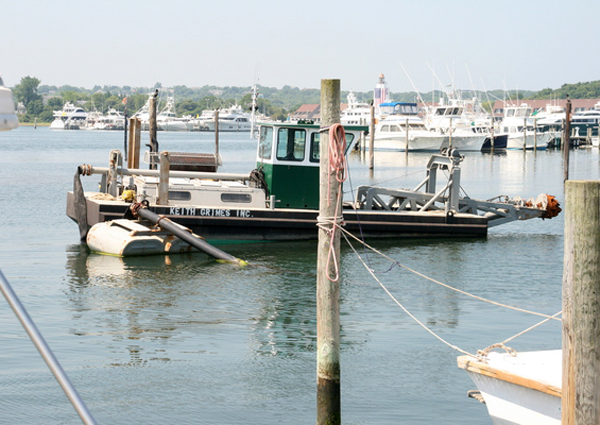
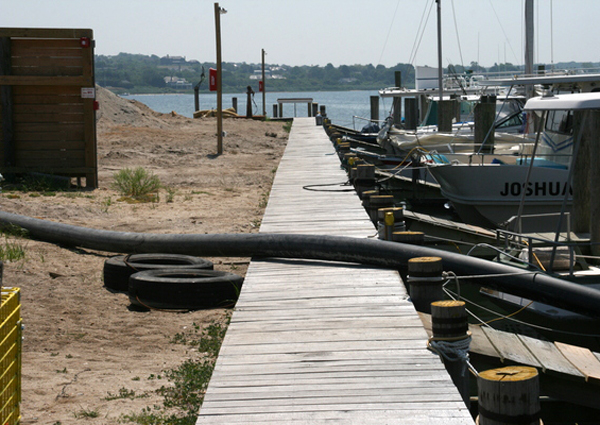
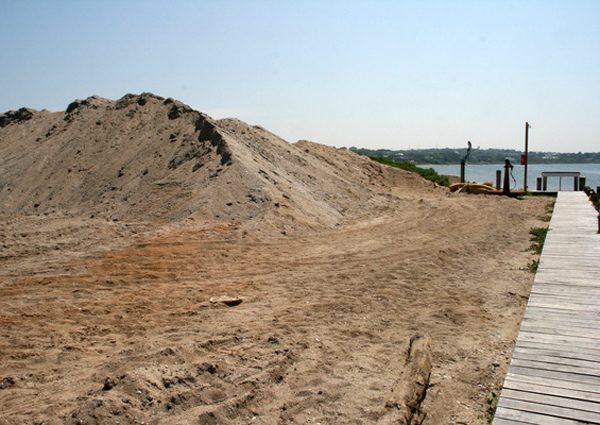
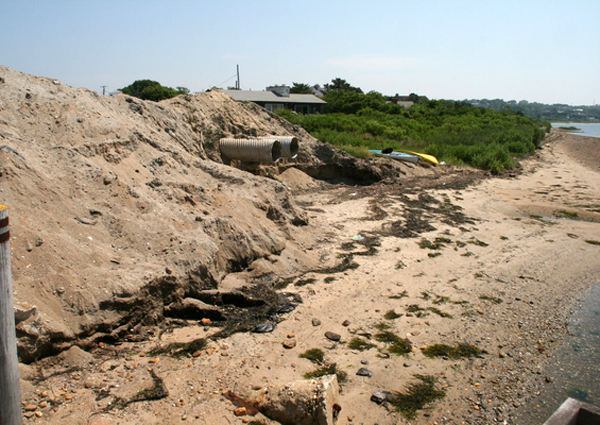
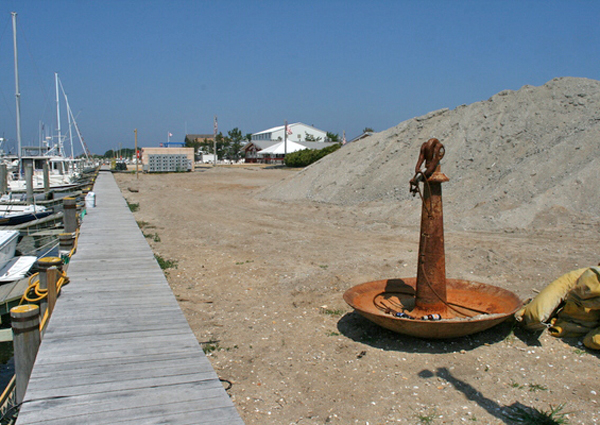
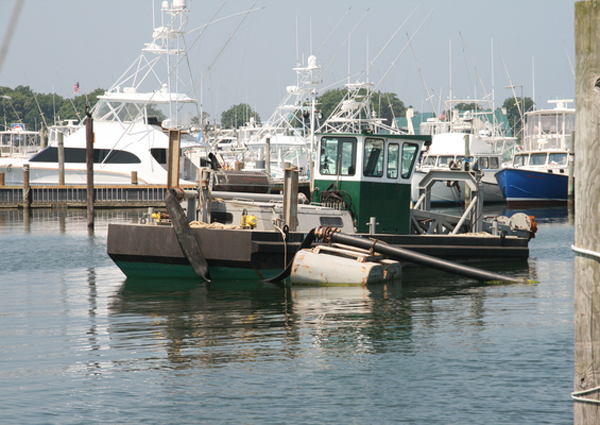
Two Montauk marine contractors and a marina owner are in hot water with the New York State Department of Environmental Conservation this week over allegations of illegal dredging in Lake Montauk.
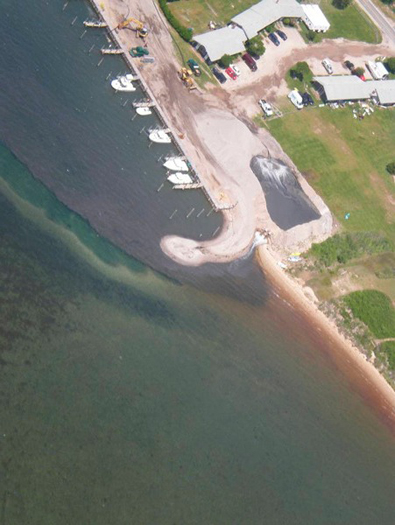
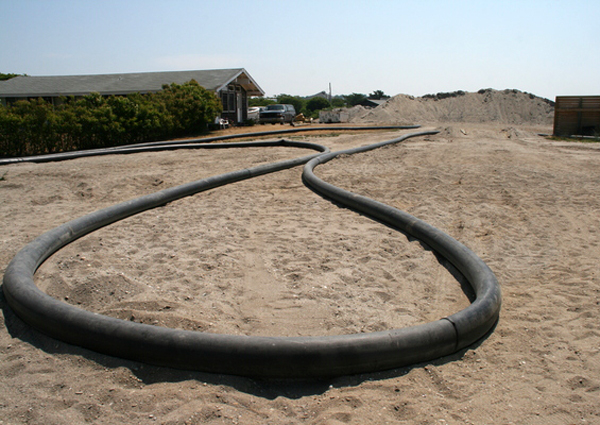
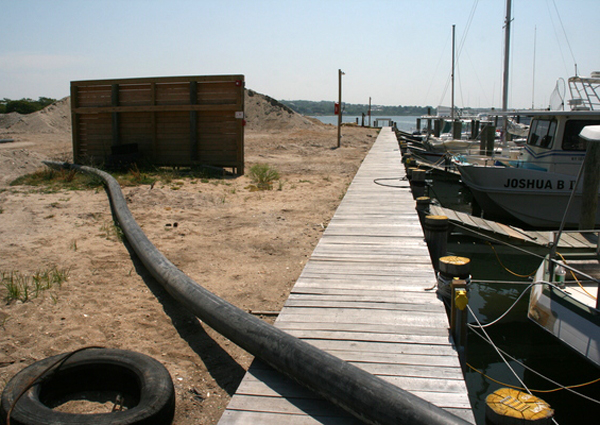
The DEC received a complaint this spring from the Group for the East End after members of the organization reported in May that a road had been built in a tidal wetland at Rick’s Crabby Cowboy Cafe & Marina on East Lake Drive to allow a dump truck to drive into wetlands near where the dredging took place. The Group also provided the DEC with photographs of a dewatering lagoon with pipes that drained silt and sediment into Lake Montauk.
Jeremy Samuelson, who works as an environmental advocate for The Group for the East End and is a member of the Concerned Citizens of Montauk, said that members of both groups who live near the marina brought the dredging to his attention when they first noticed the road being built on the sandbar late this spring.
Rick’s Crabby Cowboy Cafe & Marina owner Richard Gibbs and Keith Grimes, owner of the contracting firm Keith Grimes Inc., were charged by the DEC with dredging and constructing a road in a tidal wetland without a permit, discharge of dredge waters to surface waters without a permit, and dredging after the closure of the June 1 dredging window.
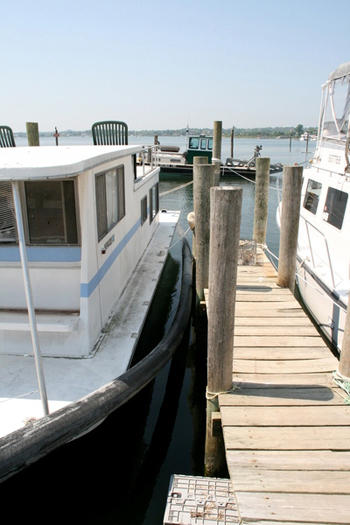
The sandbar on which the road into the wetlands was allegedly constructed is alongside the docks at the marina and is easily visible from it.
Mr. Gibbs and Mr. Grimes were also charged with placing dredge spoil in navigable waters without a permit, creation of a solid waste management facility without a permit, illegal disposal of solid waste, and two other violations related to not having received State Pollutant Discharge Elimination Systems permits from the DEC.
Susan Grimes, Mr. Grimes’s wife, who owns Sagaponack Sand and Gravel in Bridgehampton, was also charged with two counts of operating a solid waste management facility without DEC authorization and storing construction and demolition debris on her business’s property in violation of her establishment’s DEC mining permit.
DEC representative Aphrodite Montalvo said Tuesday that Mr. Grimes and Mr. Gibbs could face fines of up to $2 million total for their role in the alleged violations and Mrs. Grimes could face fines up to $75,000.
Ms. Grimes said Tuesday that she and Mr. Grimes had believed that all the permits were in place before they began work and that Mr. Gibbs had been handling the permit process. She added that they would not have begun work if they had believed permits had not been in place. She said that the work is finished, although a large pile of dredged sand is still waiting on the shoreline for DEC approval that it be moved.
Mr. Gibbs could not be reached for comment, though he told Newsday last week that he believed that he had a verbal agreement from the DEC to continue the work.
“I don’t know how these guys could have racked up any more violations if they tried,” said Mr. Samuelson, who added that it was clear from aerial photos that the silt being pumped back into the lake was disturbing the water.
“You can see that the water is a different color. In layman’s terms, it’s all mucked up, with suspended sediments. Throughout the Lake Montauk industrial area, there are heavy metals and now they’re suspended in the water column. This is critical to eelgrass and clams and scallops and oysters. For any type of mollusk that’s trying to grow in that environment, this is the worst time to do this. This is when so many finfish species are returning or the hardshells are doing their filter feeding, and we’ve resuspended all this contaminated sediment. It’s not analyzed and it’s transported off site. To take this stuff and spread it all around the lake when we don’t even know what’s in it is horrific. The mere act of resuspending all this sediment is unforgiveable.”
Mr. Samuelson added that the suspended sediment smothers eelgrass and that there are only two eelgrass beds in the entire lake, one of which is just outside Mr. Gibbs’s marina.
“If you want to know the effect of this, come back next year and look at the size of the eelgrass bed right in front of Rick Gibbs’s property,” Mr. Samuelson added.
In a release last week announcing the charges, DEC representatives stated that they had issued a permit authorizing Mr. Gibbs to replace a bulkhead and perform maintenance dredging in 2004, but that permit expired in 2009. The DEC also noted that the current dredging operation is much different than was originally authorized.
The original permit did not allow for the use of hydraulic dredging equipment or the expansion of a sandbar for the creation of a road. It also did not allow for the creation of a diked area for dewatering the dredge spoil or the placement of the dredge spoil on a sandbar in the tidal wetland.
Mr. Samuelson said that he had initially approached East Hampton Town Supervisor Bill Wilkinson about the problem, but Mr. Wilkinson had rebuffed Mr. Samuelson’s attempt to involve the town. Mr. and Mrs. Grimes were both donors to the town’s Republican Committee during Mr. Wilkinson’s election campaign last year.
Mr. Wilkinson said Tuesday that he was surprised when he received the news of the DEC’s violations. He said that he had gone to the site after he was alerted by Mr. Samuelson and other members of CCOM, but had primarily been disturbed by the pile of sand, not by the dredging operation and that he had since been told that the sand could not be moved until the DEC was sure it did not contain hazardous substances. He added that there never was a road constructed on the sandbar, though trucks had driven on the sand to the end as the dredging was underway. He said that many complaints he had heard regarding the dredging were that Mr. Grimes was “building an island” in a spot where anyone familiar with the harbor would have known there was an already existing sandbar.
“That wasn’t familiar given what I’d known to be going on up there,” he said of the DEC’s charges. “I will support the fact that marina owners are required to dredge.”
Mr. Wilkinson added that the town did not become more involved in the enforcement because he wasn’t sure who had jurisdiction and he preferred that the matter be handled by the DEC.
Mr. Samuelson begged to differ.
“I hope this serves as a wake-up call. The Town of East Hampton has permitting and regulatory authority over dredging operations like this. For the town to take a pass on any type of formal review of its own permit in light of overwhelming evidence of egregious violations is nothing short of irresponsible and dysfunctional,” said Mr. Samuelson. “It’s acts like this that are killing our marine resources. It doesn’t take a BP to put a stake through the heart of a marine ecosystem. It takes cutting corners and selfish, irresponsible good old boys who think the way it was done in 1930 is still okay.”
The three business owners will now have the opportunity to resolve the violations at a compliance conference with the DEC. If they are unable to resolve the issue, it will be heard before a DEC administrative law judge.
“The protection of tidal wetlands is an important priority for DEC, and violations like those that have been documented at this site require a forceful enforcement response,” said DEC regional directory Peter Scully in a press release last week. “DEC staff and law enforcement officers work tirelessly to promote and protect Long Island’s environment, but with almost 1,200 square miles and more than 1,180 miles of shoreline to cover, they cannot be everywhere. As this case clearly demonstrates, interested citizens can play an important role in helping to ensure the enforcement of environmental laws.”


