


 4 Photos
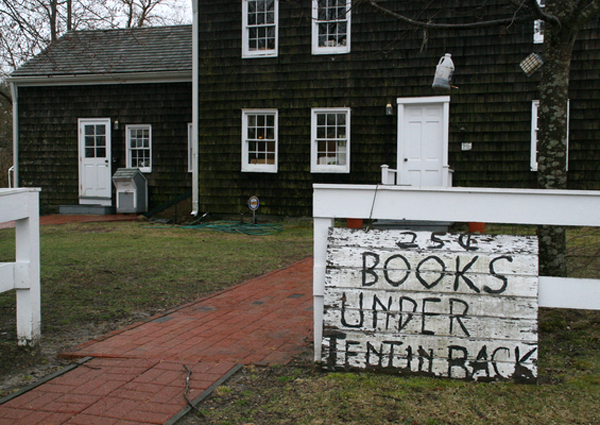
The Springs Library

The stacks at the Springs Library.
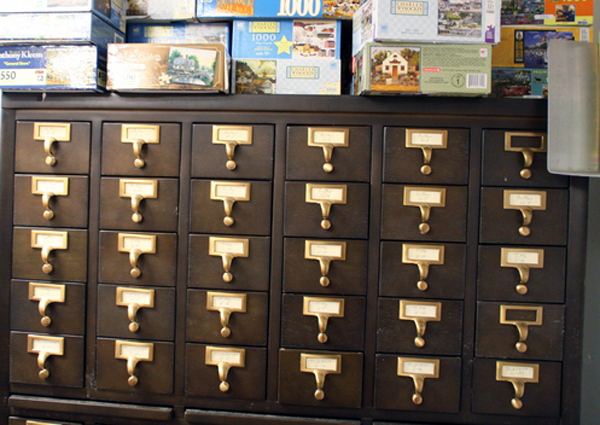
The Springs library still uses a card catalog
while libraries in the Suffolk County Cooperative Library system have computerized their records.
As the East Hampton Library’s zoning battle over its proposed children’s wing continues, a growing number of people in Springs have begun to seriously examine how to improve library service for members of their own community, and the East Hampton Library has begun to respond.
Springs has a small, subscription-based volunteer library across the parking lot from Ashawagh Hall, but its limited hours and lack of modern library amenities such as computers and expanded multimedia services leave some residents wanting.
In early March, the East Hampton Library installed two wireless internet antennas in the Springs Library and Ashawagh Hall, which provide service in the buildings and on the grounds of the historic triangle, including the Springs Community Presbyterian Church.
The East Hampton Library is also planning several community programs in Ashawagh Hall, including a story time and craft session for toddlers this Thursday, March 25, at 11 a.m. and internet search and library search seminars for adults later this spring.
But from the Springs Library to the Springs School several blocks away, some residents believe a satellite library tied into the Suffolk County Library system is needed in a hamlet known as a haven for artists and writers.
The Springs Citizens Advisory Committee has formed a library subcommittee to examine a potential location and the potential costs of having a satellite library in Springs.
Dennis Fabiszak, the director of the East Hampton Library, is a member of that group, as is CAC chair Henrika Conner and Springs School Superintendent Michael Hartner.
Mr. Fabiszak said this week that he is working on an analysis of the costs associated with keeping the Springs Library open eight hours a day, six days a week, in order to allow East Hampton Library to send interlibrary loan books to Springs for pickup by residents.
The library, which is run by the Springs Historical Society and is staffed by volunteers, is currently open just two hours a day during the week.
Mr. Fabiszak said that the cost to hire staff for the Springs Library would be at least $40,000 and would require approval by voters who, in Springs, are already saddled with high taxes. Nonetheless, he added that while Springs taxpayers account for 20 percent of the East Hampton Library’s tax base, they use 35 percent of the library’s services.
Ms. Conner has long been a proponent of using the $234,000 that Springs provides to the East Hampton Library to build a satellite branch in Springs, but Mr. Fabiszak is skeptical that a separate library building in Springs could be acquired, maintained or staffed for such a small amount of money. The East Hampton Library’s budget is nearly $1.8 million.
“I’m there so whatever they can come up with, I can tell them what the real numbers are,” he said of his involvement in the Springs group.
Ms. Conner added that the current Springs Library has many drawbacks that keep it from being an ideal location for inclusion in the Suffolk County Library System.
“The building doesn’t conform to code—it’s a whole bunch of little things, like the door to the building needs to open out, not in. It’s really tiny,” she said. “The town has enough property. It could put up a building. As a municipality, they’re exempt from zoning. They could rent it to the library, but we would have to have a committee in Springs to raise the money and do the design. The key would be taxation, and whether it would be a main library or a branch of the East Hampton Library. As with the school situation, we feel like we’re not getting what we’re paying for.”
Mr. Hartner, the Springs superintendent, said that a library building could possibly be built on the school grounds, if the school is ever expanded.
“Maybe it would be a good idea to let the local community use the Springs School library as a satellite of the East Hampton Library. People could get interlibrary loans and could come in after school and use our collection, our computers. The East Hampton Library staff thought logistically it would be difficult to work out, and it never got off the ground,” he said.
“The idea of expanding the building here has been talked about for many years,” he added. “The board has talked about adding on a high school, cafetorium and kitchen. In the current economy, that seems like pie in sky thinking, but we’re not always going to have this situation economically.”
Mr. Hartner added that some other libraries on Long Island, including one in Sachem, have a public library that is also used as a school library.
“The public accesses through one door and the school accesses through another door,” he said.
Meanwhile, at the Springs Library, Heather Anderson, who serves as both the president of the historical society and the director of the library, which are both volunteer jobs, said that she’s very aware of what her library can and cannot provide.
“People would like to have books ordered and picked up. We would love to be able to provide internet, but none of us here are good with computers,” she said. “And if people want to sit down, it would have to be in the children’s room. The school library is not open in the summer or after school.”
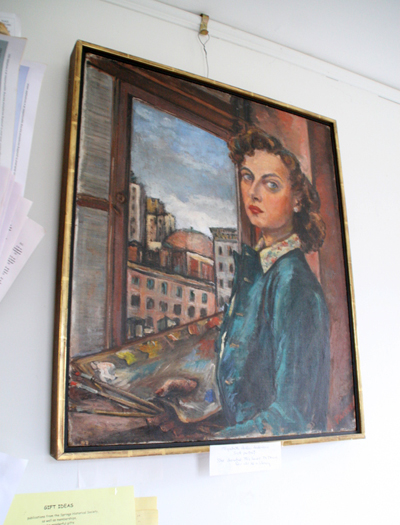
The Springs Library was the house of artist Elizabeth Parker Anderson, who donated it to East Hampton Town for use as a library in 1974. The town pays for the upkeep of the property and the historical society runs book sales and handles fund-raising for the collection. Books at the Springs Library are carefully covered with library slipcovers and hand-lettered Dewey Decimal numbers, with cards in the back of the books on which volunteers write the names of patrons and the due dates. The Springs Library has a card catalogue file, but Ms. Anderson seems to know the location of most books in her collection without even consulting it. A membership to the library costs $15 per year, but for $25 patrons can also become members of the historical society.
“No one feels any competition. Libraries are libraries. You can’t have too many of them,” she said. “One advantage of being small is you can say, ‘Oh, we can get that for you’ because we don’t have 1,000 people coming in asking for books. It’s evolved into what it is now based on what people are interested in.”


