


 21 Photos
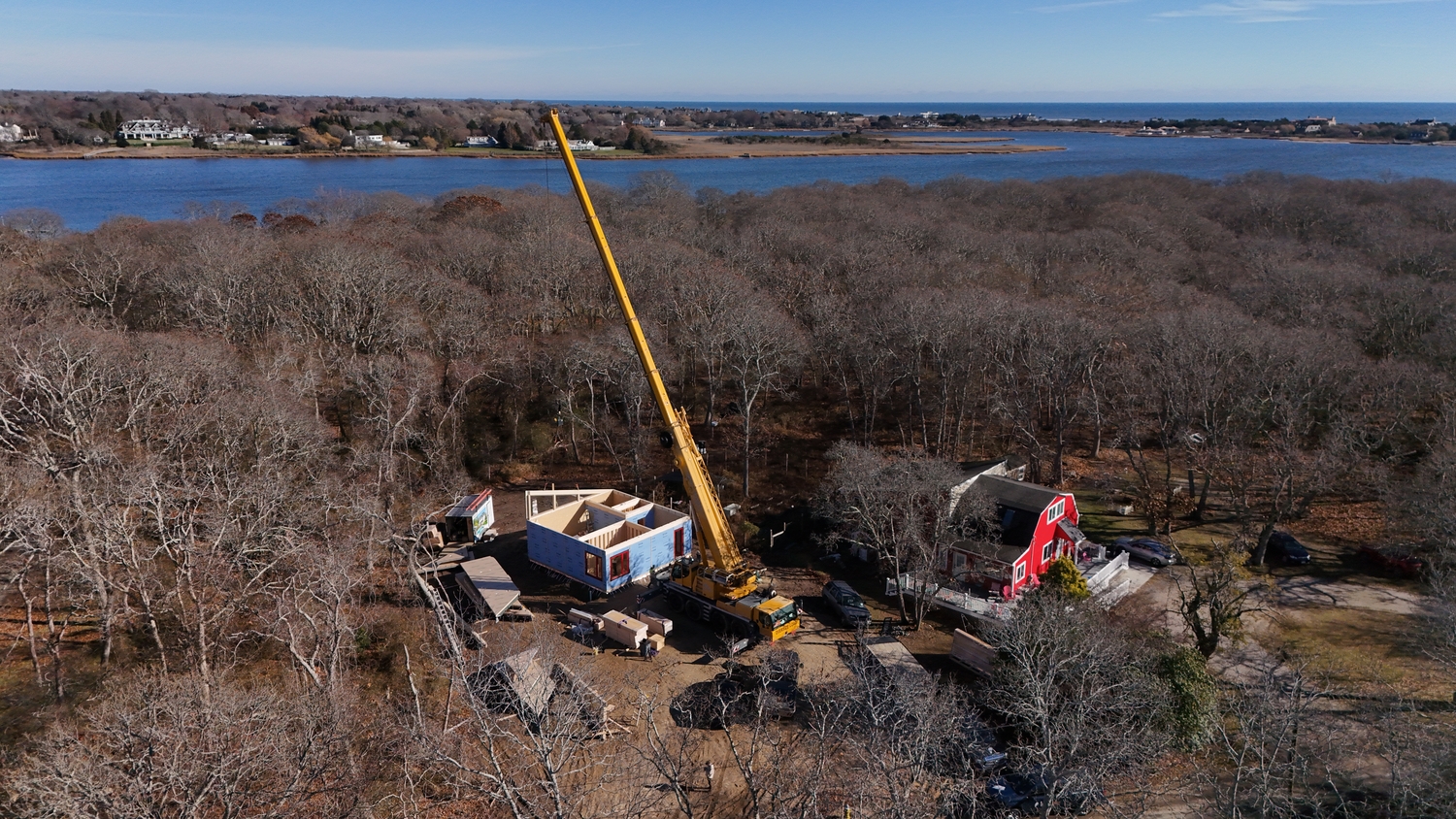
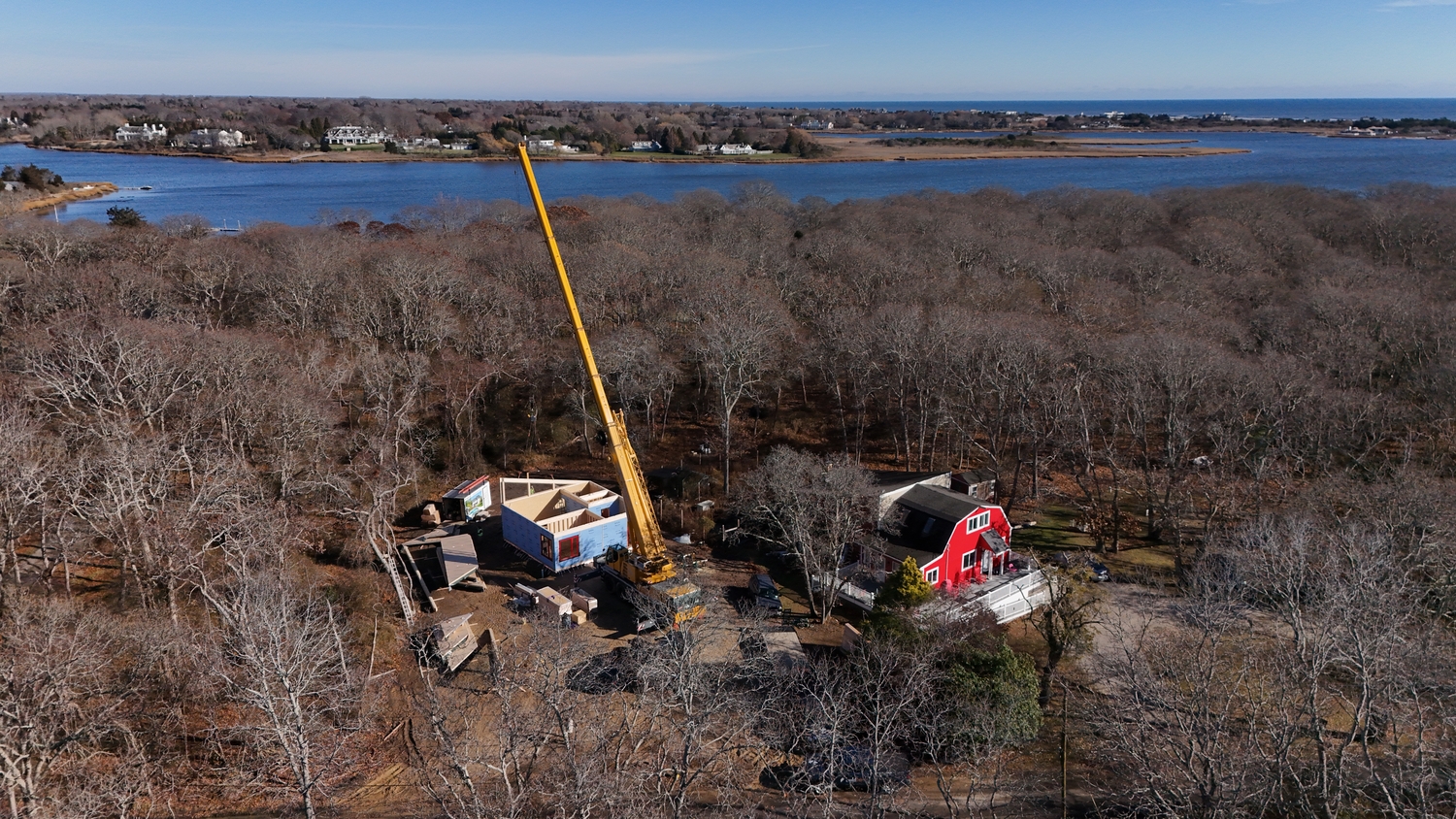
BuildLabs assembled a new studio on the Ma’s House & BIPOC Art Studio campus last week. CALE DONALDSON
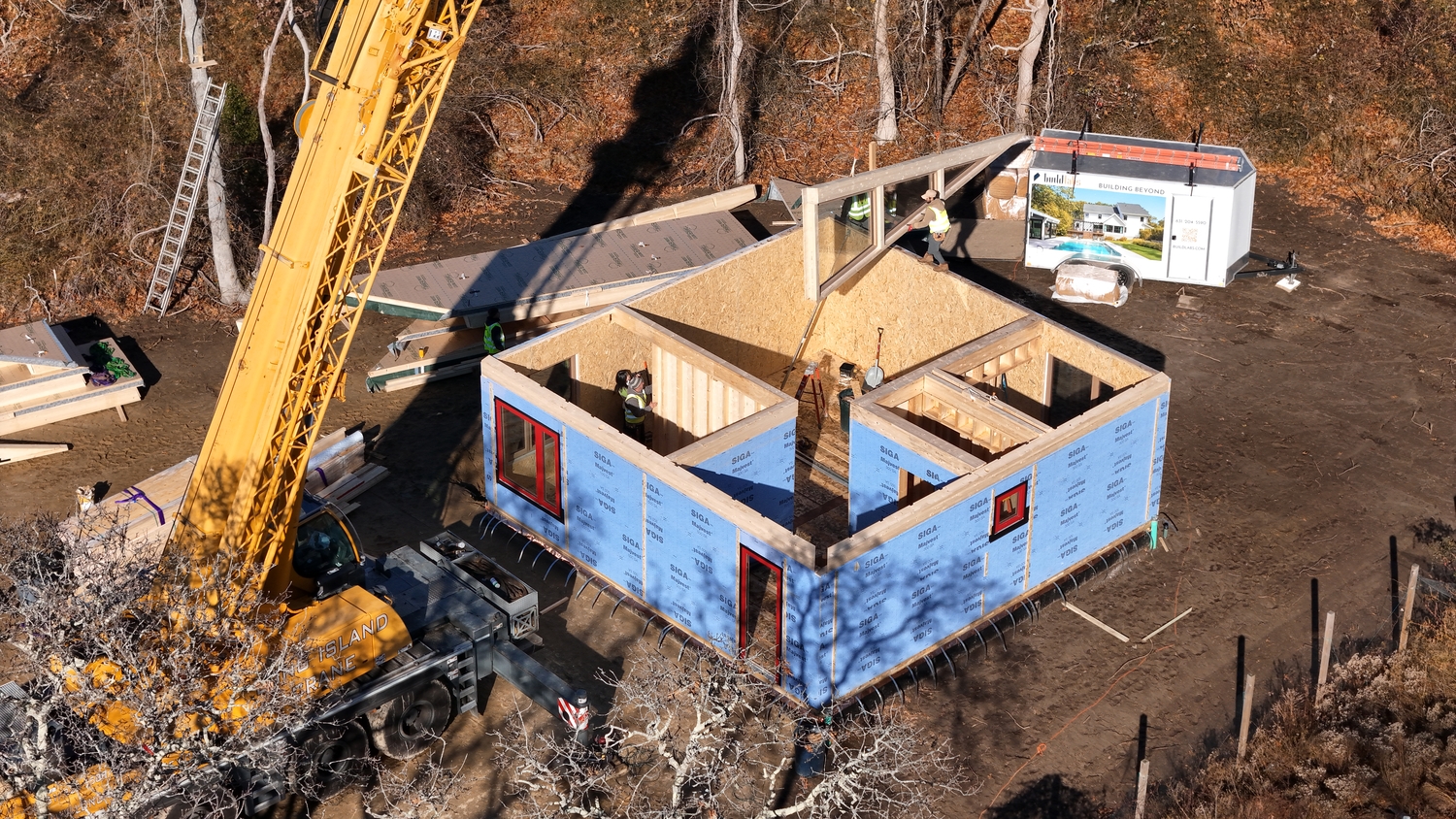
BuildLabs assembled a new studio on the Ma’s House & BIPOC Art Studio campus last week. CALE DONALDSON
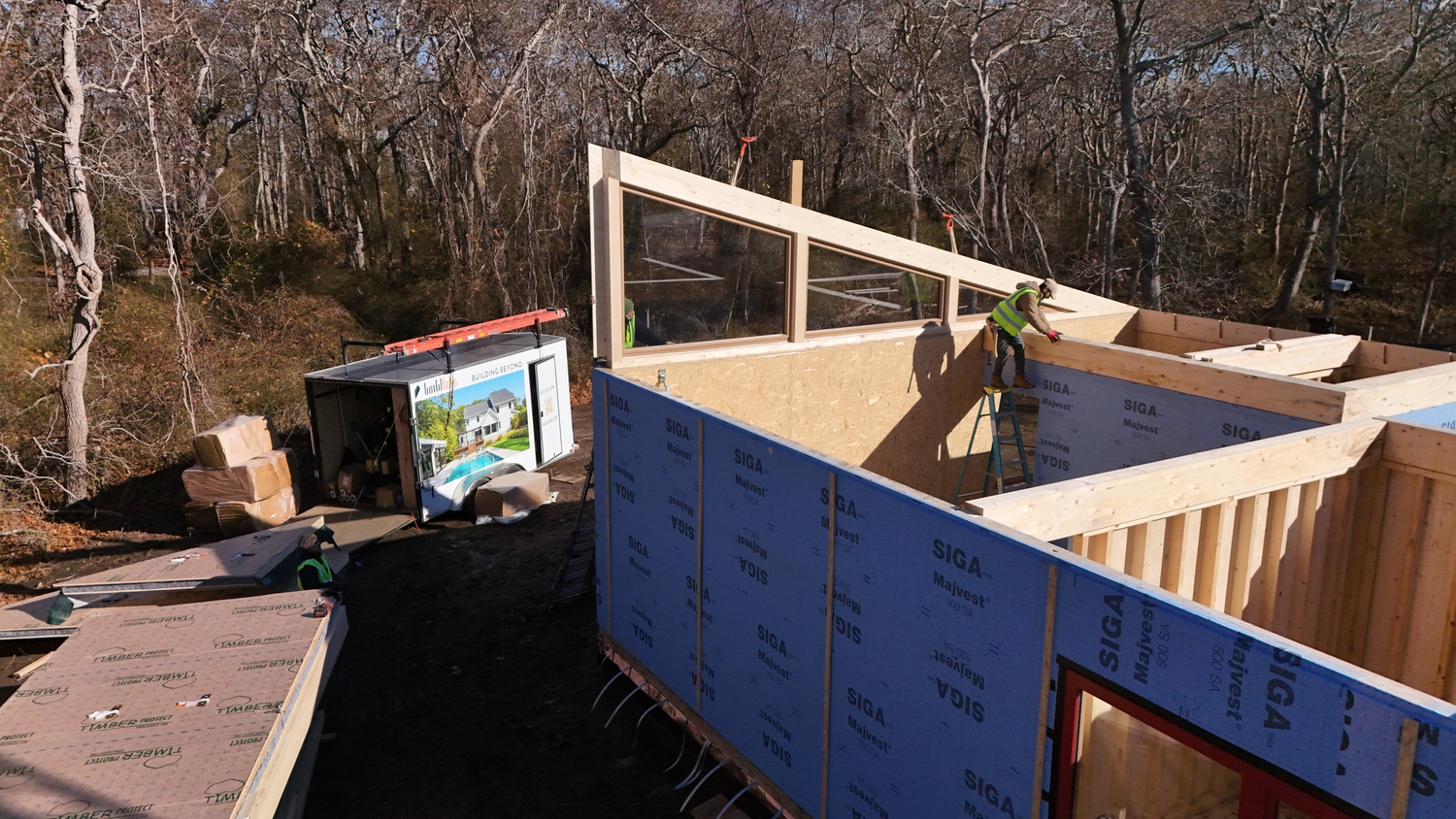
BuildLabs assembled a new studio on the Ma’s House & BIPOC Art Studio campus last week. CALE DONALDSON
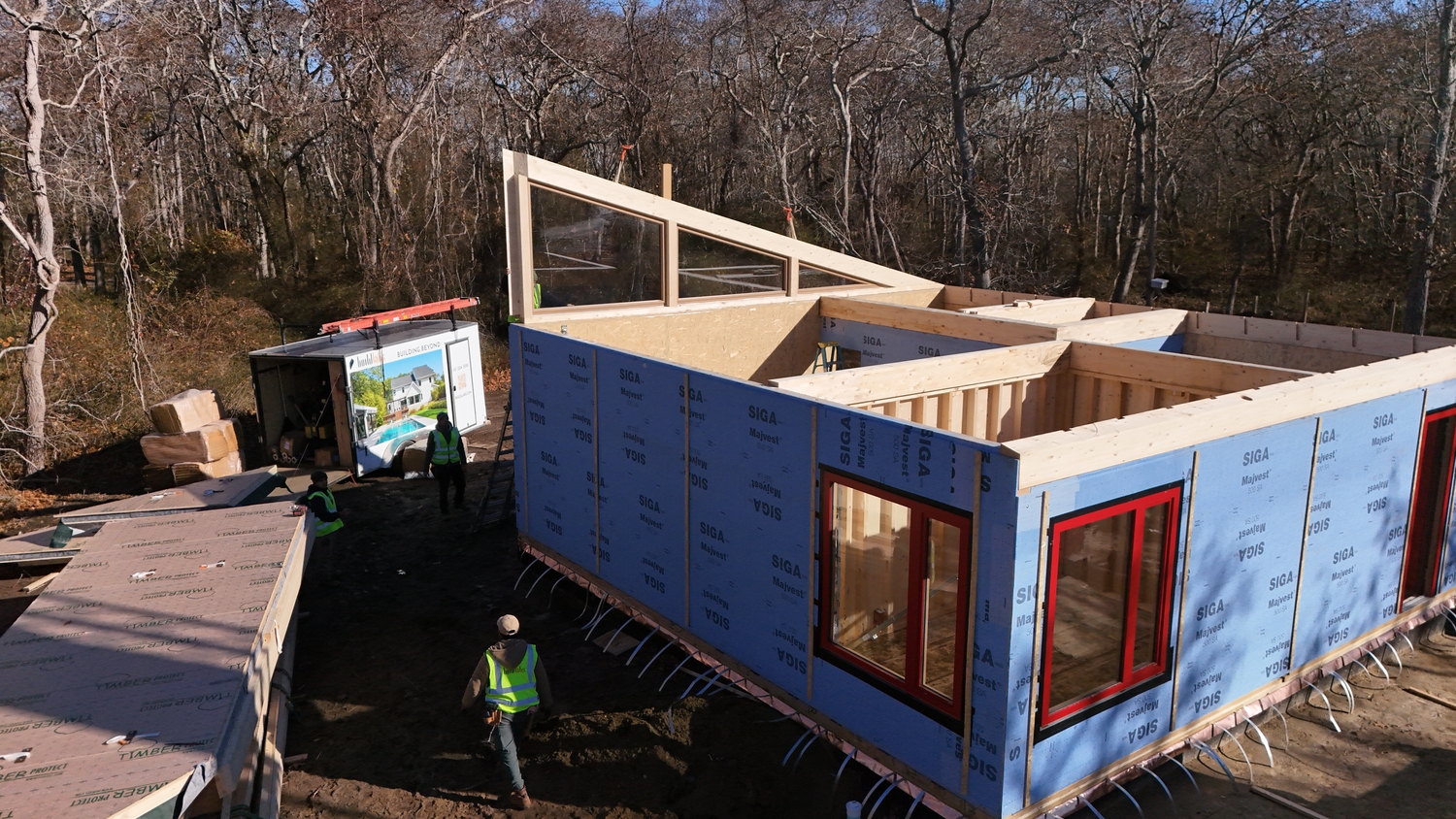
BuildLabs assembled a new studio on the Ma’s House & BIPOC Art Studio campus last week. CALE DONALDSON
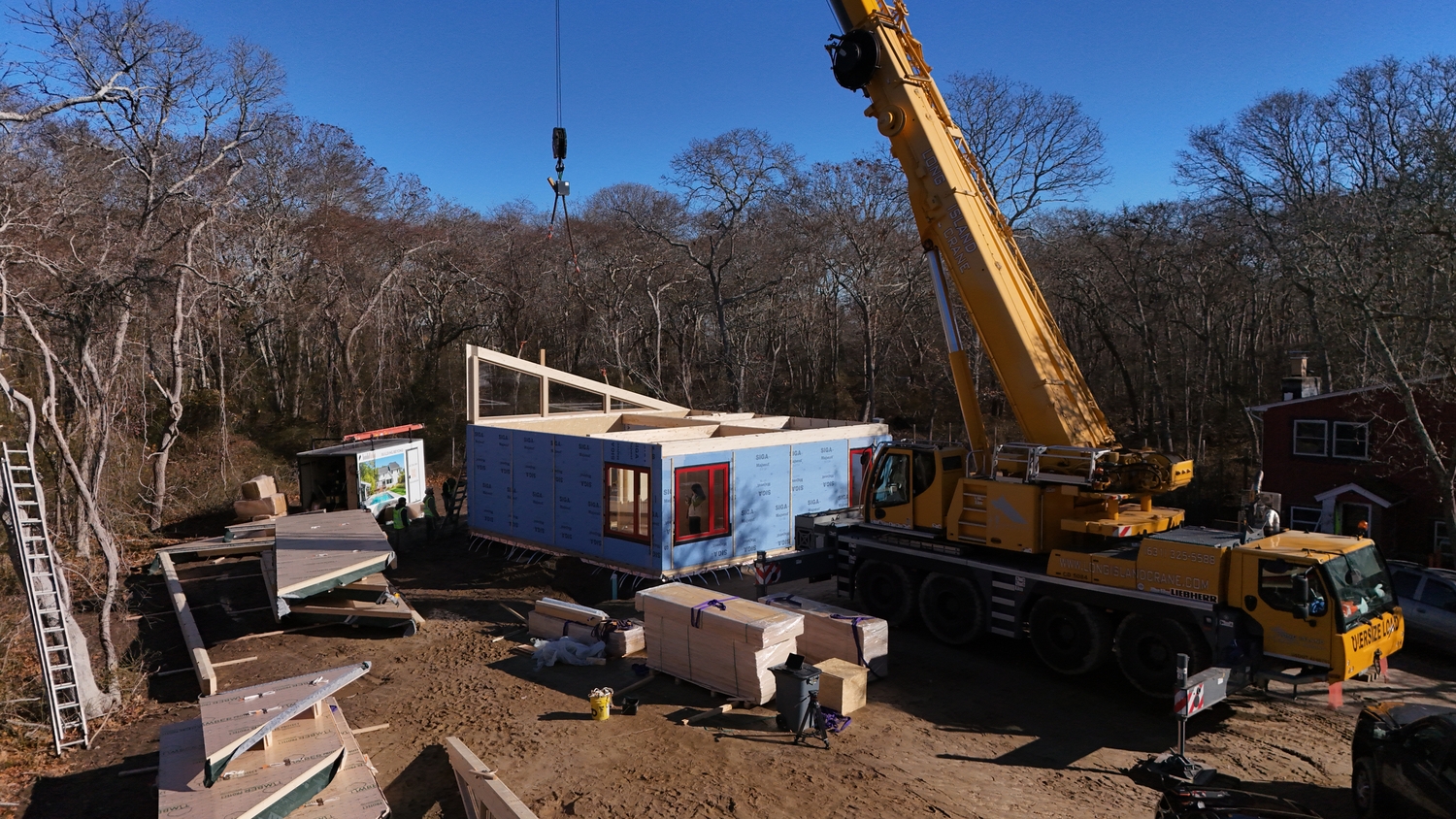
BuildLabs assembled a new studio on the Ma’s House & BIPOC Art Studio campus last week. CALE DONALDSON
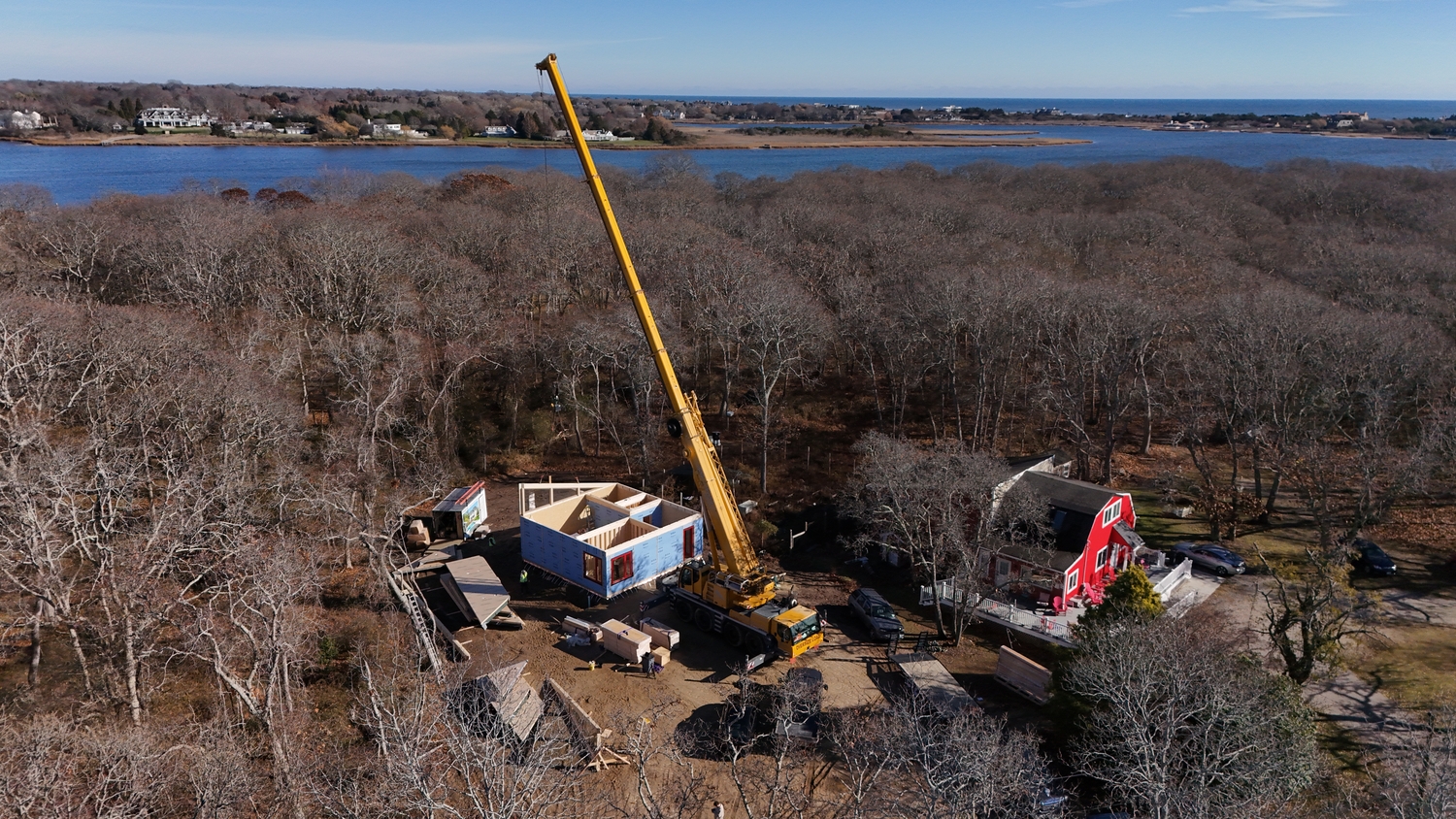
BuildLabs assembled a new studio on the Ma’s House & BIPOC Art Studio campus last week. CALE DONALDSON
BuildLabs assembled a new studio on the Ma’s House & BIPOC Art Studio campus last week. CALE DONALDSON
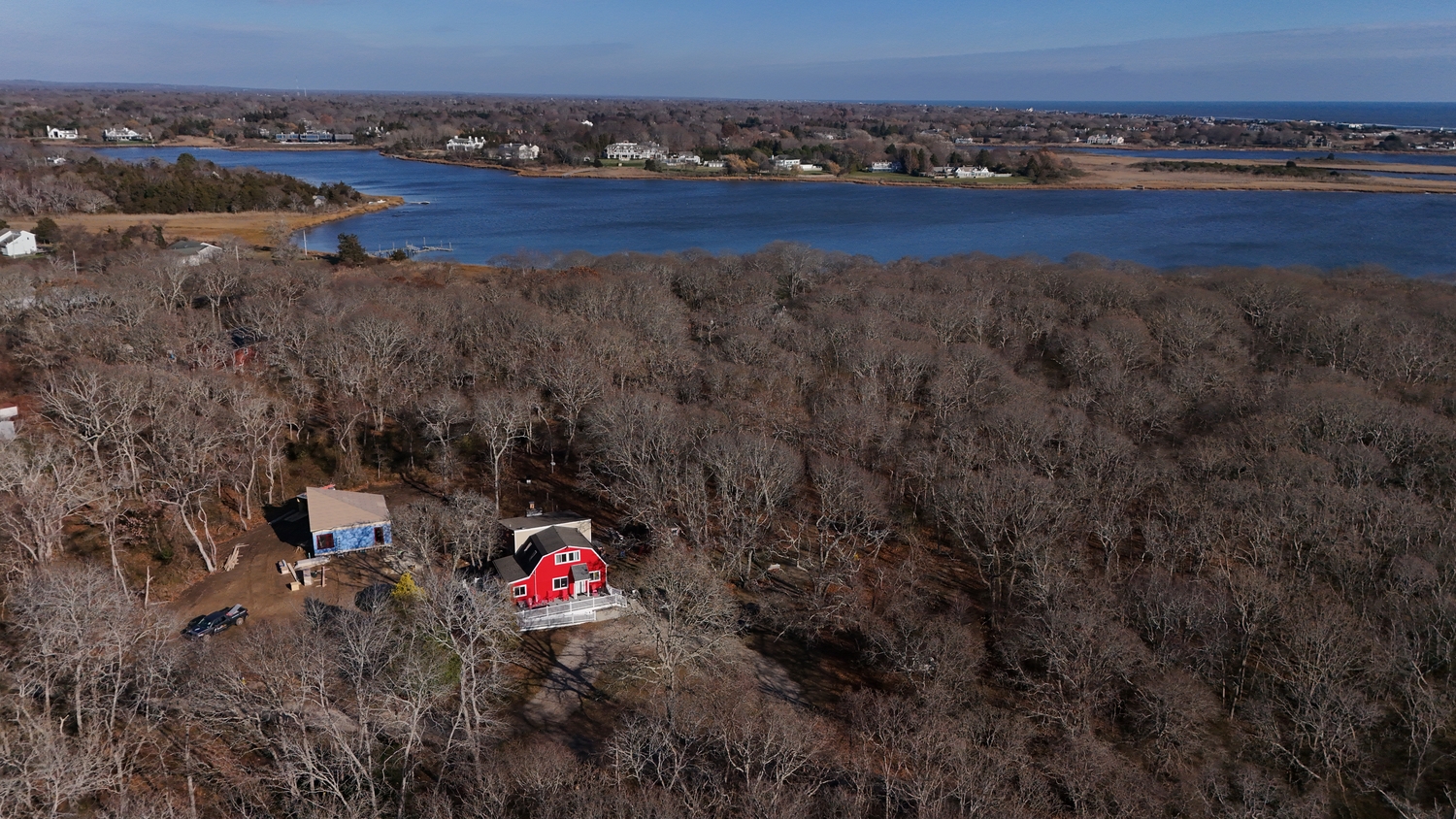
BuildLabs assembled a new studio on the Ma’s House & BIPOC Art Studio campus last week. CALE DONALDSON
BuildLabs assembled a new studio on the Ma’s House & BIPOC Art Studio campus last week. CALE DONALDSON
BuildLabs assembled a new studio on the Ma’s House & BIPOC Art Studio campus last week. CALE DONALDSON
BuildLabs assembled a new studio on the Ma’s House & BIPOC Art Studio campus last week. NICOLE CHEN
BuildLabs assembled a new studio on the Ma’s House & BIPOC Art Studio campus last week. NICOLE CHEN
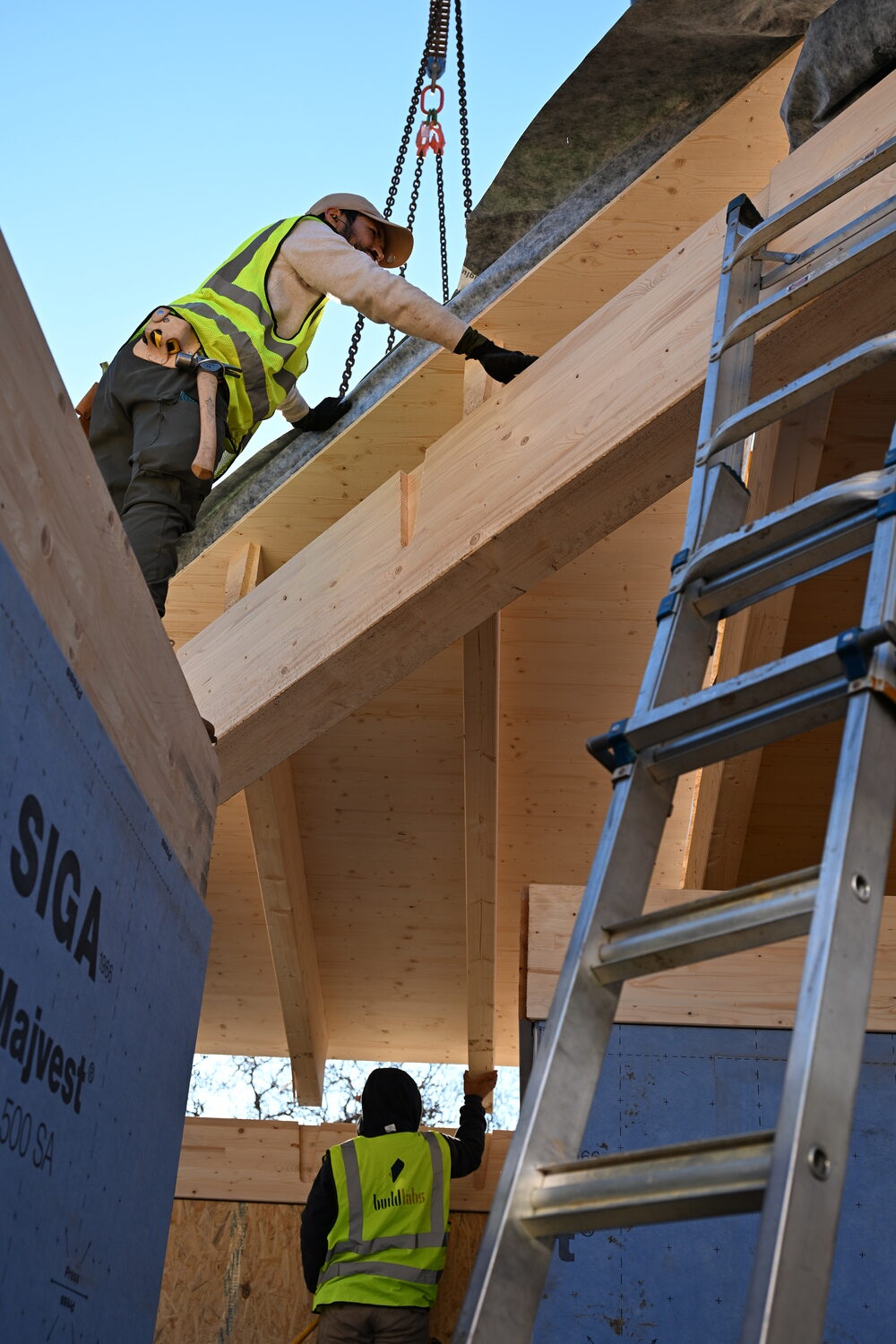
BuildLabs assembled a new studio on the Ma’s House & BIPOC Art Studio campus last week. NICOLE CHEN
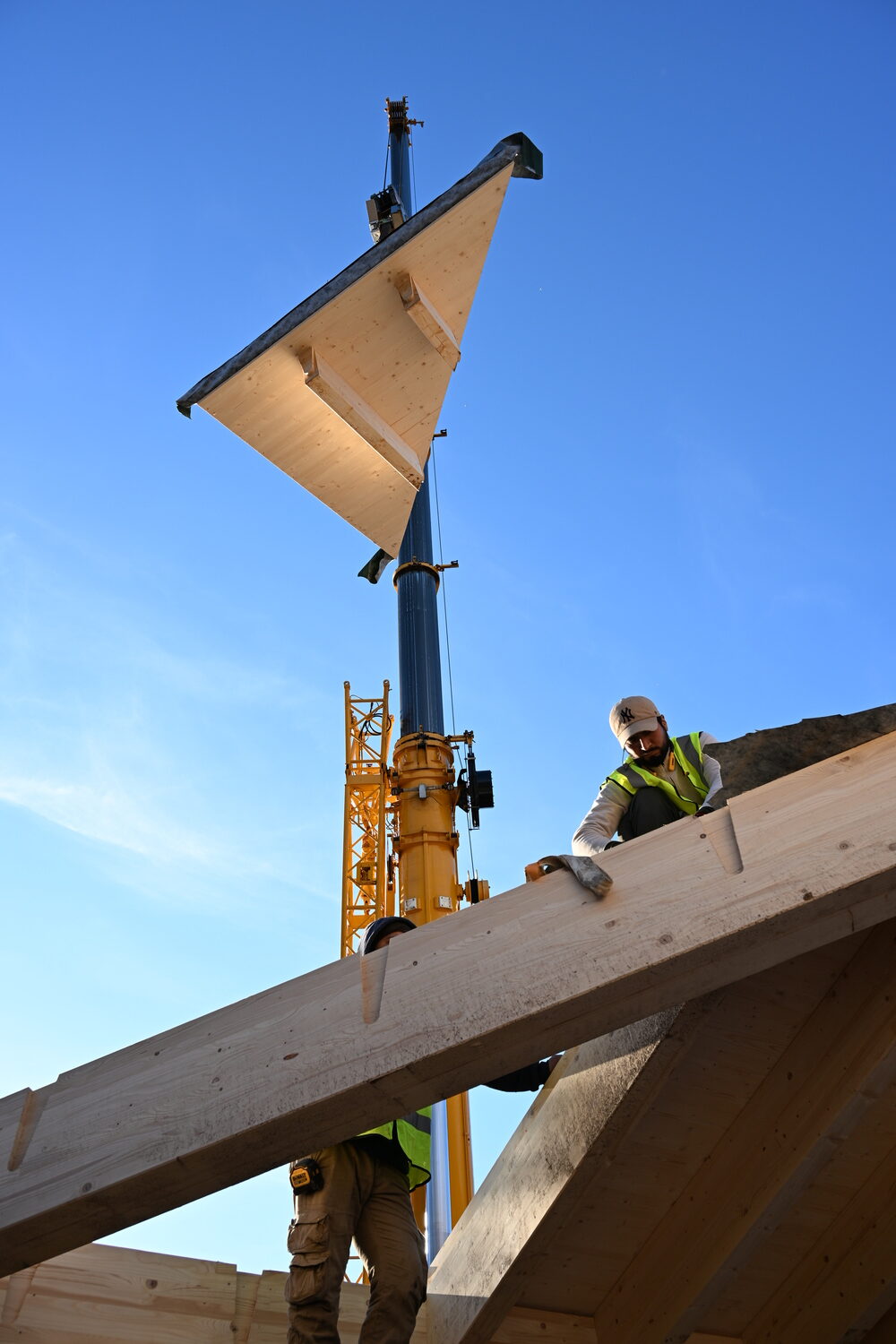
BuildLabs assembled a new studio on the Ma’s House & BIPOC Art Studio campus last week. NICOLE CHEN
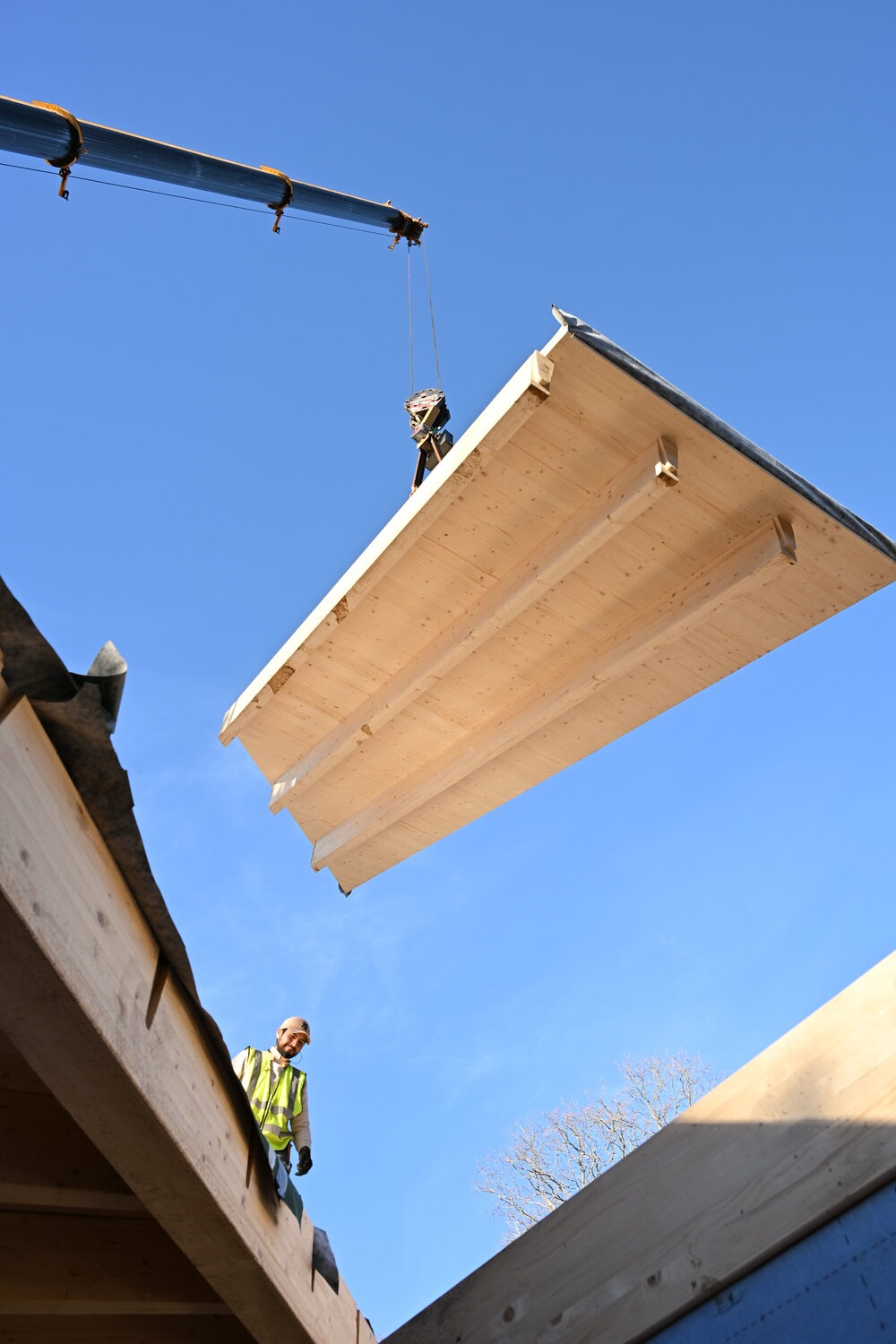
BuildLabs assembled a new studio on the Ma’s House & BIPOC Art Studio campus last week. NICOLE CHEN
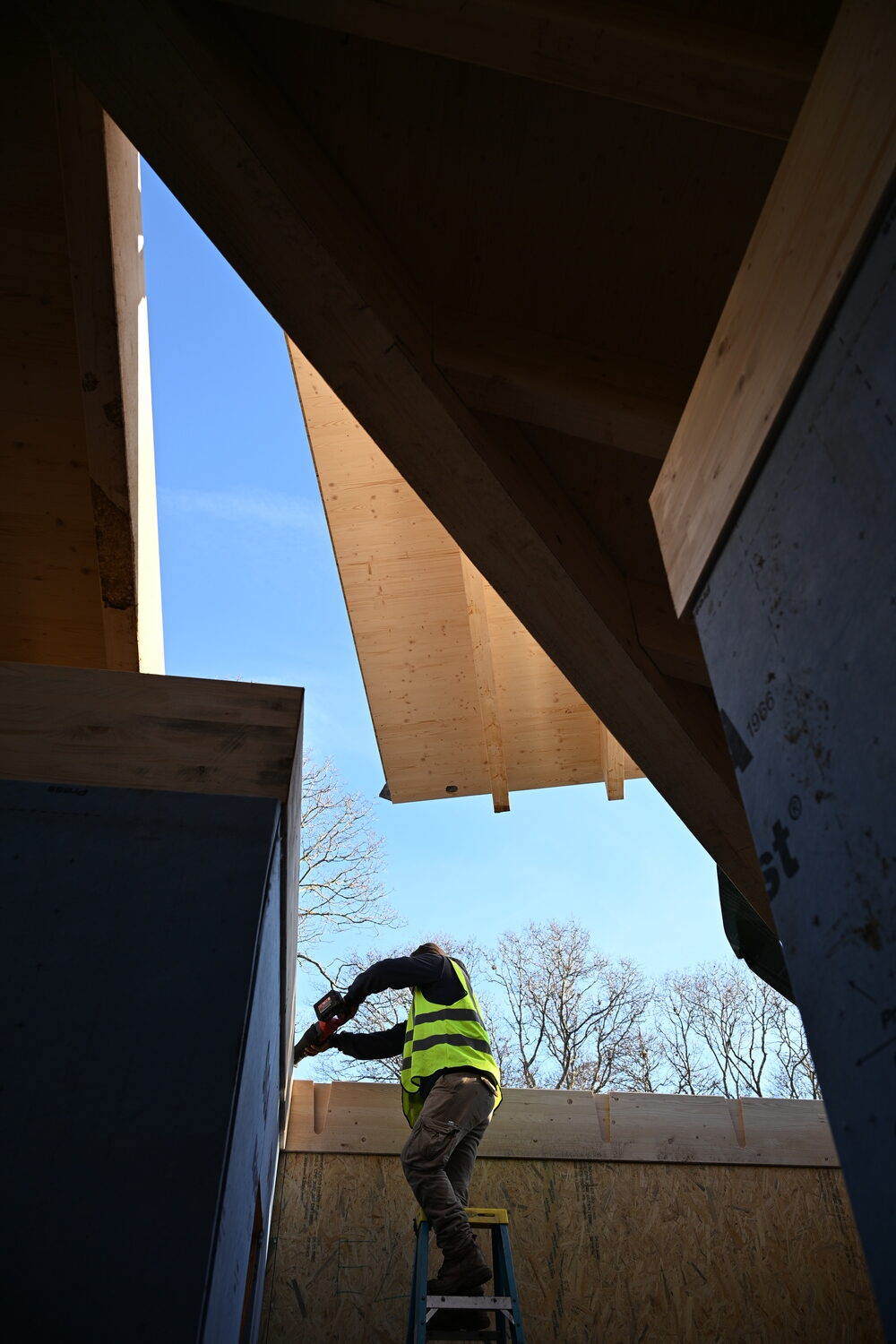
BuildLabs assembled a new studio on the Ma’s House & BIPOC Art Studio campus last week. NICOLE CHEN
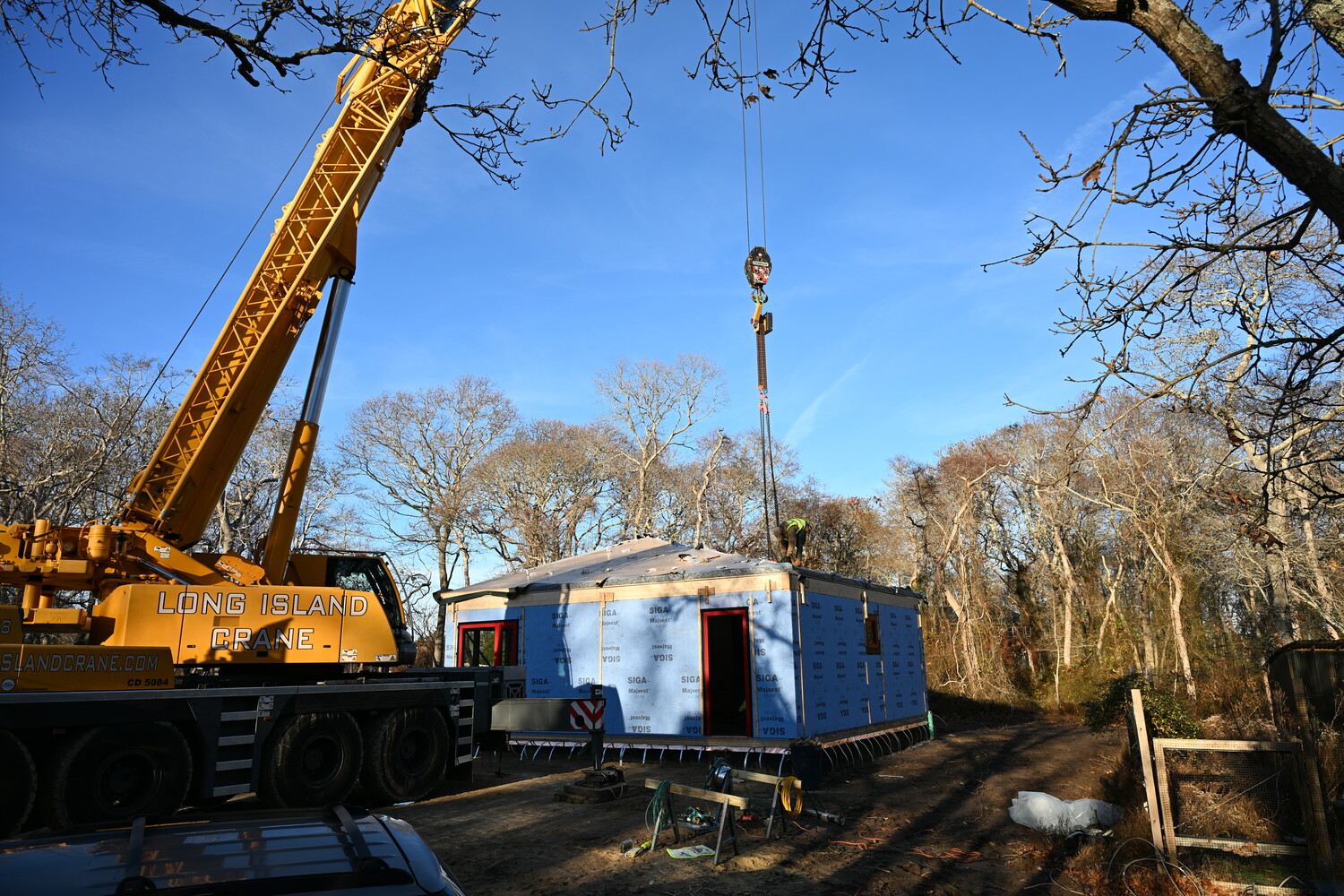
BuildLabs assembled a new studio on the Ma’s House & BIPOC Art Studio campus last week. NICOLE CHEN
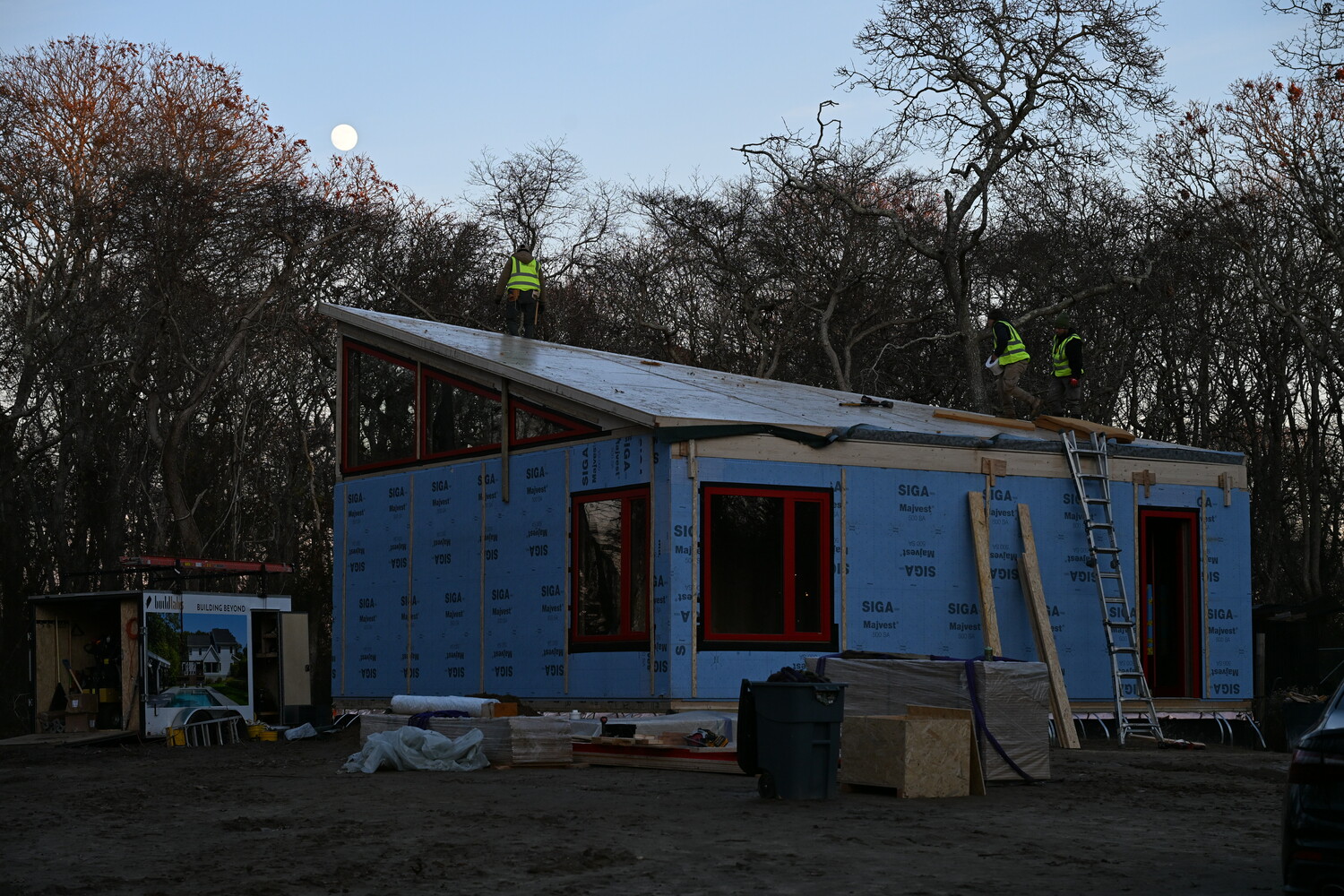
BuildLabs assembled a new studio on the Ma’s House & BIPOC Art Studio campus last week. NICOLE CHEN
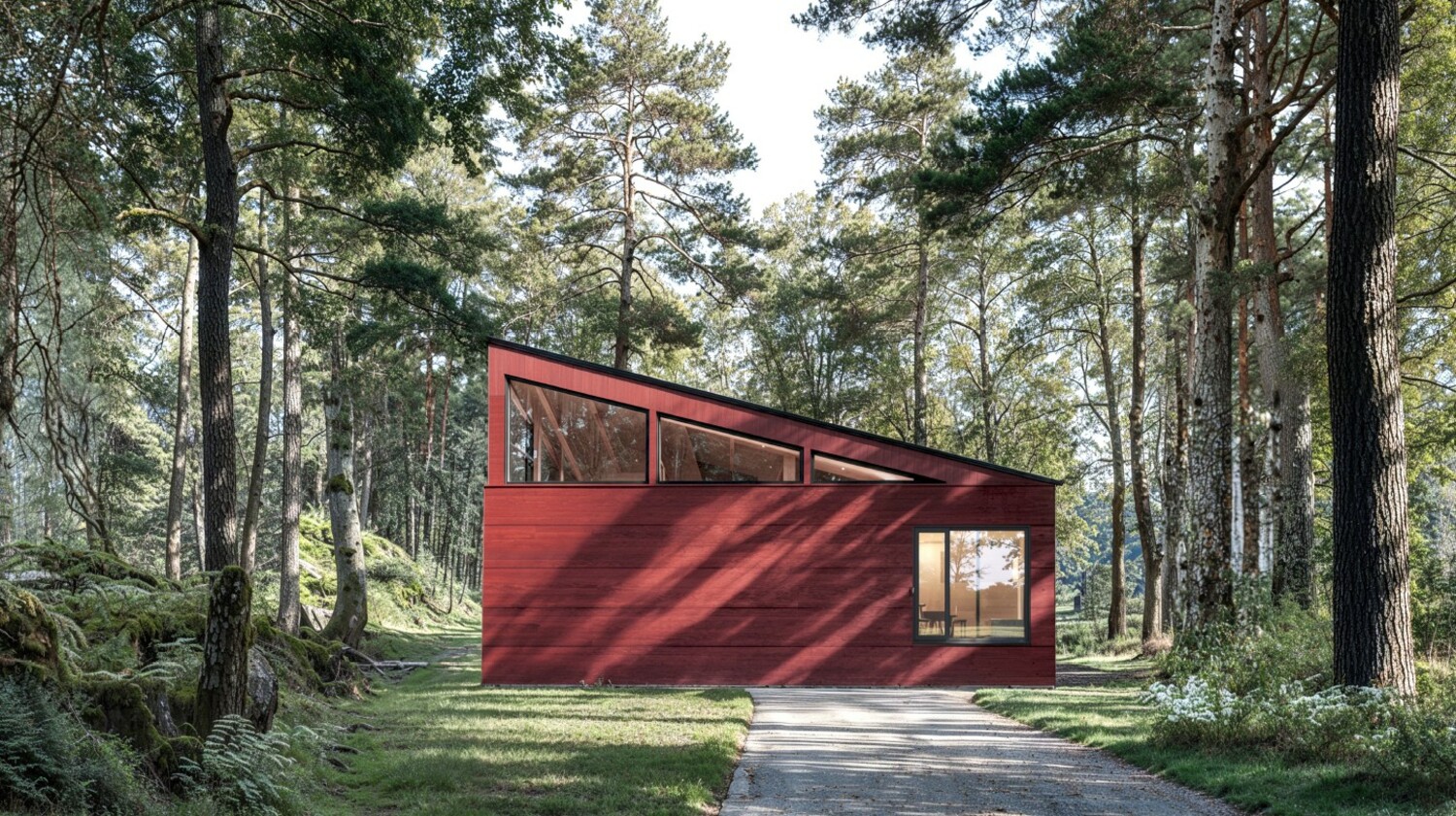
An architectural rendering of a new studio on the Ma’s House & BIPOC Art Studio campus. COURTESY BUILDLABS
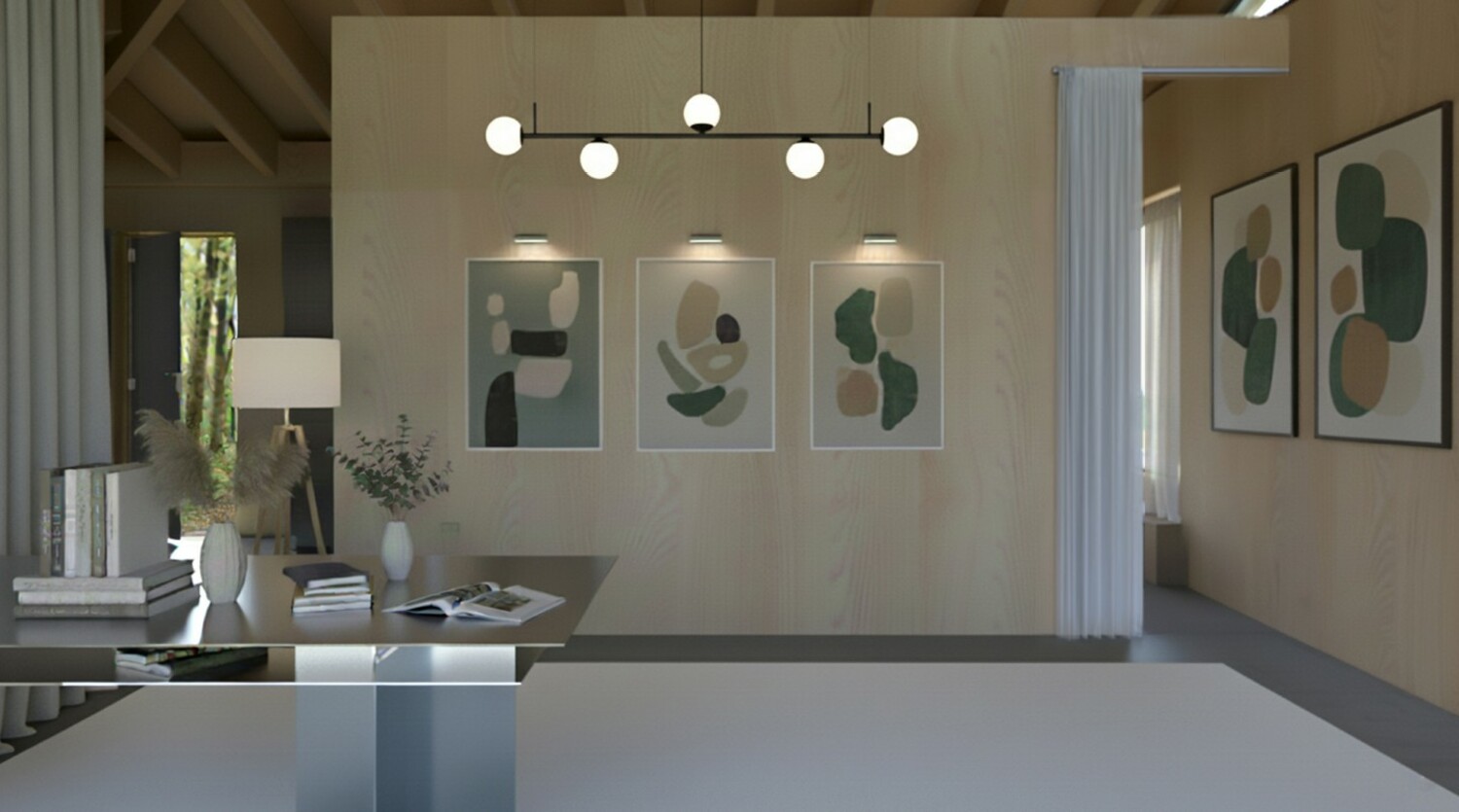
An architectural rendering of the interior of a new studio on the Ma’s House & BIPOC Art Studio campus. COURTESY BUILDLABS
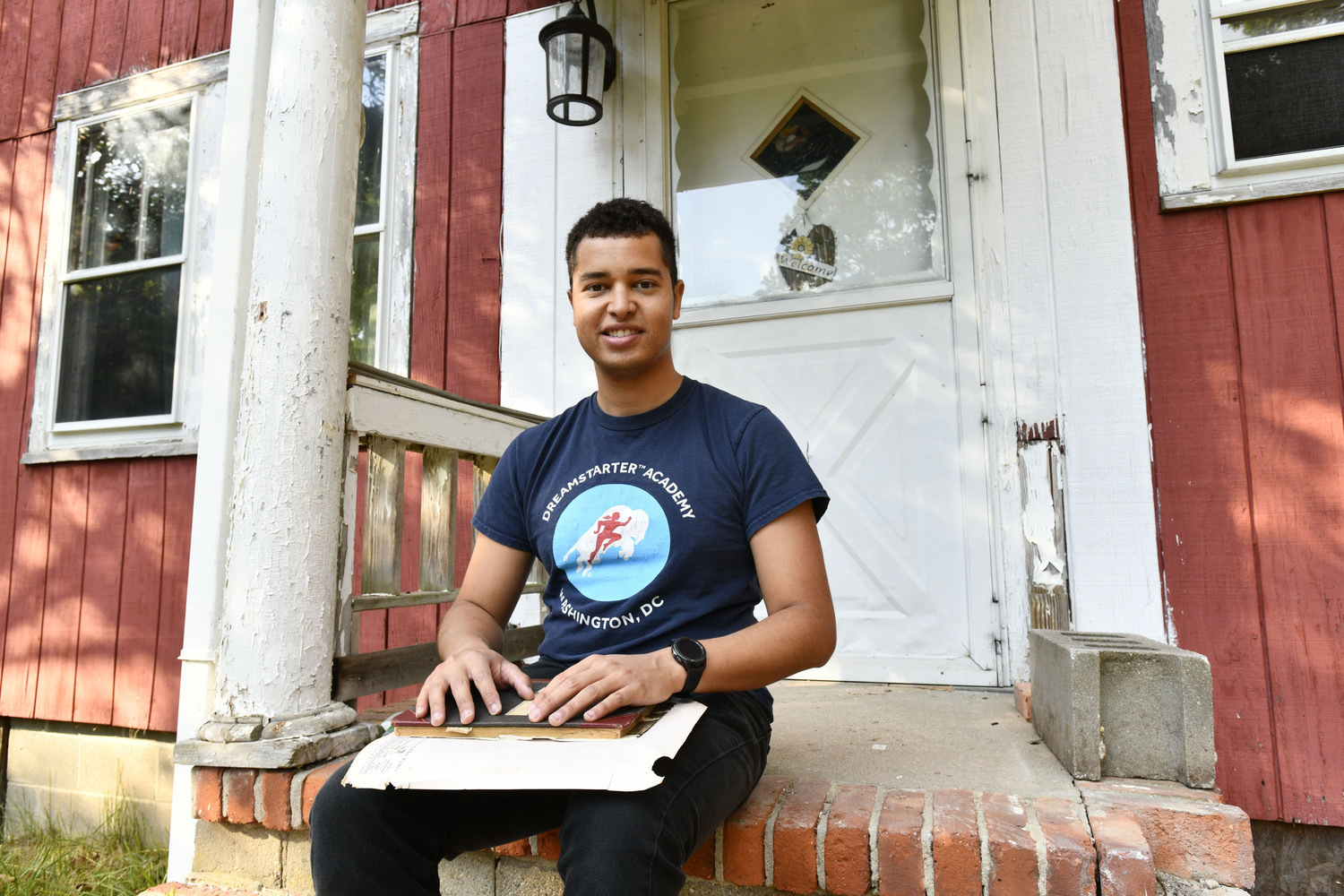
Jeremy Dennis at Ma's House on the Shinnecock Reservation. DANA SHAW
During a calm moment last week, after the cacophony of construction had quieted for the day, Jeremy Dennis turned to Peter DePasquale in disbelief.
“I’m here in this building that wasn’t here two days ago,” Dennis said to DePasquale while inside the new structure on the campus of Ma’s House & BIPOC Art Studio, which Dennis, a visual artist and Shinnecock Nation tribal member, founded five years ago.
It was a powerful moment, explained DePasquale, the architect behind the project — constructed in record time by Bridgehampton-based BuildLabs. Forty-eight hours earlier, the land they were standing on had been a field. Now, the building there represents a step toward the future for Dennis and his nonprofit artist space, he said.
“Our minds are just completely blown in terms of seeing what is typically, in our world, six or seven months of work happening in the course of two days,” the principal of the architecture firm Garnett. DePasquale said. “So that was just a really amazing and eye-opening experience.”
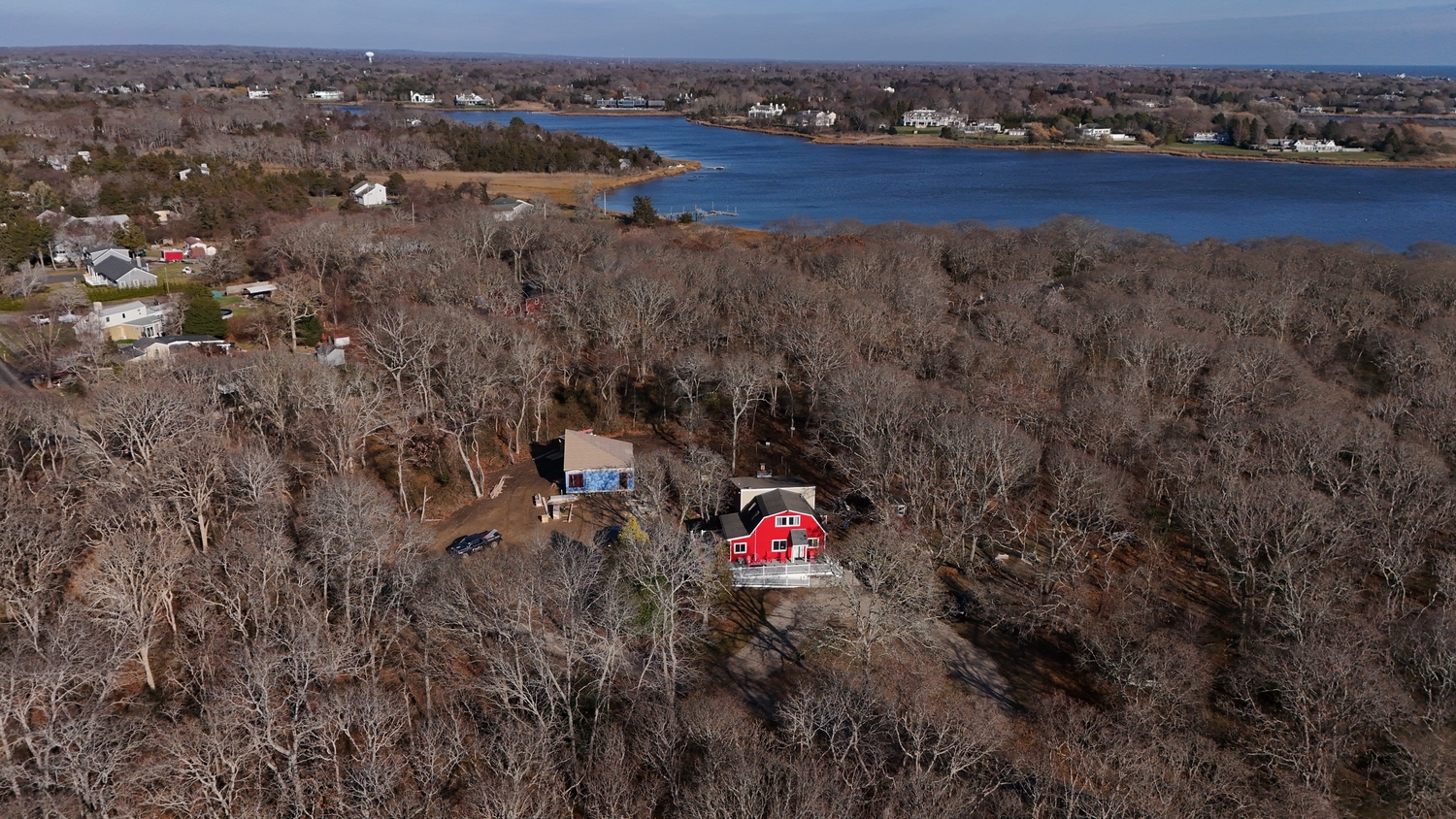
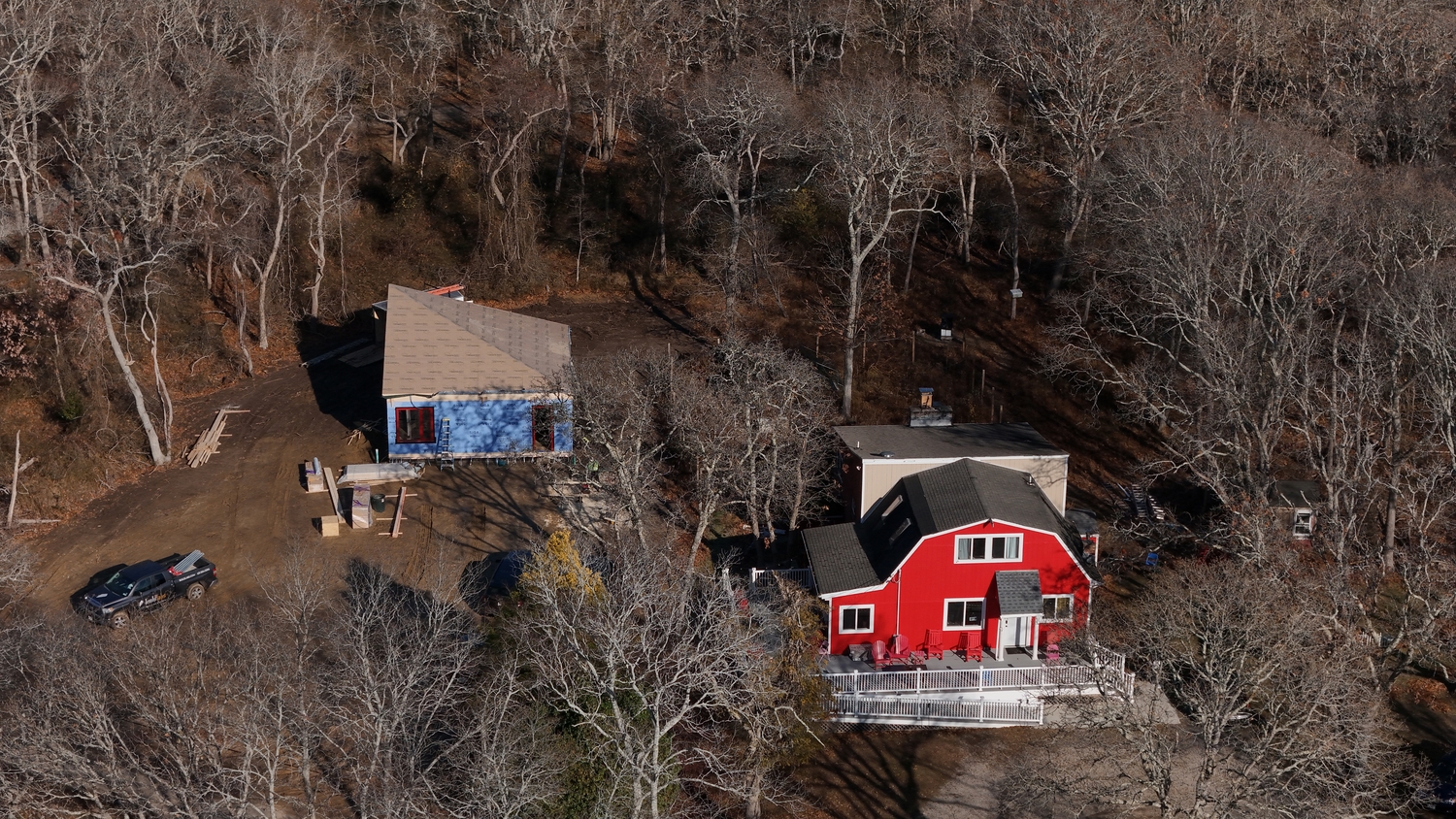
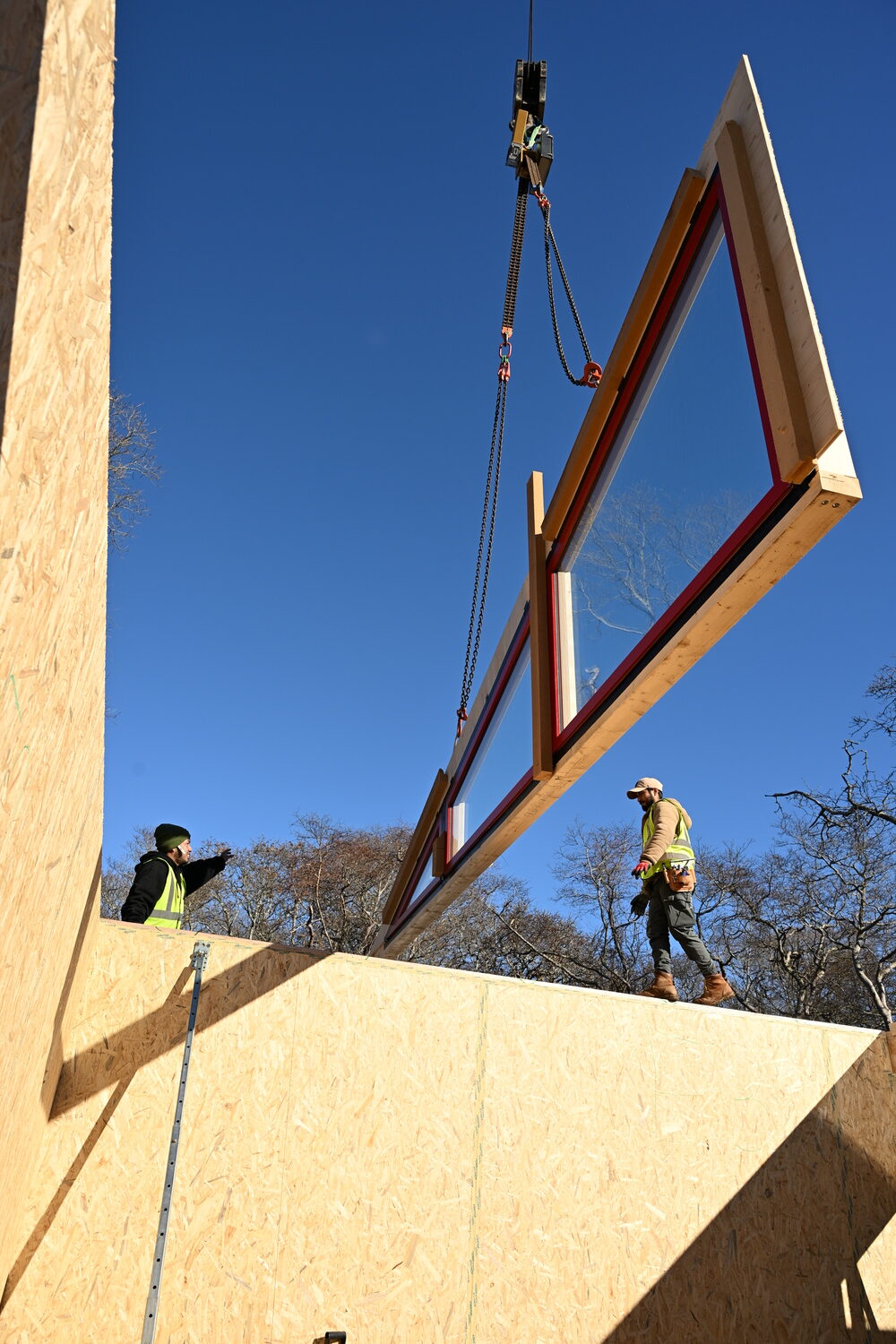
Combining advanced German engineering with American ingenuity, BuildLabs used tech-driven methodology to deliver the 1,000-square-foot studio — broken down into approximately 40 pieces — in two small shipping containers, explained co-founder Punit Chugh. It was assembled with a crane and minimal disruption to the land, he said, which aligns with the values of the Shinnecock community.
“I believe that these projects that come in different shapes and sizes with different purposes have such a deep meaning,” he said, “and we being part of the journey is something that we are very proud of.”
About two years ago, the idea for this new studio space was born. Dennis and his father, Avery Dennis Jr., had already renovated the vibrant red, circa-1960 home on the nation’s territory — affectionately named Ma’s House after his grandmother, Loretta A. Silva, who lived there — but he quickly realized he needed more room.
In the years since opening, Ma’s House & BIPOC Art Studio has evolved into one of the nation’s rare BIPOC-focused artist residencies on reservation land. It has hosted more than 70 artists from across the country, as well as workshops, exhibitions and community programming.
And so, Dennis and DePasquale started brainstorming — the architect working pro bono.
“The investment in smaller cultural institutions and cultural life is just meaningful and critical, and just truly deserves our support,” the architect said. “I hope this becomes an example project for people, for what is possible in terms of making and preserving history.”
The first design for the studio was “unique and amazing,” Dennis said, but too large for both the property and his budget. “He came forth with another one that was just as unique and special; that’s the one that we’re going with now,” he said. “And we just thought it would always be this dream project, that we’ll have to do months and years of fundraising.”
But then, Dennis stumbled across the Suffolk County JumpStart program, which provides grants for local businesses and cultural arts organizations. “We applied last minute and somehow got it,” he said, “and that was about $500,000 that was committed for both renovation and construction costs.”
With, suddenly, half a million dollars to work with, Dennis began exploring his options, which led him to BuildLabs and Chugh, who is from India and immediately found himself drawn to the project.
“As you can see and as you can hear me, I’ve been in this country for about 25 years now,” he said, “but I still believe that all these harmonies of different cultures and people coming together has a great value that enriches our society and what comes of it.”
BuildLabs donated over $200,000 in services and materials in order to construct the eco-conscious sunlit studio and gallery spaces, as well as a fully usable basement for storage. The maroon NPL siding was inspired by New England tones, while the design carries a traditional wigwam interpretation, Dennis explained.
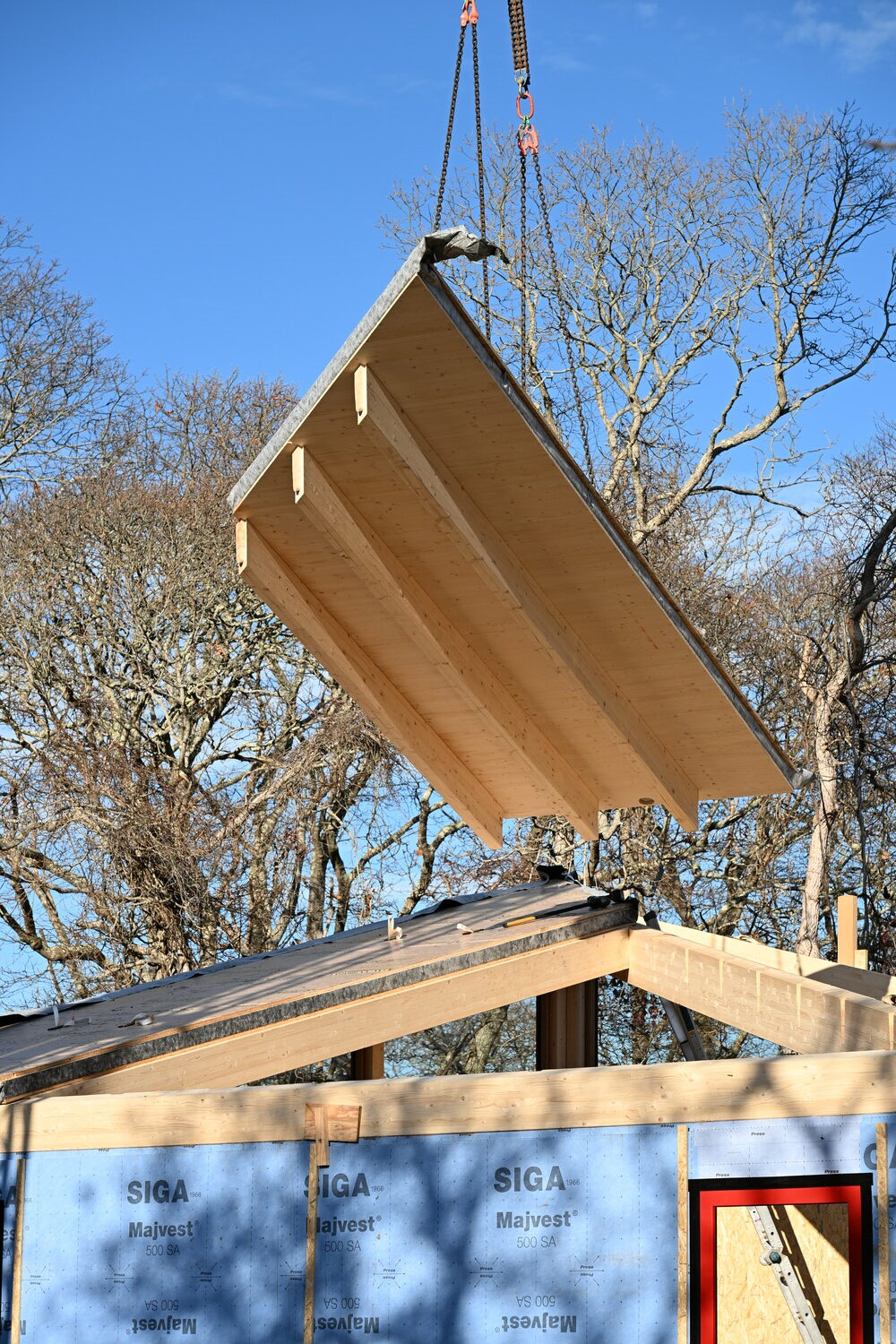
The interior features minimalist wood paneling and a durable metal roof includes exposed glulam beams and rafters.
“It was a set of client and architect who were open to exploring new ideas,” Chugh said. “They handled this project no differently from how Jeremy would handle his artwork. There was precision, there was a clear vision. There was a choice of color. They wanted to know how everything would work. But at the same time, they had the flexibility to say, ‘We are open to listen to you and your team if you have different ideas and different ways of doing this.’”
Using prefabricated components manufactured in a German-engineered facility, the assembly began on Tuesday, December 2, and by the end of the business day on Wednesday, December 3, the studio was complete.
“We have a sequence to which we assemble these elements — and that is also preplanned in our production facility,” Chugh said. “It’s almost an analogy of how a Lego is built. We have a step-by-step process and we go clockwise from the main entrance door and build it around, and then we do the roof elements.”
Dennis, who allocated $400,000 of the grant money to the project, said he expects the studio to serve as a space for new work by both Shinnecock and visiting artists.
“The real intent is to expand on our already popular and exciting programs at Ma’s House, which is both creation and showcase of art, and bringing people together,” Dennis said. “So it’s just going to add more capacity for that type of thing, which is so exciting.”
About 40 feet from the new structure stands the original Ma’s House, which will undergo another much-needed renovation with the remaining $100,000 from the grant, Dennis said. He estimates that the entire project will wrap up by March.
“This is so important because this is just part of the ecosystem of East End art history,” he said. “I think we tend to think the abstract expressionism movement was the start of the East End art scene, but we as Native people, we’ve been here for thousands of years, expressing ourselves through wampum and now newer mediums.
“So I think that this space will allow us to amplify our mission of highlighting Native art and art by people of color inspired by our story,” he continued. “And there’s so much work that we have to do — and this is going to speed up some of that catching-up time.”


 Michelle Trauring on Dec 9, 2025