


 1 Photo

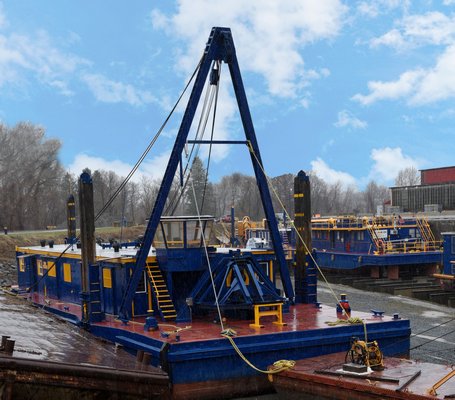
Four barges filled with hundreds of tons of steel from the former Tappan Zee Bridge and other scrap metal, and four decommissioned canal service boats, will be dumped into the Atlantic Ocean outside Shinnecock and Moriches inlets next week, the first major expansion by New York State of the artificial reefs off the South Fork in more than 15 years.
The existing reef area off Shinnecock, which sits in 80 feet of water about two miles south of the inlet, will be the site of the first “drops” in a major reef expansion along all of Long Island’s coastline and in Long Island Sound using parts of the dismantled Tappan Zee and other scrap metals and vessels.
The state will begin dropping the materials into gaps in the deeper portions of the existing artificial reef area off Hampton Bays on Wednesday, May 2.
In all, one barge of bridge parts, another of steel conduit pipes and two canal boats will be sunk off Shinnecock. Two more barges of bridge parts and two more canal boats will be dropped outside Moriches Inlet.
The local drops will be tiny compared to the thousands of tons of material that will be sunk off Fire Island and Hempstead, where another 22 barges of bridge parts and 22 more decommissioned canal boats will be sunk, along with more steel pipes and several barges filled with jetty rocks.
The announcement of the reef expansion was made by Governor Andrew Cuomo, in person, at a gathering in Nassau County last week, where the bulk of the thousands of tons of old bridge pieces and other scraps will be dropped to the sea floor to create new habitat for fish, and in hopes of boosting recreational fishing and diving opportunities and industry.
“It protects the environment, it grows the economy and it preserves and builds one of the assets … that made Long Island, Long Island. The marine economy is a major driver,” the governor said at the announcement.
“It is not a plan, it is not something we hope to get done—we’re going to do it,” he added. “We’re going to do it this summer.
“As quickly as you start to form the reef … it will then start to attract fish. The fish start to get larger. Sponges and mussels, then lobster, crabs, crustaceans, then larger marine species—dolphins, sharks, bluefish, etc. Then the habitat development capacity is really extraordinary, especially with our shoreline, [which] in many of these areas … [is] just a sandy, barren bottom. And there is no natural habitat. So this will actually create it.”
The project is being spearheaded and designed by the State Department of Environmental Conservation, which has long had but a single employee dedicated to planning artificial reef building.
A spokesperson this week said that the precise locations of the drops and scuttling of the boats are still being worked out. The boats will be towed to the locations and anchored, then flooded until they sink. The barge materials will be dropped into the water with payloaders on the barges.
The Shinnecock artificial reef was started in 1969, about two miles outside Shinnecock Inlet in 80 feet of water. Over the next four decades, it has been a receiving area for several decommissioned vessels, parts from the former Ponquogue Bridge, a lighthouse tower and tons of concrete rubble.
The announcement came a year after local fishermen and lawmakers were critical of the state’s lagging reef-building effort, and spotlighted the dismantling of the Tappan Zee as a prime resource for new reefs.
That push was spearheaded by a Hampton Bays party boat captain, John Capuano. Capt. Capuano was at the Nassau County event and said he was pleasantly surprised by the amount of materials that will be deposited off Shinnecock.
“I was originally told we were going to get one barge of pipe. Then, they started doing their presentation, and it was a barge and two of these canal boats. Now I’m told its four drops,” he said. “That’s gold for out here. I will be catching fish on it this summer.”


 on Apr 25, 2018