


 6 Photos

Cartoon 3 YUNG JAKE

Cliff Foster and his son, Dean Foster, who took over operation of Foster Farm in 2001.
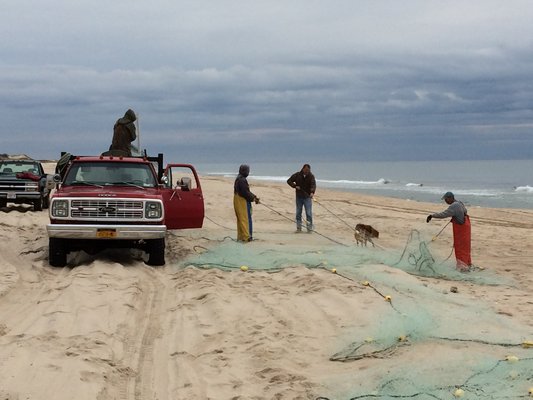
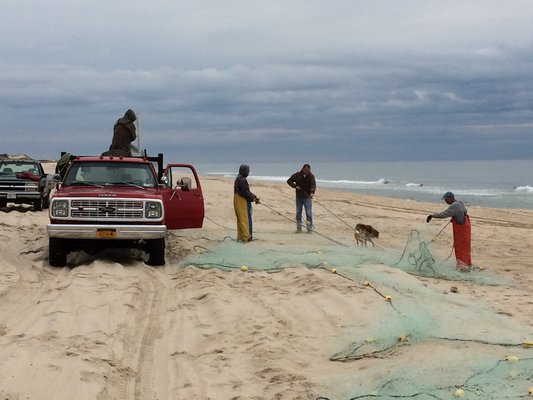
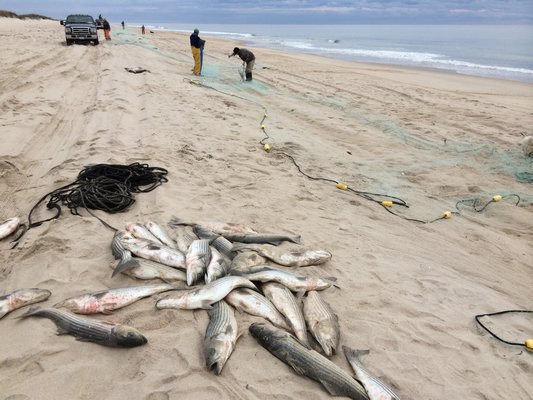
As the East End’s bays lay dormant, smothered by winter ice, the men who earn a living gathering fish and shellfish with nets and rakes when the waters warm up say their traditional way of life requires changes in state and local fishing laws if they are to survive.
Those fishermen rely on centuries-old methods of fishing inside the bays, and do not venture to sea on large draggers in the winter months. To survive, they say, they must be able to keep more fish on the relatively few days they have opportunities to work the water. They also say adjustments to date restrictions to accommodate the fleeting window of opportunity for certain species, and a lifting of a long-standing state freeze on the issuance of new licenses are necessary for the inshore fishing industry to continue on for future generations.
State legislation addressing the issues could be coming soon, thanks to local representatives in Albany.
The nearly complete freezing-over of local bays might be a rarity, but the main seafood species in the Northeast are migratory, and baymen are largely held to a six-month harvesting season each year. State commercial fishing rules, though, are arranged on a year-round basis, and quotas in the summer months are sometimes curtailed because of the success of fishermen working in the ocean—all while baymen’s nets are still on dry land. And even when they are on the water, baymen only have a small window to operate within, as fish typically migrate through a given area in large numbers for only a few weeks.
“The reality is, we may have 60 or 70 days in a season to catch our fish,” said East Hampton bayman Dan Lester, who fishes in Gardiners Bay with pound nets. “And we can’t chase them around. We’re here—our traps are in one spot. We need to be able to keep the fish when we can catch them.”
For most species, harvest limits in New York are regulated according to a per-day, or per-trip, cap. Fisheries managers vary daily limits during different quarters of the season to accommodate the logistics of inshore and offshore fisheries. But if fishing success is high in a given period, the daily limits could be dialed back substantially until the end of that period.
Most baymen who fish using pound traps, gillnets or small draggers rely primarily on catching porgy and fluke for the bulk of their income. Other species like menhaden, a bait fish, and striped bass, bluefish, blowfish, weakfish, squid and butterfish add sprinkles of revenue at different times of the year.
The tight and often changing daily catch limits for porgy and fluke have given inshore fishermen fits in recent years. In winter, the daily limit for porgy can be as much as 50,000 pounds per trip—making them a worthwhile target for large trawlers ranging out to sea in the stormy winter months. In summer, when the fish are inshore and easily caught, the limit is typically just 1,000 pounds a day, to keep the market from becoming oversaturated.
Last July, after harvest reports showed that the summer quota was nearing its ceiling, the daily limit for porgy was dropped to just 210 pounds per day at one point, and was only saved from being slashed to 70 pounds following an outcry from baymen.
“The local fixed-gear fishermen do not get a fair shake,” Hampton Bays bayman Ed Warner Jr., a Southampton Town Trustee, said. “If the big boats overfish the quota, they take it away from us. But if we don’t fill our quota one summer, the extra goes to the last quarter, by which time there’s no fish left inshore, and the offshore boats get to utilize it.”
Mr. Lester, whose family has been fishing Gardiners Bay for a dozen generations, said that even with a 1,000-pound limit, baymen are at a distinct disadvantage. “With porgies, we might get two weeks in the spring to catch them, and then they’re gone,” he said. “One day we might have 100 pounds, and another day, when the wind blows different, we might have 10,000.
“But if the rule is 1,000 pounds a day,” he continued, “we’re out of luck on the day we have 100 pounds, and we can’t make up for it on the day we have 10,000. We still have to let 9,000 go.”
The baymen say that, rather than being held to the daily quotas, subject to the influences of the big-boat fishery, the inshore fishermen should be allotted a certain percentage of the total quota for the various species that allows them to keep all the fish they catch on any given day, as long as the overall quota hasn’t been filled.
“Three percent of the quota, or something like that, would make it more fair,” said Mr. Warner, a third-generation bayman. “If the summer quota is filled and they’re going to close it, it would let the baymen keep fishing when we have the fish.”
Local fishermen say the shrinking baymen community is also being hamstrung by a two-decade-old state moratorium on the issuance of new commercial harvest licenses for fluke and striped bass. Despite the fact that many of those who held licenses when the freeze was put in place have died, retired or left the fishing industry, young local fishermen trying to earn a living on the water, few though they may be, still cannot get the permits to catch fluke and striped bass.
Mr. Lester, 41, who has fished commercially his entire life, still is unable to acquire a commercial license to harvest fluke, which would allow him and his brother, Paul, when fishing together, to keep a double limit of the valuable fish during the few weeks a year when they appear in his traps.
“They set up the permit system to give fishermen a equal share of the allocation,” explained Arnold Leo, a former bayman and East Hampton Town’s fisheries advisor. “It was 550 permits originally for striped bass. Now we’re down to only 480 permits being utilized, and there’s no way in the regulations for those unused permits to be issued to someone else.
“It’s a complete screw-up, and we’ve tried for a long time to get it remedied,” he added.
State Assemblyman Fred W. Thiele Jr. said that bringing an end to the license moratorium, the inequities faced by baymen and other perceived missteps by state fisheries laws in general will be the target of legislation that he and Senator Kenneth P. LaValle expect to introduce soon in Albany.
“The current system of issuing licenses is making it impossible for new individuals to enter into the fishery, which was never the intention and … the [DEC] Marine Division has been very unresponsive,” Mr. Thiele said. “We need a complete revamping of the whole permitting and licensing process in the State of New York.”


 on Feb 23, 2015