


 2 Photos

Seven months into a year-long moratorium on new applications for planned development districts in Southampton Town, members of the Town Board are still conflicted over the law’s future.
Since the moratorium was finalized in May, the Town Board has stopped reviewing and accepting new applications for PDDs, which generally permit more intense development on specific properties than allowed by current zoning, in exchange for community benefits. Critics of the law have complained that the interpretation of “community benefits” has widened over the years, and the use of PDDs to sidestep zoning regulations has become far too common.
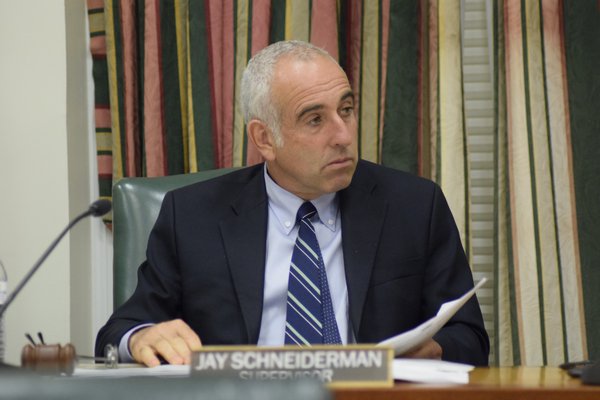
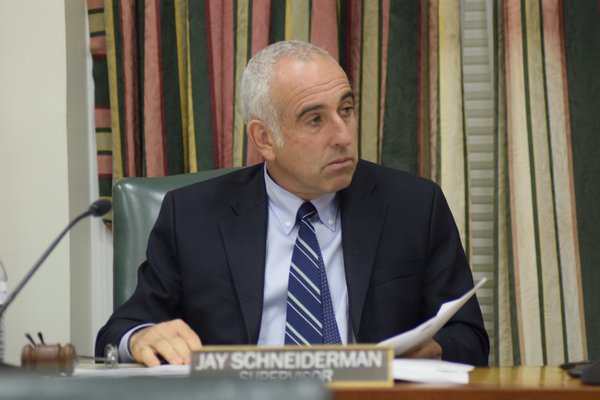
During the one-year moratorium, a committee of town officials have met monthly to discuss possible changes to the PDD legislation, according to Southampton Town Supervisor Jay Schneiderman. “We’ve just kind of been going through what’s in the town’s planning interests and what could be done without PDDs, with regular zone changes,” the supervisor said.
Members of the committee evaluating the legislation include Councilman John Bouvier, Town Attorney Jim Burke, Assistant Town Attorney Carl Benincasa, Town Planning and Development Administrator, Kyle Collins, and the principal planner for the town’s Department of Land Management, Janice Scherer.
The supervisor said he believes the PDD legislation should be limited to projects that are, in themselves, community benefits—such as a change of zone to clear the way for an assisted living facility, museum or library, projects that typically would be sponsored by the town or a not-for-profit.
“That way developers couldn’t use the PDD for private personal profit by changing the code to enrich themselves,” Mr. Schneiderman said. “Currently, it allows for it. I never liked the idea that you could gain through zoning but give back through external community benefits that were not related to the project. It looks like you’re buying the zone change.”
According to Mr. Burke, the committee is leaning toward this idea, to keep the PDDs as a planning tool primarily for public projects and to try to look in the zoning codes to provide flexibility.
“The benefits that go to the community would be more related to the actual application itself,” Mr. Burke said. “The application has to stand on its own.”
Republican Town Board members Christine Scalera and Stan Glinka, who fought against the enaction of the moratorium in May, have not been involved in any of the talks evaluating the legislation.
Ms. Scalera said she did not believe a moratorium was ever needed, because the Town Board already had the authority to turn down any PDD application, or to refuse to even consider any application—a PDD is considered only at the Town Board’s discretion. Additionally, since the moratorium did not apply to PDD applications that had already passed the public hearing stage of pre-application review—that includes The Hills at Southampton proposal in East Quogue—those PDDs would be exempt from any changes eventually made to the legislation.
“They were given ice in the winter,” she said regarding residents and the moratorium. “In an attempt to be more transparent, we actually became more confusing and overcomplicated things,” she continued on the history of the legislation.
Ms. Scalera said although she was not an advocate for necessarily keeping the PDD legislation, she sees it as a useful planning tool for the town to design a project in a way that could offer community benefits—as opposed to traditional zoning, which did not require any benefits and gave town officials little say in specific design.
“It’s one of the big underlying issues with PDDs—that there’s a perception that they are developer-driven as opposed to town-driven,” she said. “It should be very clear that the town is in the driver’s seat.”
Ms. Scalera noted that if the community felt the PDD legislation should not be in place or should be modified, she felt that zoning codes, which were established in the 1970s, would need to be changed—an idea that Mr. Schneiderman agreed with.
“It has to be updated,” he said of the town’s zoning. “I think will solve a lot of the problems. The plan we’re using is more than 20 years old. Sometimes we have to take a fresh look.”


 on Jan 4, 2017