


 1 Photo
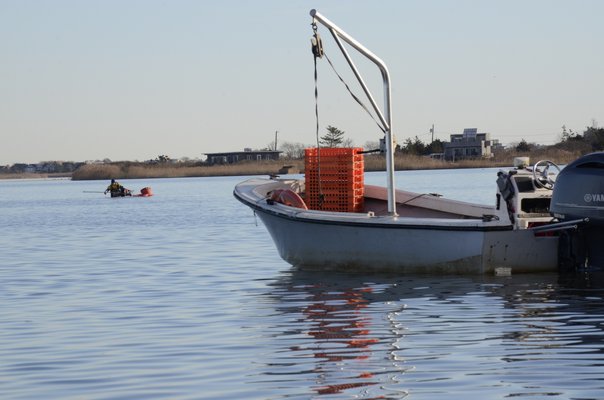
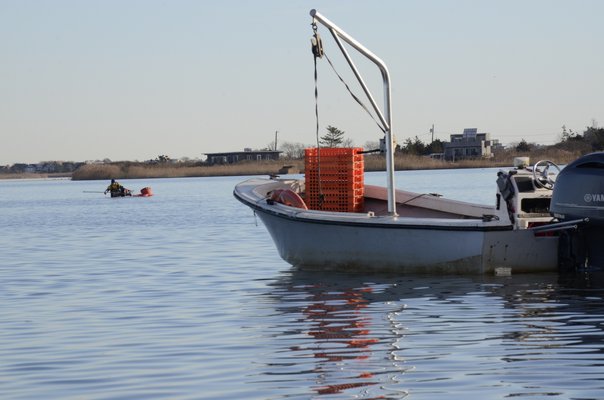
Will Caldwell, a commercial fisherman, spends his winters pulling oysters from Mecox Bay. But this year has been particularly challenging, he said: The low salinity level in the bay earlier this year caused many of the shellfish to become unhealthy and unmarketable.
“The salinity was low for an extended amount of time, to the point where they almost don’t make it through,” Mr. Caldwell said, explaining he thought the oysters were going to die. “I couldn’t sell them at the beginning of the season.”
Typically, when the salinity level in the bay gets too low, the Southampton Town Trustees open the Mecox cut, a thin strip of sand that separates the bay from the ocean. Heavy equipment is used to dig a trench that connects the bay with the ocean, allowing ocean water to flow in and out, flushing the bay and increasing its salinity, which can benefit both finfish and shellfish.
When the cut is closed, it can mean flooded basements after heavy rainfalls for property owners along the bay. Others prefer the cut to be closed to avoid erosion of the ocean beach in front of their properties. And boaters often want the cut closed in the summer to maintain high water levels. The Trustees must balance those concerns while also addressing the salinity of the bay.
In June 2016, the Trustees hosted a public forum to get input on how to manage the opening and closing of the cut, while keeping everyone’s concerns under consideration. Some of the residents in attendance called for the Trustees to close the cut within two weeks of opening it out of concern that the longer the cut runs, the more erosion occurs on the beach.
Mr. Caldwell said his primary concern is that the Southampton Town Trustees, who have historically managed the opening and closing of the cut since 1686, continue to do so without any such limitation.
“You can’t place a specific time limit on it,” Southampton Town Trustee Scott Horowitz said on Monday. “You have to watch the levels very, very carefully. If you don’t have the right salinity levels and go to close it, you haven’t reached your goals.”
The Trustees are currently working on a blueprint of conditions that will help dictate when to open and close the cut. Mr. Horowitz said salinity will be one of the trigger points, to ensure shellfish growth.
Funding is another critical piece of the puzzle. Town Trustee President Ed Warner Jr. said on Monday that the opening and closing of the cut can be costly: “It could cost $8,000 to $10,000 to open, and there’s no guarantee that it will stay open.”
Late last year, the Trustees attempted to open the cut on three separate occasions. Mr. Warner said the water never ran for more than six hours, and, each time, the cut closed prematurely on its own, ultimately denying a full flushing of the bay.
The salinity in the bay got as low as 6 parts per thousand, compared to an ideal 15 to 20 ppt. Mr. Warner acknowledged that the effect on Mecox shellfish made them virtually unmarketable.
Nearly half of Mr. Caldwell’s yearly income is generated from the oysters he pulls out of Mecox Bay. This year, he took nearly a 25-percent hit because the cut was not left opened.
“We kinda need that place not to be controlled by a two-week window,” Mr. Caldwell said. “It’s a bad idea.”


 Greg Wehner on Mar 15, 2017