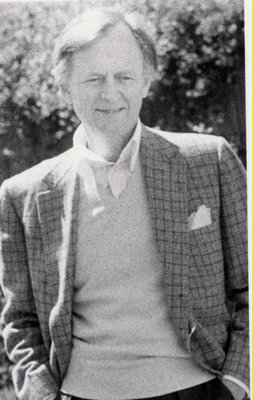
Novelist, Journalist Tom Wolfe Dies At 88

icon 3 Photos

authorCailin Riley on May 16, 2018

Tom Wolfe, one of America’s great writers, died on Monday in New York City. He was 88.

Mr. Wolfe lived in Manhattan since the 1960s, but he spent his summers at his home on South Main Street in Southampton Village.

He was a journalist, and a keen observer of people from all walks of life, and he parlayed those skills into works of both fiction and nonfiction that were celebrated for his distinct writing style. He chronicled the lives of astronauts in the 1979 book “The Right Stuff,” 1960s-era hipster culture in “The Electric Kool-Aid Acid Test,” the excesses and extravagance of 1980s-era Wall Street traders in “The Bonfire of the Vanities,” published in 1987, and modern college hook-up culture in his 2004 book “I Am Charlotte Simmons,” among other works.

Mr. Wolfe’s undeniable talent, unique style of writing and recognizable fashion style—he wore three-piece suits, usually white, with accessories to match—never allowed him to blend into a crowd, and by all accounts, he never tried.

Mr. Wolfe was born on March 2, 1930, in Virginia, attended an all-boys private high school there, and graduated from Washington and Lee University in 1951 with an English degree. He earned his Ph.D. in American Studies from Yale six years later, before beginning a career in journalism.

He worked for several newspapers, including the Washington Post, before finding his niche as a city reporter at the New York Herald Tribune in the 1960s, and he wrote for many magazines throughout his career as well, including New York and Esquire. He became known as one of the pioneers of “new journalism,” which used fiction-style writing to bring to life fact-based reporting in a new way.

Mr. Wolfe’s love of observing cultural trends—and his unabashed opinions about them—earned him plenty of enemies in the art and literary world, but even those who criticized his views seemed to acknowledge his talent as a writer.

He is survived by his wife, Sheila Wolfe, and two children, Tommy Wolfe and Alexandra Wolfe.

Cailin Riley

You May Also Like:

Benjamin ‘Shonowe Kellis Haile of the Shinnecock Nation Dies November 12

Benjamin Kellis Haile, “Shonowe”, 60, of the Shinnecock Indian Nation began his journey to the ... 10 Dec 2025 by Staff Writer

Hayground School Students Get Peek Inside Artist's Studio

At the Hayground School, students are taught to enjoy and appreciate art, to explore their ... 9 Dec 2025 by Cailin Riley

Gardner Wrestling Tourney a Gripping Event

The smoothest-running Frank (Sprig) Gardner wrestling tournament in the five years that Ethan Mitchell has ... by Jack Graves

School News, December 11, Southampton Town

Westhampton Beach Senior Shines in Manhattan School of Music Precollege Program Westhampton Beach High School ... by Staff Writer

Community News, December 11

HOLIDAY HAPPENINGS Holiday Wrapping Workshop The Hampton Bays Public Library, 52 Ponquogue Avenue in Hampton ... by Staff Writer

Brown Wants Offense To Evolve After 0-3 Start for Baymen

When discussing his team for the upcoming season, Hampton Bays boys basketball head coach Noah ... by Drew Budd

Southampton Will Offer Green Bags Through Vending Machines at Dumps

Southampton Town residents soon will be able to purchase the green town-issued garbage bags, which ... by Michael Wright

Bridgehampton Union Leaders Go Public With Concerns Over Superintendent

​Bridgehampton School Teachers Association co-leaders Joseph Pluta and Caitlin Hansen in late November described a ... by Cailin Riley

‘The Secrets We Bury’

In Patricia Gillespie’s fascinating new documentary, “The Secrets We Bury,” Jean, now in her early ... by Lisa Wolf, MSW, LCSW

Flag Legends

I was surprised to find out that the Betsy Ross flag is not an official flag of the United States. The case for the Betsy Ross flag’s legitimacy is one of inter-meshing legends — and it begins in Bridgehampton. Bridgehampton had a militia in 1775. John Hulbert, its leader, recruited 68 men. Congress ordered him to escort the British prisoners taken in the Battle of Fort Ticonderoga to Philadelphia, the Continental capital. Hulbert found himself in Philadelphia in late October or early November 1775. Hulbert’s flag had 13 six-pointed stars in a blue field, six stripes deep, in a diamond ... 8 Dec 2025 by Staff Writer