



 2 Photos

Roughly two weeks away from adopting a budget, the Hampton Bays Board of Education is looking at a spending plan that comes in just shy of $49 million for the 2015-16 school year.
The $48.9 proposal, if adopted as is, would increase overall spending by $763,175, or about 1.6 percent, next year, but would still come in under the state’s tax cap on tax levy increases. The current year’s budget totals approximately $48.2 million.
Governor Andrew Cuomo and the State Legislature reached a tentative agreement on a $142 billion spending plan for the upcoming fiscal year on Sunday, and that budget is expected to be voted through and signed into law later this week. The state budget provides $1.4 billion for school aid, but it is unclear how that will be allocated, because, unlike years past, the state has not provided districts with budget runs detailing approximate funding.
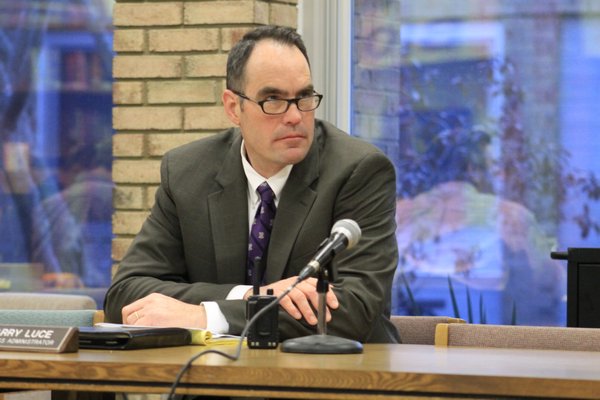
Hampton Bays Business Administrator Larry Luce said during a budget workshop last month that his district has assembled its spending plan with a predicted $104,000 increase in state aid, which he described as moderate. For the current school year, Hampton Bays has received $4.9 million in funding from Albany.
The tentative budget would allow the district to keep its current services while paying for new expenses, such as providing additional support for the district’s residency investigations—wherein employees check to see that students live at their given addresses—or transitioning the district’s 67 athletic teams’ jerseys from purple and black back to purple and white.
The budget also would cover new technology expenses including the addition of new software, hardware and a part-time network technician who would be paid $25,000 a year.
Hampton Bays Superintendent Lars Clemensen described the plan as being the “Honda Accord of budgets,” pointing to its lack of frills. “We’d all love a Cadillac, and a Cadillac is great, but the 2015 Honda is a good car,” Mr. Clemensen said during a budget workshop on March 19. “It’s a good car, it’s reliable and it’s going to accomplish everything you want it to.”
Hampton Bays could be poised to receive greater funding than anticipated as the state budget includes $300 million more than the governor had said he was originally wiling to agree to set aside. Mr. Clemensen said Monday that he still hadn’t gotten word from Albany about how much additional funding that would equate to for his district, though he expected to know that figure by early next week.
While it would be tempting to use the additional funding to offer residents a tax break, Mr. Luce said during the same March 19 meeting that the Board of Education would be wise to budget to the cap, regardless of the amount of state aid secured, and use the surplus to pay down debts faster.
Mr. Luce explained that there is an inherent disadvantage to not budgeting to the cap, because what a district sets aside one year impacts what it can budget for the following year; meaning, if a district budgets $200,000 less than the cap in 2015, its cap the following year would be $200,000 lower than it could have been in 2016. In essence, if they don’t use it, they lose it.
Hampton Bays School Board President Chris Garvey said he supported the idea of using a possible surplus to help pay down debt more quickly.
“The important thing is that if you need the money down the road, you haven’t painted yourself into a corner,” Mr. Garvey said. “The taxpayers are still getting their money back because we’re putting it toward debt services, it’s that simple.”
The Board of Education expects to adopt its 2015-16 by Tuesday, April 14; the deadline for all districts to adopt their respective spending plans is Friday, April 24. The budget will be put up for a public vote on Super Tuesday, May 19.
During its meeting last week, the Hampton Bay Board of Education voted to refinance the remaining $35 million of the bond it issued in 2006 to pay for building and grounds improvements.
The district issued a 30-year, roughly $44 million bond in 2006 at an interest rate of 4.25 percent. The bond is on track to be paid off five years early, but Mr. Luce said if the school district refinances at today’s lower interest rate, it could save about $200,000 a year in savings on interest payments, which would account for between $3 million and $4 million in overall savings.
Mr. Luce said the district’s financial advisers at Great Neck-based Capital Markets would sell off the debt to large corporations and repay them at the lower interest rate.


 Kyle Campbell on Mar 31, 2015