


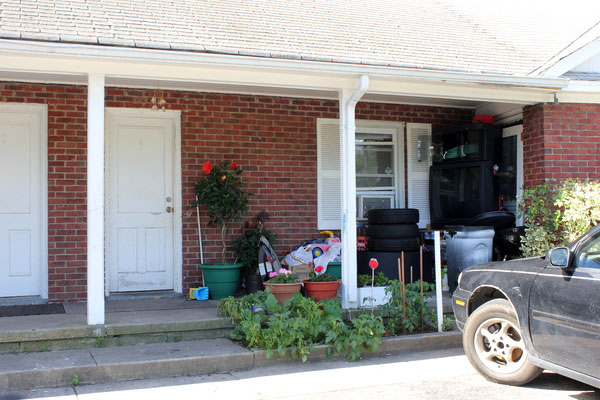
 7 Photos
Southampton Town Code Enforcement has issued a number of violations to the owner of this former motel complex off North Highway in Hampton Bays. CAROL MORAN
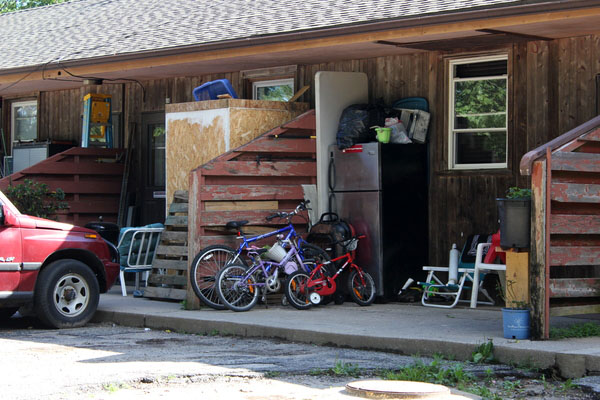
Several violations

including overcrowding
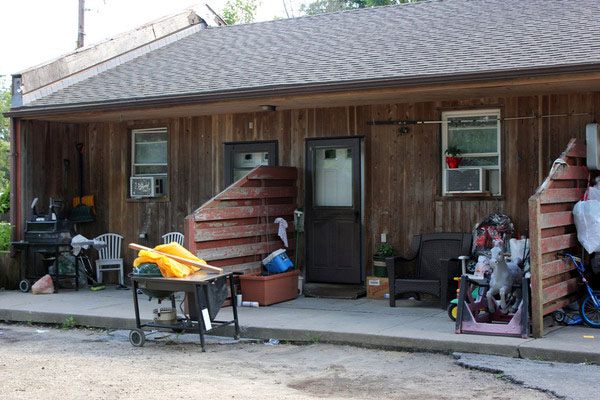
have been issued to the owner of this former motel complex off North Road in Hampton Bays. CAROL MORAN
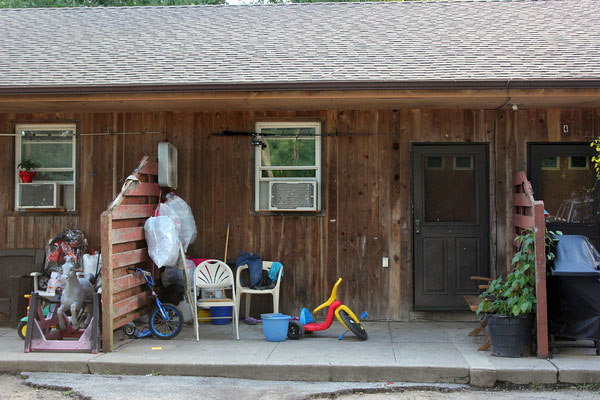
Several violations
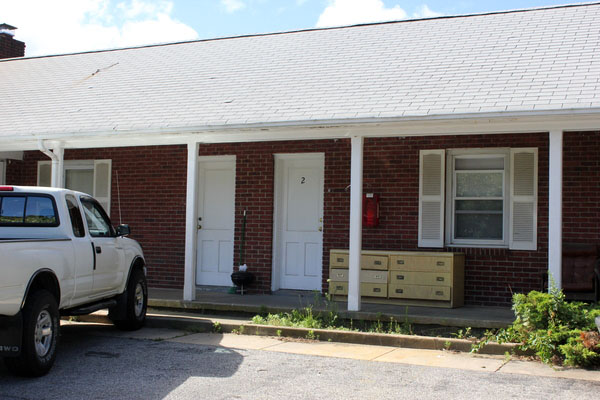
including overcrowding
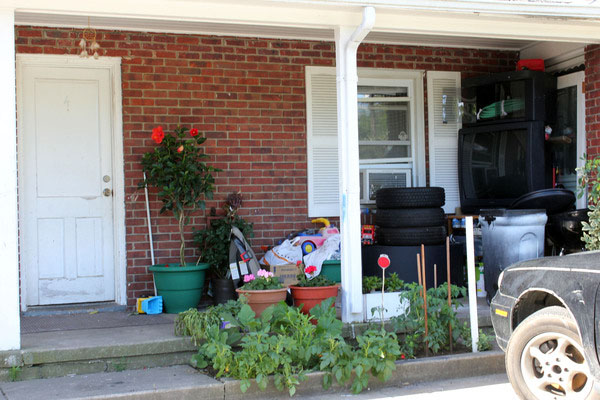
have been issued to the owner of this former motel complex off North Road in Hampton Bays. CAROL MORAN
Southampton Town code enforcement officers have issued more than a hundred violations to the owners of three former motels in Hampton Bays, all of which they said have been illegally converted to year-round residential housing.
The charges are the result of separate surprise inspections this winter and spring that angered local immigration advocates, who charged that the raids unfairly targeted minorities who were tenants.
Following a pre-dawn raid on May 2, code enforcement officers slapped Stella Kokolis of Hampton Bays, the owner of a converted motel located at 329 East Montauk Highway in Hampton Bays, with 138 violations. The violations, according to town records, included everything from missing smoke detectors to fuel oil soaking into the ground outside the units, overcrowding, and the illegal conversion of living rooms to sleeping quarters.
It was not clear how many people were found living in the motel’s 14 rooms—town officials have not released an exact number—though the violations state that, on more than a dozen occasions, two or three people were found living in bedrooms measuring 80 square feet in size, space that is suitable for only one person. State code dictates that a room must be at least 120 square feet to accommodate two people, and that number can increase by one for every additional 50 square feet of space available.
Little more than two weeks later, at 6 a.m. on May 18, code enforcement officers converged at another former motel, this one located at 76 North Highway in Hampton Bays, for another pre-dawn inspection. Stergios Tallides of Hampton Bays, the listed owner, was issued 11 violations for overcrowding and missing smoke detectors. He also received summonses for having hazards, such as overflowing cesspools, according to town records.
Again, it was unclear how many people were found living inside the motel’s estimated eight rooms at the time of the inspection, though one of the violations state that three people were found living in a 11-foot-by-12-foot room.
Mr. Tallides, the owner of 76 North Highway Corp. of Astoria, also was ticketed for permitting the illegal conversion of a motel into a permanent dwelling and, according to town officials, allowing tenants to live in an illegal basement apartment at the motel for four months. He was also ticketed for installing a kitchen, bathroom and bedroom without an updated certificate of occupancy and building permit, and installing electrical systems and plumbing without the proper permits, according to town officials. The building also lacked working smoke and carbon monoxide detectors.
Following a similar inspection two months earlier, on March 1, code enforcement officers slapped Lyle Pike of Southampton, the listed owner of the converted motel at 114 North Road in Hampton Bays, with a dozen violations, ranging from overcrowding to illegally transforming his motel into a permanent dwelling. In a previous interview, David Betts, the chief investigator for Southampton Town, said inspectors found nearly 80 people—more than twice what is legally allowed—occupying the motel’s 20 rooms.
That inspection was not the first one to turn up violations at Mr. Pike’s motel property, according to town records. In 2010, inspectors issued 29 violations for similar issues, such as illegally converting a motel into permanent residences and missing smoke detectors. He was also ticketed for allowing the construction of two kitchens, and the installation of interior partitions and plumbing and electrical systems without securing the proper building permits, records show.
Mr. Pike, a contractor, has a history of code violations dating back to 2004, at which time code inspectors found problems at five other properties he owns in Riverside, Tuckahoe and Shinnecock Hills.
Neither Mr. Pike nor his attorney, Colin Astarita, returned calls over the past few weeks seeking comment on the violations. Mr. Tallides also could not be reached for comment.
Prior to being served, Ms. Kokolis said she visits her apartments every week and does not allow renters to overcrowd the units. “I am confident that I have no problems,” Ms. Kokolis said before The Press learned about the violations she was issued in the spring. She has not returned calls seeking additional comment over the past two weeks.
While he did not know how long they have been in violation of the code, Mr. Betts said the three converted motels in Hampton Bays have had issues since he began working for the town five years ago. He said his inspectors regularly return to properties to check on the progress that owners have promised to make to address violations; Mr. Betts said he did not know when his office would return to the three motels.
Mr. Pike, Mr. Tallides and Ms. Kokolis all have the opportunity to bring their properties back into compliance before the final adjudication is scheduled and the fines determined, according to Town Attorney Tiffany Scarlato. She noted that the owners will be brought back to court on a regular basis to update the town on their progress in correcting the violations, with the possibility of lessening the fines if they are able to fix them in a timely manner.
Ms. Scarlato said the town is interested in working with the owners to address the issues and takes great pains to not harm the families who are living in the former motels. “We don’t want to harm anyone in the process,” she said.
Ms. Scarlato also explained that the owners will have a hard time securing the proper permits to legally change their units from temporary motel rooms to year-round residences—if they ever attempt to do that—as the buildings have been used for a number of years. Instead, she said it would be easier for them to bring the units back into compliance with the town’s transiency regulations by allowing residents to rent the rooms for only a maximum of 30 days at a time. Ms. Scarlato added that the property owners must prove that the people they are renting rooms to are not dwelling there permanently, and that the town never forcibly removes tenants.
When reached this week, Assistant Town Attorney Kara Bak said she would not comment on the three cases, or say how long the town has been aware of the violations. She said the town’s ultimate goal is compliance and, when that does not happen, the town takes the property owners to court.
Town code enforcement officers and fire marshals have been criticized by local church and immigrant advocacy groups, as well as certain community members, for their handling of the predawn inspections. Representatives of the advocacy groups have charged that the town is unfairly targeting poor Latino families, and that the predawn raids are harassing and scaring those who are forced to rent the converted motel rooms—charges that, again, have been denied by Mr. Betts. “We do our best to minimize the impact on everybody,” he said.
Mr. Betts added that it is his office’s obligation to respond to complaints about possible code violations and, more important, protect residents from dangerous living conditions. He said it is necessary to conduct the inspections when all occupants of a home are present.
“We walk a tightrope between needing to enforce our code while certainly not wanting to do any undue harm, and we try to balance that as best we can,” said Southampton Town Supervisor Anna Throne-Holst, adding that the inspections are held to punish the landlords, not the tenants. “We need to enforce our code. There’s a very small window in a 24-hour period where the officers can do that in a way that will be effective.”
Still, Sylvia Baruch, the founder of Neighbors in Support of Immigrants, an advocacy organization in Hampton Bays, said residents of the converted motels are being victimized twice—first by the landlords, and then by the code enforcement officers.
“We don’t want anyone to live in unsafe and unhealthy housing, but we do feel that there are more sensitive and humane ways to proceed with code enforcement,” she said. “The immigrant population, some of whom are undocumented, need a special kind of care.”


