


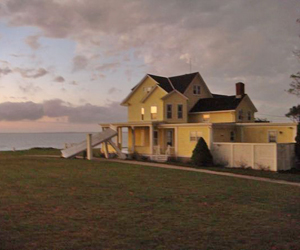
 14 Photos
A neighboring Queen Anne Victorian house
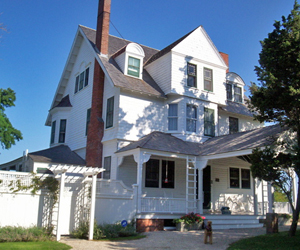
which Ms. McChord said is slated for demolition.
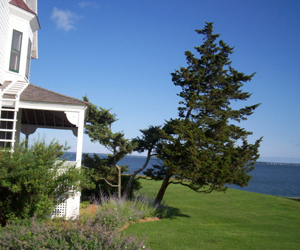
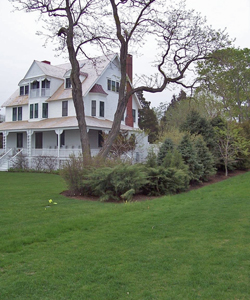
The William Cauldwell house
The William Cauldwell house
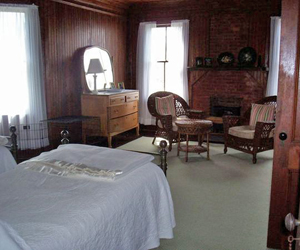
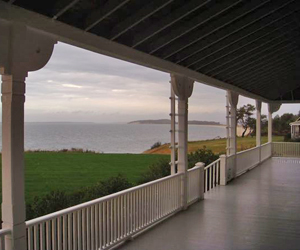
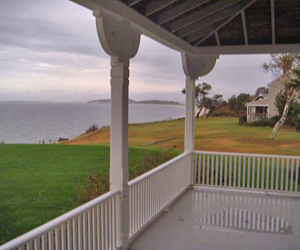
overlooking the water.
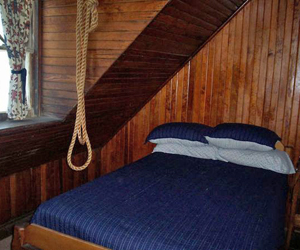
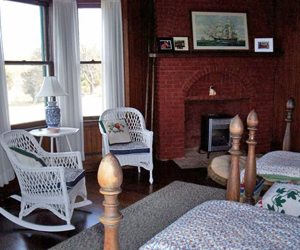
A bedroom in the William Cauldwell house
A bedroom in the William Cauldwell house
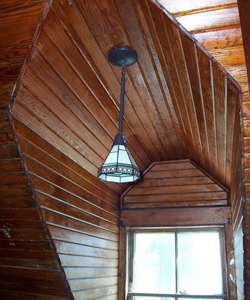
A bedroom in the William Cauldwell house
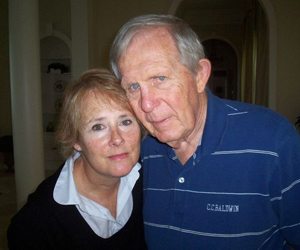
Shelby McChord with her father
Cyril Crockett Baldwin Jr.
who owns the William Cauldwell house.
Inside the William Cauldwell house.
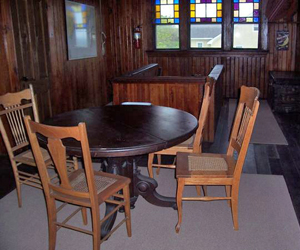
Inside the William Cauldwell house.
The William Cauldwell house
A century-old summer home in Noyac is up for consideration for both the New York State and national registers of historic places.
The house once belonged to William Cauldwell, a New York State senator and New York City newspaper publisher. Now it belongs to the Baldwin family, who reportedly won it in a game of cards 80 years ago and are now looking to preserve it for future generations.
The distinctions would afford the house some protections from demolition or alteration and make it eligible for grants and historic rehabilitation assistance.
“It’s such an amazing house ... nothing’s changed,” said Shelby McChord of Newtown, Connecticut, whose father, Cyril Crockett Baldwin Jr., owns the house. “Even some of the furniture is the original furniture.”
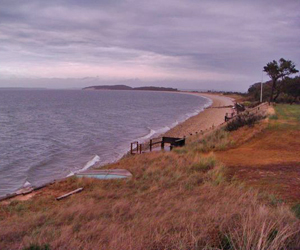
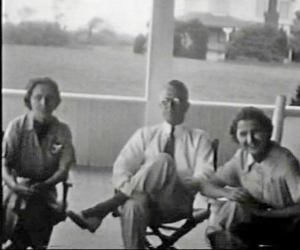
Cyril Baldwin Jr. bought the house, just 50 feet from Little Peconic Bay, from her grandfather, Cyril Sr., who, as the story goes, won it in a poker game in 1929. Before that, Ms. McChord’s great-grandfather, Kaleb Cook Baldwin, a minister, had been staying there during the summers since 1910 or so, Ms. McChord said.
The Queen Anne Victorian-style house was built for Mr. Cauldwell in 1892, according to the date marked on the chimney.
The Cauldwell House was one of 32 places the The New York State Board for Historic Preservation nominated this month, and it is the only nominee in Suffolk County. The nomination has been passed to Commissioner Carol Ash of the New York State Office of Parks, Recreation and Historic Preservation. Spokesman Dan Keefe said that once the board nominates a site, the commissioner’s approval is typically just a formality.
Once a state adopts a site to its register, it is passed on to the National Register of Historic Places for the same consideration.
Mr. Cauldwell, who died in 1907, was the owner and editor of the now-defunct city newspaper New York Sunday Mercury. He was the state senator representing the Morrisania district in the Bronx from 1868 to 1879 and was a supervisor of the Bronx for six terms.
“As owner of the Mercury, he introduced Mark Twain, Ella Wheeler Wilcox, Josh Billings, Petroleum V. Nasby, Hans Breitman and other famous writers to New York,” according to Mr. Cauldwell’s obituary in The New York Times.
Ms. McChord insists that the house is haunted—not by the ghost of Mr. Cauldwell, who died in his Manhattan home on Madison Avenue, but by the ghost of a former suitor who committed suicide.
“On the third floor, there’s a huge open area and rafters,” Ms. McChord said, explaining where the century-old suicide reportedly occurred. “The man hanged himself because he couldn’t marry Cauldwell’s daughter.”
The Cauldwells did not return to the house after the suicide, Ms. McChord said. “When my grandfather bought it, it was like a ghost house,” covered in overgrown vines and boarded up, she said.
“We’ve had a bunch of incidents happen,” she went on to say of the house’s history. For example, when contractors were working on the roof and kitchen, all four of their cars’ batteries died at the same time with no explanation.
On another occasion, when workers were putting in a new furnace and the power to the house was cut off, everything in the house turned on without any electricity, Ms. McChord said, and one carpenter left all his tools behind at the house and refused to go back in after he was spooked.
The incidents never happen when any member of the Baldwin family is present, but others have reported seeing ghosts or specters, according to Ms. McChord. “There are so many stories about this funny old place.”
Ms. McChord said she submitted the house for historic register consideration because she doesn’t want to see it meet a wrecking ball.
“I want to just save it because, heaven forbid, when my dad passes, if we can’t afford the estate tax on it, it would go up for sale. And if it goes up for sale, they’re definitely going to tear it down,” she said. “It doesn’t have any of the things that people buying a million-dollar home want.”
There is a high cost of upkeep and a lack of modern-day amenities, including heat, which means it can be used only three to four months a year, Ms. McChord said. Getting listed on historic registers makes sites eligible for public preservation programs, state grants and federal historic rehabilitation tax credits. It does not mean a listed site can never be demolished, but it makes it harder to do so.
The Cauldwell house has had its roof replaced, but with cedar shingles, to mimic the original roof, rather than asphalt shingles, Ms. McChord said. She added that the cedar siding, which has been painted white, will be removed soon and replaced with bare cedar to eliminate the cost of painting the house again and again and restore the house to its original look.
“Everything we’ve done has been true to how it was built,” she said.
Ms. McChord said her family doesn’t know who the architect or builder was. Southold architect Anne Surchin said she suspects George Skidmore or Isaac Green, architects who built in Southampton during the time the Cauldwell House went up, may have designed it. The house is a good, intact example of a Queen Anne Victorian, Ms. Surchin said, explaining that Queen Annes are characterized by cross-gables, an asymmetrical design, wrap-around porch, double-hung windows and “lots of beautiful woodwork and molding detail” on both the inside and out.


