


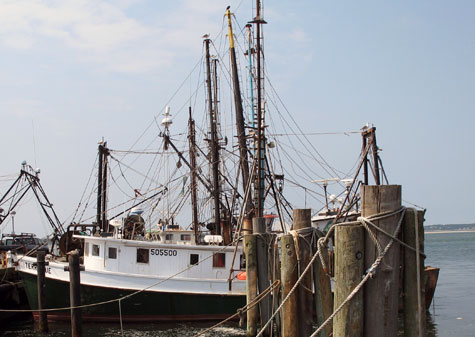
 1 Photo
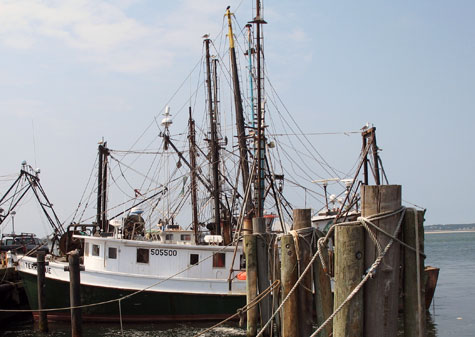
The shellfishing industry in the Great South Bay is withering away and might disappear altogether unless the federal government steps in to help restore the health of the waters, government officials said last week.
At a press conference in Patchogue, Senator Charles Schumer and Brookhaven Town Supervisor Brian X. Foley called for federal relief funds for restoration of the Great South Bay. Restoration would include repopulating the bay with shellfish and would include further research of brown tide, an algae that releases a chemical that harms juvenile clams and has spread throughout the Great South Bay this year. The Moriches Bay and western parts of the Shinnecock Bay have also had their shellfish populations devastated by brown tide blooms.
In June 2005, the coastlines of Massachusetts and Maine received federal aid when the fishing industry was temporarily shut down by a red tide bloom, an algae that is lethal to humans if ingested.
“It’s not dead, it’s dying,” Mr. Foley said of the South Shore clamming industry in an interview this week. “[Brown tide] has pretty much destroyed a multimillion-dollar industry, and that’s where the federal government can be of assistance.”
“Brown tide is literally suffocating the Great South Bay, and if we don’t act fast, the damage could be irreversible,” Mr. Schumer said in a statement. “This disaster declaration is a critical first step to finally devote the necessary federal resource to attacking this problem.”
As it reproduces and spreads, brown tide consumes oxygen from the water, reducing light penetration to the eelgrass on the sea floor, harming important nursery grounds used by fish and other sea life.
Brown tide is an algae native to South Shore waters, but several environmental factors—possibly caused by humans—have allowed the algae to bloom beyond natural proportions and upset the ecosystem. The first bloom of brown tide was documented in 1985 and came on the heels of major clamming activity in the Great South Bay, Moriches Bay and Shinnecock Bay. Clams help filter particles from the water, including algae, and their overharvesting left a hole in the ecosystem that allowed algae to thrive, said Peconic Baykeeper Kevin McAllister, who monitors brown tide in South Shore waters.
At the clamming industry’s peak, 700,000 bushels of clams were being hauled in each year. That number has since dropped to just 5,000 bushels per year.
“Overharvesting created a void for brown tide to set up the way it has become,” Mr. McAllister said. “So to control these events we need to restore the shellfish population to former levels.”
Though no research definitively points to a cause of brown tide blooms, overdevelopment of shorefront may also have an impact on algae blooms. The contents of septic systems and fertilizers all find their way into bay waters, adding nutrients that may help support blooms.
“Are excessive levels of nutrients coming into our waters a result of overdevelopment?” Mr. McAllister said. “There are still a lot of questions that need to be answered, and that is why the research is going to need to be funded.”
This year’s bloom has been “very intense and long-lasting,” said Dr. Christopher J. Gobler, a brown tide researcher with Stony Brook University.
“Things are not good in general, not just with shellfish but apparently fishing has not been good this year as well,” Dr. Gobler said, noting that blooms reduce water visibility making it more difficult for fish to hunt. “If it is poor, it wouldn’t be surprising that it was because of the brown tide.”
Brown tide levels in South Shore waters have subsided this month but stand a chance of returning in the fall.
The bloom in the Great South Bay hit its peak in early June and has since faded. Originally this year, brown tide blooms began in the western portion of the bay in May and spread east to Moriches Bay in June, Dr. Gobler said. A separate bloom in Quantuck Bay that spread into the western end of Shinnecock Bay also peaked in June and has declined this month, he said.
According to water samples collected by Dr. Gobler, the cell count for brown tide in the Great South Bay peaked in June at two million cells per milliliter. Concentrations dropped to 250,000, and then to 20,000 by mid-July. In the Quantuck and Shinnecock bays, cell counts peaked at one million cells per milliliter. By mid-July, concentrations dipped below 100,000. Densities of 100,000 cells per milliliter or greater are a hazard to shellfish.
That does not mean brown tide is not going to return this year, he said. Trends since 1985 show that blooms subside in July only to reappear in September. The blooms subside, in part, due to summer water temperatures. Last year, blooms returned to greater densities in September as the water cooled, Dr. Gobler said.
“Last year we actually saw the cell densities come back even higher in September,” Dr. Gobler said. “The levels will continue to decline, but watch out for fall resurgence.”


 Bryan Finlayson on Jul 21, 2008