


 2 Photos

The Sag Harbor Village Zoning Board of Appeals on Tuesday overruled a determination by the village building inspector that claimed operations at a Buddhist meditation center violated its certificate of occupancy.
Building Inspector Timothy Platt, after reading a newspaper article about the Vajravarahi Buddhist Meditation Center, which opened at 112 Hampton Street last winter, wrote to the ZBA claiming that the building’s CO did not allow for a religious use without Planning Board approval. He said he met with the business’s representatives, but when they failed to act within six months, he cited the center and building owner Paul Babcock in September for an unlawful change of use.
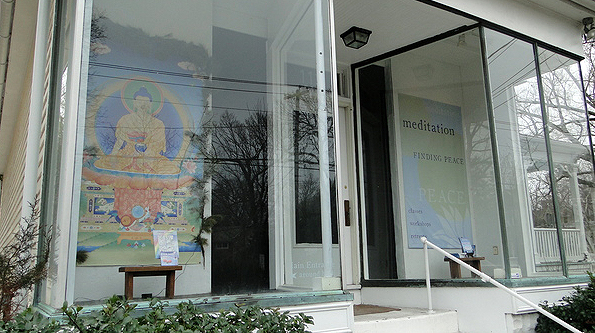
The center rents the first floor of the building. A cushion-filled space with a traditional Buddhist shrine occupies much of the space, while a small store selling Buddhist and meditation-related books and CDs occupies the rest.
According to its website, the Vajravarahi Buddhist Meditation Center was founded by Venerable Geshe Kelsang Gyatso in 2001 and is a member of the New Kadampa Tradition-International Kadampa Buddhist Union, a global network of more than 1,000 centers and groups around the world.
The center, which its representatives claim is not a religious institution, then sought to have its use classified as a bookstore with an accessory use of meditation. But Mr. Platt argued—unsuccessfully—that meditation was not a customary accessory use to a bookstore, and further, that the center operates primarily as a meditation center. On visits to the center, Mr. Platt, said, he always saw the space being used for meditation, but no one was ever looking at the books. He also claimed the center’s website promotes meditation, but does not mention the Sag Harbor location as a bookstore.
The center appealed to the ZBA for an interpretation. “This is not a church. This is not a temple,” the center’s attorney, Mark J. Catalano of East Hampton argued to the board on Tuesday night, by way of explanation as to why the center could not seek a change of use.
He also argued that the center’s main role was as a bookstore and the meditation classes merely supplement the retail use. He drew comparisons to Christian Science bookstores that also support classes and are not considered churches. He compared the center to BookHampton or Canio’s Books, which often hold events supporting the sale of their books.
Village resident Jonathan Glynn spoke in support of the center, saying he, a board member at his local synagogue, has bought books and CDs at the center and appreciates the guidance that the meditation provides for the books he gets. “Quite frankly, I can’t make heads or tails of a lot of the stuff, and if it wasn’t for [Gen Kelsang Norden, a Buddhist nun who is the resident teacher at the center], who interprets the information from these meditation books, which I’m very interested in ... you need some guidance for this, let me tell you,” he said.
The board quickly agreed, voting unanimously to interpret the village code in the center’s favor. Members of the public, which included Gen Norden, dressed in her saffron-colored nun’s robe, applauded the decision.


 Colleen Reynolds on Jan 16, 2013