


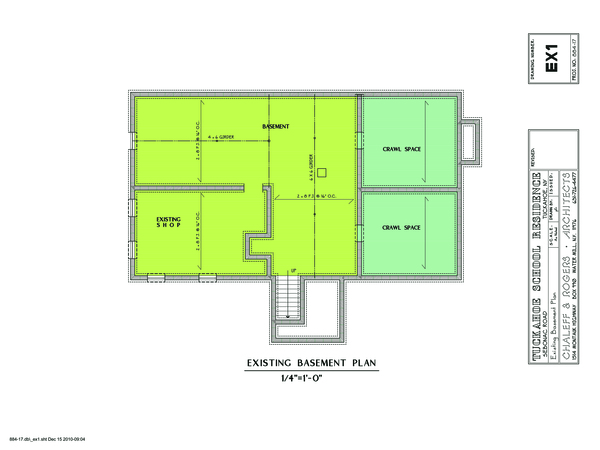
 4 Photos
Tuckahoe School residence existing basement. COURTESY OF CHALLEFF AND ROGERS ARCHITECTS
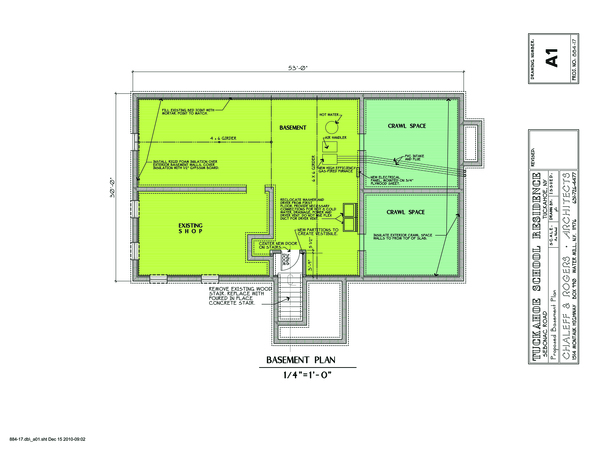
Tuckahoe School residence proposed basement. COURTESY OF CHALLEFF AND ROGERS ARCHITECTS
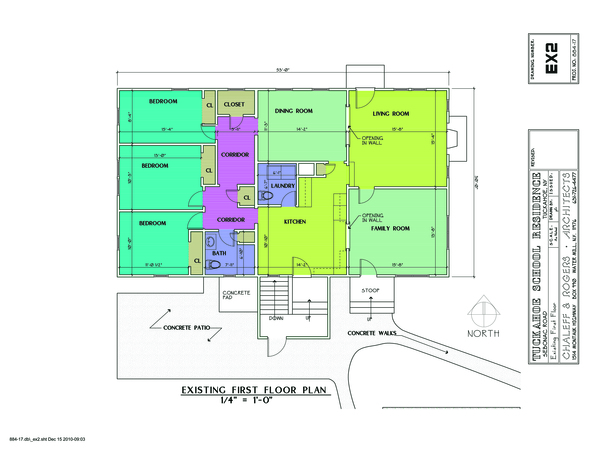
Tuckahoe School residence existing first floor. COURTESY OF CHALLEFF AND ROGERS ARCHITECTS
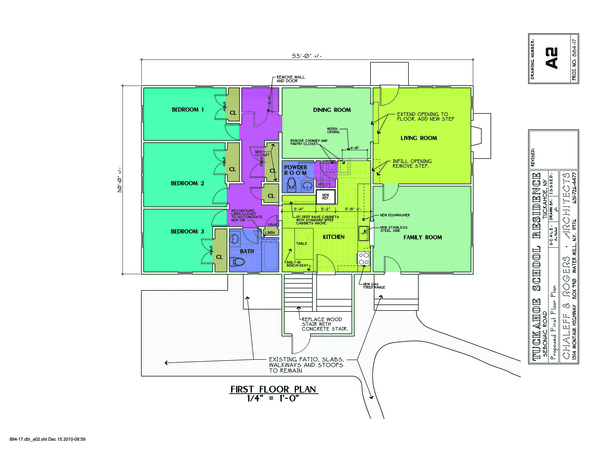
Tuckahoe School residence proposed first floor. COURTESY OF CHALLEFF AND ROGERS ARCHITECTS
Despite angry criticism by district residents and pleas to postpone an upcoming special vote, the Tuckahoe School Board on Monday night decided to move forward with holding a referendum on December 21 asking voters to approve spending $95,000 to renovate an on-campus house for use as the school superintendent’s home.
Taxpayers’ concerns largely focused on finances and a perceived lack of transparency on the board, but also involved complaints about the timing of the vote.
One resident in attendance at Monday’s board meeting, contractor Joe Mullen, questioned the estimated cost of the project, arguing that “$95,000 would get you a bathroom.” He called the price tag given by the district a “pipe dream” and added that he believes the true cost would far exceed this estimate—at a minimum of about $200,000.
The district is asking voters via a special election on Tuesday, December 21, to approve spending $95,000—from an unappropriated reserve fund that holds nearly $660,000—to refurbish and bring up to code an approximately 1,600-square-foot house at 46 Sebonac Road, east of the school’s athletic field. The plan is to rent the house to Superintendent-Principal Joseph “Chris” Dyer once the renovations are complete. School Board Chairman Robert Grisnik has said the rent would be set at fair-market rate and would be determined through an appraisal once the renovations, if approved, are finished. He also noted that because Mr. Dyer does not participate in the district’s health care program, an amount equal to what he would receive under the health plan could be applied to the rent. Mr. Dyer currently rents a house in Shinnecock Hills on a month-by-month basis.
The district purchased the house and half-acre property it sits on for $515,000 in 2009, following voter approval.
At Monday’s meeting, nearly 40 community members turned out for the meeting, one of the largest turnouts for a Tuckahoe School Board meeting in 2010.
The district’s architect, Paul Rogers of Chaleff & Rogers Architects in Water Mill, briefly presented a plan for the house and told the attendees it involved a minimal amount of renovation to make the building habitable. All the finishes would be new, the floors would be redone, air conditioning would be added, and an oil-heating system would be replaced with gas, among other changes, he said.
Many parents, including Daphne Gil and Michael Hadix—both of whom sought seats on the School Board last April, but ultimately lost to Daniel Crough—said they would rather see the money go directly toward educational uses. They cited poor test scores, outdated textbooks and obsolete computers as examples of where money could be funneled. Another resident, David D’Agostino, said the district could purchase an iPad for every student in the school for the cost of the project.
“It was supposed to be a community information session, but Grisnik had almost had no information,” parent Rick Sobrevinas said on Tuesday of the previous night’s meeting, which spanned more than two hours. “He could provide very little information.”
The board, for example, told the community that the property was acquired to conform with New York State Education Department property-to-footprint building ratios, but since the district said it also acquired a variance from the state, residents questioned the board as to why the compliance was still needed.
Mr. Grisnik said he did not have any figures regarding the state requirements and reiterated that the acquisition put made the district more in compliance with the state, but could offer no specifics.
Mr. Sobrevinas, who serves as a financial advisor to Southampton Town officials, also questioned the district’s assertion that using funds from an unappropriated fund would not raise taxes. After the meeting, he argued that the board members were being “deceptive” because if the board drew from its undesignated fund, taxes would have to be raised in order to keep that fund at its required 4-percent of the total budget.
Lack of answers to such questions led some, like resident Frances Genovese, to urge the board to delay the vote. Also at issue was the date of the referendum, four days before Christmas. Residents said many senior citizens are wintering in warmer climes at this time, but Mr. Grisnik countered that school is still in session on December 21.
When Mr. Sobrevinas asked anyone in attendance in favor of the vote to raise their hands, no one did.
Ernest Unger, a resident of Shinnecock Hills, urged the board to tear the house down altogether—even though district officials said doing so and building a new structure in its place would be even more expensive. Several people questioned the board about its transparency regarding the plan, noting that work on the house has already begun, including some sheetrock removal.
“You have to have a plan to give to the community to vote on,” Mr. Grisnik responded. “We have been elected by you to run this school district. This is what this board has decided to do. We are presenting this plan to you and we’re asking you to vote on it. That’s it.” He added that some sheetrock that was “bad, anyway” had been removed by school custodians.
School Board members Sharon Grindle and Daniel Crough remained silent throughout most of the meeting, until some residents asked if they had changed their stances. In response, Dr. Crough said the board was not stealing money, which prompted some residents to wonder aloud about the statement, noting that no one was suggesting otherwise. Ms. Grindle spoke about keeping the property as an asset for the school.
Board members said they would discuss the concerns in an executive session. Mr. Dyer reported on Tuesday morning that the executive session was short and the plans were to remain unchanged, adding, “I think the concerns that were expressed by the community were honest and candid.”
Voting will take place this Tuesday, December 21, between 11 a.m. and 8 p.m. in the school gymnasium on Magee Street.


 Colleen Reynolds on Dec 15, 2010