



 3 Photos

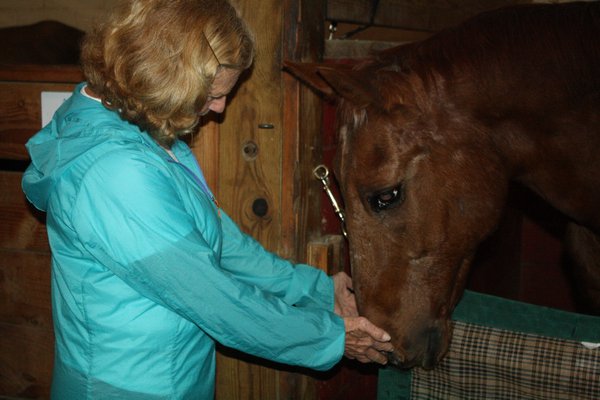
Carol Thorne and seven other women were part of an equine bereavement program, offered by East End Hospice at Spirit's Promise Equine Rescue in Riverhead. The second six-week session concluded last week, and another is set for November. CAILIN RILEY
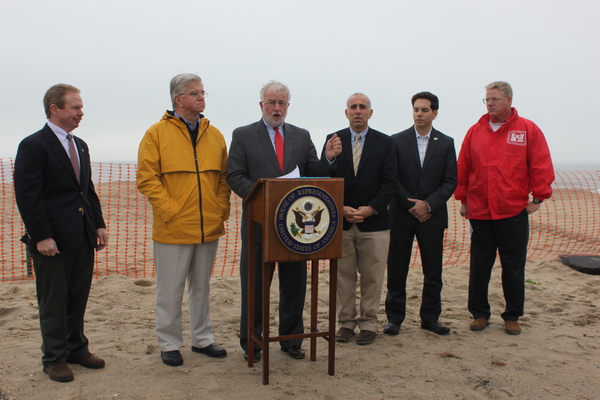
During his visit to the Shinnecock Inlet Monday morning, U.S. Representative Tim Bishop said the U.S. Army Corps of Engineers would expand a beach rebuilding project currently under way to include an additional 2,000-plus feet of shoreline in the area of Tiana Beach.
The original project, which began on November 30, was designed to dredge approximately 128,000 cubic yards of sand from the inlet and use it to restore about 2,100 feet of beaches west of the inlet to their state prior to Hurricane Irene in 2011. Additional sand will be used to restore what was lost during Superstorm Sandy, and about 115,000 cubic yards more will be dredged and used to bolster the Tiana Beach region.
In total, about 450,000 cubic yards will be removed from the inlet and pumped on shore, according to the Army Corps. The project, which officials said would be completed in about two weeks, will cost more than $7 million in total, split between federal and state funds.
“We’re proud of the work here,” New York District Army Corps of Engineers Deputy Commander Joe Seebode said, adding that the dredging would not only restore and protect the beaches from further erosion, but would also improve the navigation channel so that it will require less maintenance in the future.
“Rebuilding the dunes around the Shinnecock Inlet is of vital importance for the infrastructure not only on the land immediately surrounding the inlet, but on the mainland as well,” Mr. Bishop said in a prepared statement. “The storm surge estimates for the area were based on dune levels that no longer exist. Bringing the levels back to engineered levels can help to prevent the type of devastation we saw in 1992, when the ocean met the bay.”
The congressman was referring to a nor’easter that washed away much of what is now the Village of West Hampton Dunes, destroying homes and also creating a temporary breach on Dune Road.
A group of federal, state and local officials joined Mr. Bishop at the Shinnecock Inlet on Monday, including State Assemblyman Fred W. Thiele Jr., DEC Regional Director Peter Scully, Scott Martella, the Suffolk County representative for Governor Andrew Cuomo, and Suffolk County Legislator Jay Schneiderman.
“Swift action in addressing the storm damage is important for the fishing industry, as well as for the barrier beach protection,” Mr. Schneiderman said. “I would like to thank Congressman Bishop and the state for expediting the work.”
Mr. Bishop added that he plans to push for legislation to allow the Army Corps of Engineers to rebuild dunes and beaches higher than they were before the storms hit, as part of a mitigation effort. He said the Army Corps is currently constrained to restoring sand levels to their pre-storm condition, but no higher.
“I’m hopeful that we can get that done as well,” he said.
The Shinnecock Inlet port is home to the second-largest fishing fleet in the state, according to Mr. Bishop’s office. The port supports an average of 6.6 million pounds of fish that are transported each year, and the area is home to endangered species, such as piping plovers and least terns.
The dredge being used to clear the inlet and restore the beaches to the west of the passage was the same one used last month to fill a large breach at Cupsogue Beach County Park, just east of the Moriches Inlet, caused by Superstorm Sandy. That work, which cost approximately $6 million, wrapped up late last month.


 Carol Moran on Dec 10, 2012