


 2 Photos
Some new I/A septic systems are far outperforming county minimum standards set when the systems were first approved, but other models are not meeting expectations.
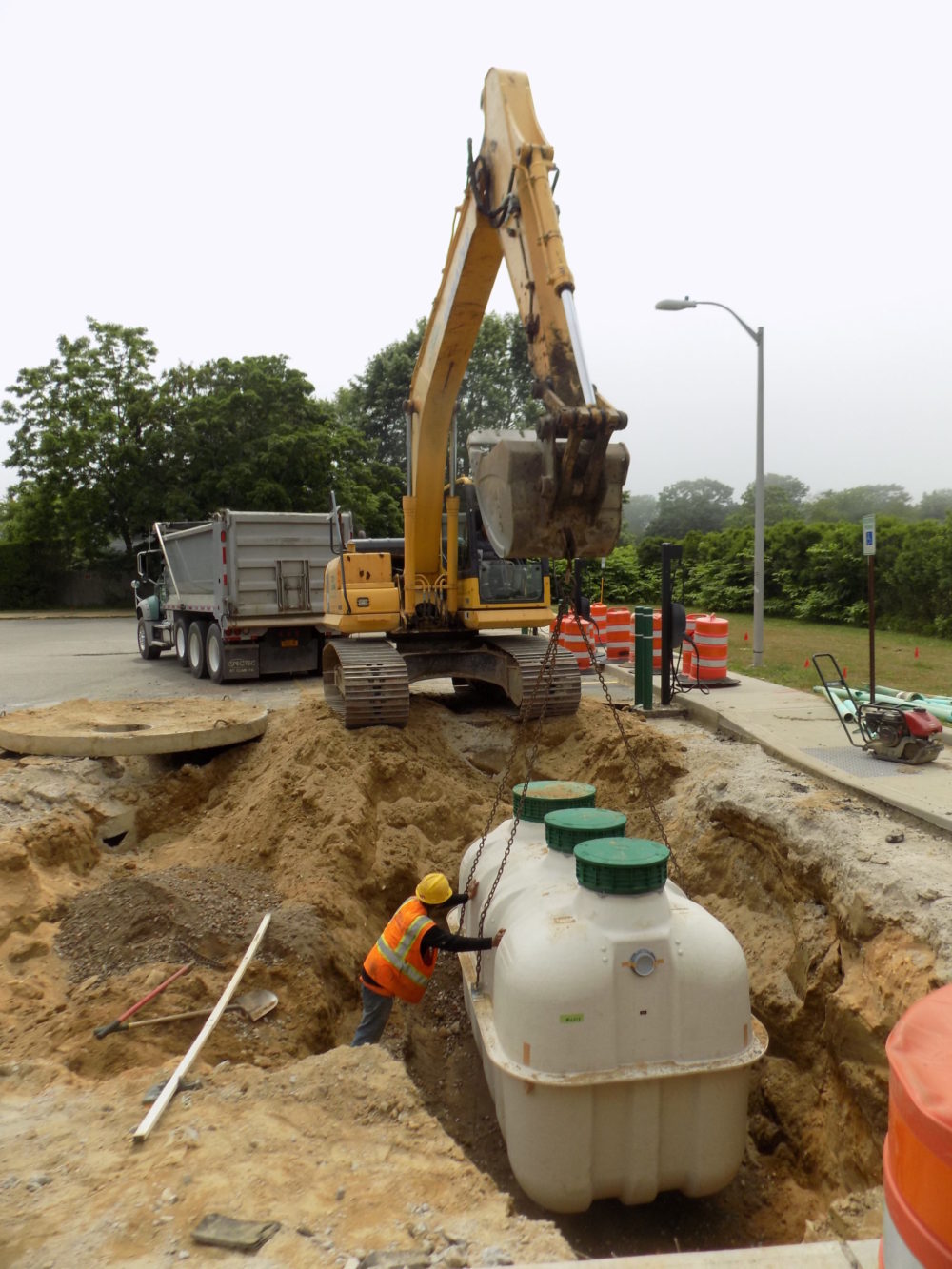
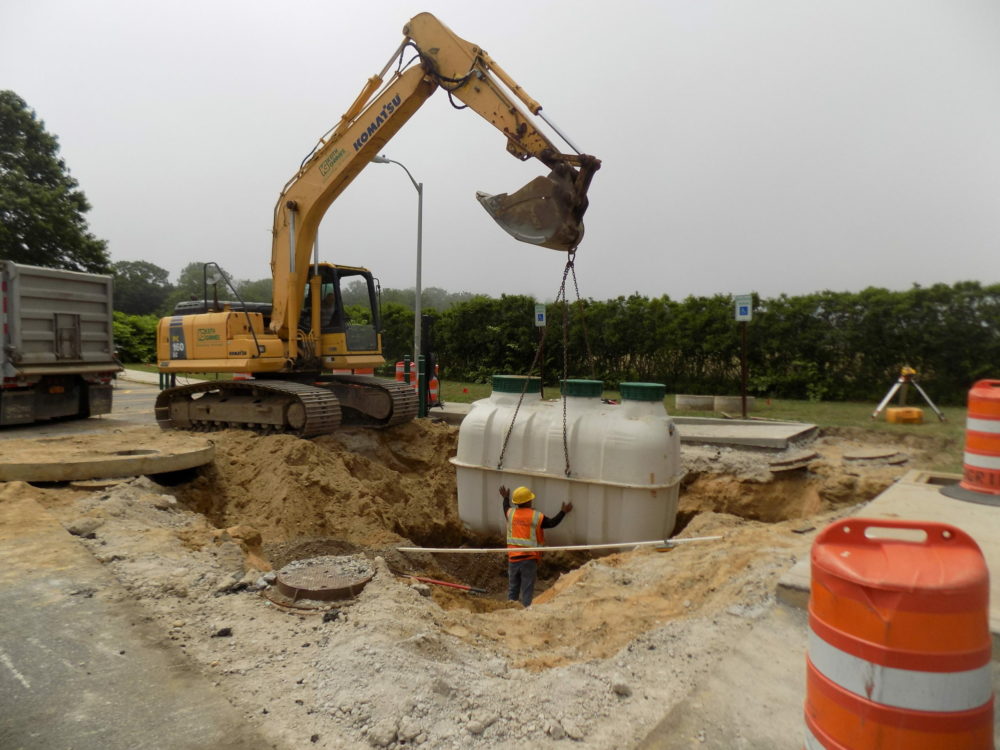
Some of the new I/A septic systems, like this one being installed in Amagansett, are proving to outperform the minimum standards of nitrogen reduction set by the county. But other systems have not met the expectations and their manufacturers are being forced to make retrofits to installed units to improve their performance.
The two most popular brands of the new “innovative alternative,” or I/A, septic systems being installed at homes throughout the East End to combat water quality degradation have proven to reduce nitrogen in wastewater to levels well below the minimum standard set by Suffolk County for the new systems.
But some other brands have consistently failed to meet those minimum standards, and the county has directed the manufacturers to make retrofits to already installed systems that will boost their nitrogen reduction — or risk losing their provisional approvals.
The two top-performing systems, a Japanese-made system called FujiClean and Indian-based HydroAction, have proven, in monitoring of selected systems already installed at homes around the county, to reduce nitrogen loads to an average of about 11 milligrams of nitrogen per liter of wastewater.
For context, a typical standard septic system might allow more than 65 milligrams of nitrogen to reach groundwater, and sometimes as much 100 or even 200 milligrams. The minimum standard set by the county for approval for use was 19 milligrams.
The county so far has given provisional approval to six different treatment systems, allowing them to be installed at homes and monitored for performance. Five of the six have proven to be reducing nitrogen in effluent to levels below the county’s minimum threshold.
Suffolk County Department of Health officials noted this week that even the systems that have not met its standards are reducing the amount of nitrogen released into groundwater by at least two-thirds, and possibly much more, compared to the traditional septics that had been the standard in the county for decades. But the county has set a much higher bar for what it sees as the main weapon in the fight to restore water quality.
“Some were urging that we just authorize technology to be used in Suffolk based on data that they brought us based on their performance in other states, but we decided to take a much more measured and cautious approach,” said Peter Scully, the deputy county executive who has headed up the wastewater overhaul under Executive Steve Bellone’s administration. “We’ve designated the Suffolk County Department of Health Services as the responsible management entity that is required to oversee the installation and maintenance of the systems.”
Jennifer Freese, a project manager for the Health Department, said that all the systems in the county provision program must be certified by a testing lab first as being able to achieve a minimum of 50 percent reductions of total nitrogen, then go through six months of demonstration testing that must meeting the county’s much lower threshold before they can be offered for installation. Then units installed at private homes are tested bi-monthly for the first two years of their operations, and the results of those tests averaged by the county to determine how well the systems are operating.
The EPA average for standard septic systems is 65 milligrams of nitrogen per liter but can actually be double that, or more. Marine biologists from Stony Brook University have said that an average level of just 10 milligrams per liter is probably the level the county will have to reach in the long run to reverse water quality degradation caused by wastewater.
FujiClean systems averaged 10.6 milligrams of nitrogen from installed systems that were monitored over the first two years of use, county Department of Health officials said. HydroAction systems averaged 11.2 milligrams.
Together the two systems account for more than 600 of the approximately 1,200 systems that have been installed countywide thus far and are the only two that have received a final approval for widespread use from the county DoH thus far.
Two other systems, manufactured by Orenco and Norweco, have met the county standard but have only averaged between 17.5 and 18 milligrams of nitrogen per liter in effluent. Another system, SeptiTech, has averaged about 15 milligrams.
Two other systems, also manufactured by Orenco and Norweco, and totaling over 260 units installed, have not met the county’s minimum standard. The Orenco system has been dropped from the provisional approval list, and Norweco’s system is being modified by the manufacturer and has already installed systems retrofitted, to improve nitrogen removal.
The installation of I/A systems at hundreds of thousands of homes around the county has been seen as the key thrust in combating the emergence of harmful algae blooms in Long Island’s tidal bays and freshwater ponds. Scientists have said the algae blooms that have plagued local bays since the late 1980s are spurred by high nitrogen levels in local waters, primarily caused by human waste effluent from outdated and often failing septics at homes in the watersheds to local bays.
After decades of lagging behind much of the rest of the county in putting controls on the discharges into groundwater from septics, in 2018 Suffolk County embarked on an aggressive reboot of its septic policy and now requires the I/A systems for new construction and major expansions of homes. The county has also directed more than $21 million toward grants to homeowners for replacing their aging systems with new I/A systems — augmenting the up to $20,000 that East End towns have offered in grants to any homeowner who installs an I/A system.
There are more than 230,000 individual septic systems beneath homes countywide, about 100,000 of which are in what the county has identified as high priority regions, where groundwater flows quickly toward nearby bays and aging waste systems flush nitrogen into them as it goes.
The main thrust of the county’s water quality proposal is a 30-year effort to replace all 100,000 of those systems in priority areas, with low-nitrogen systems — most of which are on the East End and in eastern Suffolk where large municipal sewer systems are not practical and homes will rely on individual on-site waste systems for decades to come.
Despite the long road ahead, county officials say there is ample evidence that Suffolk homeowners are embracing the shift to the new systems. The county saw a spike in installations of the new systems in the spring of 2020 — in yet another side effect of the COVID-19 pandemic.
As more second homeowners, sometimes with extended families, moved into their former summer vacation homes full-time, many septic systems started failing under increased use and homeowners, whether compelled to by local laws or spurred by concern for the environment, replaced more of those systems with I/A systems.
“Most were simply for failing systems, so it was a voluntary choice,” said Julia Priolo, an environmental analyst for the county. “People want to do the right thing for the environment.”


 Michael Wright on Mar 30, 2022