


 7 Photos
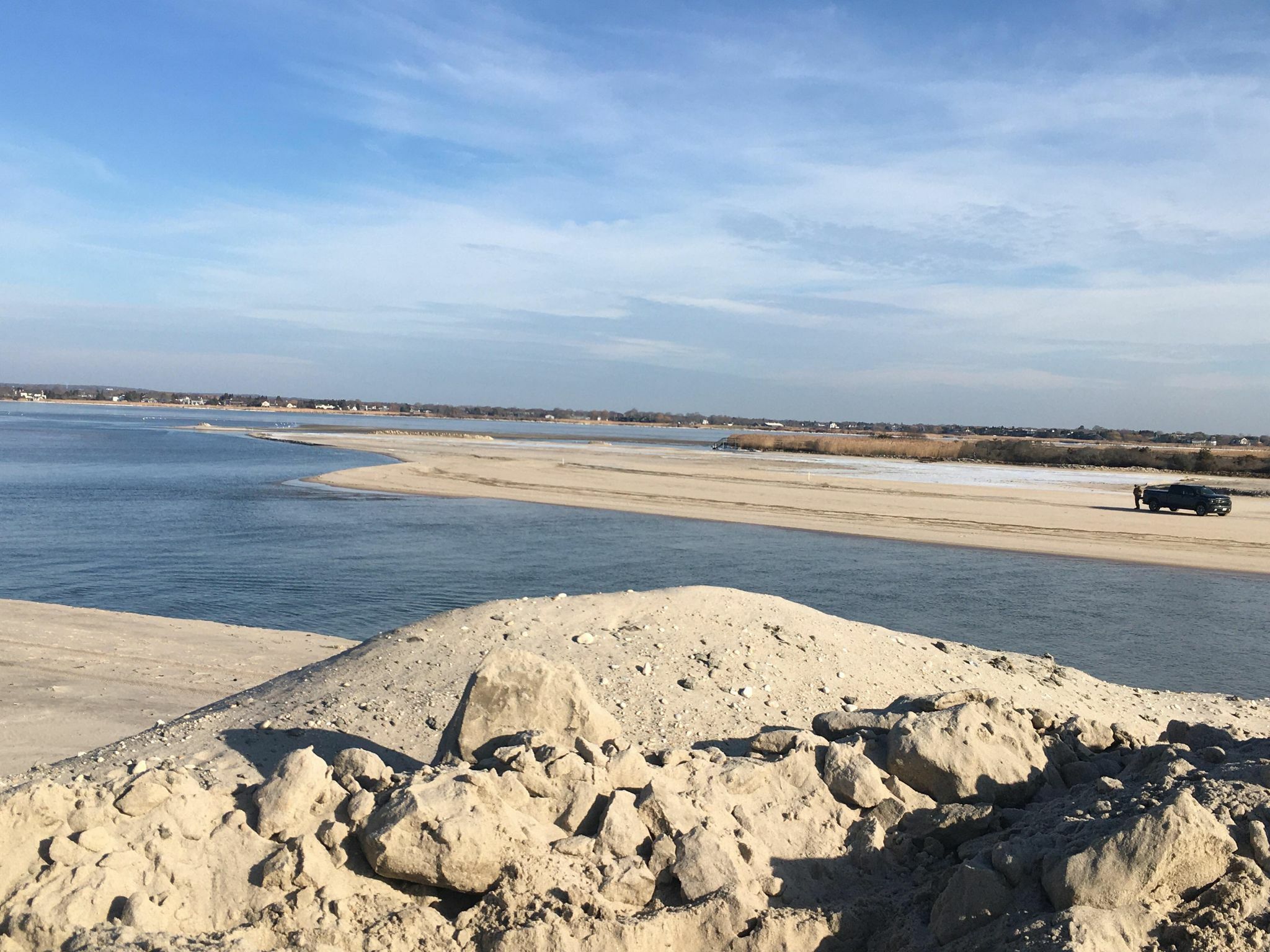
The view of the Mecox cut from atop a 30-foot tall sand hill. KITTY MERRILL
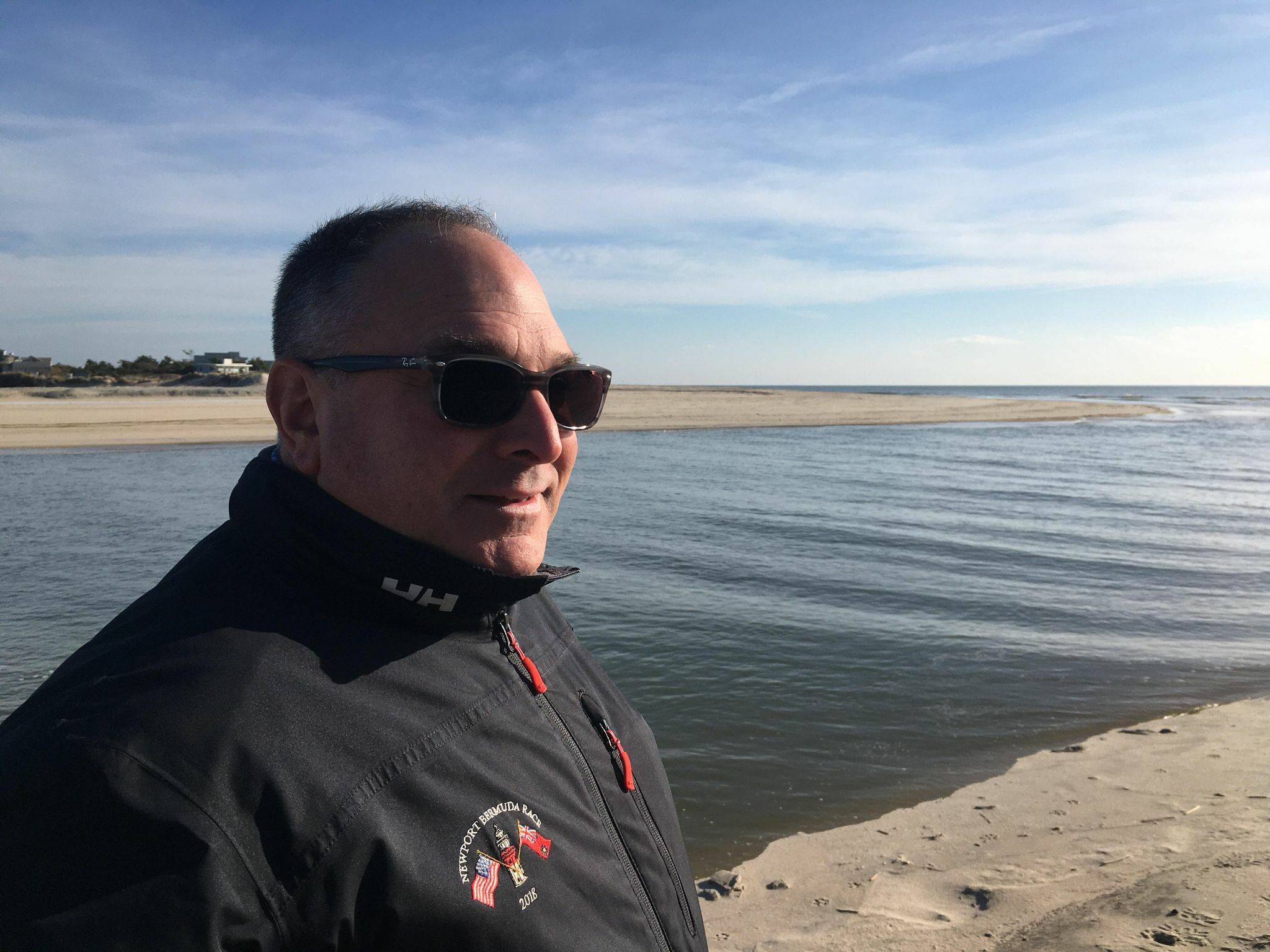
Southampton Town Trustee President Scott Horowitz views the progress at the Mecox cut. KITTY MERRILL
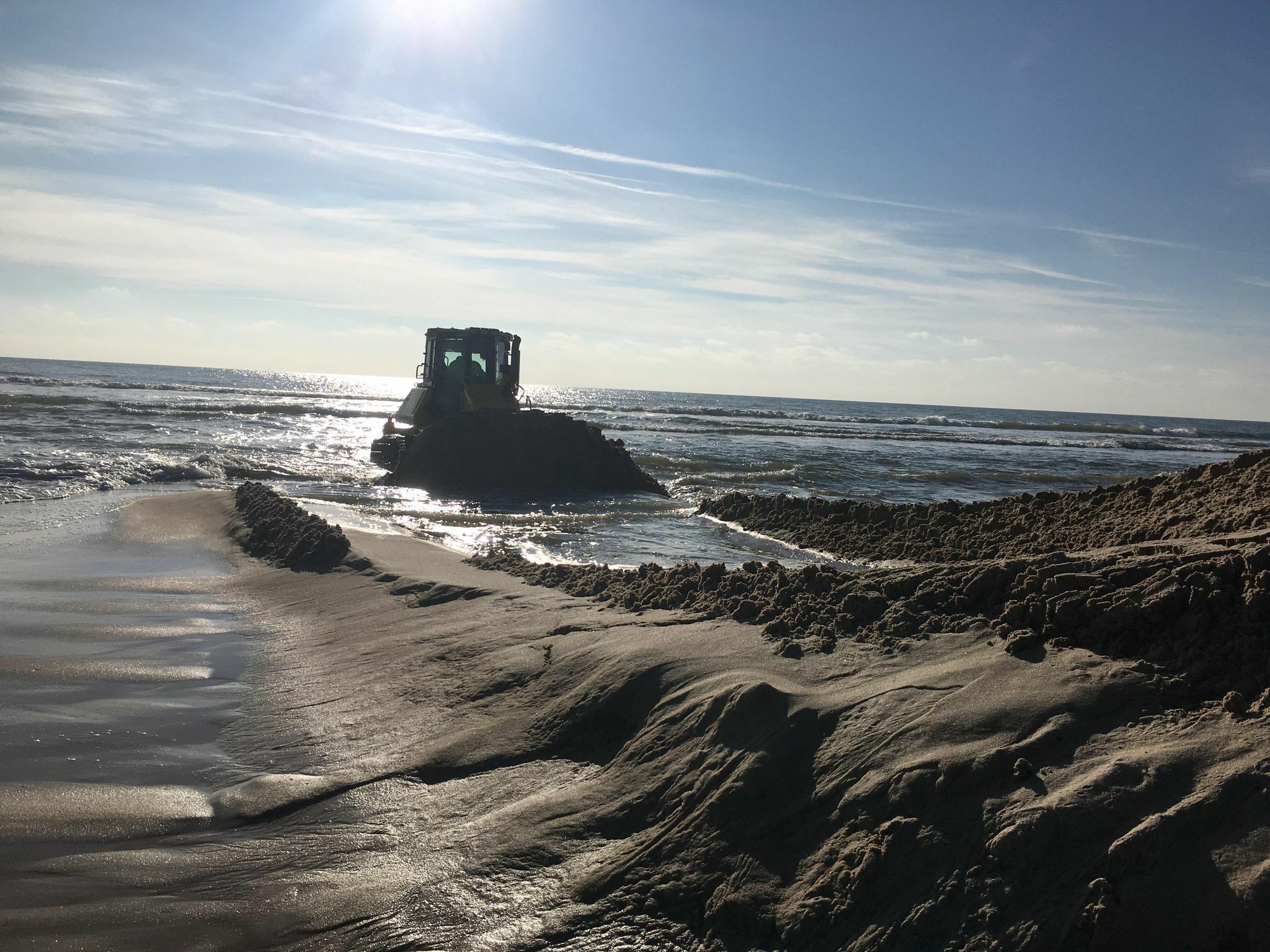
Out in the surf, the bulldozer crafts the sand mountain at the Mecox cut. KITTY MERRILL
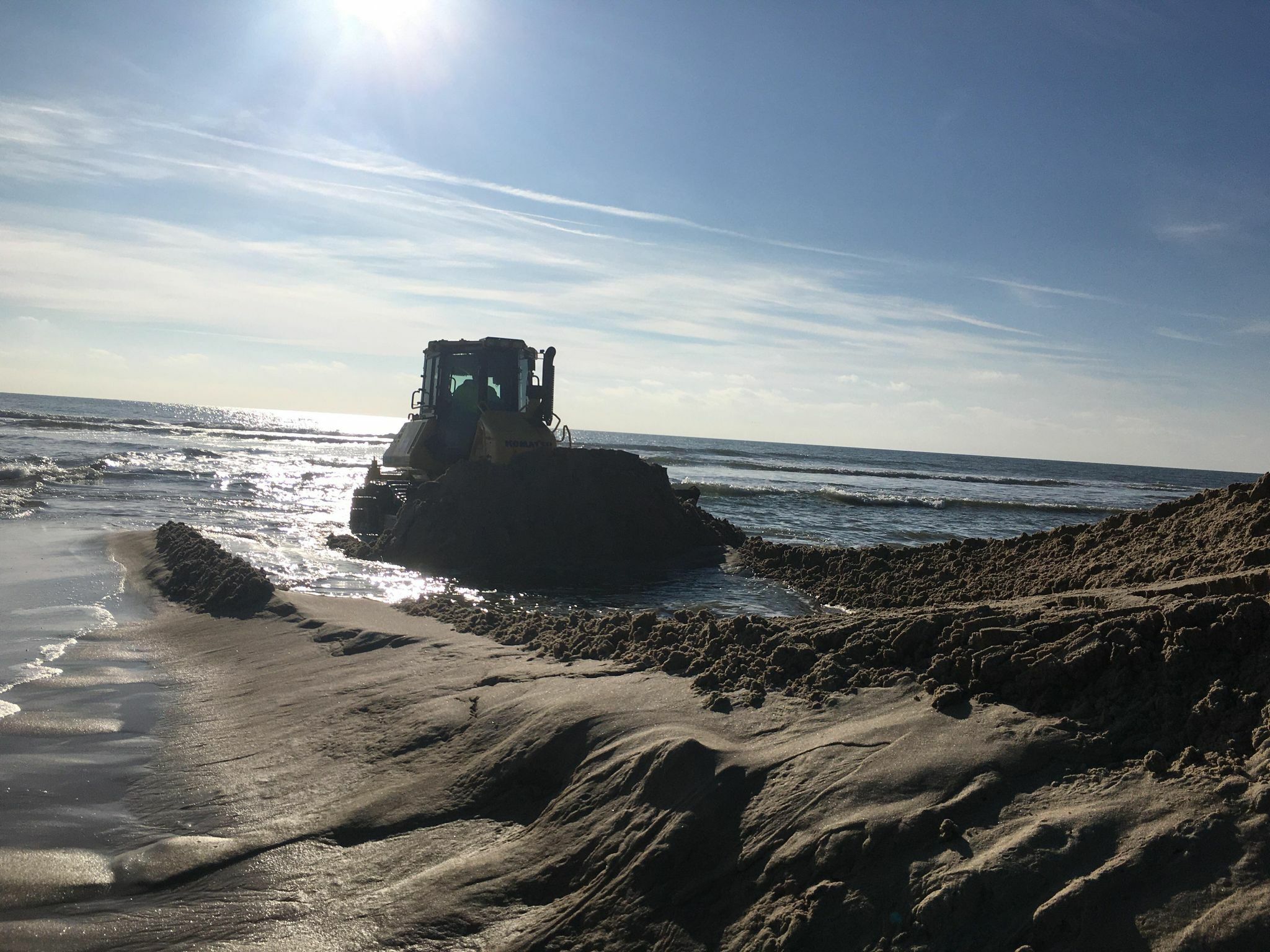
Out in the surf, the bulldozer crafts the sand mountain at the Mecox cut. KITTY MERRILL
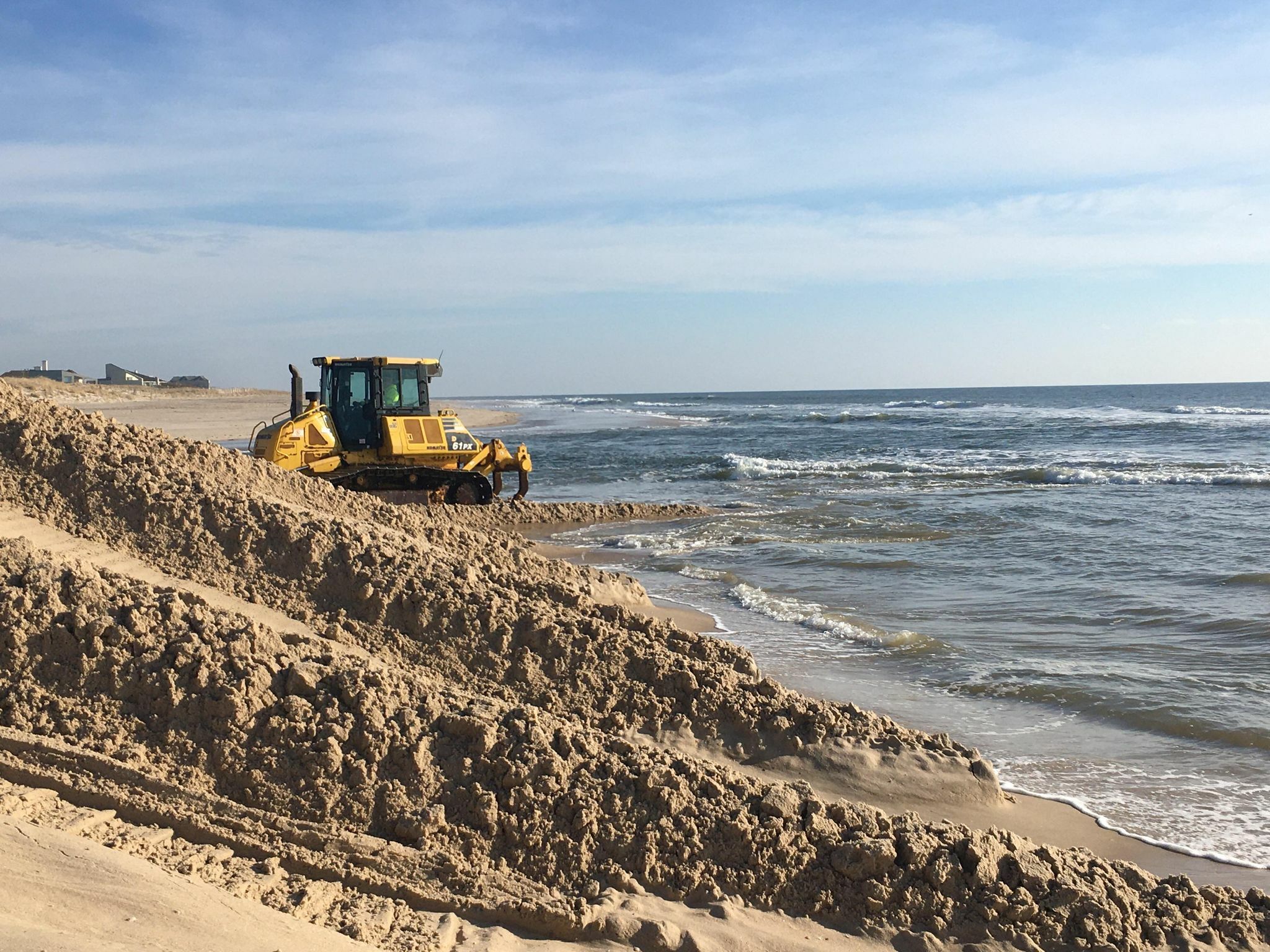
Out in the surf, the bulldozer crafts a sand mountain at the Mecox cut. KITTY MERRILL
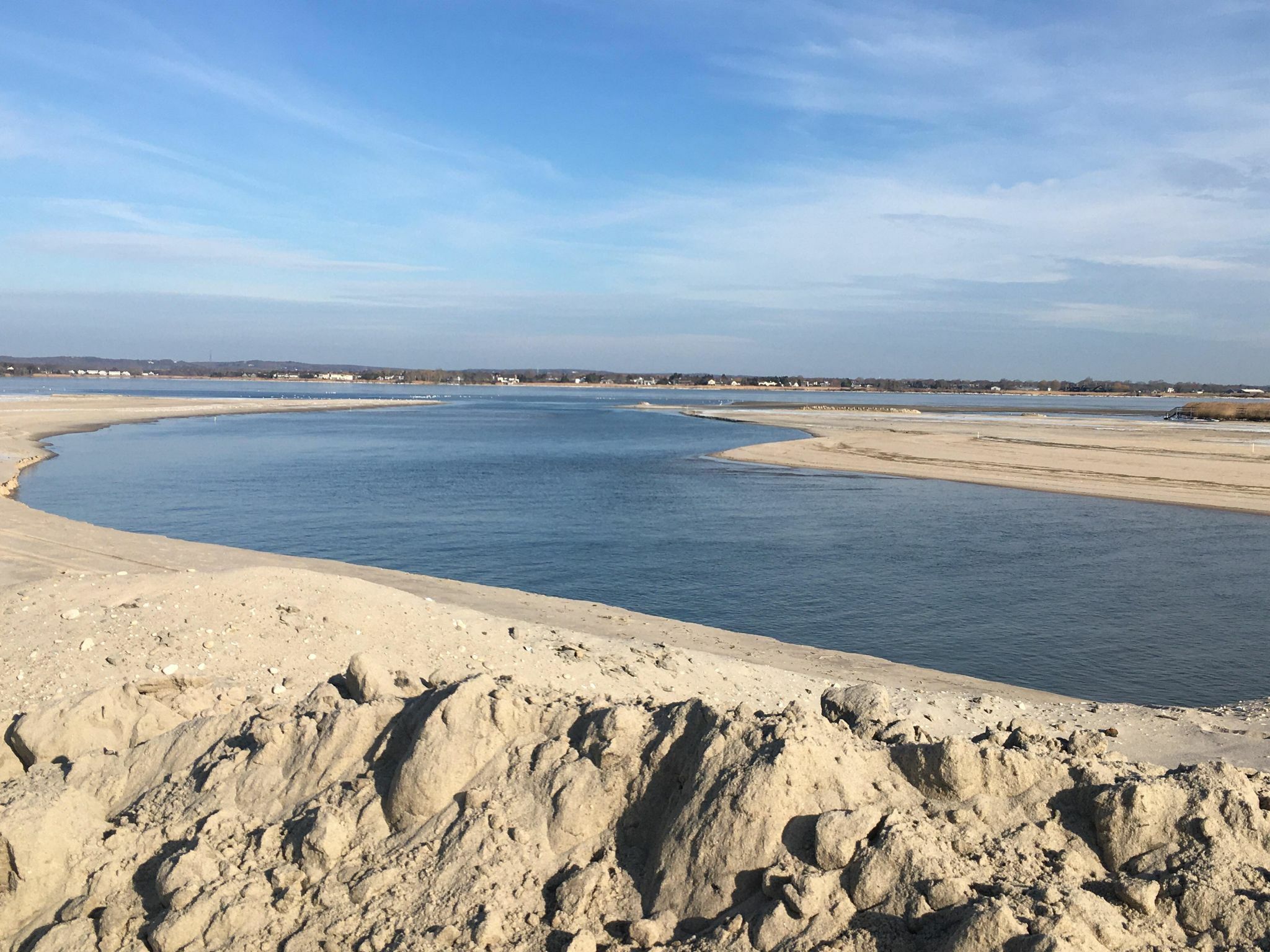
Obstacles provided by Mother Nature notwithstanding, work opening the Mecox cut continued. KITTY MERRILL
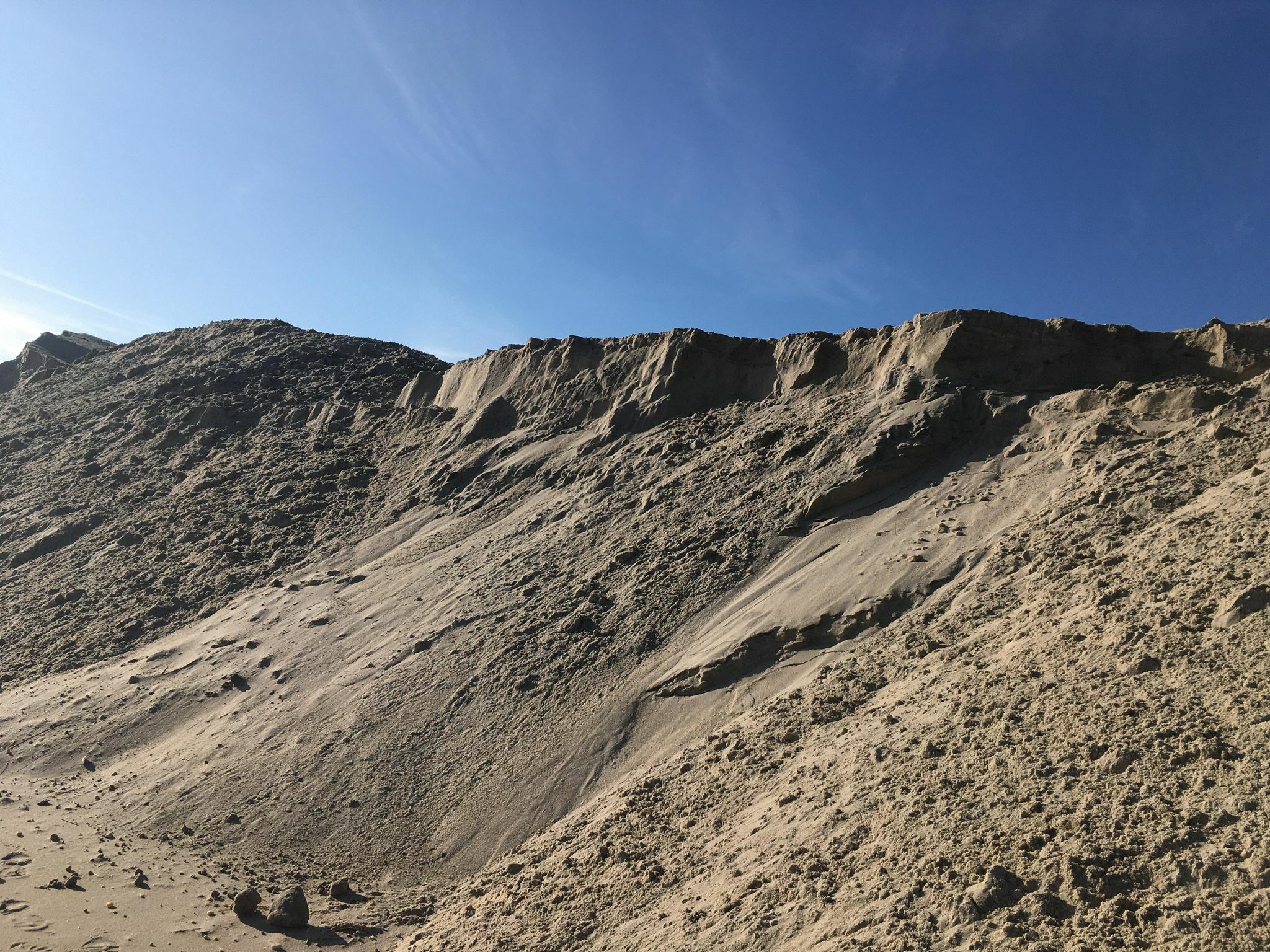
Southampton Town Trustees expect thousands of yards of sand to be amassed, then distributed through the Mecox system by the time the cut is complete. KITTY MERRILL
The view from atop a 30-foot-tall mountain of sand at the Mecox Bay cut in Water Mill on a sunny December morning was majestic — and productive. Sidelined by the weather in the middle of the month, the dredging of a sand delta in the bay was back in action during a visit on December 29.
A bulldozer worked in the surf, crafting mounds of sand pulled from the bay, while workers restaked the channel’s border where sand had been pushed back by the predation of Mother Nature, and Town Trustee President Scott Horowitz and project manager Steven Wulforst of H & L Contracting surveyed the scene.
By the year’s end, more than 13,000 cubic yards had been removed through the long dredge project that had been a long time coming.
Interviewed on Monday, January 2, Horowitz estimated the contractors were moving between 2,000 and 2,500 yards of sand a day. “They’ve got their rhythm down,” he said.
On Tuesday, workers began moving sand down to the homeowners to the west of the cut. “They’re really making great progress,” he said.
Through a settlement of a suit with neighbors, up to 12,500 yards of the sand may be sold to them to nourish the beach and dunes in front of their homes. The remainder will be spread on the beach and dunes nearby. “It has to go back into this system,” Horowitz explained.
The long dredge entails carving a 1,000-foot-by-200-foot channel from the bay to the sea. It used to be an annual undertaking, but for several years the town has been entangled in the bureaucracy inherent in procuring the proper permits from the New York State Department of Environmental Conservation. For close to eight years, only a shorter cut could be implemented and then only on an emergency basis. During that time, a massive sand delta formed.
By the end of 2022, the Trustees had procured a five-year permit that will allow the dredging to take place more regularly.
The project began in early December, with an initial cut made to drain the bay water down low enough so machines could get in and begin removing sand. Adverse weather came through and filled the cut back up. One weekend in mid-December, workers from H & L had to move all their heavy equipment to higher ground to avoid the raucous inflow created by a storm.
The contractors worked 17 days in 2022 for a cost of more than $200,000. A lot of the effort was doing over work Mother Nature had undone, Horowitz explained. The Community Preservation Fund’s water quality program is underwriting the project.
This year so far, Horowitz said, “The weather is working with us. We’re not getting pounded by storms.”
At the most recent check, he said the salinity of the bay was nearly double what it had been. “Already with the flushing, there’s a benefit,” he reported. Opening the cut allows the salty ocean water to mix with what can be at times stagnant bay water.
The hope is that once the long dredge project is completed, and allowed to be performed more regularly, the result will be better water quality, he said.
Horowitz hesitated to set a completion date. Barring weather interference, the dredging could be completed in the next two weeks. He said he bumped into some area homeowners over the weekend and they seemed very pleased with how the project was going.
Opening the cut from Mecox Bay to the Atlantic is an exercise that dates back centuries. Native Americans did it by hand.
The bay collects rain, and when levels rise, the water starts to lose its salinity, imperiling shellfish habitat. The higher levels impact area homeowners, flooding their basements and even making it impossible to flush toilets, inundating cesspools buried on properties bordering the water body. Crops on nearby farms drown in the saltwater. Road runoff, which includes fertilizers from neighboring lawns and farm fields, adds to the pollution in the bay.
In recent years, federally protected piping plovers got in the way of even emergency dredging. It’s a crime to undertake any action that might disrupt their nesting. Last year, with permit approval lagging and the water rising, volunteers armed with shovels tried to dig the cut the ancient way.


