


 3 Photos
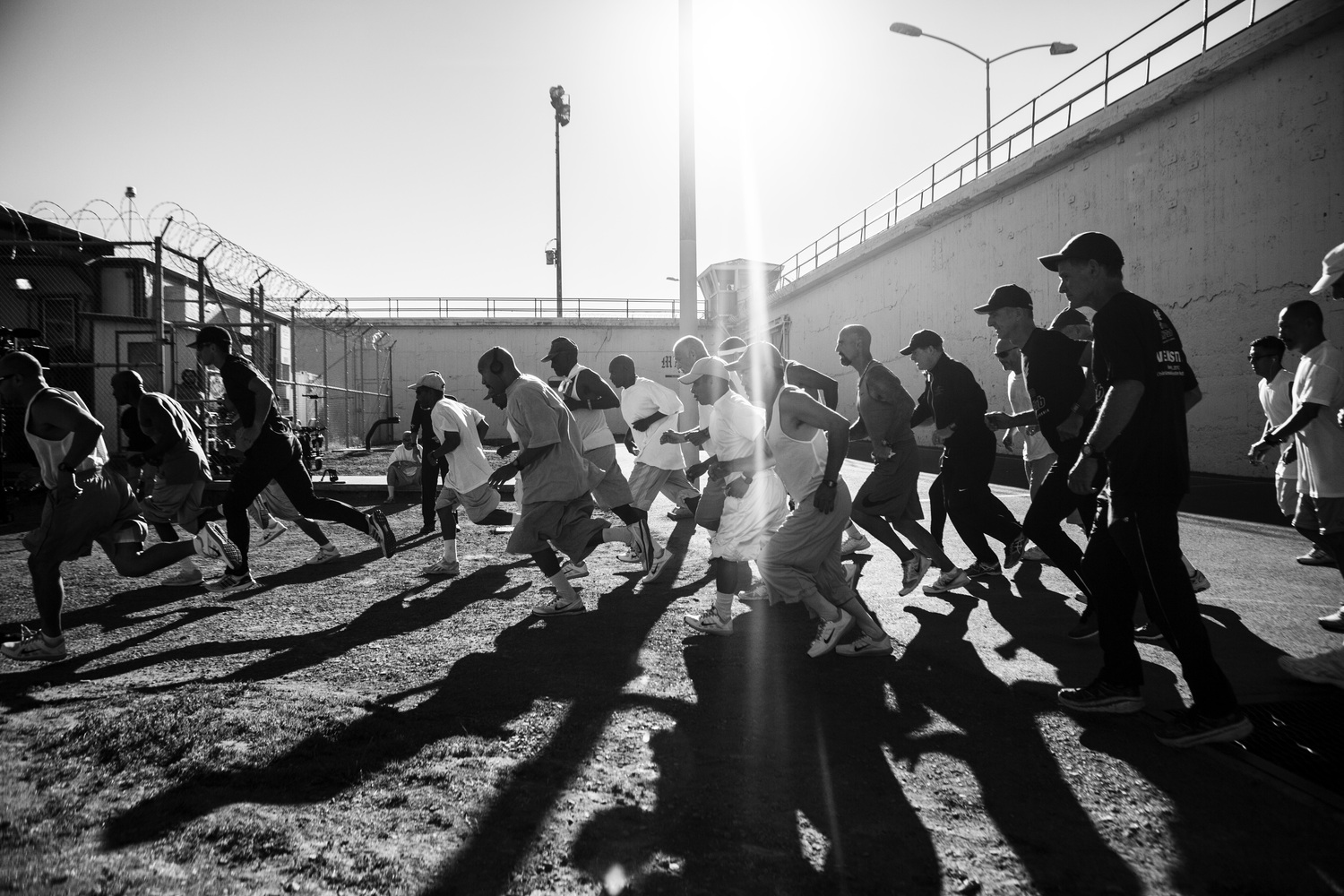
The 1000 Mile Club workout at San Quentin State Prison. JONATH MATHEW/© SAN QUENTIN MARATHON, LLC

Markelle Taylor, the “Gazelle of San Quentin." JONATH MATHEW/© SAN QUENTIN MARATHON, LLC
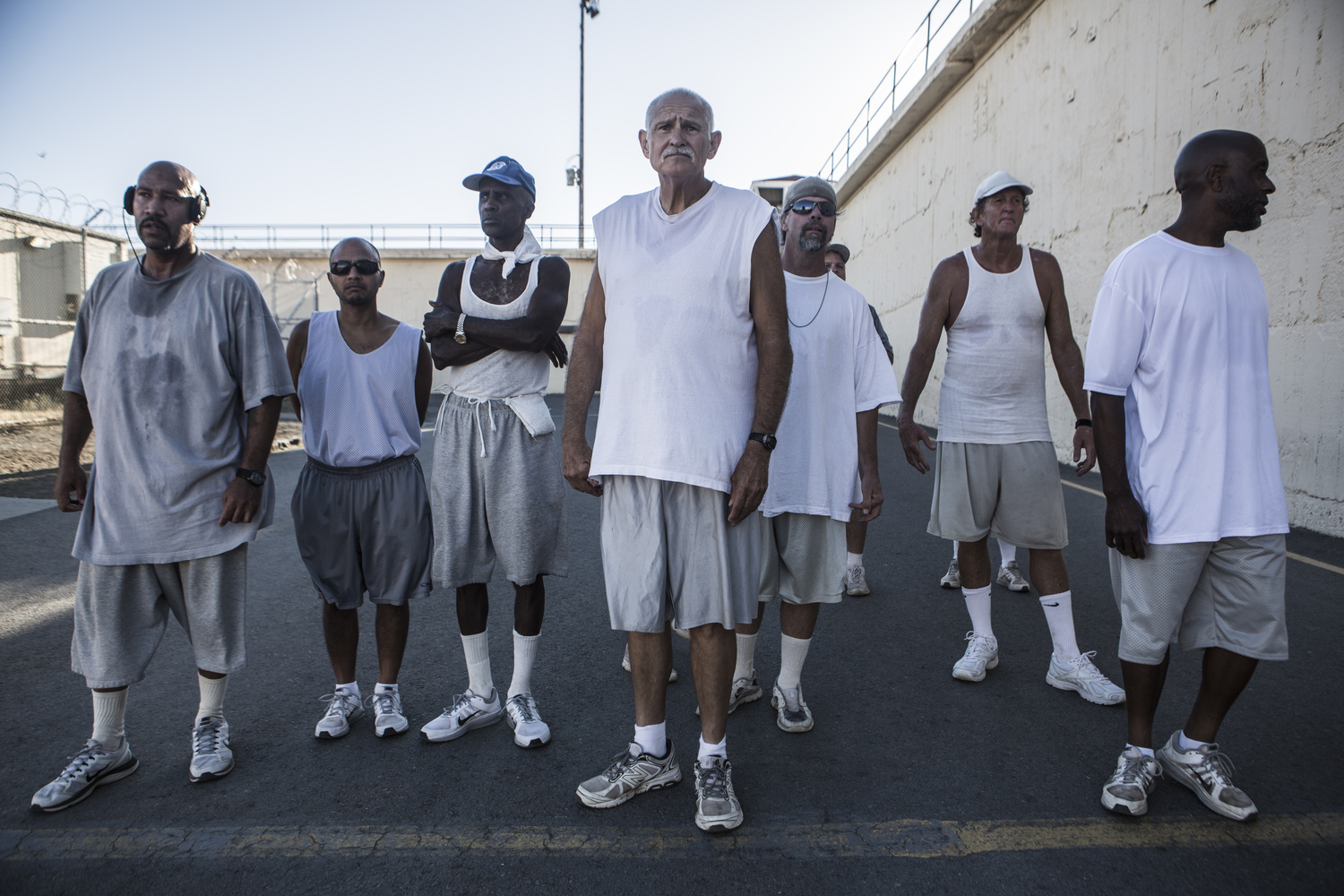
Members of the 1000 Mile Club at San Quentin State Prison with Larry Ford, center. JONATH MATHEW/© SAN QUENTIN MARATHON, LLC
California’s San Quentin State Prison isn’t the sort of place where you’d expect to find much in the way of optimism. But, as a new film screening at the Hamptons Doc Fest reveals, thanks to a running club overseen by a group of dedicated volunteers, serving a life sentence in prison doesn’t necessarily mean the end of the line. In fact, in many cases, it’s often just the starting point.
Christine Yoo’s documentary “26.2 to Life” shares the story of a group of San Quentin inmates — all of them serving long sentences — who find camaraderie, solace and hope for the future through a simple, yet thoroughly character-building, activity — running.
Welcome to the 1,000 Mile Club, San Quentin’s long-distance running group. Inmates who join the club train for a year under the inspiring guidance of volunteer head coach (and septuagenarian) Frank Ruona along with other volunteers who come faithfully every week to work with them. It’s all in preparation for a full marathon — a 26.2 mile race that is completed on the prison’s uneven, unconventional exercise yard where the men run 105 laps — or at least, attempt to — in order to go the distance.
“26.2 to Life” follows some of the stand-out runners in the club, including Markelle Taylor (a.k.a. “The Gazelle of San Quentin”). When the film opens, he is 16 years into his 15-to-life sentence and has been denied parole twice. We also meet Rahsaan “New York” Thomas, who has been incarcerated since 2000. He may be the slowest runner in the group, but he’s also the only one to have been named a finalist for a Pulitzer Prize, thanks to “Ear Hustle,” his San Quentin-produced podcast about life behind bars. Also highlighted in the film is Tommy Lee Wickerd, an older inmate who originally joined the 1,000 Mile Club to lose some weight, but eventually found a lot more than he lost — including a close relationship with family members on the outside.
As Yoo learned during the making of “26.2 to Life,” the 1,000 Mile Club isn’t just about helping inmates get into shape or occupying their time, though it does both of those things. It also builds confidence, character and reorders the traditional prison social system, creating new bonds beyond ethnic groups, often resulting in unlikely friendships between inmates who wouldn’t typically associate with one another — but in this case share a passion for the sport of running.
For these incarcerated runners, the determination, fortitude and endurance required to complete a marathon after a year of intense training can be translated to the goal of improving and rehabilitating oneself on the inside as well. Eventually, even getting out of prison is possible and many runners in the program — 50 or so — have done just that since it was first launched by Ruona in 2005.
“What you see in the film, which I came to realize later, is rehabilitation and transformation in action,” explained Yoo in a recent phone interview from her home in California. “In order to get out of prison, you have to actually demonstrate transformation. San Quentin is one of the few places where people have that opportunity because there are so many programs — the running club is one, computer programming is another.”
In the film, we even see Wickerd lobby prison officials for permission to start an official ASL class at San Quentin for the deaf community. A new short documentary about Wickerd’s efforts, “Friendly Signs,” is expected to be released by The Marshall Project next year. Produced by Yoo, the film was directed by fellow runner Rahsaan Thomas.
“The sad irony is, if those clubs were available to them when they were young, they might not have gone to prison in the first place,” noted Yoo.
Though the crimes these men committed to land in San Quentin are revealed in the course of the film, they are not a primary focus. Instead, Yoo notes that she wanted viewers to get to know the inmates in a way that went beyond their criminal history.
“I knew as a journalist that we’d have to know what these guys did to get in there. You can’t skirt around that. It’s part of wanting to understand the process of the journey where these guys are coming from,” said Yoo. “But the coaches do have a policy of not asking and they only hear the story if the person comes forward to tell it.
“I was really interested in that perspective,” she added. “In the film, I thought, ‘Let’s meet these guys as the coaches meet them.’ They’re runners, first and foremost.
Yoo first learned of the 1,000 Mile Club in 2016 through a magazine article, and she was immediately intrigued by the story, largely due to her own, albeit limited, experience with the prison system.
“I had been to a prison before — I had a friend wrongly convicted — he was sentenced to 270 years,” said Yoo. “He was like a brother, and was also Korean American. I knew about the social justice issues, but I had never known anyone who was in prison or had a direct reference point.
“I started visiting him in Pelican Bay on the California/Oregon border, the state’s most secure prison. It’s a frightening place. It’s very isolated,” she said. “So that experience really created a lot of despair in my life, knowing his family and how it impacted them. It was heartbreaking. They’re immigrants and had no idea what they were up against. It was overwhelming.”
The men in “26.2 to Life” make no excuses for their long sentences and they don’t maintain their innocence. Many of them do, however, admit to having grown wiser with age and say they are not the same reckless young men that they once were.
“As people grow older, they age out of crimes. When you’re young, you have the energy to do more crazy shit. I won’t do stuff now that I would’ve done then,” said Yoo. “Especially for our male counterparts, they don’t become fully formed adults till the age of 25.”
Having active and creative outlets in prison goes a long way toward realigning perspectives and priorities for inmates. The 1,000 Mile Club is unique among the offerings at San Quentin because, like any team sport, it builds social connections, but at the same time, running is truly a solitary activity that is about individual accountability.
“Choosing to run long distances is only for really highly motivated people, and they are generally highly motivated individuals,” said Yoo of the 1,000 Mile Club members. “I think there is a certain amount of self-selection in terms of those who joined the club. Most of them wanted to lose some weight, be active, of course that in and of itself is a desire to improve oneself.
“You have all sorts of choices. What these guys tell me is that a lot of them have never completed anything in their lives. They never had goals,” Yoo said. “Suddenly, they complete five miles and have all this confidence. They’ve undertaken this hard thing. Then they reconnect with family, get their GED or get a job they didn’t think they could get.
“It sets off a sense of positivity.”
Another vital aspect of the club is the relationships inmates foster with the volunteers from the outside who consistently come to San Quentin to mentor them.
“Those relationships they have with free people end up being really important,” said Yoo, noting that as the years rack up, contact with family members tends to drop off, leaving inmates without connections to the outside.
Getting out of San Quentin isn’t easy for anyone, and getting in is a challenge as well, especially if you’re a filmmaker, as Yoo learned.
“To get permission, I submitted a pretty extensive proposal,” said Yoo. “I was more interested in the human experience of incarceration in the running club, the question I went in with in was how do you survive life in prison?
“To get into San Quentin takes time and there’s no guarantee you’ll get back in once you’ve been in if they don’t think you’re following the rules,” she said. “You’re not paying for the location. Going in is a privilege.”
The bulk of the film was shot in 2017, but Yoo ended up going back several times over the years to shoot more footage.
“We gained the trust of the prison and the men themselves. We went in every chance we could when cameras were not rolling,” Yoo explained. “I went to every workout to familiarize myself with the club and who these people are so I could understand what was going on.”
As she got to know the runners, she knew that Markelle Taylor, a former high school track star, would be one to watch. In and out of group homes and abused as a child, Yoo notes that he belongs to the 80 percent of people in prison who have spent time in foster care
“Markelle was born in Chicago — in the Robert Taylor Homes. It’s a miracle he’s alive and he is where he is,” Yoo said. “I’d never in a million years thought anyone would get out. When I met Markelle in our first interview, he said he wanted to go to Boston to run the marathon,” recalled Yoo. “I laughed, ‘Dude, you’re in prison.’ He was denied parole twice — but he did get out.”
Since “26.2 to Life” premiered at the DOC NYC film festival in 2022, the documentary has garnered a good deal of attention. It has been screened at several film festivals and has been shown to those in the prison system around the country, including at juvenile detention centers, corrections facilities and even for the California Board of Parole Hearings.
“We’ve been inundated with tons of requests to screen in prisons,” said Yoo. “We had a screening at San Quentin, that reinforced our idea that we need to get the film into more prisons. We donated it to the California prison system, it plays at 32 prisons every day at 4 p.m. on closed circuit television.”
And since the film’s release, membership in the 1,000 Mile Club has exploded. More than 100 inmates have signed up and the program is actually turning down volunteer coaches at this point.
“What we’re hoping to do is develop a handbook on how to start a prison running club,” said Yoo. “We’re looking for corporate sponsors to team up with — we want to give these prisons a handbook, a digital clock and running shoes to get started.”
Yoo will be in attendance at the screening of “26.2 to Life” which will be shown at Bay Street Theater in Sag Harbor as part of the Hamptons Doc Fest on Monday, December 4, at noon. Joining her will be Markelle Taylor, who is now out of San Quentin and living in the San Francisco Bay area.
He’s proof that the 1,000 Mile Club is a success story of rehabilitation. While Yoo notes that the national average recidivism rate is 60 percent for inmates released after serving five years or more, of the dozens of runners who have been released from San Quentin — all who were serving life sentences — none have returned to prison. That’s a recidivism rate of zero percent.
Not bad odds, when you consider all the obstacles these men have had stacked against them for most of their lives.
For tickets to the screening, visit hamptonsdocfest.com.


 Annette Hinkle on Nov 28, 2023