


 3 Photos
Every time a fisherman casts his lure, he runs the chance of losing it.
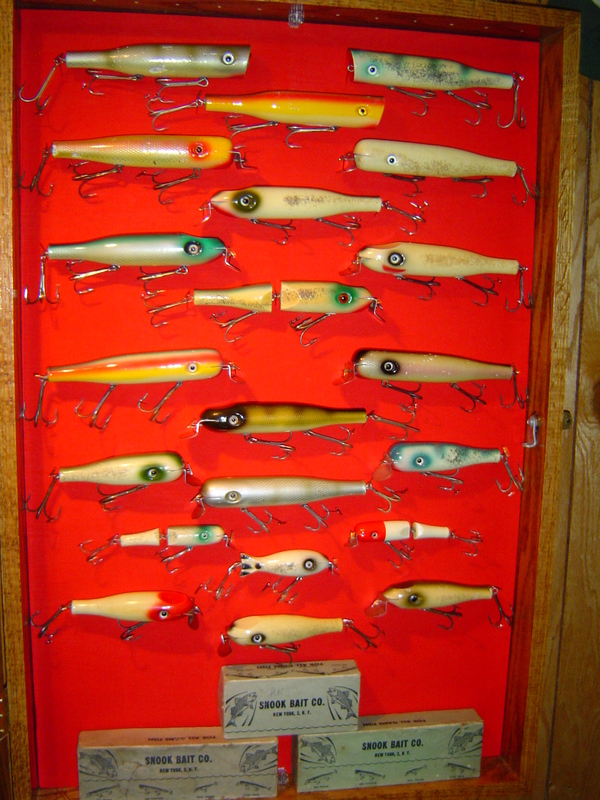
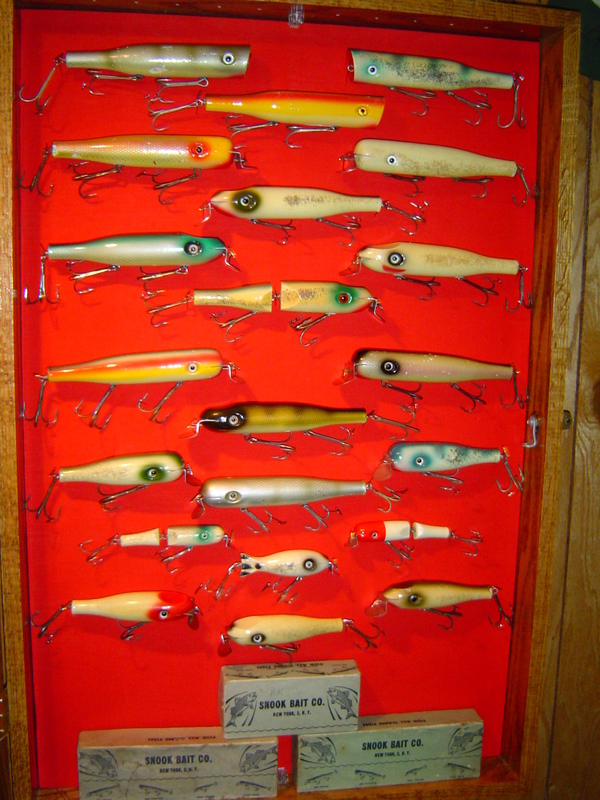
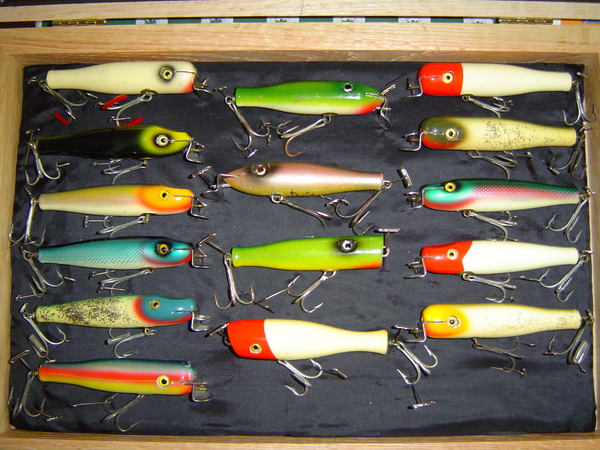
That’s why about 500 lures—some of which date back to World War II—in surf caster Bob Jones’s 1,000-plus collection are safely tucked away in cabinets and display cases at his homes in Springs and Massapequa.
But for three days, beginning Friday, September 23, a fifth of Mr. Jones’s lures will debut at the Water Mill Museum during an exhibition featuring vintage, salt-water baits and lures from the 1940s and 1950s.
“That was probably when they were at their finest,” Mr. Jones said of the era’s baits during a telephone interview last week. “That was their finest hour. That was when they were the most creative. That was when it was all happening. After that, people started copying each other. They were innovative back in those days.”
Salt-water lure making all began along the Eastern coast, Mr. Jones said. In the 1940s, groups of men fished together, and each knew a trade, whether it was painting, carpentry or metalwork—the essential ingredients in constructing salt-water baits. But after World War II, anything metal was hard to come by, Mr. Jones explained. The fishermen wanted to make baits to catch striped bass found in salt water, and needed a hook and lure that would do the trick.
“A big fresh water fish may get to eight pounds,” he said. “Striped bass can be 60, 70 pounds. If you threw fresh-water lures to a striped bass, they’d just tear it apart. You couldn’t land the fish. That’s what was happening in those days.”
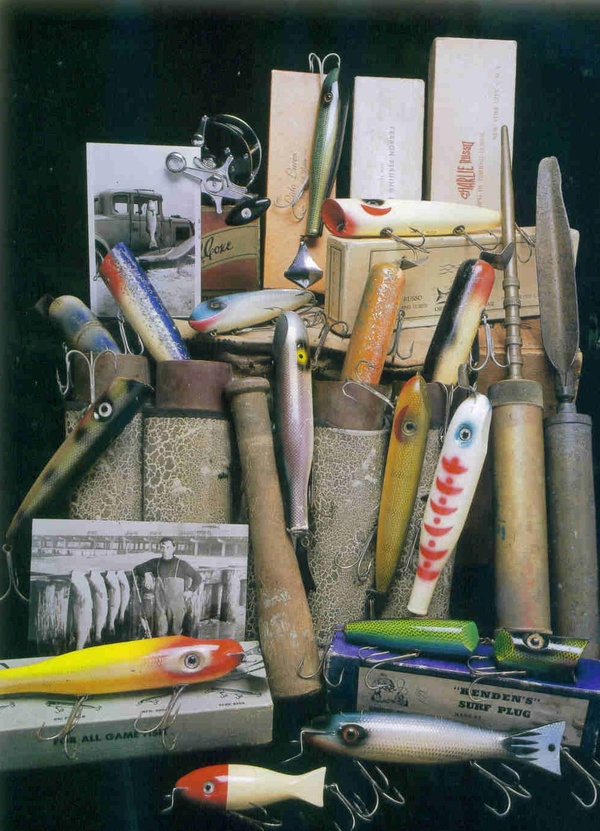
With necessity comes invention, and so the fishermen took salt-water bait manufacturing into their own hands. They made the lures heavier. They made them stronger. Oftentimes, the men wired the lures with a bicycle spoke to hold the hook in place, Mr. Jones said. They attached big glass eyes, typically found in dolls, and would carve gills into the bodies of the lures. And they experimented with different colors, replicating the bait of the season.
And so came the dawn of salt-water bait manufacturers, including New York giants, Lido Lures and Charlie Russo.
“A lot of the ones from New England and New Jersey, the quality just wasn’t there,” Mr. Jones said. “Maybe they weren’t thinking about the big fish like we do in New York, which by far had the best builders. It was just a competition between them. They were trying to outdo each other.”
Fast-forward half a century. Surf casting is mainstream and salt-water lures are easy to come by today, with the exception of the originals, said Mr. Jones, who has been a collector for seven years and belongs to the Salt Water Lure Collector Club, a non-profit organization which promotes the “Golden Age of Surf Fishing,” which many serious collectors believe spanned from 1945 to 1960.
Obviously a serious collector, when asked where he finds his antique baits, Mr. Jones responded, “I’d have to kill you if I told you.”
Joking aside, Mr. Jones said the key to finding the best lures is to network, stay diligent and overpay if someone has a bait of interest.
“Pay extra, then they’ll tell their friends,” he said. “That’s the best way of doing it. If I was to go to a shop and see lures I know are worth $500 to me, I could say, ‘I’ll give you $10,’ and she might take it. If I were to say to her, ‘I’ll give you $250 for it,’ and get very excited, she may say, ‘Wait, I have more downstairs.’”
Lure quality is marked by the thickness of the wire, the type of hook, the way the flat tail is fastened, the care that was taken with the eyes, and the paint job, Mr. Jones said.
But when Ann Lombardo, the Water Mill Museum’s board president and director, looks at the lures, she simply sees works of art.
“There’s a romance around these lures, and it’s such a kind of cult thing, too,” she said during a telephone interview last week. “You have to reach out into what people do here. They fish, they farm and they build houses. This is what our world is here.”
The exhibition will raise funds for the preservation and restoration of the Water Mill Museum, said Ms. Lombardo, who concocted the idea for the exhibit after a recent conversation with her husband, Anthony—a longtime friend of Mr. Jones and fellow surf caster.
“When I was younger, I’d put on a wet suit and we’d fish off the rocks along the ocean in Montauk,” Mr. Jones recalled. “I’ve been fishing all my life, and I’m 64. I’m a fisherman, but a lot of other collectors are not. I’ve always been very competitive, always in fishing contests. I always wanted to catch the big one.
“So to me, these lures are always something you can catch fish with,” he continued. “The ones I like are the ones that are best made, the ones I look at as a fisherman and say, ‘If I were to actually fish with this, this would be a good product.’”
And that alone puts Mr. Jones’ collection into a league of its own, Ms. Lombardo said.
“It’s a rare opportunity to see a collection of these put together all from the same era,” Ms. Lombardo said. “And it’s a rare opportunity to hear what Bob can say about them. It’s not easy to go find and see such an exhibit. It’s not common.”
Salt Water Lure Collector Club member Bob Jones will show and be on site to discuss his vintage, New-York-area salt water fishing baits and lures dating back to the 1940s and 1950s from Friday, September 23, to Sunday, September 25, 11 a.m. to 5 p.m., daily, at the Water Mill Museum in Water Mill. Admission is $5 and children under 13 are free. For more information, call 726-4625 or visit watermillmuseum.com.


 Michelle Trauring on Sep 19, 2011