


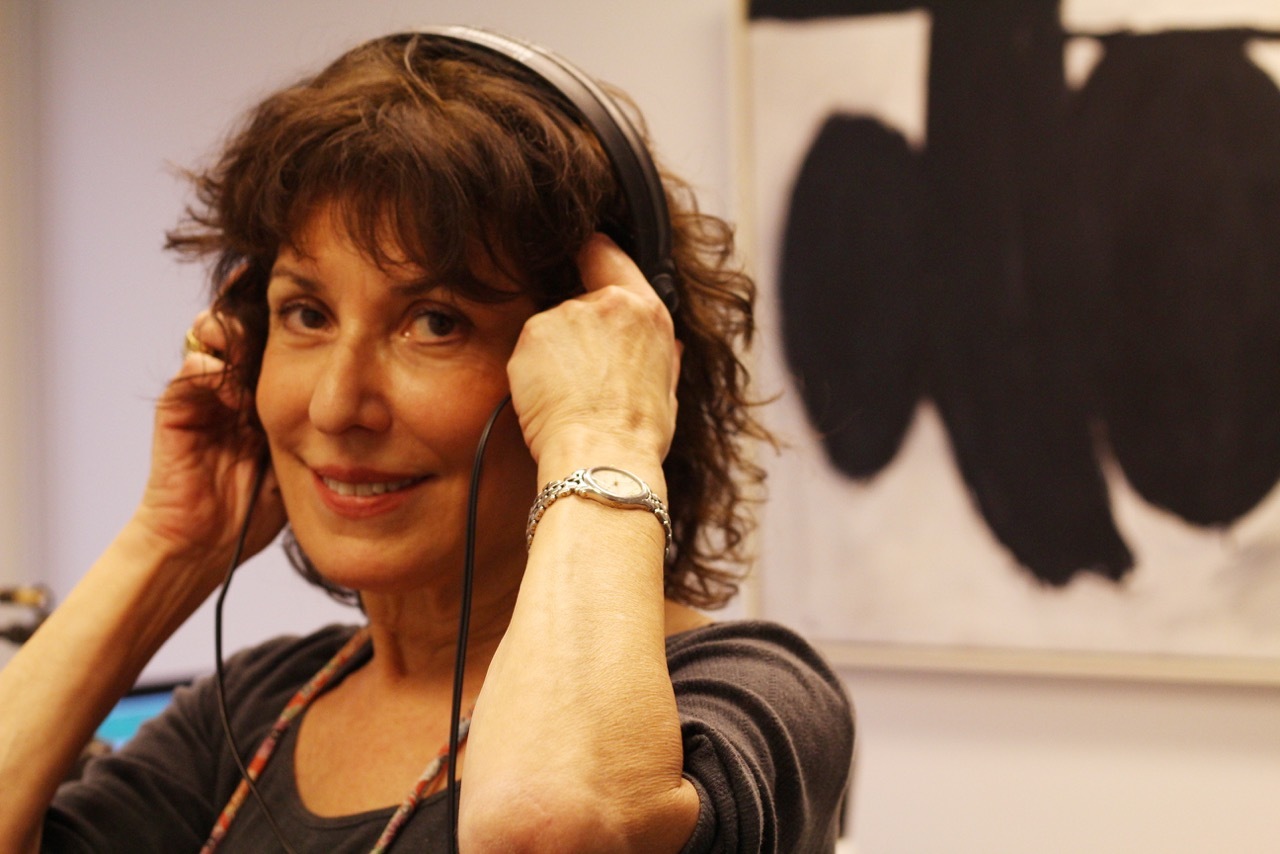
 5 Photos
Daria Price, director of "Driven to Abstraction" in front of a Motherwell fake.
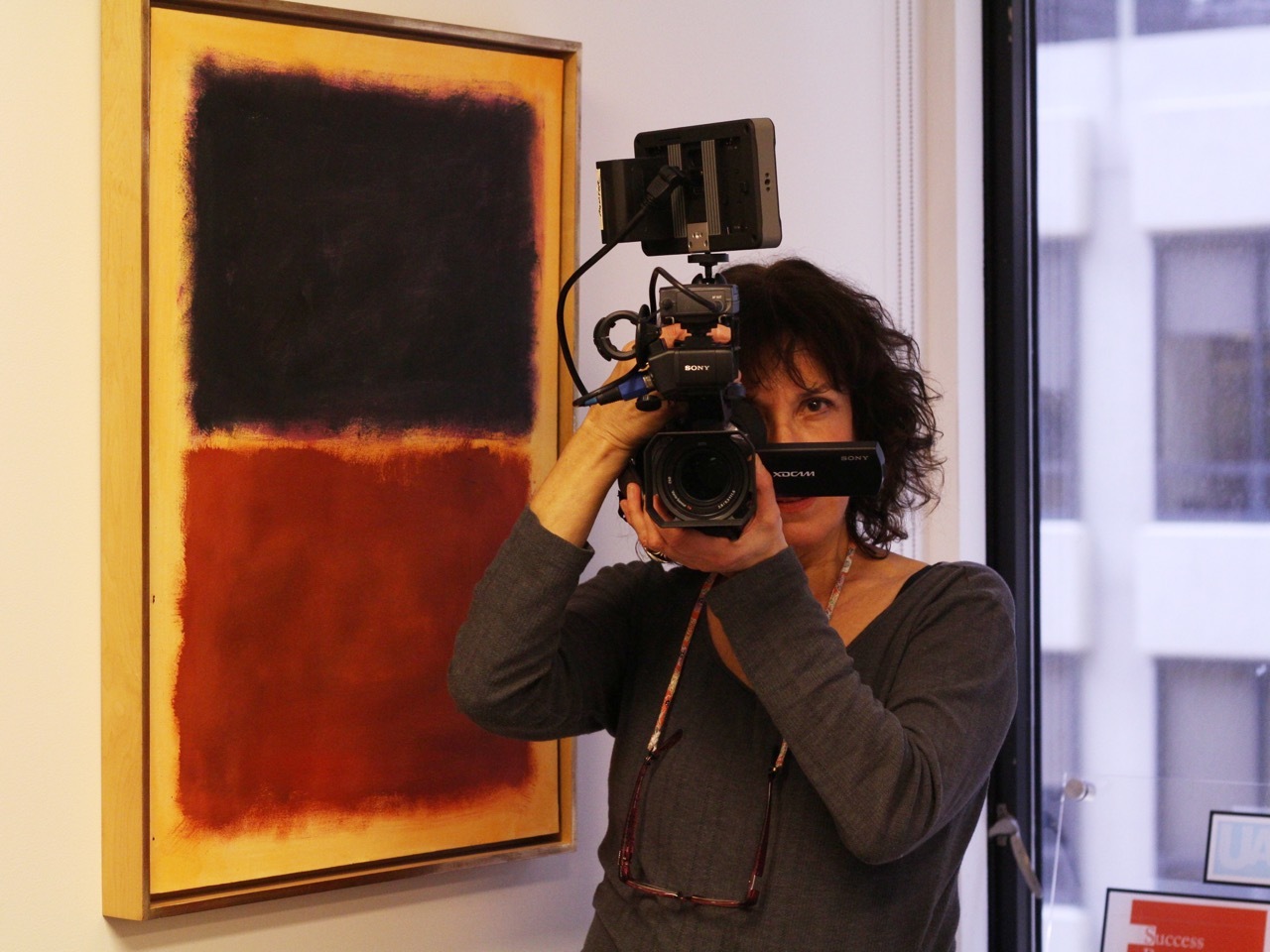
Daria Price, director of "Driven to Abstraction," next to a Rothko fake.
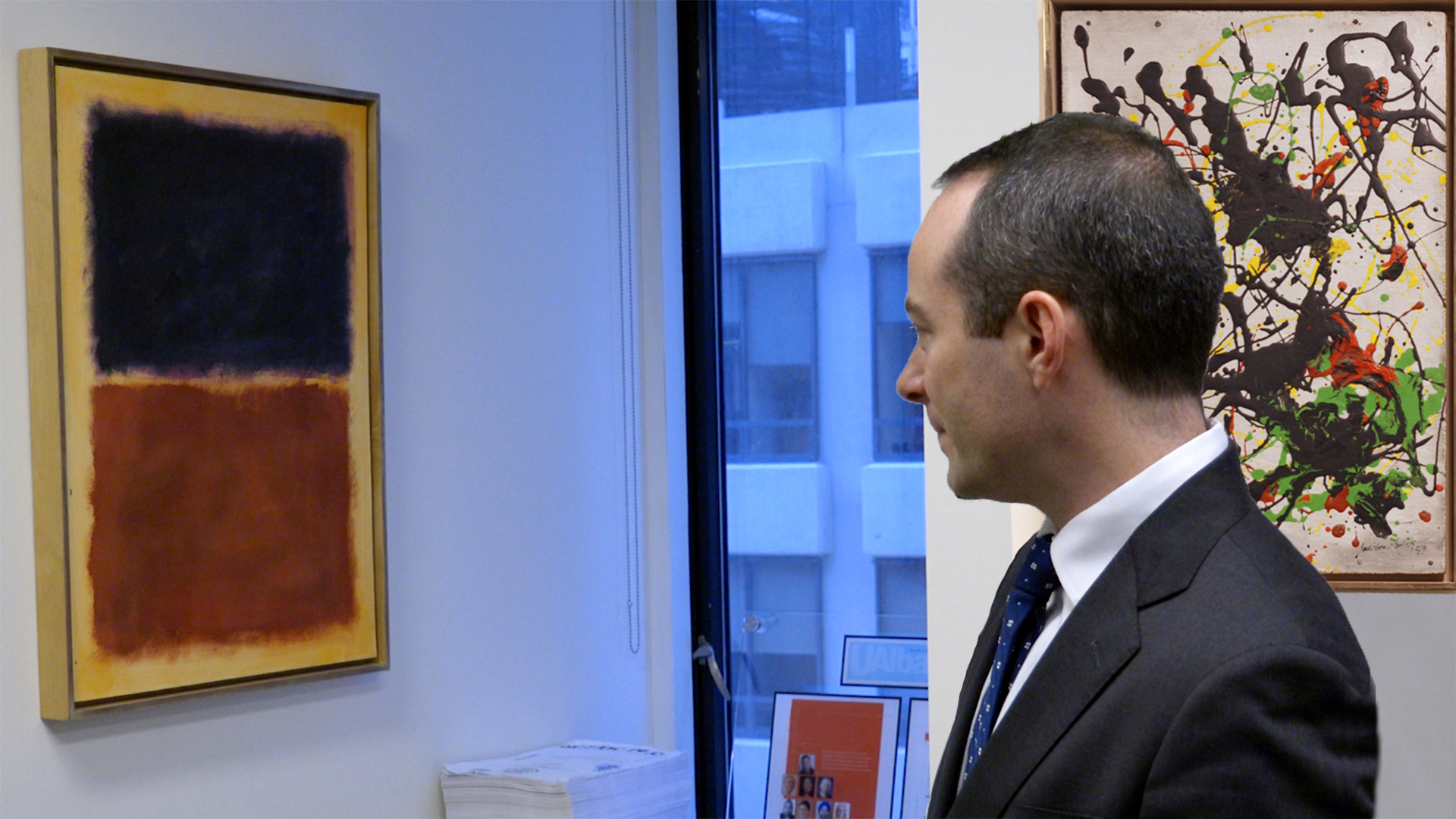
A still image from the film "Driven to Abstraction." Attorney Luke Nikas examines a fake Rothko. Behind him is a fake Pollock.
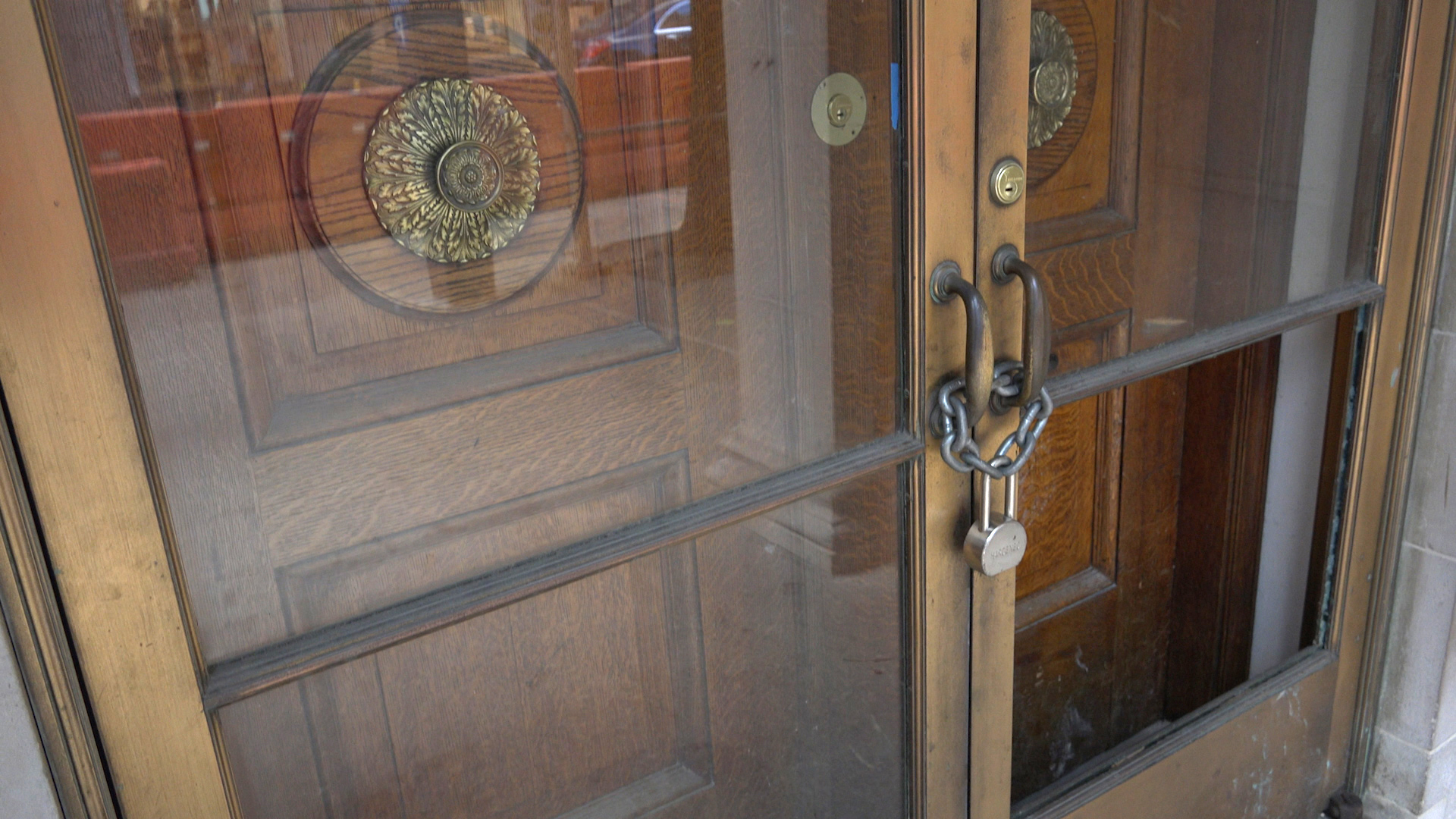
The locked doors of the Knoedler Gallery in Manhattan from the film "Driven to Abstraction."
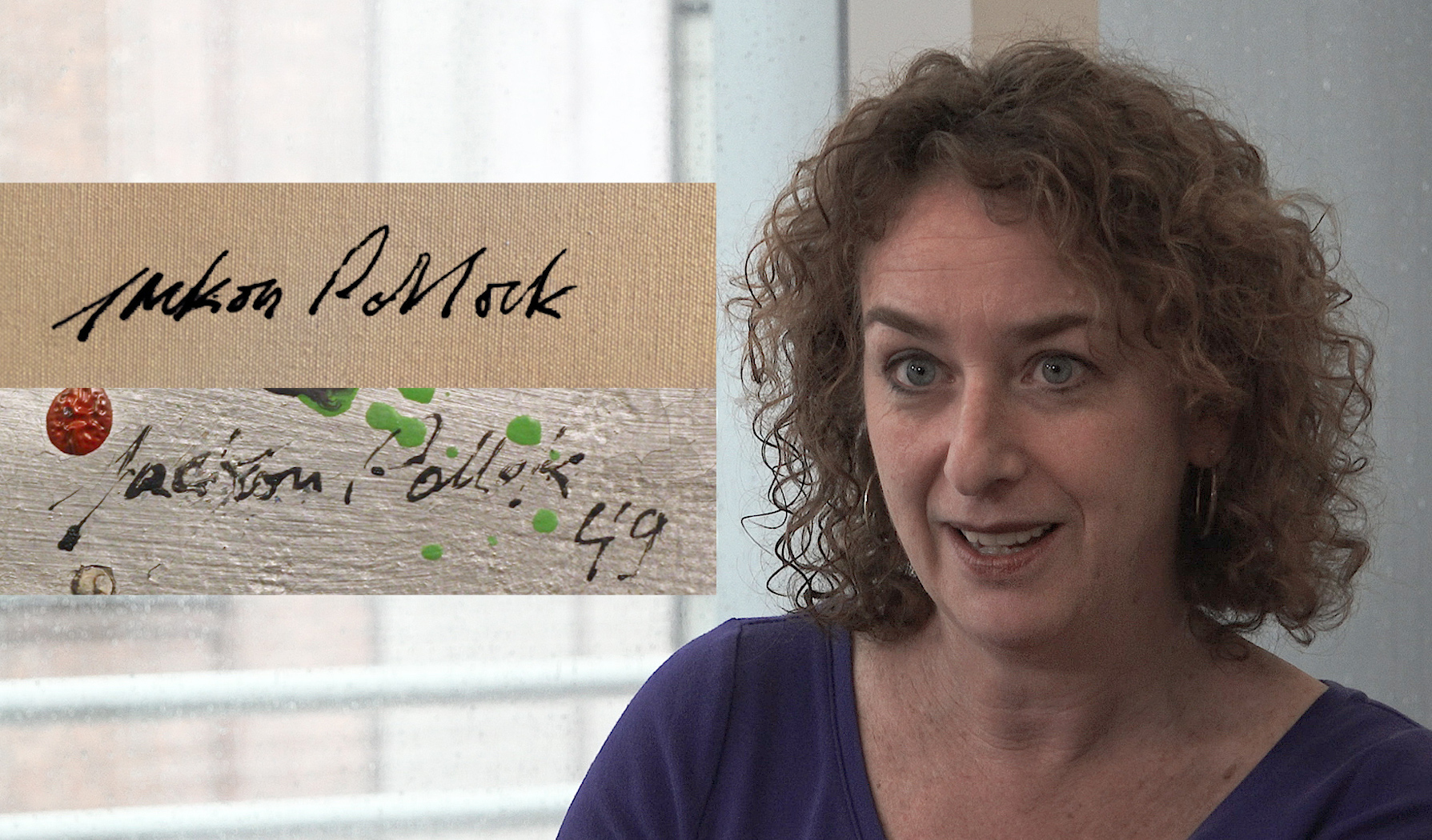
New York Times reporter Patricia Cohen with an image of a mispelled Pollock signaure in the film "Driven to Abstraction."
The art world can be a peculiar animal, especially when it comes to the business side of things. Not only is the appreciation of art subjective, but in many ways, so is its value. Deals can be secretive and shadowy, prices can vary widely depending on who walks through the gallery door and, unlike the buying and selling of nearly any other commodity, it’s perfectly acceptable for sellers to remain anonymous.
And fakes? Well, let’s just say “buyer beware” is sometimes the best policy.
The murky realm of shady art deals is the subject of “Driven to Abstraction,” Daria Price’s 2019 documentary, which will be released by Grasshopper Film for distribution on select digital platforms on August 28. The film screened last December at Bay Street Theater as part of the Hamptons Doc Fest, and beginning September 2, will also be available on the festival’s website, along with a video of the Q&A with Price that followed the screening.
“Driven to Abstraction” explores an $80 million art forgery scam allegedly perpetuated by Knoedler & Co., the now defunct New York City art gallery that was the country’s oldest. At the center of the scandal was the gallery’s longtime director Ann Freedman who, as far back as 1994, was suspected of knowingly selling fake works supposedly painted by some of the world’s most famous Abstract Expressionists — including Mark Rothko, Richard Diebenkorn, Robert Motherwell and Jackson Pollock.
When asked why she wanted to make a film about the scandal, Price admitted it was a story she had been following in the news since suspicions about Knoedler first surfaced. She had even written a screenplay about art forgery.
“In 2011, I was following the story through articles,” she explained. “As it developed and the craziness started to come out, I found it was a fascinating story full of these shape-changing people and nothing made sense.”
Knoedler Gallery, which was located on East 70th Street in Manhattan, shut its doors in 2011 after 165 years in operation. Last August, the final federal lawsuit related to the scheme — this one brought by the Hilti Family Trust, who purchased a $5.5 million fake Rothko from Knoedler in 2002 — was settled in court. But the settlement left many unanswered questions, including exactly what Freedman and gallery owner Michael Hammer really knew about the provenance of the works they were selling.
“I spent every minute at the trial,” said Price. “There were things that were never examined because everyone settled.”
So when she set out to make this art dealing saga into a film, Price knew it was going to be a difficult proposition. She began digging deeper, but soon realized few people would be willing to share their insight into the scandal.
“It’s the art world, and nobody wants to talk,” said Price, who finds that the conundrums inherent in cases like this are layered and many.
For example, if you, as a collector, suspect you may have purchased a fraudulent artwork, do you do the research to find out for certain and then go public with that knowledge in order to spare other victims? Or do you guard your ego and your investment by keeping the suspicions to yourself, never seeking out the truth figuring that one day, you will sell the work to someone else?
Then there’s the question of whether or not Freedman actually believed the works she was selling were authentic, despite mounting evidence to the contrary.
“I think that’s another complexity. I can’t say who knew what, when, but it’s like falling in love,” said Price. “Part of the story is that you fall in love with something — whether it’s a person, an ideology or a piece of art — then, you want to believe, and doubting your belief becomes very complicated, like doubting your love.
“I find that the aspect of self-delusion, conning, being conned, conning others, became interesting on a human level,” she added. “I doubt anyone’s role was set in stone when it first happened. Knoedler was not doing well, but nobody knew that, and it wasn’t common knowledge. Those Abstract Expressionists, when they were making millions on them, was probably the biggest part of their income.”
In hindsight, the story of where the work originated was rather problematic. Over the course of a few short years, Knoedler came across a veritable, and somewhat unbelievable, treasure trove of Abstract Expressionist works — some 40 in all — none of which had ever before been seen on the art market. No expert knew of their existence and there was no provenance or paper trail for the paintings, which were attributed to some of the heaviest hitters in the field. All the works were brought to Knoedler by Glafira Rosales, an unknown art dealer from Long Island who said the paintings belonged to “Mr. X,” a mysterious collector from Asia who had purchased the paintings directly from the artists in the 1950s and ’60s, which is why there was no paper trail.
Suspicions about the work soon arose, and forensic tests by purchasers of some of the pieces revealed that the paint used in the paintings was not available at the time they were purported to have been created. A U.S. Justice Department investigation subsequently revealed that the works had been created in Queens by a Chinese-born artist named Pei-Shen Qian in collaboration with Rosales and her then-partner, Jose Carlos Bergantiños Diaz.
Only Rosales ultimately served time in prison for the scheme. In 2013, she pleaded guilty to charges of wire fraud, money laundering and tax evasion.
“On the stand, Rosales said she was coerced to create the false paintings by the long-term abuse of Diaz. That was the first anyone had heard of it,” said Price. “She was sentenced to nine months house arrest and probation with time served of three months.”
The master forger, Qian, claimed he didn’t know the works were being sold as originals and didn’t make much money from the scheme. He left the U.S. for China in the wake of the scandal, while Diaz high-tailed it to Spain in order to avoid the legal consequences.
In the end, Price found that the journalists who covered the Knoedler case were the key to telling the story on film, including New York Times reporter Patricia Cohen and Sag Harbor’s Michael Shnayerson, who wrote about the scandal for Vanity Fair.
“It’s always a challenge in making a film. I went into this one knowing there would be a lot of resistance,” said Price. “I had a ‘Deep Throat’ pointing me in directions as to where to look. The fear of litigation in the art world is over the top.
“Some people have taken a line that the experts should’ve said more in this scandal. I think experts have the right to make mistakes too,” said Price, who notes that in some cases, art experts who simply may have been responding politely when shown pieces at Knoedler were later shocked to find they had been named as authenticators of the work. “If you live in a world like that, it’s not surprising you can have an absurd 15-year hoax … how people talk when looking at a work casually is not authentication.”
With the Knoedler cases settled and the gallery now closed, not a lot has changed in the art world when it comes to making deals. Ultimately, the question that remains is why a highly respected figure in the art world like Freedman would even think about dealing in works with questionable provenance.
“I think that was one of the curiosities — why would someone seemingly at the top of her game even risk something?” asked Price. “I guess if you look at how fortunes are made and lost in art world, it’s really not so strange. You’re excited when you make a big discovery … But making 40 big discoveries is a little hard to believe.”
To access “Driven to Abstraction” beginning August 28, rent the film via via Grasshopper Film's screening platform, Projectr: https://projectr.tv/driven-to-abstraction/. Daria Price will be engaging in an ongoing virtual Q&A from Friday, August 28, through Thursday, September 3, where audience members can submit questions through the site and will receive an email notification upon response. The film can also be accessed as of September 2 at the Hamptons Doc Fest website, hamptonsdocfest.com. The Q&A with Daria Price from the 2019 festival will also be available for viewing on the site.


 Annette Hinkle on Aug 25, 2020