


 5 Photos
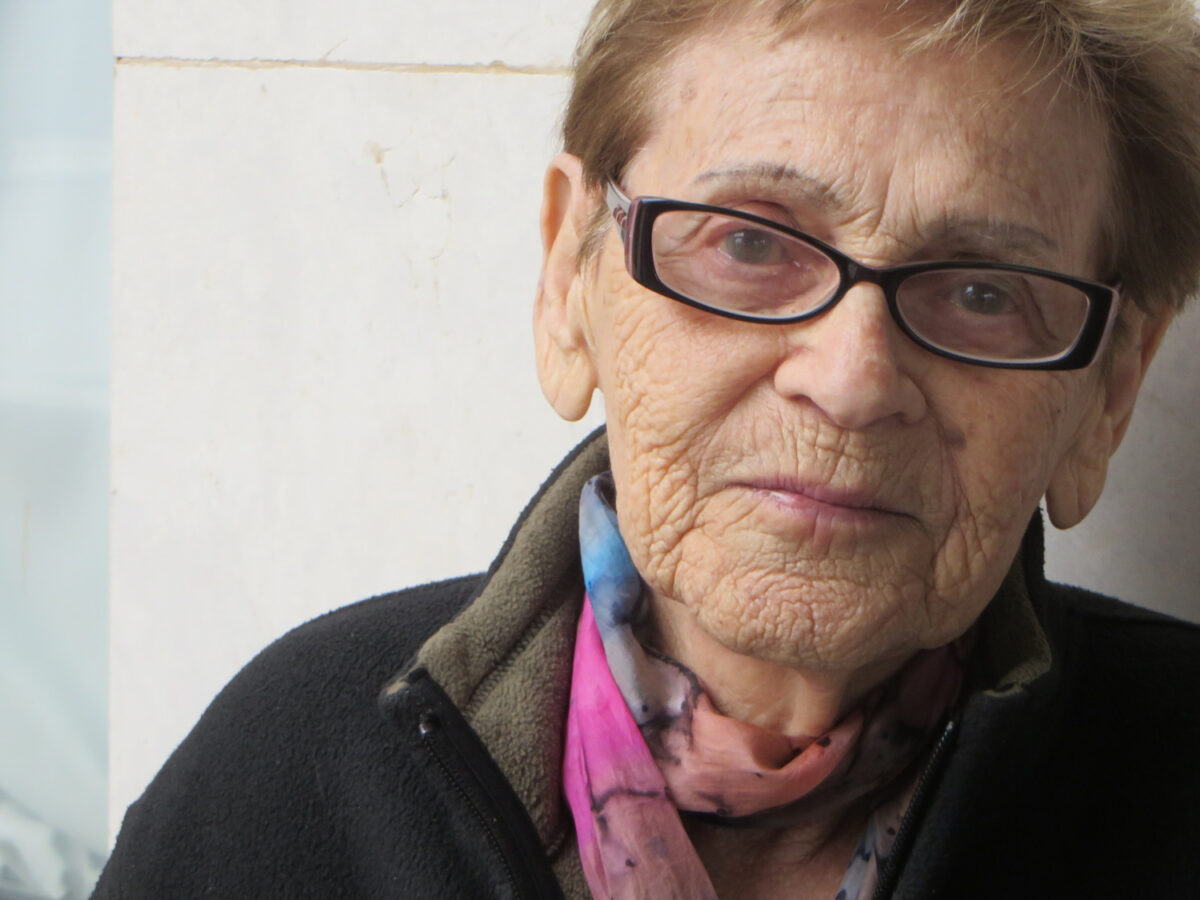
Heather Dune Macadam's film “999: The Forgotten Girls of the Holocaust” includes interviews with Edith Grosman, prisoner 1970 at Auschwitz. STEPHEN HOPKINS
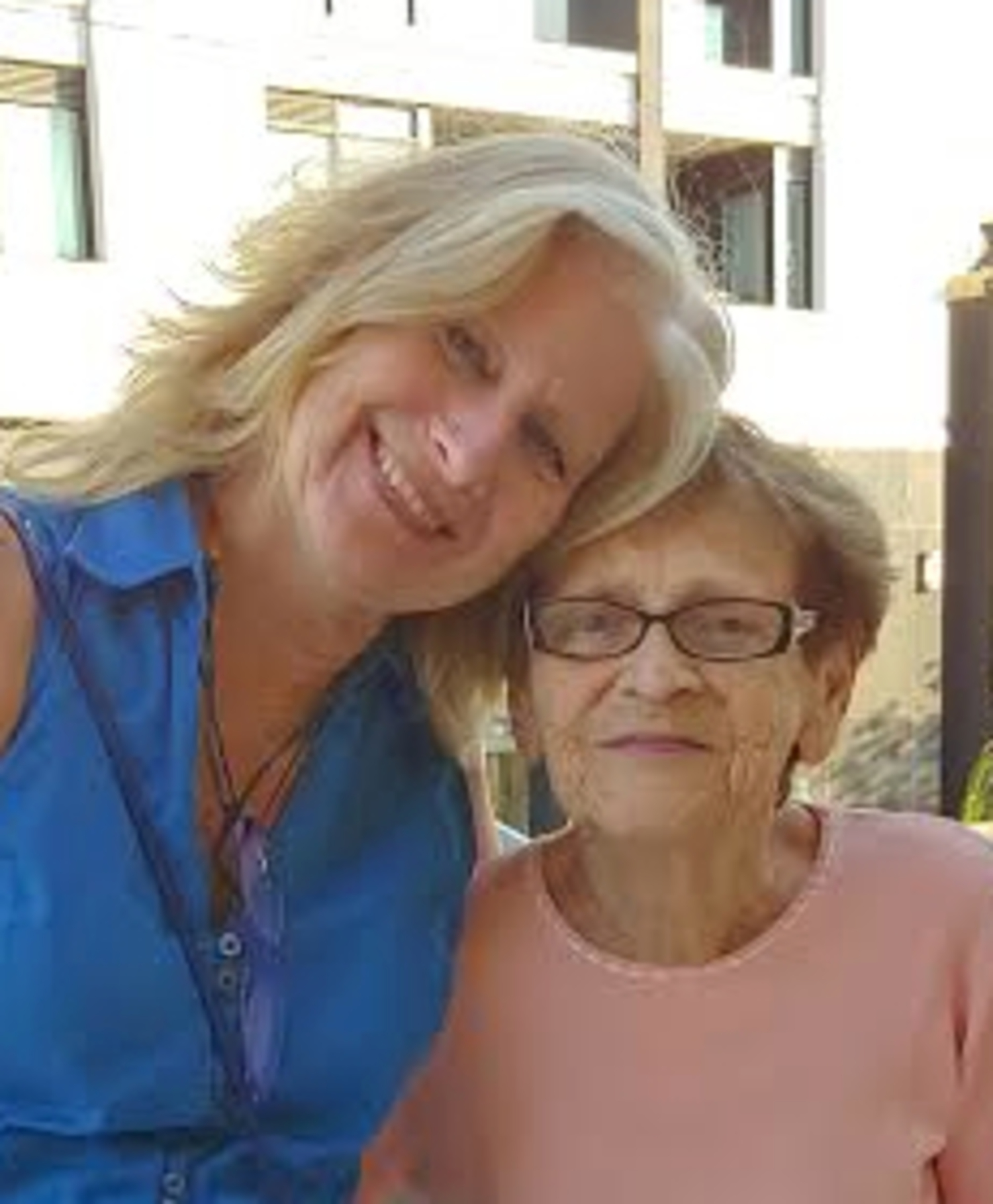
Heather Dune Macadam with Edith Grosman, prisoner 1970 at Auschwitz, who she interviewed for her film “999: The Forgotten Girls of the Holocaust.” STEPHEN HOPKINS
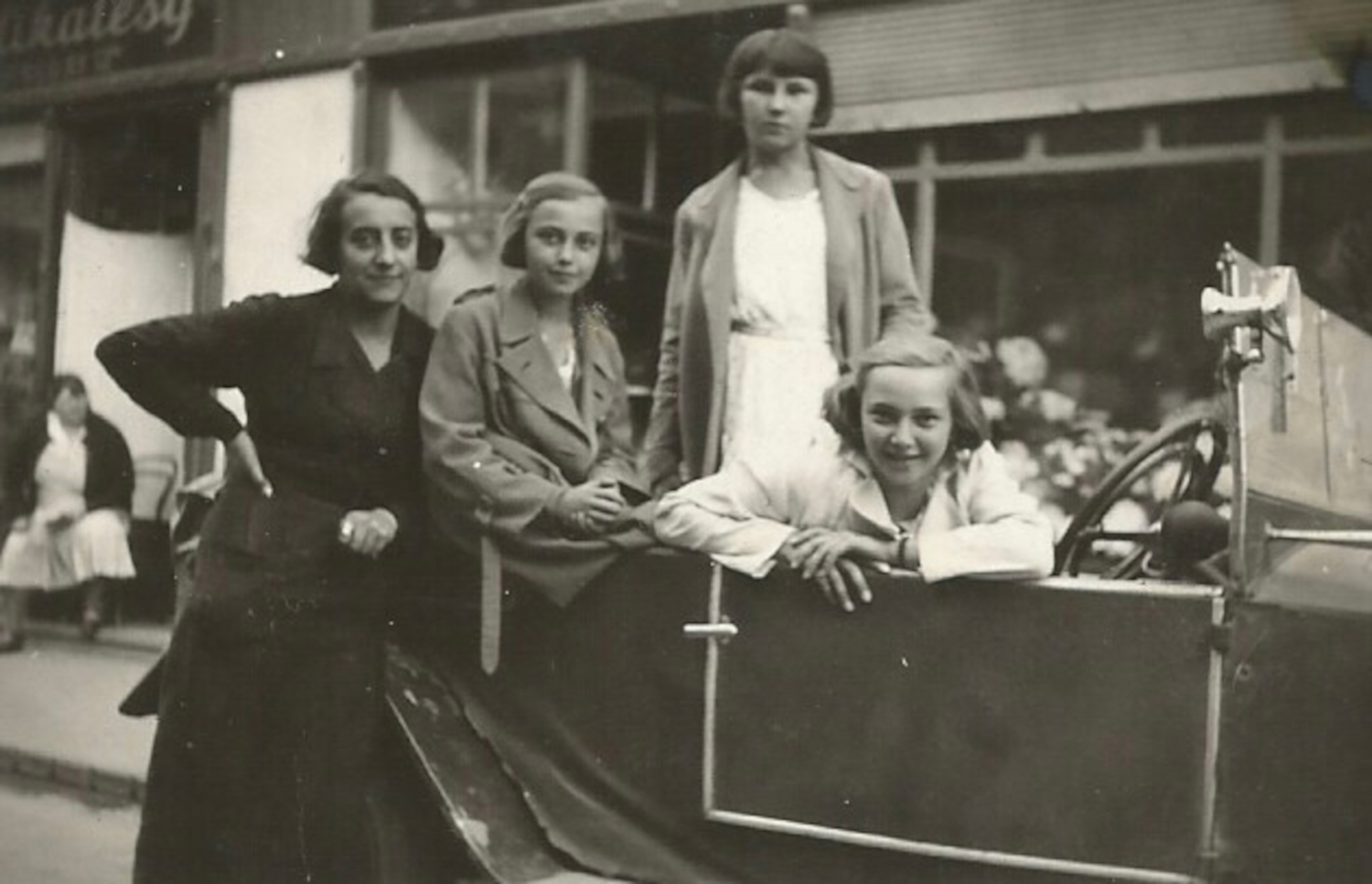
A scene from Heather Dune Macadam's documentary "999: The Forgotten Girls of the Holocaust." COURTESY HEATHER DUNE MACADAM
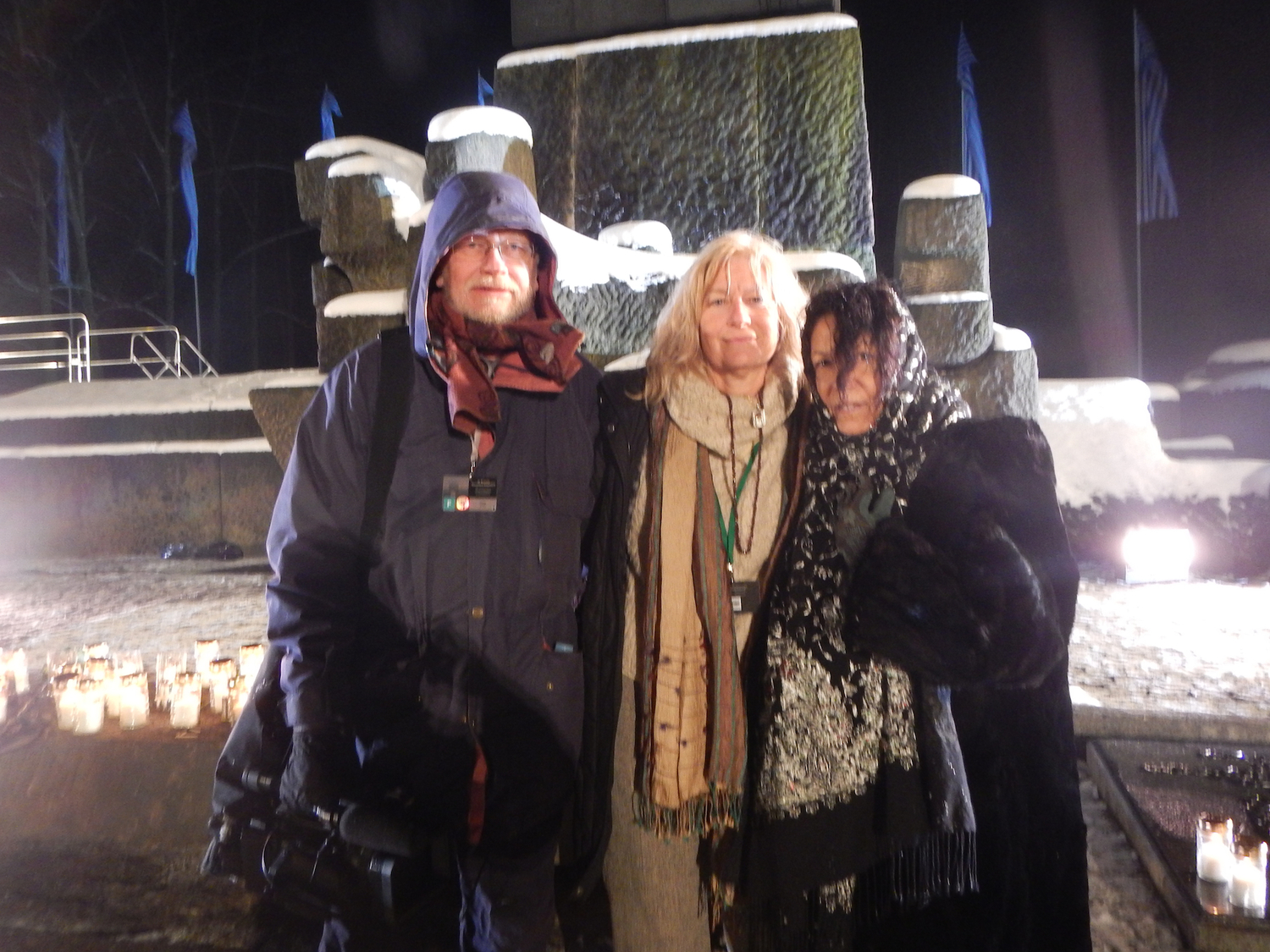
Filmmakers Heather Dune Macadam, Stephen Hopkins and Ellen Frank at Auschwitz during observation of the 80th liberation. Macadam's documentary "999: The Forgotten Girls of the Holocaust," screens at Hamptons Doc Fest on December 5. COURTESY HEATHER DUNE MACADAM
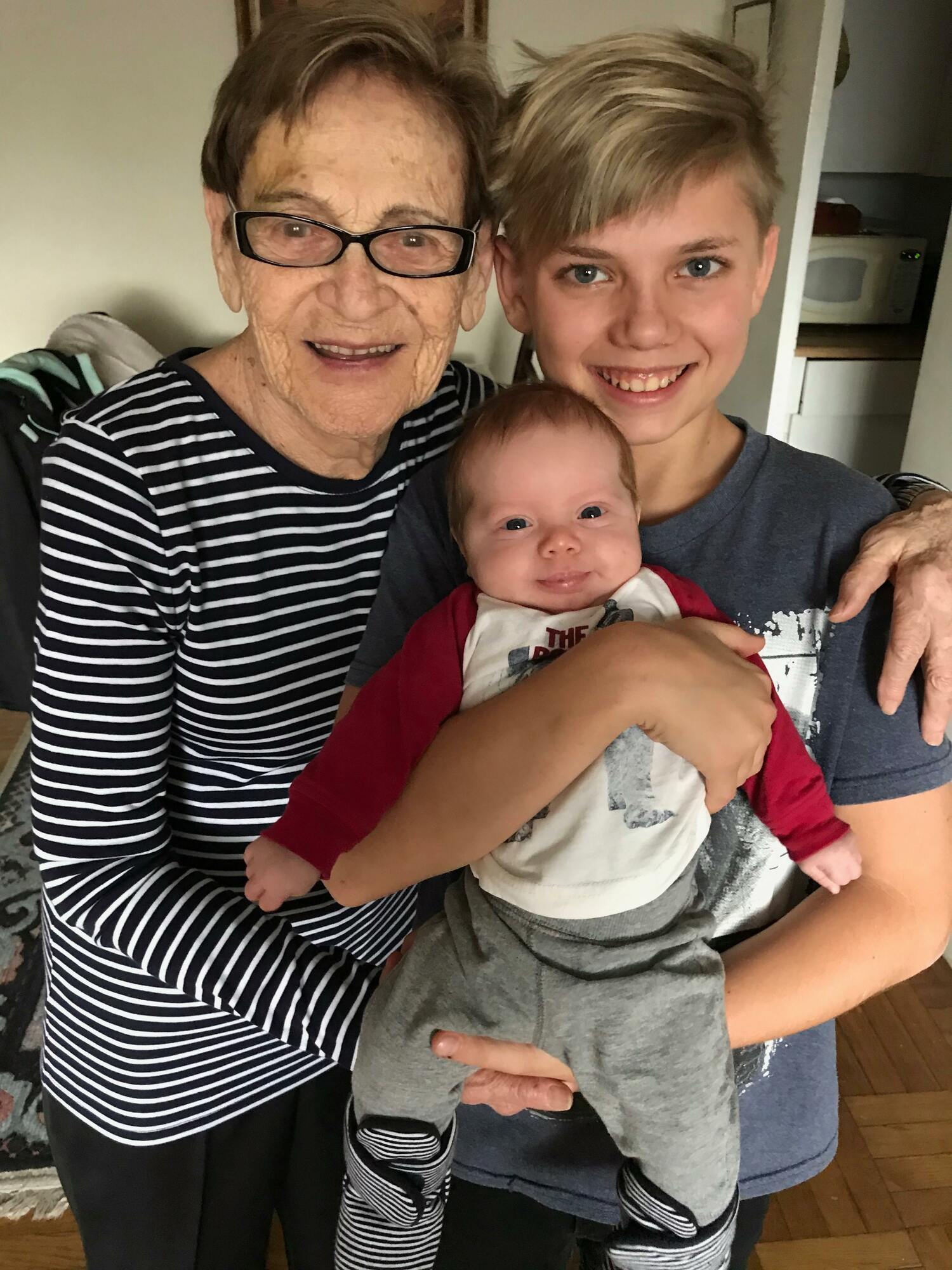
Edith Friedman Grosman with two of her great-grandchildren in 2019. EDITH FRIEDMAN GROSMAN
In 1996, East End author Heather Dune Macadam penned “Rena’s Promise,” a harrowing book that told the true story of Rena Kornreich, a young woman who was sent to Auschwitz from Slovakia on the first Jewish transport in 1942, yet lived to tell the tale.
More than 80 years later, finding new narratives about the Holocaust isn’t easy — and it’s getting harder every day. Though Rena died in 2006, in many ways, her tale has lived on, thanks to Macadam’s determination to uncover the stories about the plight of women at Auschwitz.
It’s a topic that has continued to define her career.
Macadam’s 2019 book, “999: The Extraordinary Young Women of the First Official Jewish Transport to Auschwitz,” which has been translated into 19 languages, uncovered the story of almost 1,000 teenage Jewish girls and young women who were rounded up in Slovakia and shipped to Auschwitz in March 1942, including Rena.
Now, Macadam has made a documentary about the event — “999: The Forgotten Girls of the Holocaust,” which will screen at the Hamptons Doc Fest on Tuesday, December 5, at 8 p.m. The film is receiving the festival’s Human Rights Award and Macadam, an East End resident, will be on hand to take part in a Q&A about it. The film recently screened at the Austin Jewish Film Festival, where Macadam reports it had the highest rating of any documentary shown in the festival’s 21 years.
In order to tell the story, Macadam tracked down survivors of that first transport and interviewed as many of them on film as she could prior to their deaths. The film begins in Humenné, Slovakia in 1942, where young women were told by officials there that they were being hired to perform government service work, possibly in Germany. The women, between the ages of 16 and 36, often went eagerly, seeing the mission as an opportunity to make much needed money for their struggling families. They expected to be back home in Slovakia in a few months.
But it was not to be. Slovakia’s president Jozeph Tiso, a former Catholic priest and rabid anti-Semite, had installed a fascist government and embraced many of the Third Reich’s methods. By 1940, anti-Jewish legislation was even more severe in Slovakia than it was in Germany. Jewish businesses were transferred to gentile owners and Tiso struck a secret deal with the Nazis to export unmarried Jewish women to Poland as a slave labor force.
Macadam believes that the number of women taken on that first transport was set specifically at 999 by Nazi Heinrich Himmler due to his occult obsession. The film also makes the case that by taking unmarried girls and women to Auschwitz, the Nazis were removing females of reproductive age from the Jewish population.
Very few of them ever made it back home.
“In 2012, I started making the film. I thought it would be easier than writing a book,” said Macadam in a recent interview in Sag Harbor. “I worked on the film until 2017 or ’18, took two years off to write the book and then came back to it.
“The women kept showing up. After the book came out, someone said ‘I can’t believe you didn’t interview my mother,” recalled Macadam. “I said, ‘I’m sorry, I didn’t know about your mother, I’ll interview her now.’ I had to get approval to use all the stories and finding the families wasn’t easy.”
And Macadam was fortunate to get the six women survivors of Auschwitz on film when she did.
“The number of participants were down to four when the film was finished in spring,” she said. “Now, we’re down to just two — both of them are in Israel.”
Both Macadam’s book and the film largely came together at a time when she was living in Europe and realized that she could fly to Slovakia for $14. Macadam made plans to be there in 2017 for the 75th anniversary of that first transport, and in advance of the trip, reached out to families she had connected with over the years to see if there were people who could talk about it all. That’s how she met her first crucial subject — Edith Friedman Grosman, who was guest of honor at the ceremonies and agreed to talk to Macadam and her film crew.
“It was so easy to go. I discovered Edith Grosman was on the transport. I had no idea of anyone other than Rena on the first transport,” said Macadam. “Rena was one of the 999 — she was Polish, but was hiding in Humenné in Slovakia with her sister. Edith was Slovak. It’s like a puzzle. Rena had parts of this puzzle and things I didn’t know, Edith had other parts and there were her parts that overlapped.”
Though Edith was much younger than Rena, they were both connected to a young woman named Adela Gross, who Macadam described as “a beautiful redheaded girl who was selected to die at Auschwitz.”
“After the war, Edith ended up marrying into the family — her future sister-in-law was Adela’s sister,” said Macadam. “It turns out that Rena had witnessed Adela going to the gas chamber.”
In Slovakia, Adela Gross’s surviving family, who never knew what happened to her, read Macadam’s book and learned the truth.
“Edith was there, and so I reached out and said, ‘Would you be willing to talk to me?’”
She was, and in many ways, Edith, who died in 2020 at the age of 96, provides the most detailed account of what the women endured, first in Auschwitz and then nearby in Birkenau.
“Auschwitz was a men’s camp in 1941, and in ’42 it was split between men and women. Then in August ’42, they moved the women to Birkenau,” Macadam explained. “Because of Edith, she’s the backbone, the spine of the whole story. She can tell me who she’s connected to and what happened to the families.”
Narrated by British-Iranian journalist, documentary producer and author Ramita Navai, the film uses testimony of survivors gathered over the course of 30 years, home movies, archival footage, photographs, prisoner artwork and reenactments to tell the stories. Though finding survivors to sit down for interviews was one challenge, locating archival footage to help illustrate their narratives was another.
“In terms of the film, my editor was quite brilliant. There is so much in archives that it’s really hard to make it a shiny, perfect HD film,” said Macadam. “The Shoah Foundation’s VHS tapes, they’re bad and faded. But because they are digitized, there are glitches and things. My editor ended up embracing the glitches, and even stuck some extra ones in there for artistic reasons.
“When she suggested that’s what we do, it opened up and helped the story.”
One of the most difficult aspects of using archival footage is the fact that Macadam found very little showing women in concentration camps. The footage she did find depicts women wearing the striped concentration camp uniforms, which didn’t come about until later. So Macadam resorted to a novel approach to telling the tale — using artwork.
Polish artist Zofia Kostyrko-Edwards, who had worked at Disney with Jane Schonberger, one of Macadam’s producers, was brought in to help tell illustrate the film through her artwork.
“Zofia is a portrait artist. We had the idea of her doing a portrait of a woman and then asked her to take the hair off. It was amazing. Then we asked, ‘Can you put Russian uniforms on them,’” said Macadam, explaining that when the women first arrived at Auschwitz, they were forced to wear the uniforms of dead Soviet soldiers.
Though it would seem that being on the first transport to Auschwitz would be an automatic death sentence — and often was — in some ways, the earlier arrivals faced better odds of surviving than those who came later. That’s because they had time to learn the system, the various jobs, the guards and the camp layout, before it became overcrowded, while later arrivals would typically be sent directly to the gas chambers. Ironically, one guard even made a point to spare the lives of the women who had numbered tattoos below 2000 — meaning they had been among those who were the first to arrive at the camp.
But very few did survive, and even fewer made it to their 80s and 90s, which is why Macadam did her best to interview as many of them as possible while they were still able to tell their stories.
“Multiple narratives makes it a much more complicated and a more complex story,” said Macadam.
Fortunately, Sag Harbor’s Susan Lacy, creator of the PBS series “American Masters,” is one of the film’s producers and Macadam was able to consult her in the process.
“She’s incredible. I contacted her, asking for advice, because I was really struggling,” Macadam admitted. “We had gotten a rough cut together. I was getting a lot of feedback — a lot of critical feedback. It was too big, I kept changing my mind, shifting and pulling things. I’m not an editor, I’d never done it before. I was worried about the dramatic arcs, the timing, then everyone else had opinions.
“So I called Susan. I showed her the rough cut, and she thought it was great,” said Macadam. “I said, “Really? Are you sure?’ She said, ‘Trust your gut,’ which is hard to do.”
While making the film, she also had more than one person question her motives, and people have asked her why this story is so important to her.
“I’ve had people say, ‘What’s it to you? Are you Jewish?’ No, but I’m a woman,” said Macadam. “That’s my connection. To me, that’s the target audience and that’s why I think it’s important historically. Because we are targets and our daughters are targets.”
Hamptons Doc Fest screens Heather Dune Macadam’s film “999: The Forgotten Girls of the Holocaust” on Tuesday, December 5, at 8 p.m. at Bay Street Theater in Sag Harbor followed by a Q&A. The film will receive year’s HDF Human Rights Award. For tickets, visit hamptonsdocfest.com.


 Annette Hinkle on Nov 20, 2023