


 7 Photos
Some people just have “that voice.” Think commentator Paul Harvey, actor James Earl Jones, radio personality Casey Kasem, narrator Rod Serling and journalist Edward R. Murrow.
It is by no coincidence that the above list is all men. Until recently, voice acting was a male-dominated industry. The announcer-type voices that were sought out for commercial acting now represent less than 10 percent of the voice acting jobs available for an equal proportion of men and women.
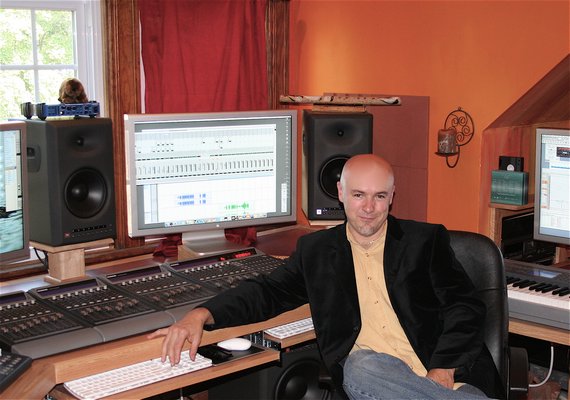
Today, the voice acting industry thrives on voices filled with sincerity and believability, according to David Bourgeois, president of Voice Coaches. He will host a 2½-hour workshop, “Getting Paid to Talk,” on Monday, September 23, at the Southampton Cultural Center for those who are interested in learning how to break into the field.
“The class is designed as an upbeat, realistic introduction to the voiceover field,” Mr. Bourgeois explained from his production studio in Albany, New York. “You can’t become a voiceover artist in a single evening and, at the same time, the voiceover field isn’t a good fit for everybody. But it has really opened up to a broader range of viable voices.”
By definition, a voiceover is a production technique pre-recorded by an unseen narrator previously used on, predominantly, television. But now, 90 percent of voiceover work is non-commercial, Mr. Bourgeois said. The field also includes audio books, training and educational content, phone systems, video games, documentary programming and fixed installations—for use at historical sites, museums and theme parks, for example.
Each requires a different type of voice, Mr. Bourgeois said.
“It is important to understand your niche. What does your voice do best? What are you most likely to get cast doing?” he said. “Someone might have a voice that’s a little more hyper-nasal and may convey humor and sarcasm. Someone clear of any affect at all is good for training material or public-service announcements. Maybe your voice conveys a warmth and breathy quality, which would work great for children’s material, but at the same time for sensual material, like for a wine or chocolate commercial.”
According to Forbes.com, the average voice actor earns between $50,000 and $60,000 per year—which is dependent on the size and scope of a project, Mr. Bourgeois emphasized, adding that voice acting is not for everybody, including professional screen and stage actors.
“I’ve had a lot of actors come in and they’re horrified when they hear their work back,” he laughed. “People, in general, you can see them and hear them. A voice actor has to do everything with their hands tied behind their backs. That’s one of the greatest challenges in effective voiceover communication: getting around the lack of visual communication.”
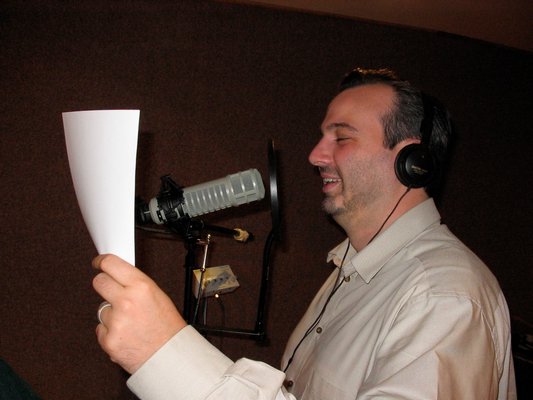
In the studio, Mr. Bourgeois looks for “natural-plus” delivery, or a voice that sounds conversational with a little push on it, he said. Exhale more air over the voice for a more sincere and caring tone, or play with facial muscles by smiling, frowning or grimacing to make a voiceover more dynamic.
The late Mr. Harvey—a familiar voice on ABC Radio Networks who was famous for his “The Rest of the Story” segments—had voice acting down to an art form, Mr. Bourgeois said.
“A legendary radio broadcaster, probably my favorite,” he said of Mr. Harvey, who died in 2009. “The guy continuously sounded like he was telling you a story, even if he was selling you a product. He was certainly one of the most effective voices.”
One of the biggest mistakes a voice actor can make is jumping straight into trying to put together a demo tape without any training, Mr. Bourgeois said. Do some prep work first, he said. Understand job responsibilities, develop basic voiceover skills, build up script interpretation and learn how to use a microphone.
“Some voices are naturally reproduced better over electronic media systems, or naturally sound better on a microphone than others. That’s not a prerequisite for success,” he said. “It’s not just about having a good voice. But boy, it’s not bad.”
Voice Coaches will host the introductory workshop “Getting Paid to Talk” on Monday, September 23, at the Southampton Cultural Center. The fee is $25 and enrollment is limited. For more information, call 287-4377.


 Michelle Trauring on Sep 12, 2013