


 1 Photo
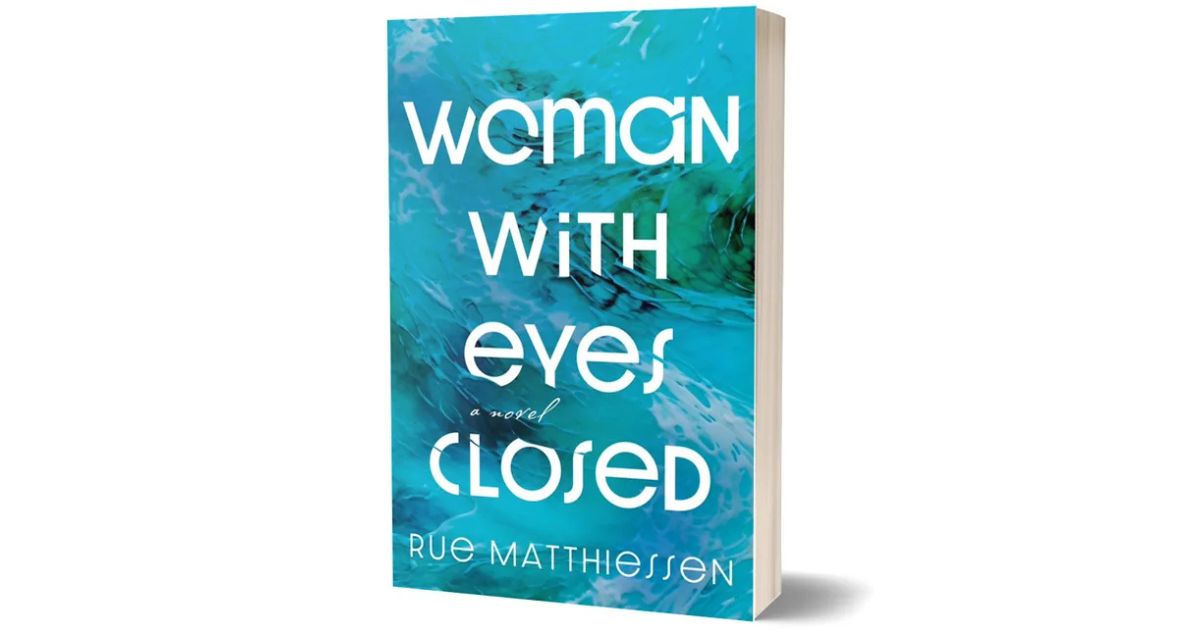
"Woman With Eyes Closed" by Rue Matthiessen
Rue Matthiessen’s “Woman With Eyes Closed” may attract for several reasons: The Matthiessen name — Peter Matthiessen was Rue’s adoptive father, her mother his second wife, Deborah Love; the title of the book may invoke Lucian Freud’s 2002 portrait so named; and the grounding subject — an art heist from the Kunsthal Museum in Rotterdam in the Netherlands — actually happened in 2012, the date of the opening of the novel (though in reality seven works were stolen from the museum, not the four in the tale). Then there’s a major setting of the narrative — Sagaponack.
The novel is Matthiessen’s first, though she’s a published nonfiction writer and memoirist. It’s ambitious and informed though somewhat diffuse in intention and effect: perhaps too much attempted in one novel; diverse characters and events in different countries who never meet. The Netherlands sections follow the young criminals who commit the art theft, detailing their relationships. The Hamptons parts focus on a critique of pop art and big money. Although each chapter opens with a dateline, noting how many days it is after the heist, the device doesn’t really unify the two parts, since the characters in both don’t interact. Not to mention the devastating hurricane, effectively described, which hits the East End and constitutes the book’s climax.
The story begins with the theft in progress, as three youngsters break into the museum and make off with two Monets, one Picasso and a “Hochberg” portrait, “Woman With Eyes Closed,” a haunting piece that causes wonder about its subject, said to be a contemplative dying middle-aged woman. The thieves are two young brothers and the brainy punk girlfriend of one of them, who’s calling the shots. The fourth in the group, who sits in her squalid home, old beyond her years, a wily Mme. Defarge type, is the boys’ harsh but affectionate mother, who planned the heist. The family exists mainly on drug money the elder boy delivers. This Netherlands section engages with details about how the family manages and the dynamics among them, evoking sympathy as well as curiosity about how they will fare. It’s soon revealed that the boys have been caught.
The other story line focuses on Perrin Clayton, an attractive 35-year-old East End painter with roots in Sagaponack where she grew up with her father, a once-famous, still remembered admired artist, her beloved mother having died years ago. Perrin lives nearby with her wealthy pop artist husband, Jack, in a glass box he has built on the beach — a “clear, lit up Rubik’s cube.” Self-absorbed and of dubious talent, Jack is not that smart (he thinks Evelyn Waugh is a “she”) and doesn’t stick around for the hurricane. He represents what is worst in modern art.
What finally links the Netherlands and Sagaponack sections comes mid-book by way of a handsome MI5 investigator, Chris (not his real name) who has had a lead in London that the stolen art works may be in the possession of a Russian mobster living in Sagaponack. Chris strongly believes that if only he can get close to the Russian, he’ll solve the case and prove his worth again, after a glitch in his career. He, too, gets a backstory. When Chris attends a well-fueled bash thrown by the Russian and meets Perrin, he’s immediately attracted to her, romantically and professionally — she’d be the perfect spy to get into the horny Russian’s house and seduce him into showing her the paintings. The boys’ mother has insisted that she has burned the Monets. The DNA evidence is inconclusive. Chris isn’t buying.
The narrative also introduces minor subjects that relate to individual characters in each section, such as Perrin’s distress at how many birds crash into her glass cube house, which prompts her to adopt a damaged crow. Perrin’s famous father is a good reason for Matthiessen to revisit the art scene in Springs in the 1950s, when love of art, not corporate greed, seemed to define motives and market.
Matthiessen’s passions and purposes are admirable, and many parts of “Woman With Eyes Closed” display good writing, especially passages on the land and sea. She also takes risks with unusual images, though some are not effective. What does it mean to look around “with starry-eyed irritation”? or “He felt queasy as if he had fallen into a deranged child’s Lego creation.” Will readers recognize a Henry James reference to a “Milly Theale” in a description of a green linen dress (“The Wings of the Dove”)?
For sure, however, especially for East End readers, “Woman With Eyes Closed” will longingly resonate, recalling a time before luxe buildings and big money art acquisitions came to dominate a once genuine artists’ community. And the novel has — no spoiler alert — a lovely ending.
Rue Matthiessen’s “Woman With Eyes Closed” comes out on June 17, and the book is available now for pre-order both in hardcover and as a paperback at latahbooks.com.


 Joan Baum on Feb 20, 2025