


 8 Photos
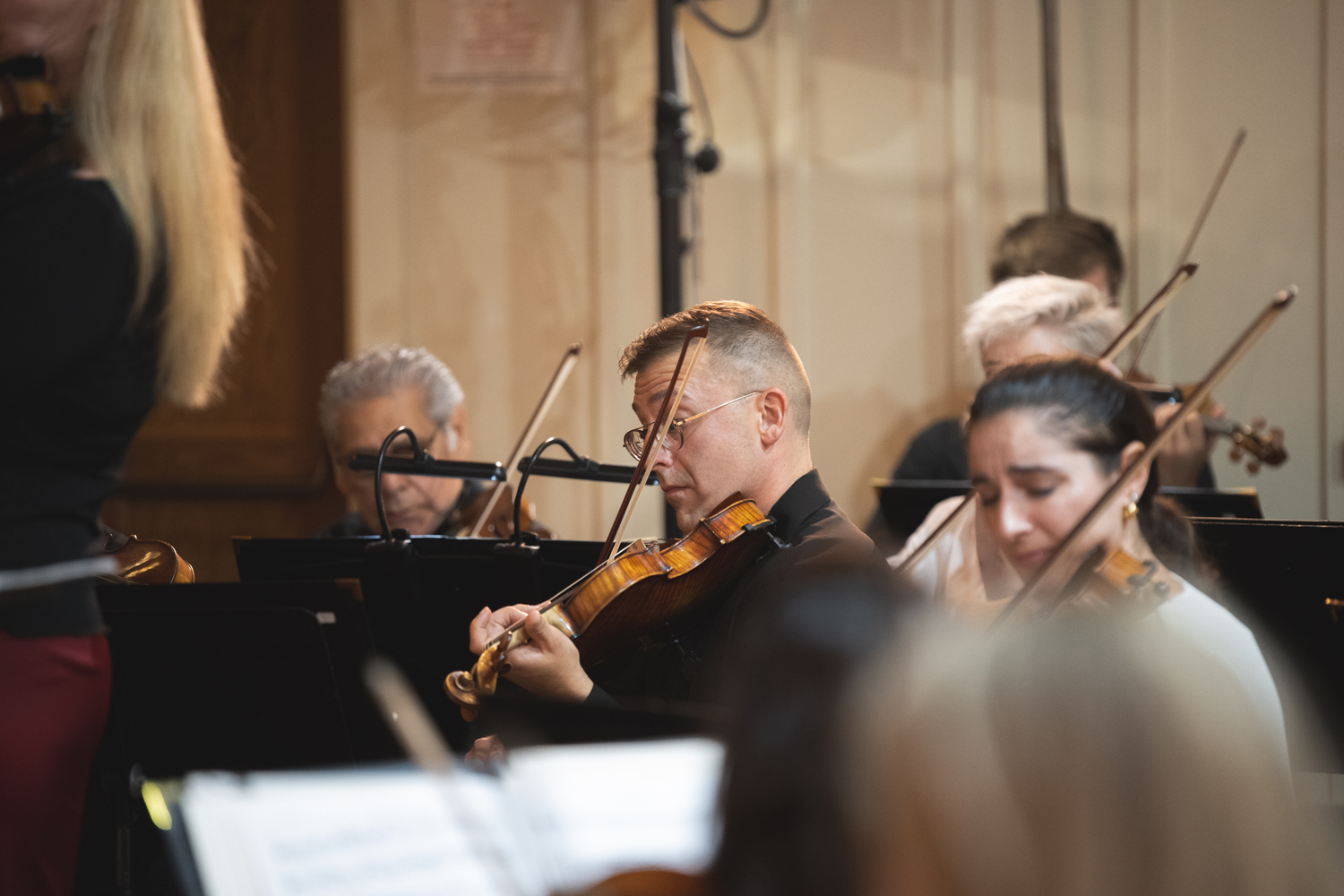
TH·FM assistant concertmaster Garry Ianco performing in St. Luke's Hoie Hall. DANE DUPUIS
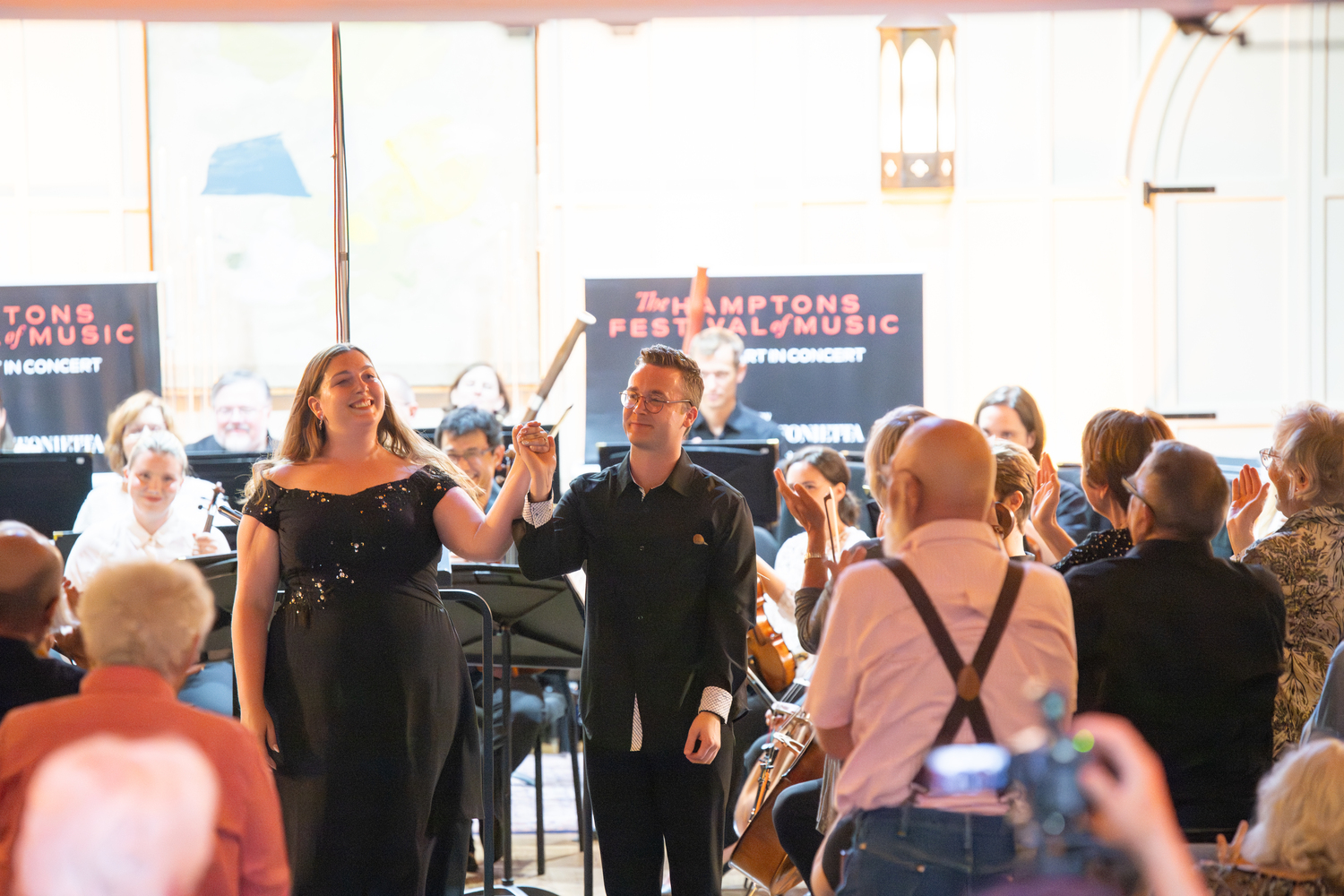
Soprano Greer Lyle and TH·FM associate conductor Logan Souther performing in a previous concert at St. Luke's Hoie Hall. DANE DUPUIS
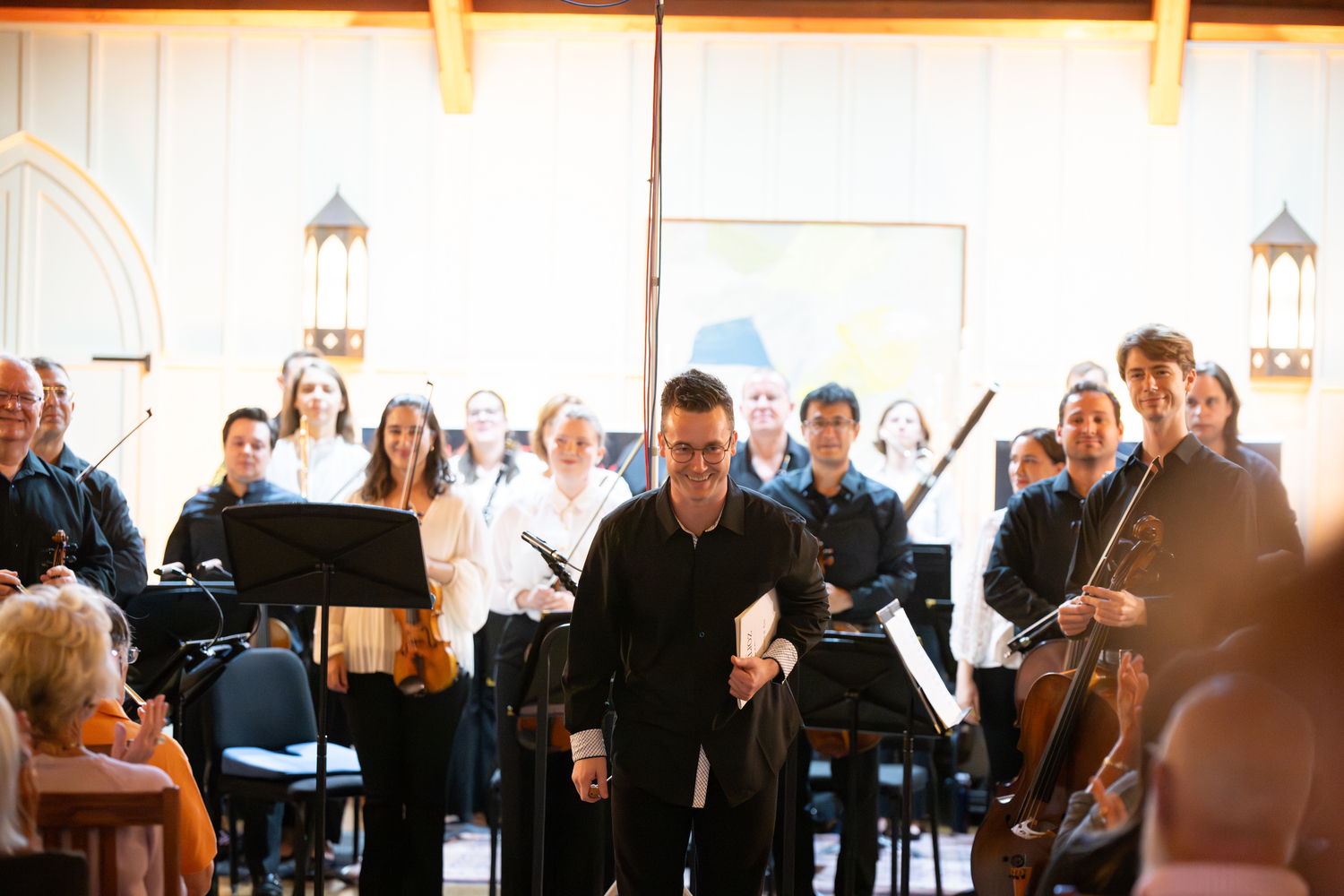
TH·FM associate conductor Logan Souther at a previous concert at St. Luke's Hoie Hall. DANE DUPUIS
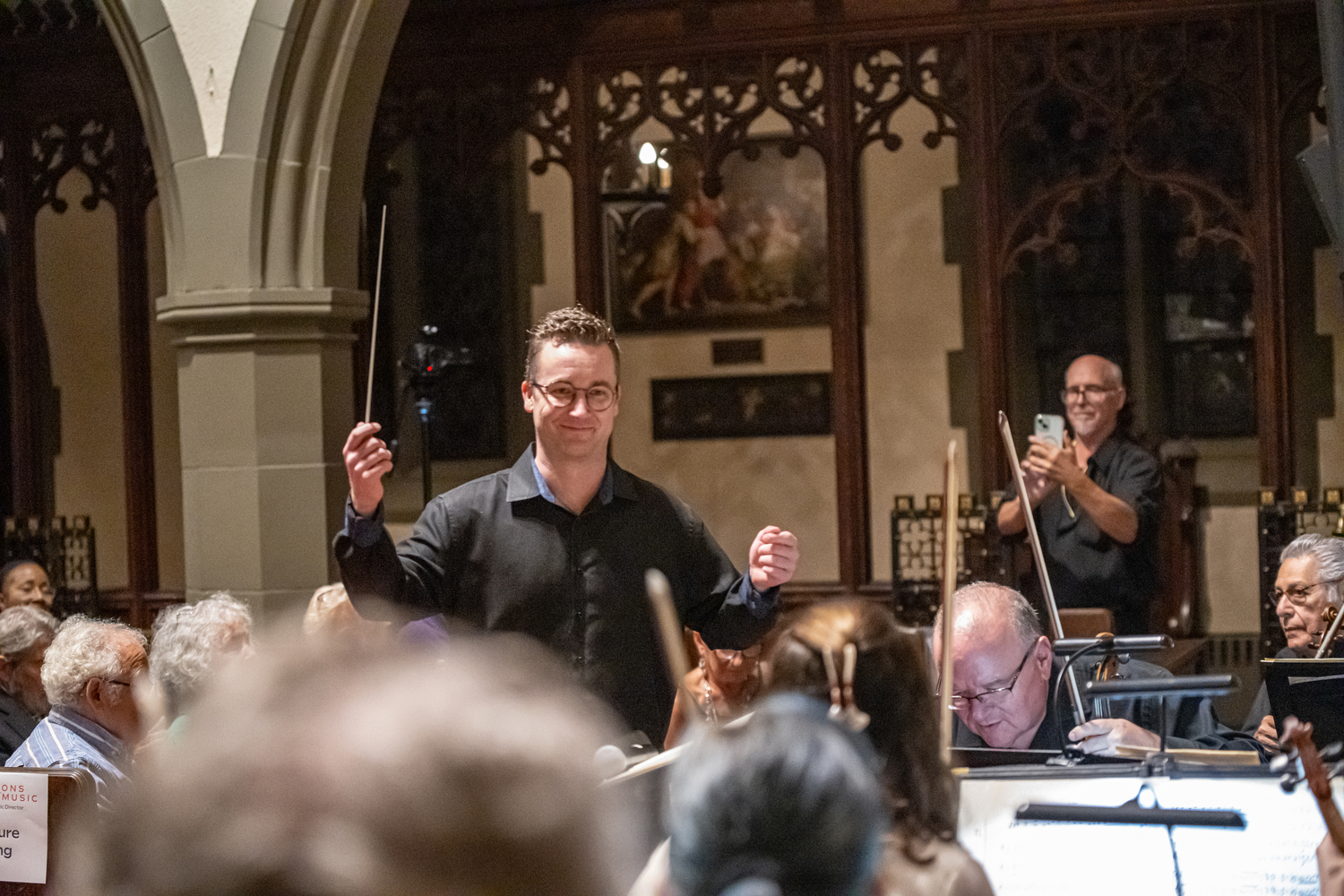
TH·FM associate conductor Logan Souther conducts a mainstage performance in September at St. Luke's Church. DANE DUPUIS
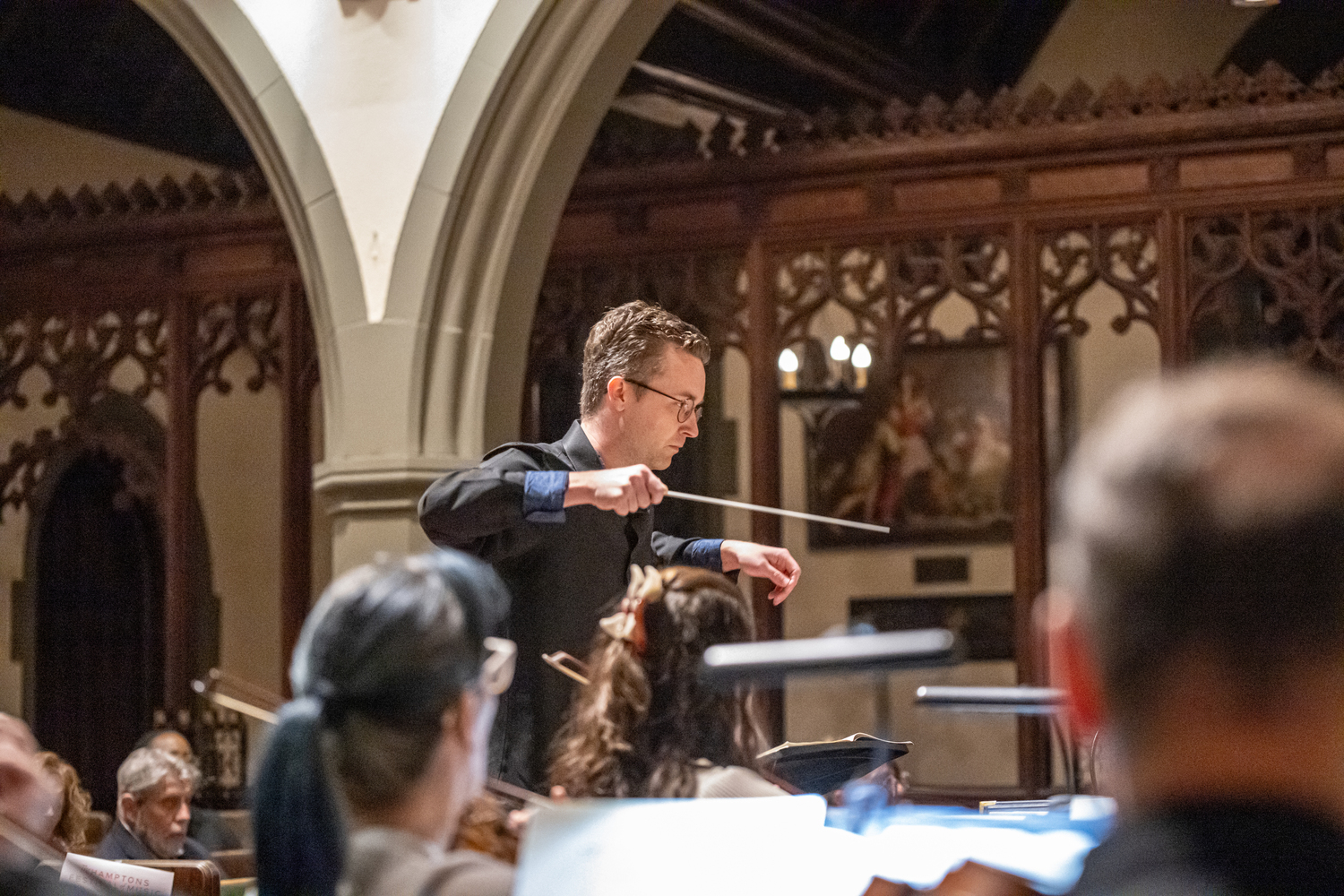
TH·FM associate conductor Logan Souther conducts a mainstage performance in September at St. Luke's Church. DANE DUPUIS
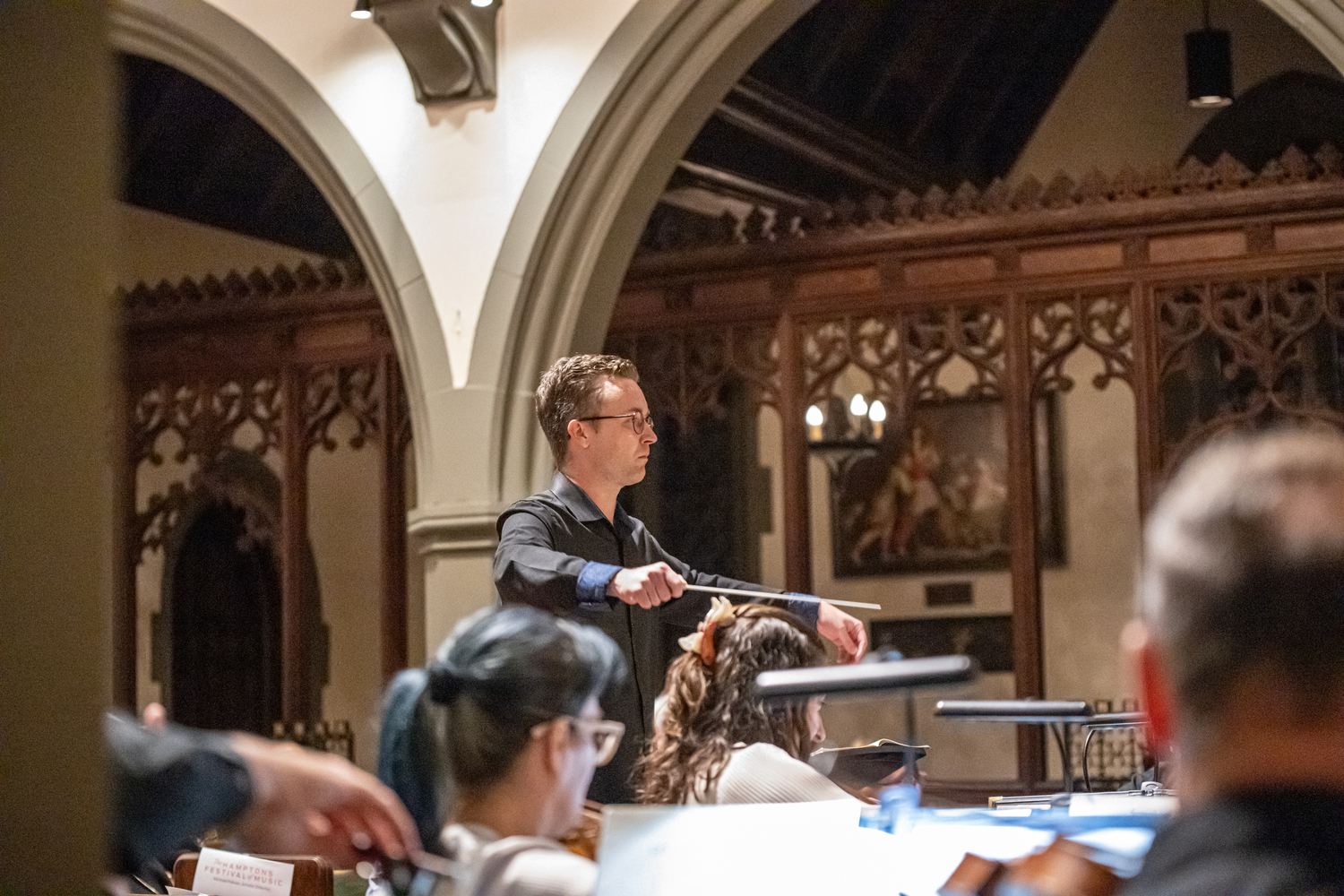
TH·FM associate conductor Logan Souther conducts a mainstage performance in September at St. Luke's Church. DANE DUPUIS
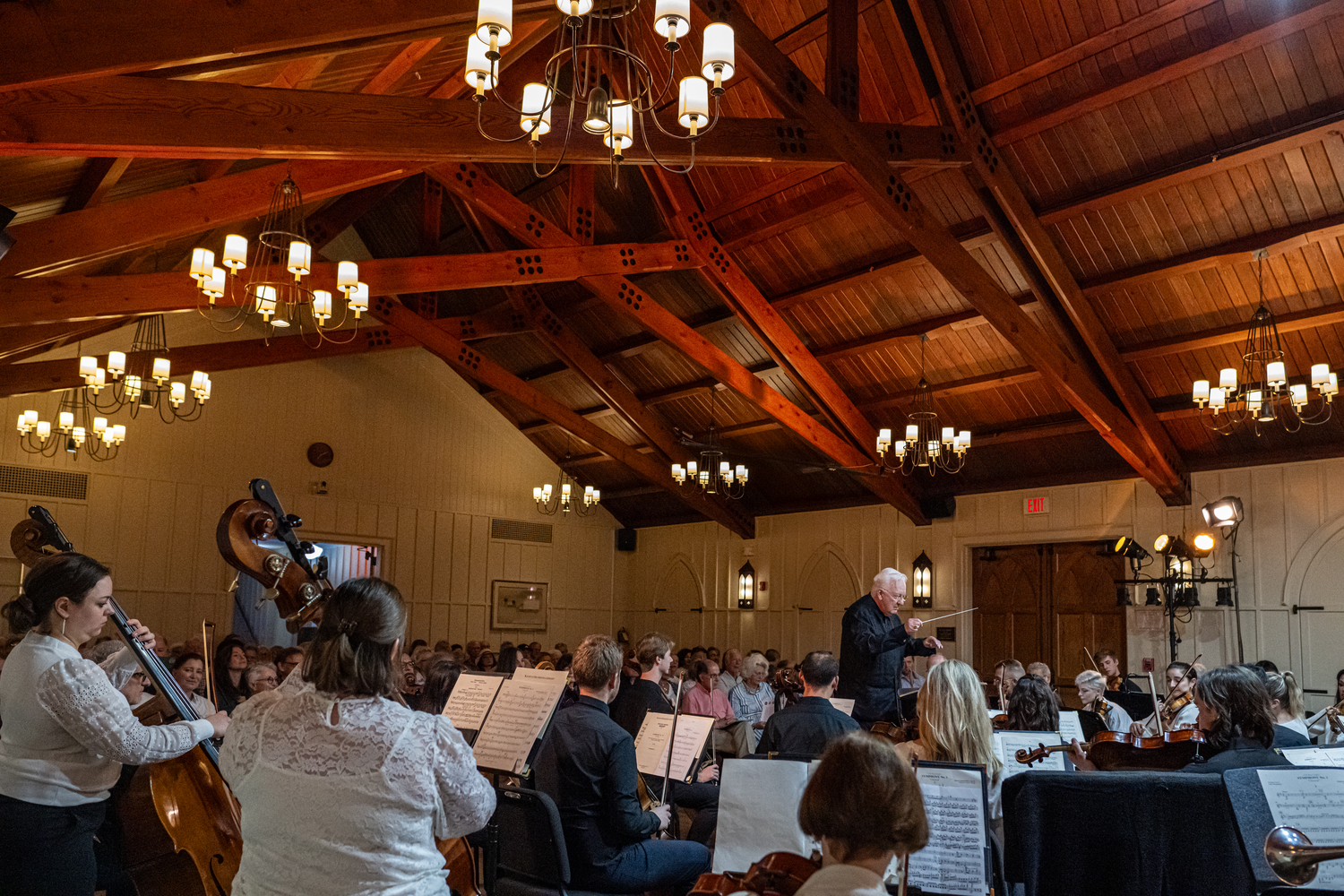
A TH·FM mainstage performance at St. Luke's Hoie Hall in September. DANE DUPUIS
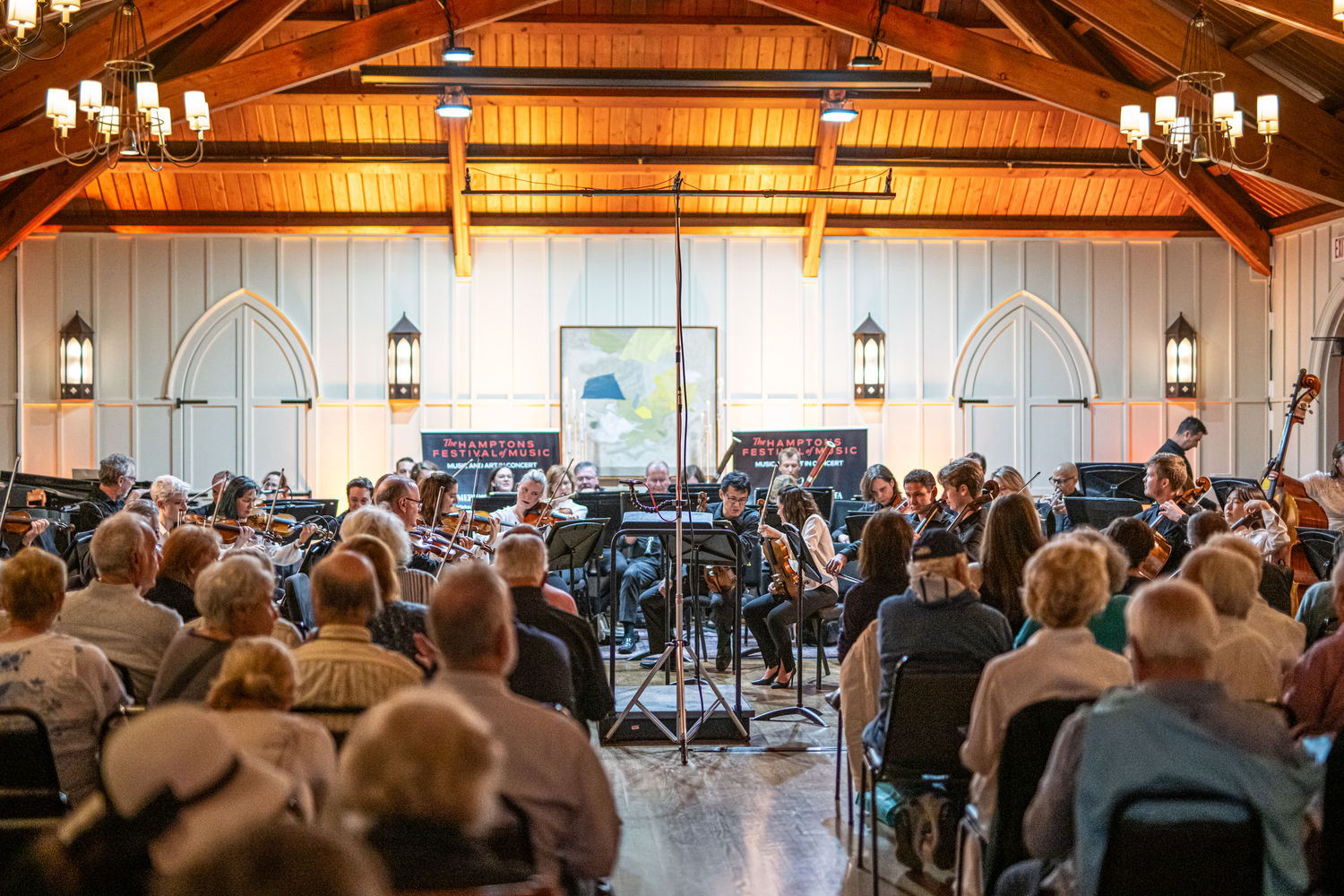
A TH·FM mainstage performance at St. Luke's Hoie Hall in September. DANE DUPUIS
With December settling in and Christmas just on the horizon, The Hamptons Festival of Music (TH·FM) is gearing up to brighten the dark nights by offering two performances of a holiday concert celebrating this most festive time of year.
“Christmas Concertos: The Sound and Spirit of the Season” will be presented by members of the TH·FM Salon Orchestra under direction of associate conductor Logan Souther at two different venues on subsequent nights. On Thursday, December 18, at 6 p.m., the orchestra performs at Springs Community Presbyterian Church and on Friday, December 19, also at 6 p.m., the concert will be held in Hoie Hall at St. Luke’s Episcopal Church’s in East Hampton Village.
Both concerts will feature Baroque favorites, along with poetry pieces read by Tony-nominated actor Paul Hecht on December 18, and designer Marshall Watson on December 19. The performances will include Vivaldi’s “Winter” from “The Seasons” (performed by solo violinist Garry Ianco) and three concerto grossos by Corelli, Terelli and Handel.
As Souther explained in a recent phone interview, the idea of offering a Baroque holiday concert came as a natural progression for TH·FM, given the momentum the organization has built through its concerts and outreach efforts over the course of the last few years.
“This is the first time we’re doing a bona fide holiday concert the real TH·FM way,” Souther said. “Last year, we had one performance with just piano and voice. It was in Hoie Hall with a big Christmas tree in the back of the room.
“We had a great response and this year, we wanted stay in line with all the great growth we’ve had by bringing this salon orchestra out for something like our Memorial Day concerts,” he added.
The hope is that these expanded seasonal offerings will become part of a new holiday concert tradition for families and community members on the East End.
While TH·FM’s mainstage concerts in early September are performed by its 40-piece resident orchestra, The New American Sinfonietta, Souther noted that this TH·FM Salon Orchestra will be far more intimate, with 11 musicians highlighting the concerto grosso Baroque compositions.
“I won’t have a baton, but I’ll be leading from the keyboard,” he said. “These are all strings — violins, viola, cello, bass. But the concerto grosso form also has three soloists, also strings, performing alongside the larger ensemble.
“In each of the pieces, there’s a trio set apart that plays more virtuosically by themselves,” he continued. “These pieces are not so much different than jazz charts today. There’s not a lot of information on them, because the composers would be performing with the musicians as an ensemble.”
When asked to expound on the musical term “Baroque” and what defines it technically, Souther responded: “For us, it’s the time period — so this is anywhere from the 1500s to the late 1600s, but we’re tuning into the 1700s. In that time period, the style is pretty well defined. There’s lots of glittering passage work and lots of counterpoint.
“What I find is the music really is improvisatory and similar to the way we relate to jazz music now,” he added. “With Baroque music, the composers are not quite as regimented as the music that comes afterward. It’s always interesting and novel. They are creating classical music as they go.”
The pieces can also be described as more intimate than many other classical works. Like paintings from the era, many Baroque compositions were commissions written specifically for the church.
“Baroque music was equivalent to the visual arts of that time period,” Souther explained. “The composers are craftsmen. They have guilds where they are pumping out a lot of music to be used by churches or aristocrats. It’s music that has a purpose and is performed within the chamber.
“In the Baroque music we have now, including the pieces we are doing, the composers were satisfying both commissions and doing their own work,” he added. “The first two pieces we’ll be doing, which are Christmas concerto grossos by Torelli and Corelli, were composed for the church and designed to be played on Christmas Eve. The Vivaldi and Handel compositions are both secular pieces.”
In describing the specific elements found in Baroque music, Souther said, “The counterpoint is pretty constant. There are multiple violins and melodies going at the same time. That’s why it’s described as shimmering and glittery. It’s kaleidoscopic. It parallels the visual arts or architectural elements — like Rococo furniture — with swirls, ornamentation and patterns. You hear a lot of that.
“Baroque is tied up in the genesis of classical music,” he added. “It parallels the development of a kind of civilization and the modern cities that grew out of the Renaissance. Classical music, as we know it, is all born out of church music and music for the mass and Gregorian chants. At first, it was just the voice. Then the technology developed to having different kinds of instruments that composers can write for. Some of these instruments are now kind of extinct, but they evolved into violins, violas and cellos. But they were still writing for the church.
“Meanwhile, all of European society is starting to modernize,” he continued. “There is more secular commerce and the rise of the European aristocrat. Princes and counts need music to entertain and satisfy the court.”
It’s at that point where, like art, classical music starts to not be just music for the church.
“Composers were employed through a certain court. Haydn is an example of that,” Souther said. “He came at the tail end of the baroque period but was famously known as the composer for Nicholas Esterházy’s court. He lived there and composed music for him.”
Interestingly enough, before stringed instruments found their way into the church setting, the predominate instruments at masses were brass and woodwinds.
“In Renaissance music, one main instrument was the sackbut. It was basically a trombone,” Souther said. “Then came the recorders, flutes and woodwinds — then another one of the big baroque wind instruments that looked like a box with a reed on top — the common ancestor of the bassoon, oboe or clarinet. Given the pathway where trombones and horns have ended up now, it doesn’t seem like they would be church instruments, but they actually were.”
The upcoming concerts aren’t just going feature music from the Baroque period. Also on the program are a series of seasonal readings offered by Hecht and Marshall.
“There will be four readings and then there’s four complete works,” Souther explained. “So, the poems and the readings will be right before the performance of the next piece.”
Those poems include one by Vivaldi himself, who wrote individual sonnets before each portion of his compositions in “The Seasons,” including “Winter.”
“In that piece, everything he writes has a corresponding section in the music, including teeth chattering and snow falling,” Souther said. “The same thing’s true with the other readings. The first one is the ‘Christmas Wreath.’ It alludes to how the different items we bring out each year carry the traditions of Christmas past. Then we will finish with the conclusion to ‘A Christmas Carol’ after Scrooge wakes up a changed man.”
Just as a reformed Scrooge finds new life with the support of family and community on Christmas morning, with this concert, Souther feels like TH·FM has settled into the place where it is now truly at home.
“I think going into our fifth year, we’ve learned a lot along the way,” he said. “I’m looking back at how amazing it was. How quickly supportive and enthusiastic the community’s response has been, also just how warm and friendly these relationships are.
“We’ve had such a warm experience when we’ve performed at the Springs Church. The acoustics work well for this repertoire. The real treat is the intimacy of the musical experience, which is kind of what we do,” he added. “It’s really special for us to perform in Springs. So many of our early supporters, friends and home stays came out of the Springs neighborhood. We like to be on home turf. Always in Springs, it feels like home.”
Souther, along with TH·FM Artistic Director Michael Palmer and Executive Director Michael Yip, feel as if the organization is now firmly established on the East End and moving enthusiastically forward with its mission.
“We’re definitely reaching a kind of new baseline amongst the three of us,” Souther said. “We have bigger and bigger plans. The last four performances have all sold out. We’re constantly meeting new people. The response I’ve been hearing is just how valued what we do is by members of this community.”
“Christmas Concertos: The Sound and Spirit of the Season” will be performed on Thursday, December 18, at 6 p.m., at Springs Community Presbyterian Church, 5 Old Stone Highway, East Hampton, and on Friday, December 19, at 6 p.m., in Hoie Hall at St. Luke’s Episcopal Church, 18 James Lane, East Hampton. The program includes Arcangelo Corelli’s Concerto Grosso in G minor, Op. 6 No. 8 “Christmas”; Giuseppe Torelli’s Concerto Grosso in G minor, Op. 8 No. 6 “Christmas”; Antonio Vivaldi’s “Winter” from “The Seasons,” featuring Garry Ianco, violin soloist; and George Frideric Handel’s Concerto Grosso in G Major, Op. 6 No. 1. Tickets are $50 at thehamptonsfestivalofmusic.com.


 Annette Hinkle on Dec 8, 2025