


 5 Photos
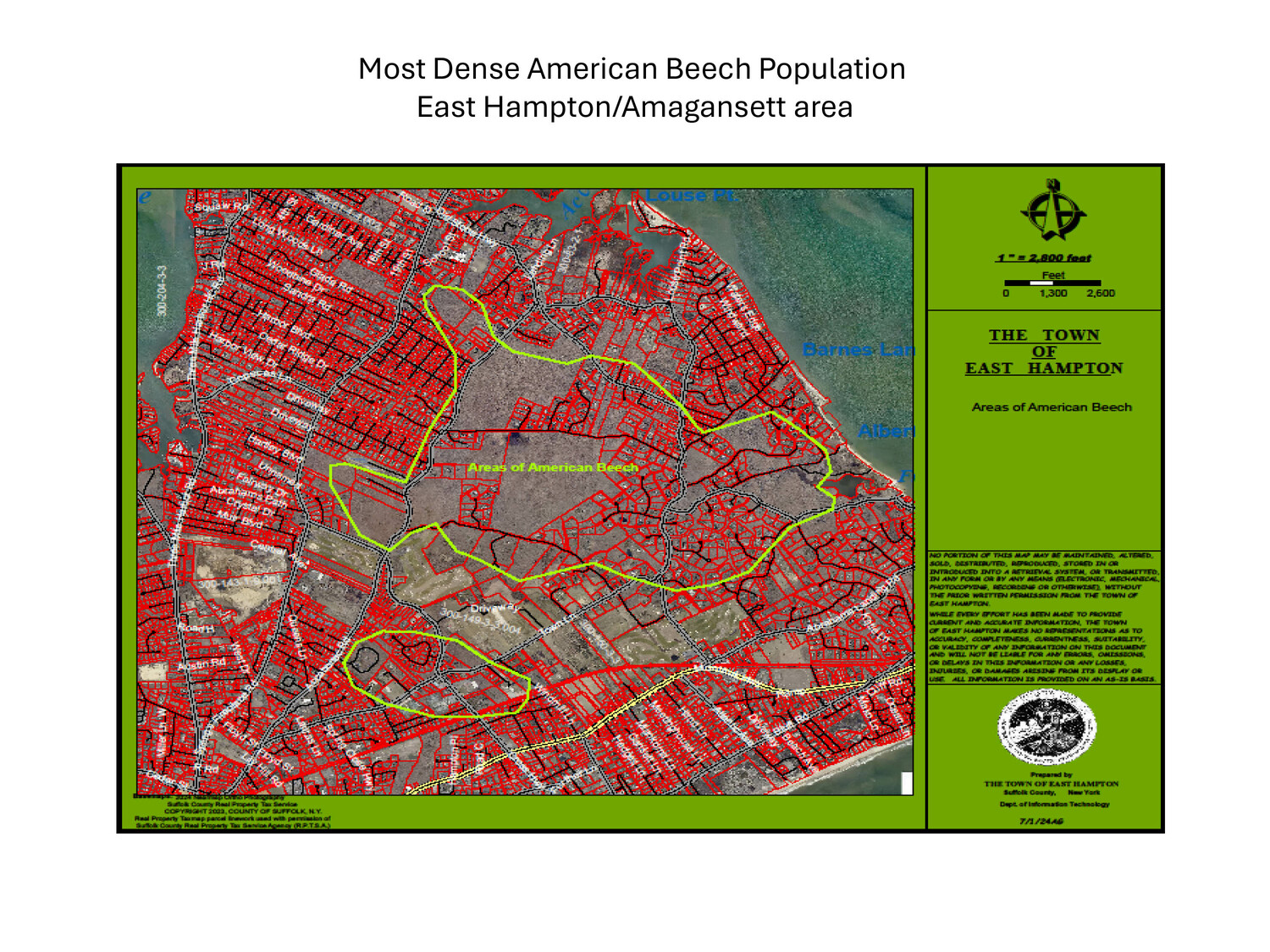
The area in East Hampton and Amagansett with the most dense Beech Tree population. COURTESY EAST HAMPTON TOWN
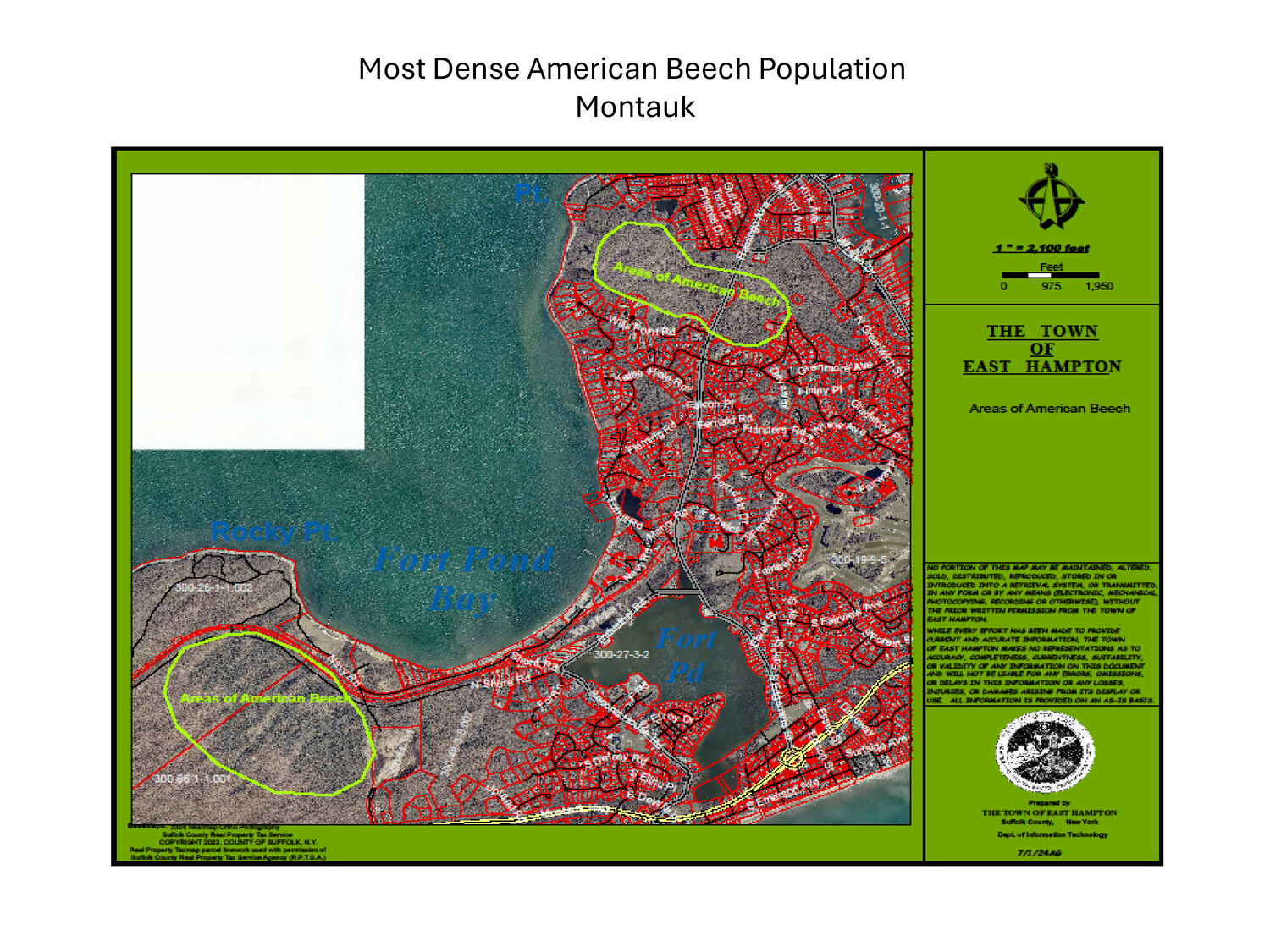
The area in Montauk with the most dense Beech Tree population. COURTESY EAST HAMPTON TOWN
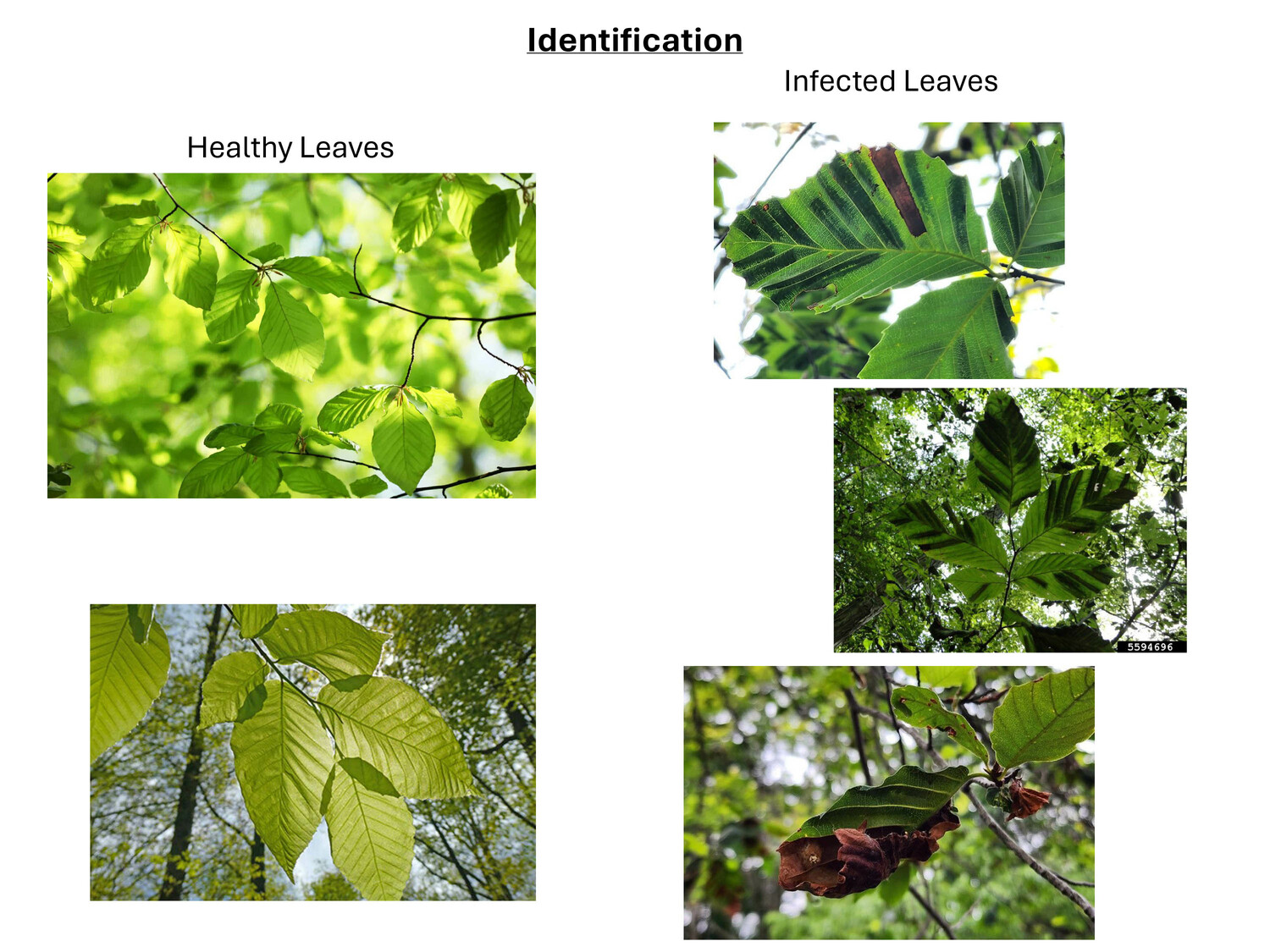
An example of healthy leaves and leaves with Beech Tree Disease. COURTESY EAST HAMPTON TOWN
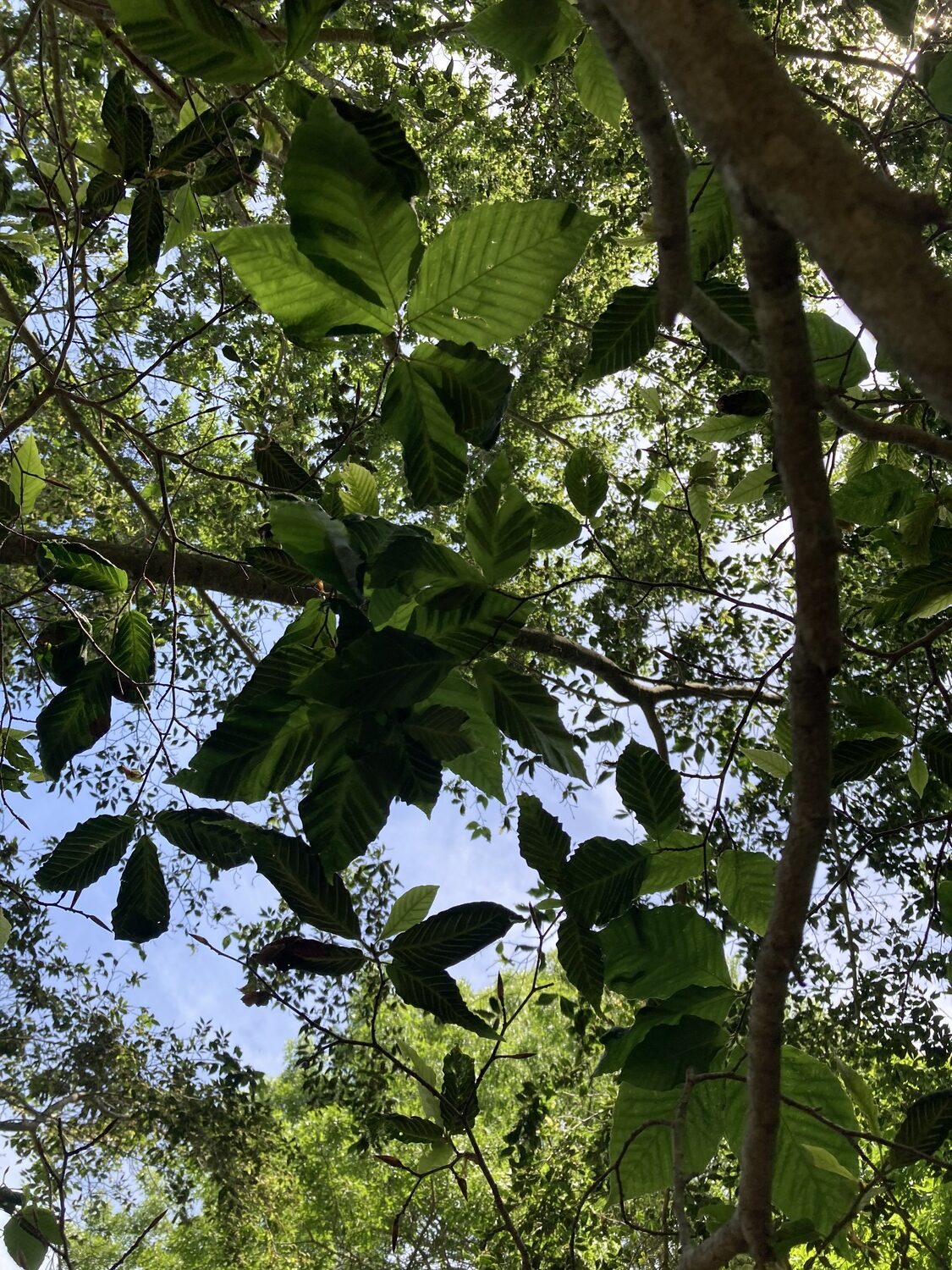
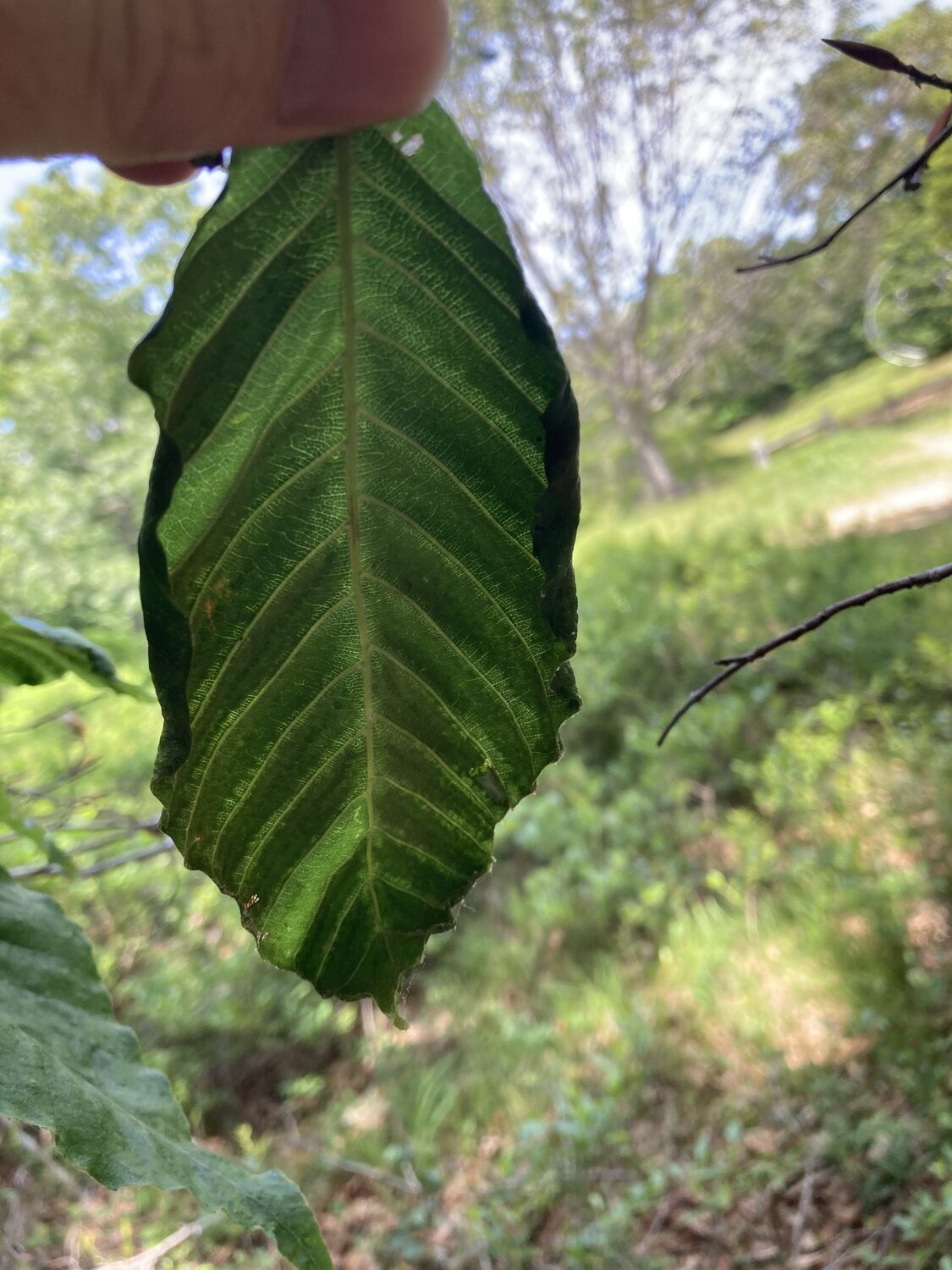
Beech leaf disease is affecting trees in multiple locations in East Hampton Town. ANDY GAITES
Leaves infected with beech leaf disease display dark veins and may curl and turn brown. ANDY GAITES
As the southern pine beetle continues to infest and kill pine trees in East Hampton Town, a new vector is now killing beech trees, albeit more slowly and on a smaller scale.
Mark Abramson, the assistant environmental protection director in the town’s Natural Resources Department, and Andy Drake, a senior environmental analyst in the Land Acquisition and Management Department, told the Town Board on July 16 that areas of East Hampton and Amagansett, where the highest density of beech trees is found, as well as in Montauk, are seeing “a majority of all the beech trees” affected.
A nematode subspecies called Litylenchus crenatae mccannii, or Lcm, is believed to be the cause, affecting leaves and eventually killing the trees “because they cannot photosynthesize and get nutrients,” Abramson said.
Lcm invades beech tree buds from June to October, when they feed and overwinter. They are likely to be dispersed by birds and insects. Infected leaves will display dark veins and may curl and turn brown. In severe cases, buds are killed, and no new leaves or shoots are produced.
Beech leaf disease is mostly found on the town’s nature preserve properties, Drake said, where it is affecting most of the European and American beech trees. This, he said, “is the first instance anywhere where a nematode is causing tree mortality. So for that reason, there’s not a lot known about this.”
Studies are underway, he said, “but there’s not enough data at this time to really know what a successful treatment or management might look like. … Unfortunately, large-scale management of our public lands is probably not yet feasible for that same reason — we just don’t know enough about it.”
Beech leaf disease, Drake said, is killing around 90 percent of affected trees. But at smaller stands, trees may be saved or their lives prolonged through management.
“Doing some pruning to increase air circulation, which helps dry the leaves out, is something that can be done,” Abramson said.
PolyPhosphite 30 can be applied to beech trees as a soil drench or injected into the soil, and the Broadform fungicide, Drake said, may prolong a tree’s life.
“There’s no cure for the disease,” he said, “but using these methods, there has been shown extended life in the tree. And some trees are bouncing back better than others.”
There are clearing restrictions and revegetation requirements on private lands, though, and Abramson and Drake emphasized that property owners seeking to remove dead or dying trees that may threaten structures and driveways should be mindful of those restrictions and requirements.
“Our department can help with the assessing of private lands,” Drake said. “If a landowner is interested, we can help to assess for damage and help to mark trees that may … be hazardous to their property, that can be removed from their property.”
If the understory is left undisturbed, the area will not be considered an area of clearing. Any treatment of affected trees would be the property owner’s responsibility, he said.
The town, Abramson said, does not apply pesticide or insecticide on town-owned lands, and “we definitely do not want to encourage that, but again, if there are specimen trees and the homeowner would like to try and save that specific tree, there’s options for them. But we will recommend doing the pruning and possibly just fertilizing the tree to extend its life, and hopefully in the future we’ll have something that’s more substantial to actually saving the trees.”
Better data and knowledge should come with time, Drake said, “and trees are kind of bouncing back in some cases. And then others just look terrible. A lot of unknowns.”


