


 38 Photos
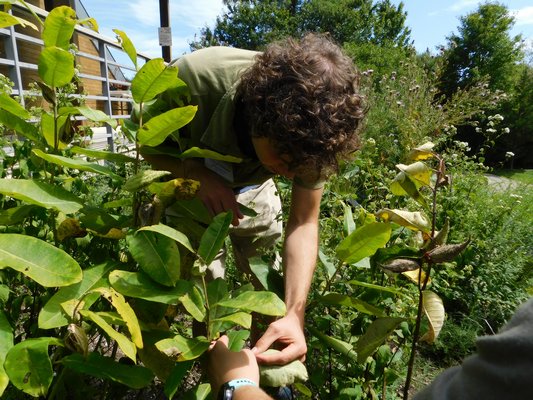
Miles Todaro, an educator at the South Fork Natural History Museum, searching a milkweed plant for monarch caterpillars outside of SOFO. ELIZABETH VESPE
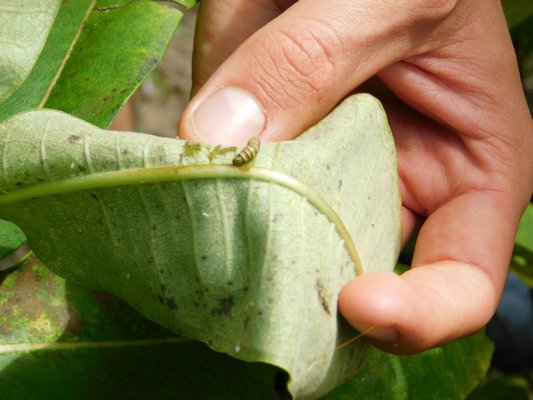
Miles Todaro, an educator at the South Fork Natural History Museum, searching a milkweed plant for monarch caterpillars outside of SOFO. ELIZABETH VESPE
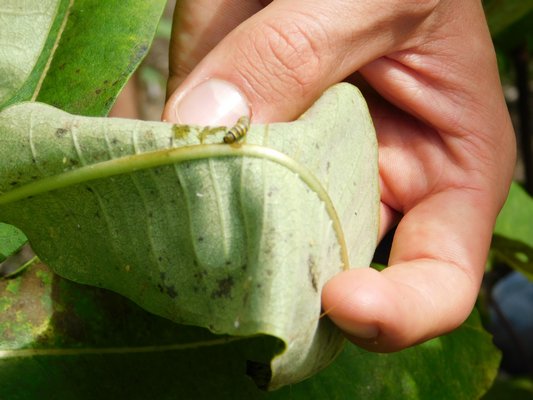
Miles Todaro, an educator at the South Fork Natural History Museum, searching a milkweed plant for monarch caterpillars outside of SOFO. ELIZABETH VESPE
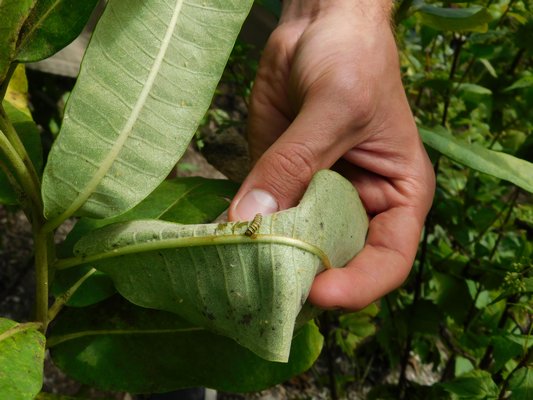
Miles Todaro, an educator at the South Fork Natural History Museum, searching a milkweed plant for monarch caterpillars outside of SOFO. ELIZABETH VESPE
Miles Todaro, an educator at the South Fork Natural History Museum, searching a milkweed plant for monarch caterpillars outside of SOFO. ELIZABETH VESPE
Miles Todaro, an educator at the South Fork Natural History Museum, searching a milkweed plant for monarch caterpillars outside of SOFO. ELIZABETH VESPE
Miles Todaro, an educator at the South Fork Natural History Museum, searching a milkweed plant for monarch caterpillars outside of SOFO. ELIZABETH VESPE
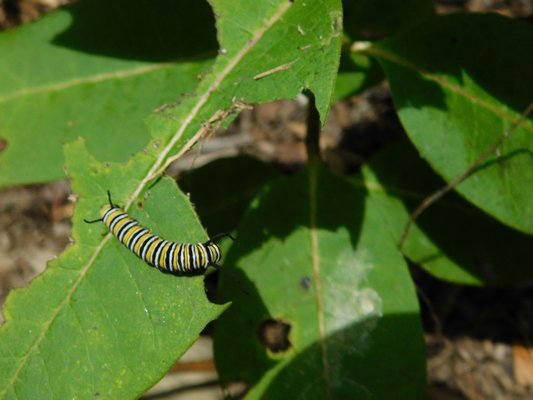
A monarch caterpillar on a milkweed plant outside of SOFO. ELIZABETH VESPE
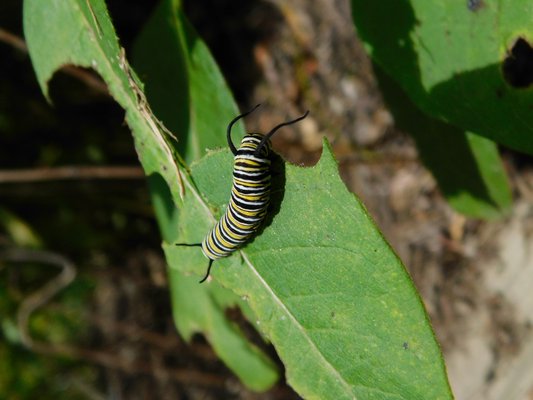
A monarch caterpillar on a milkweed plant outside of SOFO. ELIZABETH VESPE
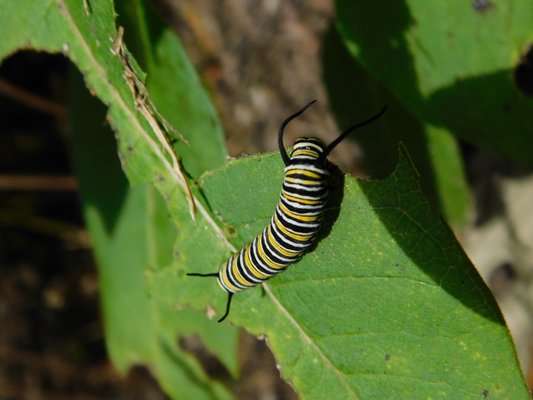
A monarch caterpillar on a milkweed plant outside of SOFO. ELIZABETH VESPE
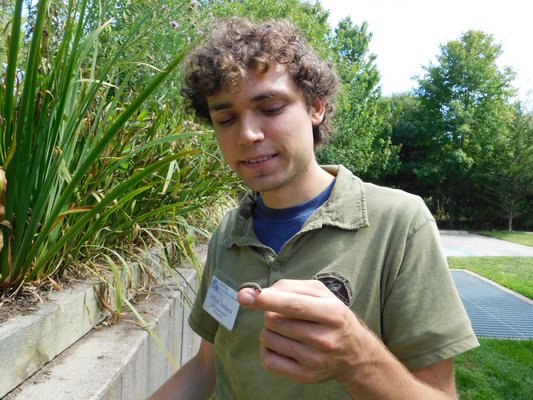
Miles Todaro, an educator at the South Fork Natural History Museum, searching a milkweed plant for monarch caterpillars outside of SOFO. ELIZABETH VESPE
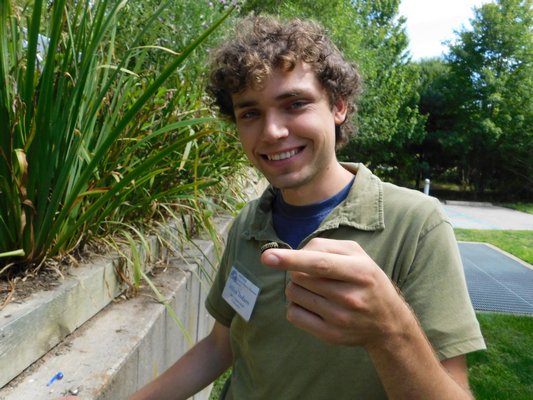
Miles Todaro, an educator at the South Fork Natural History Museum, holding a monarch caterpillar outside of SOFO. ELIZABETH VESPE
Miles Todaro, an educator at the South Fork Natural History Museum, searching a milkweed plant for monarch caterpillars outside of SOFO. ELIZABETH VESPE
Miles Todaro, an educator at the South Fork Natural History Museum, searching a milkweed plant for monarch caterpillars outside of SOFO. ELIZABETH VESPE
Miles Todaro, an educator at the South Fork Natural History Museum, searching a milkweed plant for monarch caterpillars outside of SOFO. ELIZABETH VESPE
Miles Todaro, an educator at the South Fork Natural History Museum, searching a milkweed plant for monarch caterpillars outside of SOFO. ELIZABETH VESPE
Miles Todaro, an educator at the South Fork Natural History Museum, searching a milkweed plant for monarch caterpillars outside of SOFO. ELIZABETH VESPE
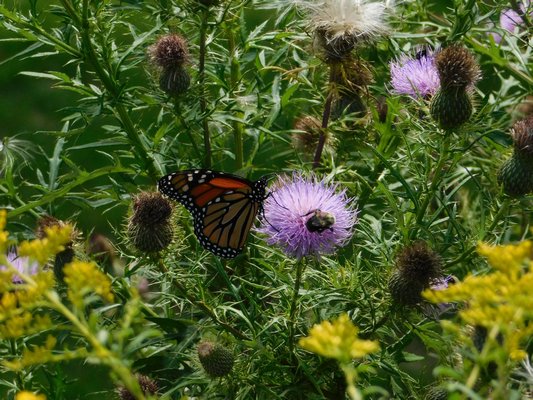
A monarch butterfly at the South Fork Natural History Museum. ELIZABETH VESPE
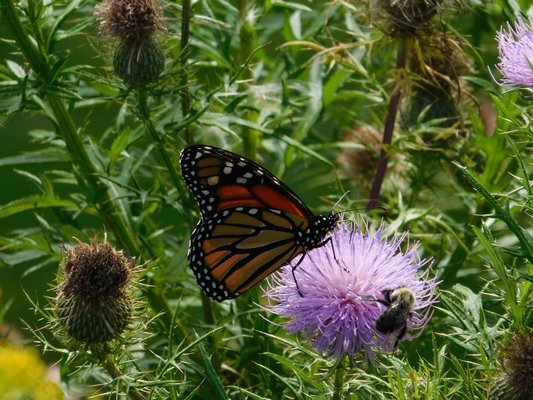
A monarch butterfly at the South Fork Natural History Museum. ELIZABETH VESPE
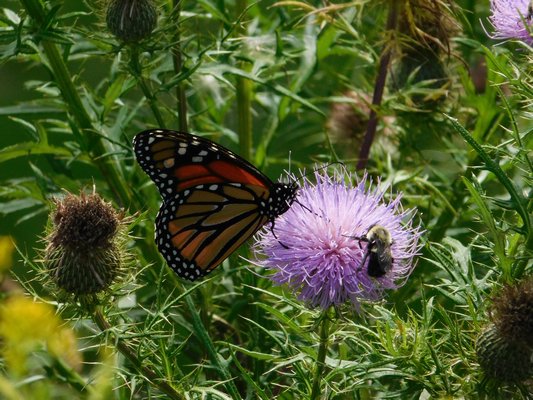
A monarch butterfly at the South Fork Natural History Museum. ELIZABETH VESPE
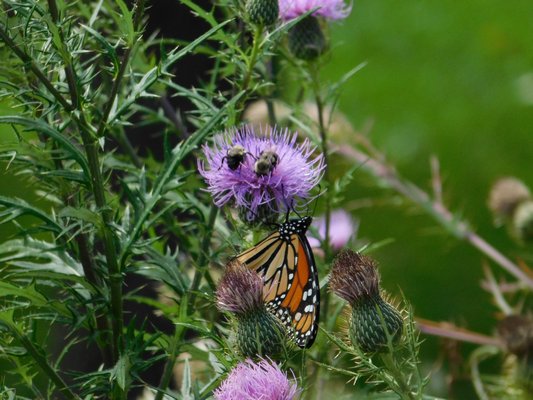
Miles Todaro, an educator at the South Fork Natural History Museum, searching a milkweed plant for monarch caterpillars outside of SOFO. ELIZABETH VESPE
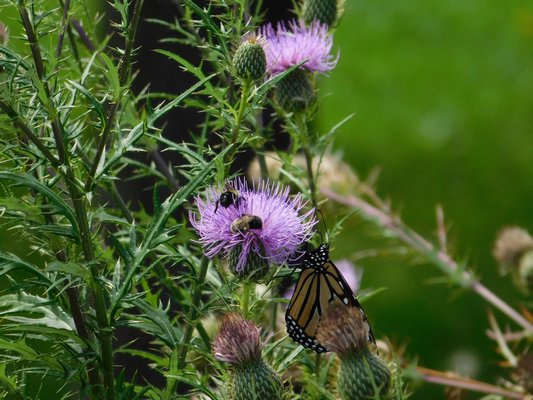
Miles Todaro, an educator at the South Fork Natural History Museum, searching a milkweed plant for monarch caterpillars outside of SOFO. ELIZABETH VESPE
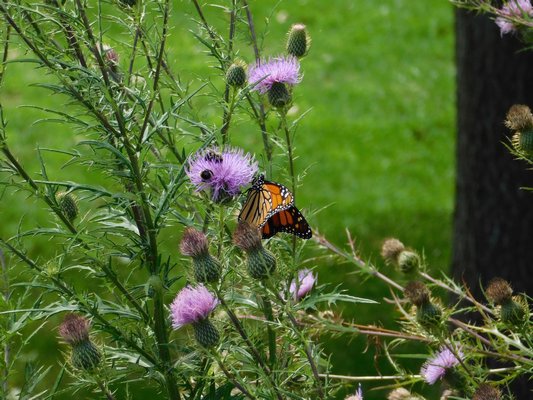
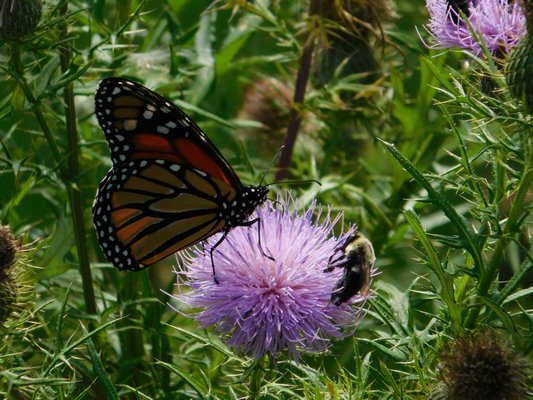
A monarch butterfly at the South Fork Natural History Museum. ELIZABETH VESPE
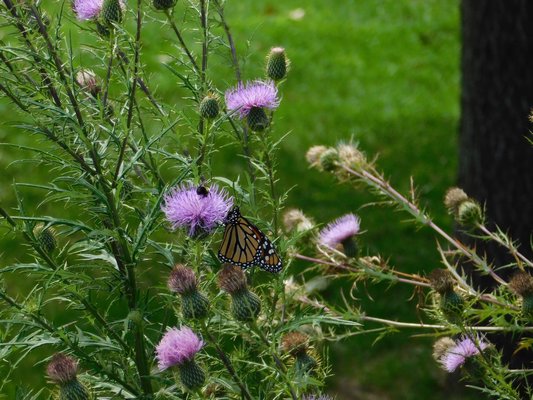
A monarch butterfly at the South Fork Natural History Museum. ELIZABETH VESPE
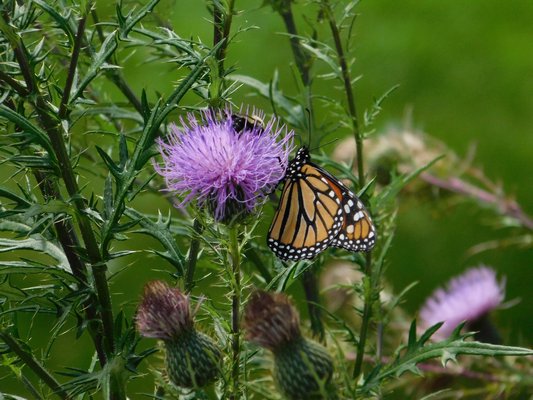
A monarch butterfly at the South Fork Natural History Museum. ELIZABETH VESPE

Miles Todaro, an educator at the South Fork Natural History Museum, searching a milkweed plant for monarch caterpillars outside of SOFO. ELIZABETH VESPE
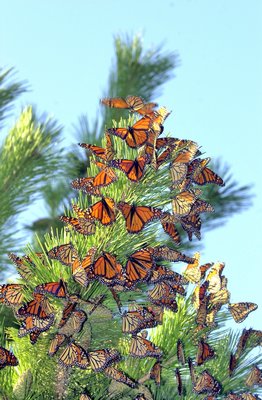
A favorite roosting spot for migrating monarchs is on Dune Road in Hampton Bays. DANA SHAW
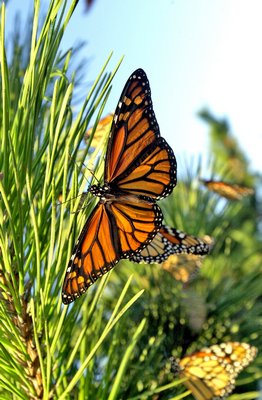
A favorite roosting spot for migrating monarchs is on Dune Road in Hampton Bays. DANA SHAW
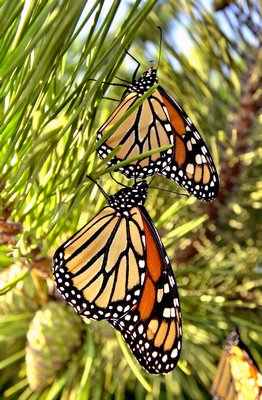
A favorite roosting spot for migrating monarchs is on Dune Road in Hampton Bays. DANA SHAW

Jeffry Petracca, entomalogy curator for the Long Island Aquarium and Exhibtion Center. ELIZABETH VESPE

Jeffry Petracca, entomalogy curator for the Long Island Aquarium and Exhibtion Center. ELIZABETH VESPE
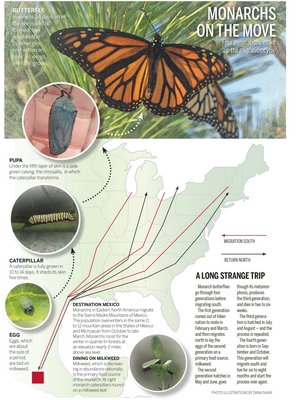
Monarchs On The Move
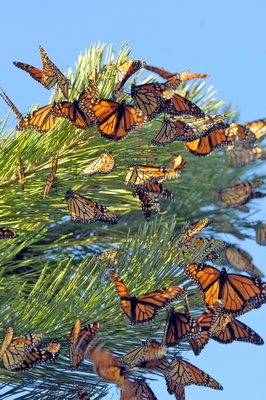
A favorite roosting spot for migrating monarchs is on Dune Road in Hampton Bays. DANA SHAW
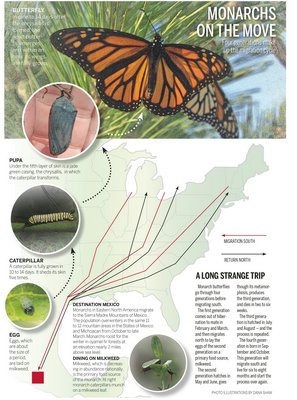
Monarchs On The Move
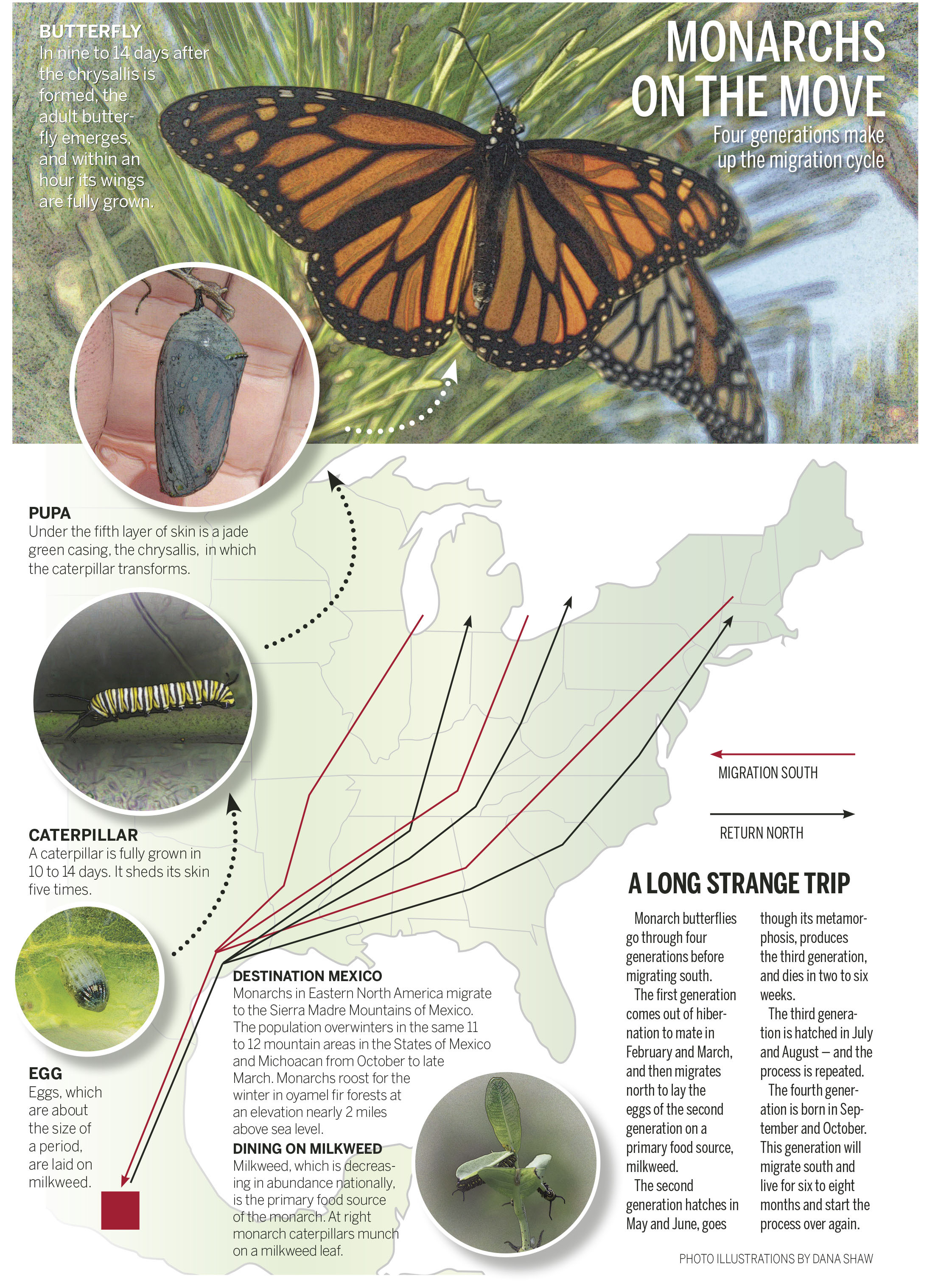
Monarchs On The Move
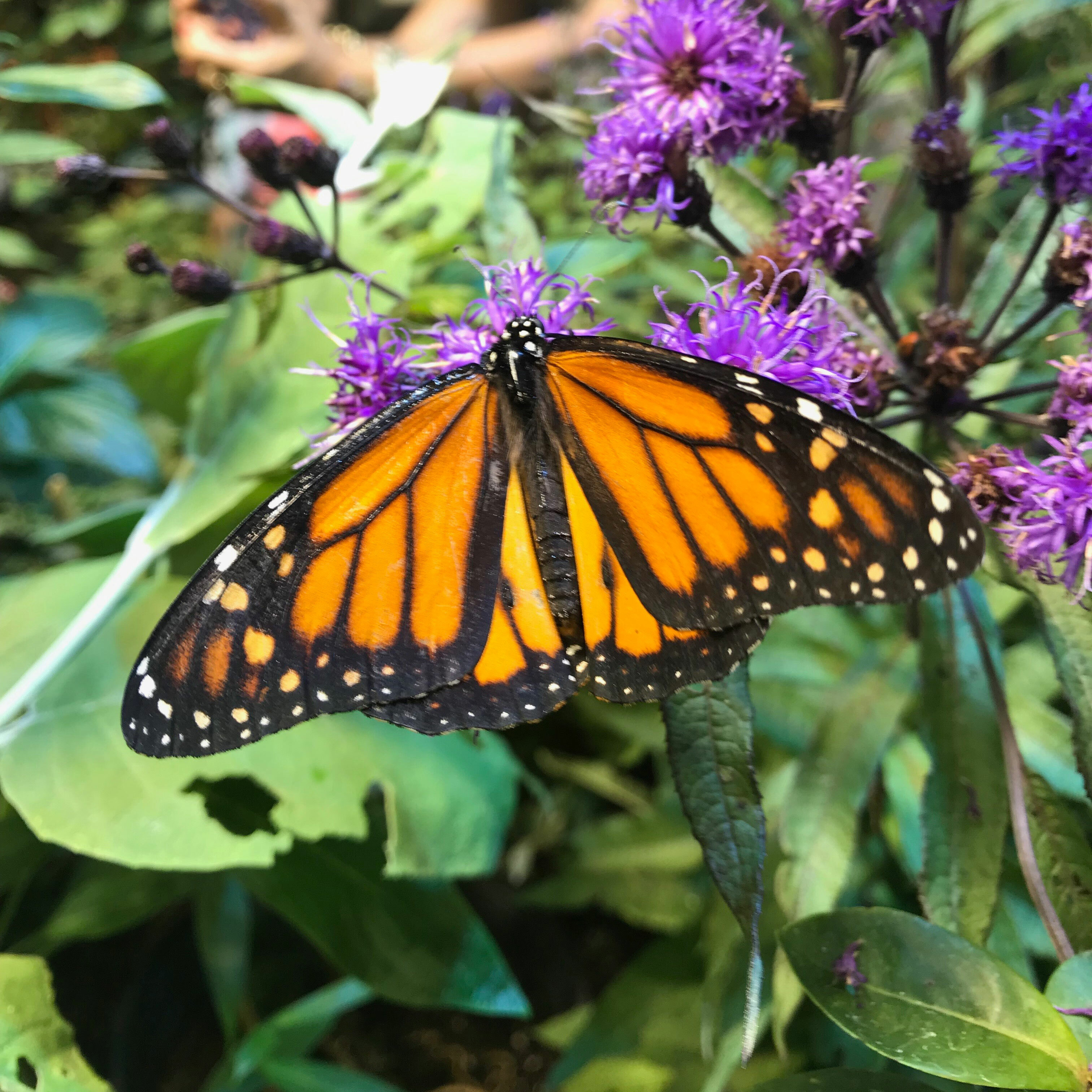
Jeffry Petracca, entomalogy curator for the Long Island Aquarium and Exhibtion Center. ELIZABETH VESPE
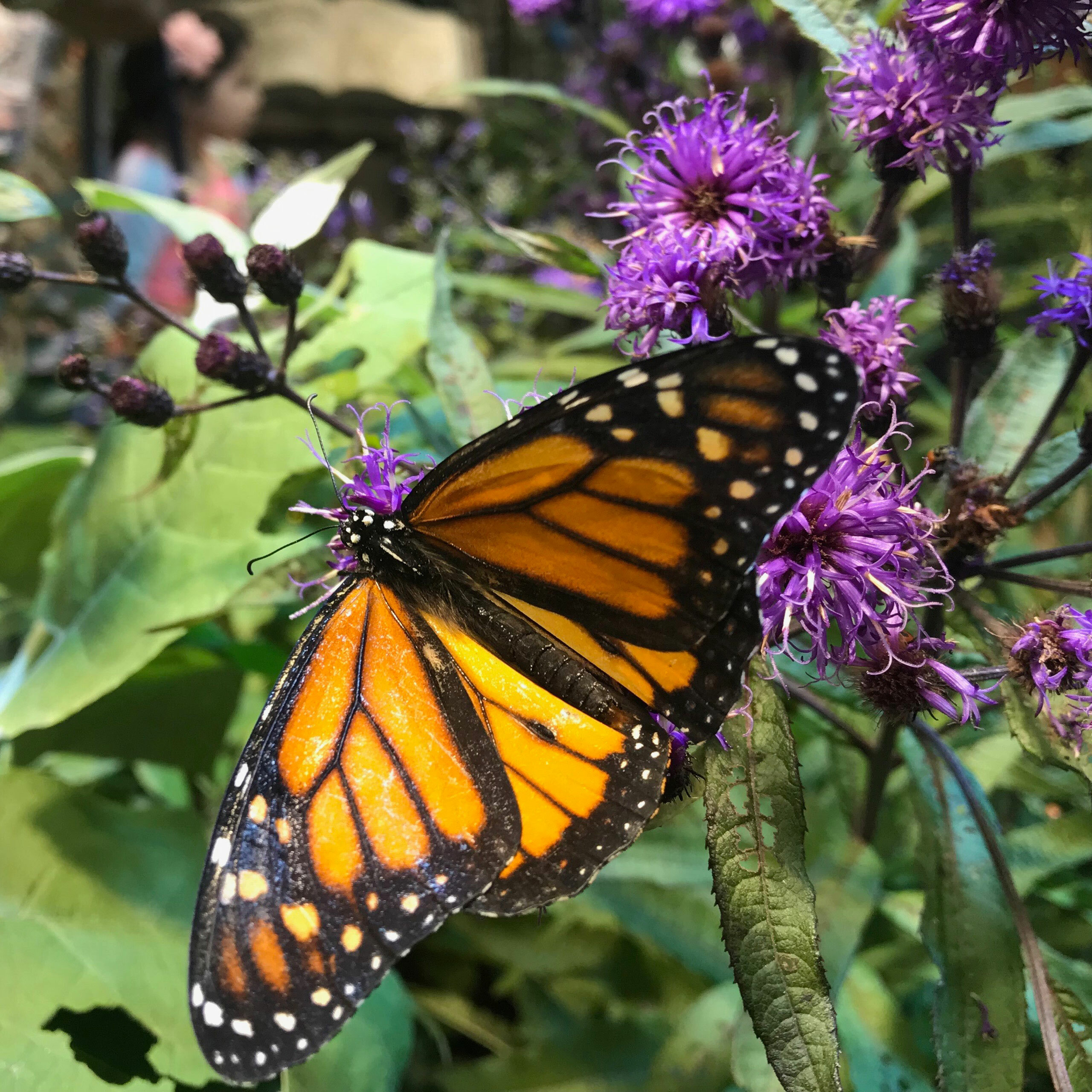
A monarch butterly. ELIZABETH VESPE
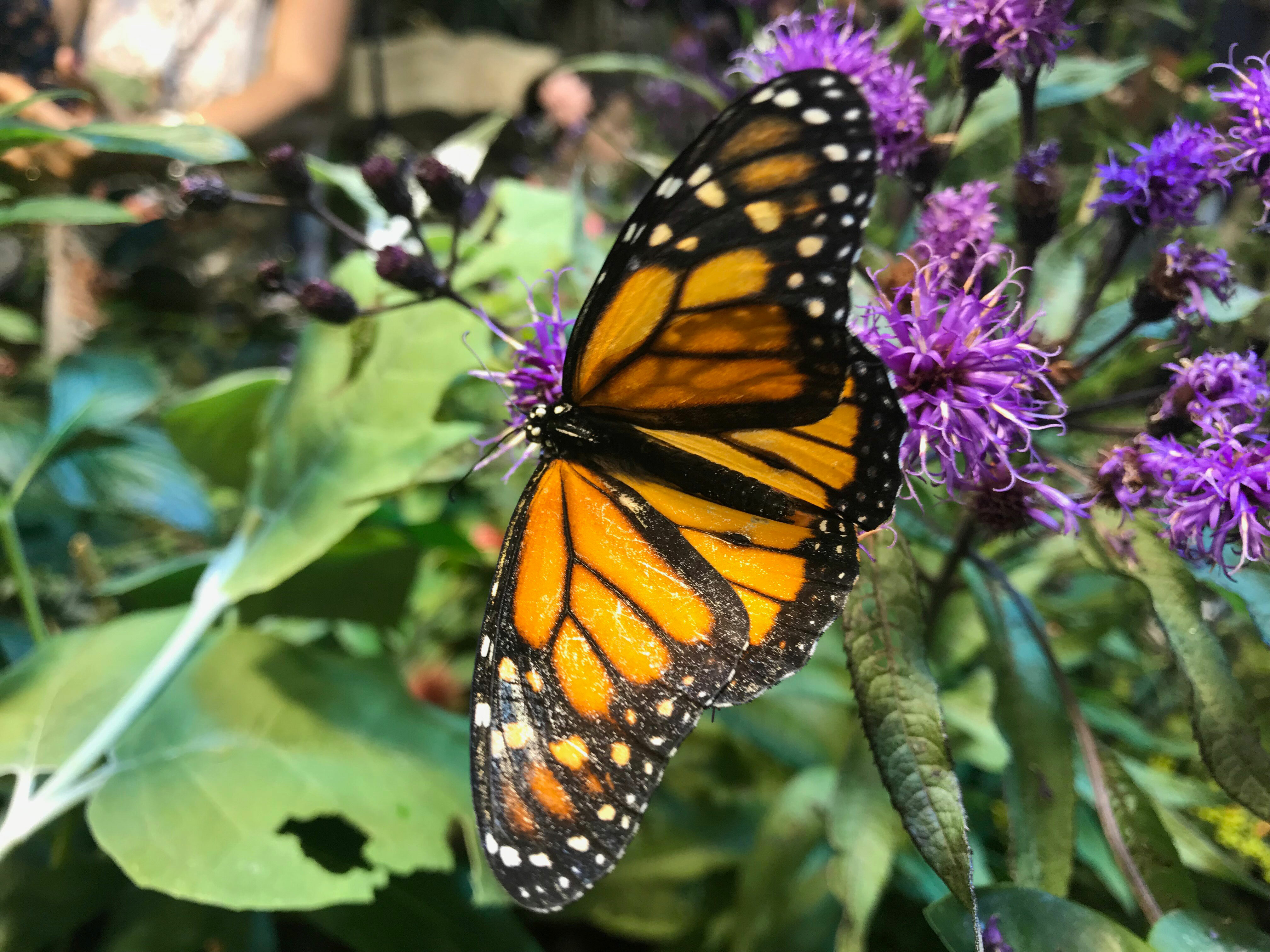
A monarch butterfly. ELIZABETH VESPE
With paper-thin wings spanning 3.5 inches, monarch butterflies fly as far as 3,000 miles each fall from the northern United States and Canada to Mexico, where they overwinter before making a return trip that takes four, sometimes five, generations to complete.
Monarchs born in the north during the summer breeding season live only two to six weeks, according to Jeffry Petracca, the entomology curator at the Riverhead Aquarium. But the monarchs that migrate to Mexico in the fall and are born in late summer stay alive all winter and migrate back north the following spring.
In recent years, the population of monarch butterflies, like 20,000 other species of insects, has declined due to habitat loss, the use of pesticides — and, in the monarch’s case, the lack of milkweed, which is the only plant monarchs can lay their eggs on. The United States Fish and Wildlife Service estimated that nearly one billion monarchs had disappeared from the overwintering sites since 1990. Numbers that were once in the billions are now in the hundred millions.
To much surprise and excitement, however, some Eastern Long Islanders have seen what may be an increase in the local population this summer.
There have been plenty of monarch sightings in Montauk and on the South Fork in general, according to Mr. Petracca. Because their life cycle is so short relative to those of other animals, however, he said it is difficult to put a number on the population on Eastern Long Island.
“There is so much pressure on them, in terms of predators and the weather,” Mr. Petracca said. “It’s hard to predict if a population is suffering or if it’s the natural fluctuation.”
Mr. Petracca said that every fall, as caterpillars, the monarchs sense winter is approaching due to the temperature drop and the shortening of daylight.
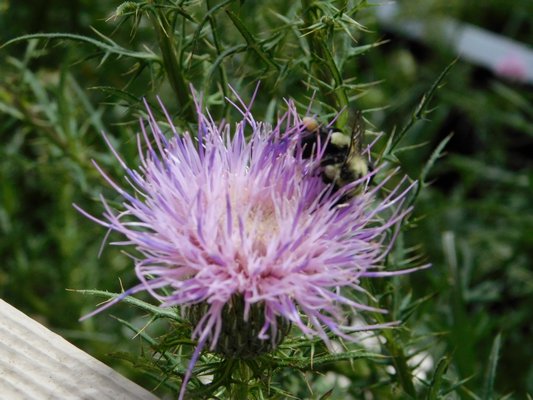
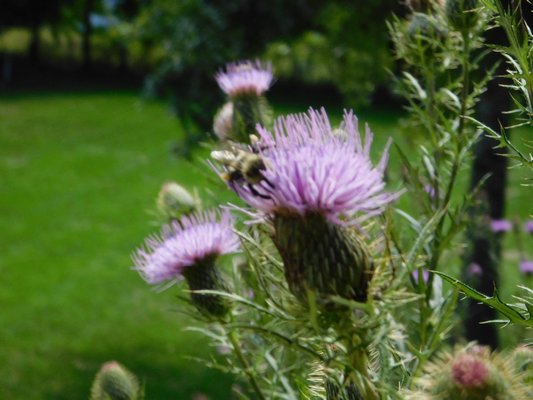
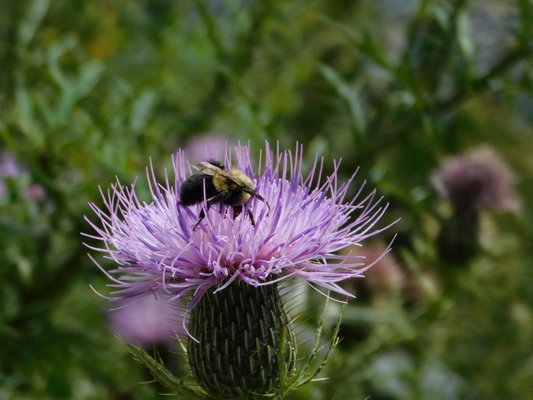
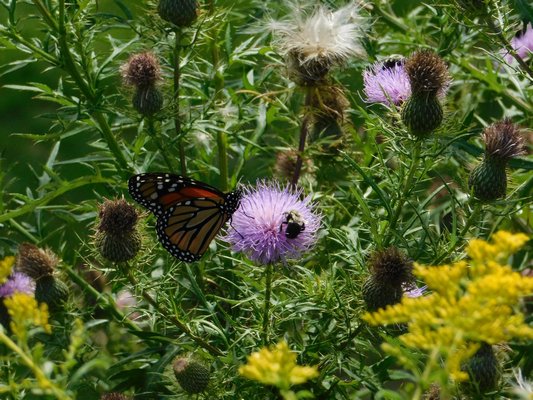
“Monarchs from as far north as Canada will spin up into a chrysalis and emerge as adult butterflies,” he explained recently while walking through the aquarium’s butterfly exhibit and pointing to live monarchs eating nectar from purple thistle flowers — a favorite nectar source for many pollinators. Monarchs travel to Mexico together, forming impressively large swarms over the course of their long journey.
John Potente, who has served as editor and executive board member of the Long Island Botanical Society and a member of the Suffolk County Environmental Review Board and has been researching monarchs since moving to Suffolk County decades ago, gave a recent talk on monarchs at the Long Pond Greenbelt nature center in Bridgehampton. He said that gathering statistics about butterflies and other insects can be a challenge, adding that the only reason researchers can estimate the North American migrating population is because the monarchs gather on mountaintops in Mexico.
Even then, they are estimated by the number of hectares — a hectare measures 2.5 acres — they occupy, Mr. Potente said. There are hundreds of acres of forest in Mexico that every single monarch from the East Coast migrates to, and in the mountains of Mexico they cling in clusters to the oyamel fir, an evergreen pine tree in the Monarch Butterfly Biosphere Reserve, a protected area covering more than 200 square miles.
MonarchWatch.org, a network of students, teachers, volunteers and researchers dedicated to studying and expanding the butterfly’s population, announced the total forest area occupied by overwintering monarch colonies in January 2019. Fourteen colonies were located this winter with a total area of 6.05 hectares, according to a graph on the organization’s website that indicated a 144 percent increase from the previous season.
Mr. Potente used photos and videos at his recent talk to show a full audience the life cycle of the monarch, from its beginning as a millimeter-sized egg laid on the underside of a milkweed leaf. The cream-colored and light-green eggs are laid in spring and summer, Mr. Potente explained while showing footage and photo of milkweed plants in his own yard in Hauppauge.
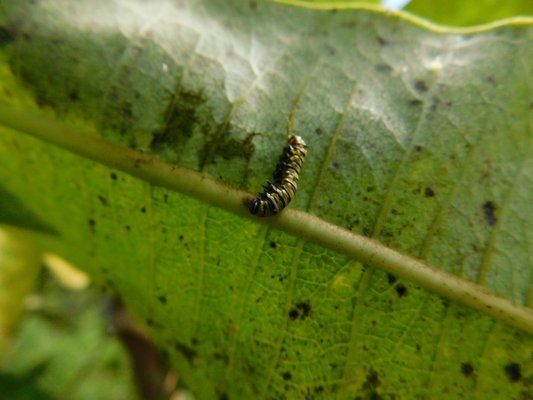
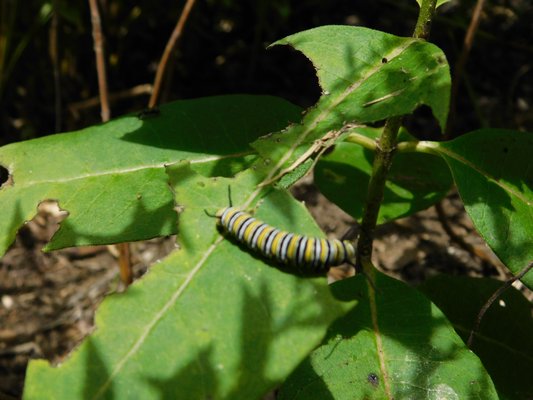
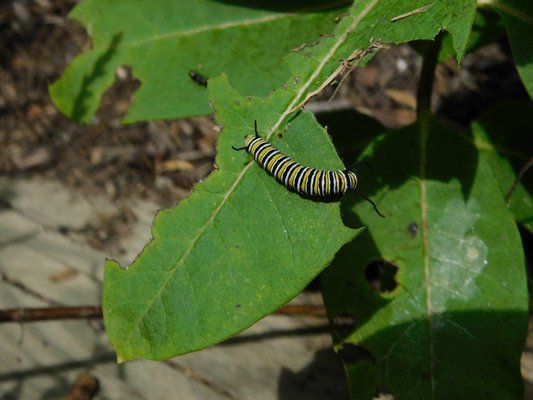
A female will lay anywhere from 300 to upward of 1,000 eggs, which weigh less than half a gram each and take three to eight days to develop into caterpillars. The yellow, black and white striped caterpillars with wiggly antennae at both ends would be sitting ducks for small rodents and other insects, but monarchs are poisonous and thus chemically defended because they ingest a toxin from the milkweed plant that causes heart palpitations and nausea in predators.
A monarch caterpillar spends most of its time eating and growing for the next life phase, the pupa or chrysalis stage. The caterpillar molts its skin five times before the pupa stage, a process referred to as instar.
Mr. Potente showed the audience a video of a caterpillar finding a safe place for pupation. The caterpillar spun a silk pad and securely latched its body onto a milkweed leaf before spinning an inch-long chrysalis around itself. After eight to 15 days, the butterfly slowly emerges from its cocoon and is ready to fly.
Mature butterflies may fly for a month or two, traveling perhaps more than 2,500 miles from the Northeast to Mexico — quite the undertaking for an insect that weighs less than a gram. Statistics believe the butterflies can fly from 50 to 100 miles in a single day. Adult migratory monarchs live about 10 months, consuming nectar from native plants such as goldenrod.
“The best advice I give is to allow milkweed to grow and sit back and enjoy watching the monarchs flourish on them,” Mr. Potente said about encouraging the population locally.
Miles Todaro, an educator at the South Fork Natural History Museum in Bridgehampton, was pointing out monarch caterpillars munching on milkweed near the museum’s butterfly garden on a recent Sunday afternoon.
“It seems like there’ve been a lot of monarchs, especially around the museum with all of the milkweed and native flowers,” he said. “It’s a really good spot for monarchs. We’ve seen a lot here,” he said.
“They rely on this one plant,” Mr. Todaro said while one caterpillar crawled onto his finger. “The less milkweed you have, the less monarchs you will have.”
He explained that butterflies lay eggs on specific groups of plants. “The monarch butterfly only lays its eggs on plants in the milkweed family,” he said. “Without that plant, it can’t produce offspring and can’t survive.”
Development and the subsequent loss of milkweed, pesticides and climate change have all been factors in the population’s decline, he said.
“You can actually see piles of dead butterflies all over the ground that are hit by unexpected frost,” he said. “If their numbers are rising on Long Island, they’re definitely not where they need to be, ecologically speaking.”
“Without question the numbers have gone down,” Mr. Petracca also said of the overall population. “Insect numbers in general are not where they should be. They are one of the most important animals in our environment. Without them, our environment can’t exist.”


 Elizabeth Vespe on Sep 12, 2019