


 2 Photos
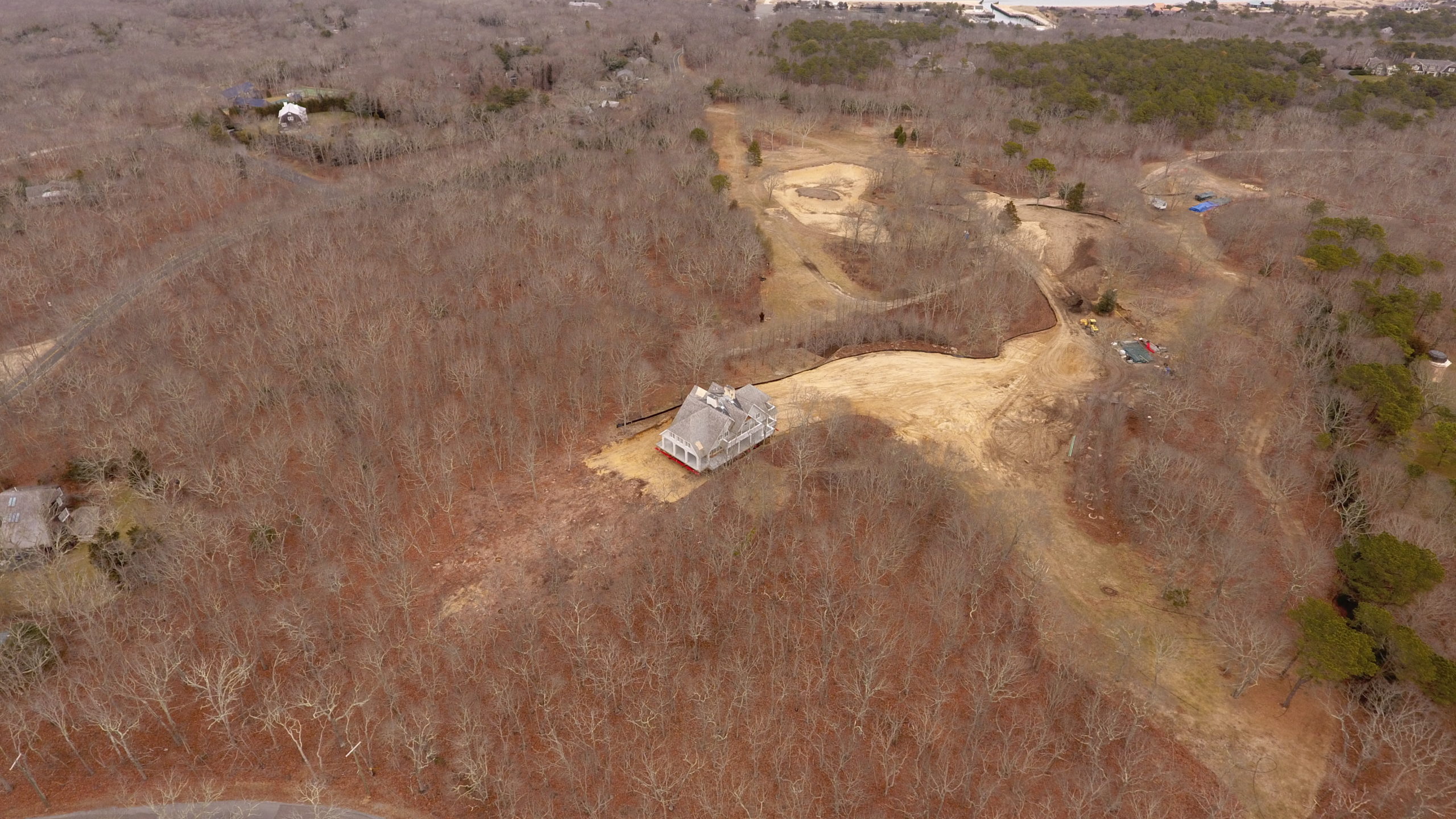
Architect Francis Fleetwood's home was moved earlier this month from its original location to the edge of another property owned by wealthy investor Michael Novogratz, who has sued East Hampton Town over a stop-work order on the project.
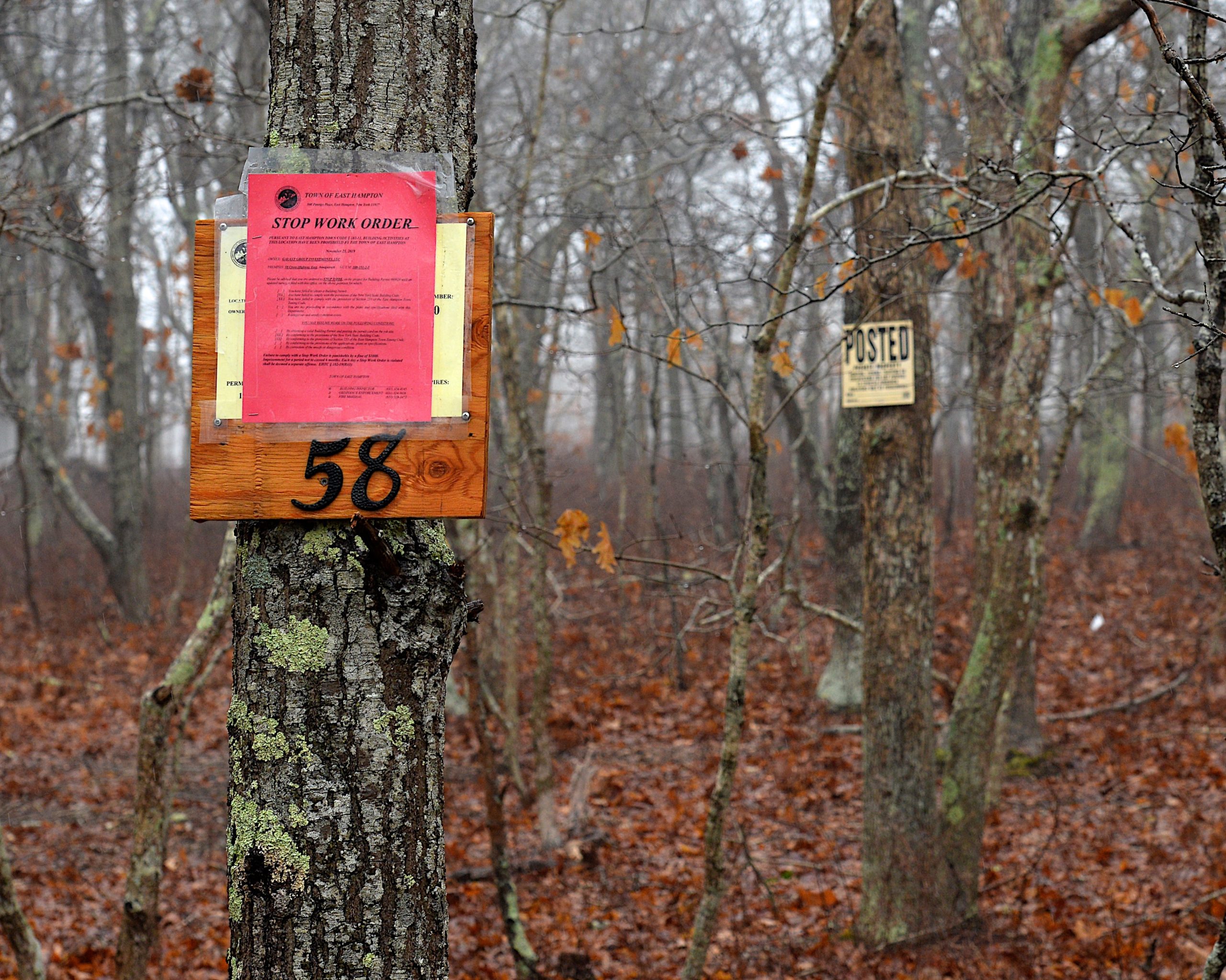
The Town Building Department issued a stop work order on the house move in January. Kyril Bromley
The billionaire investor who has been trying to expunge a “paper road” that makes up a portion of the Paumanok Path from his Amagansett property has sued East Hampton Town, demanding that a stop-work order be lifted and seeking damages of at least $1 million.
Attorneys for Michael Novogratz filed suit in State Supreme Court last week asking that the court allow his contractors to complete the relocation of the former Francis Fleetwood home off the renowned architect’s former 33-acre estate and onto an adjacent 5-acre parcel that Mr. Novogratz also owns.
The attorneys asked the court to lift the stop-work order immediately, to allow the move to be completed last week, on the condition the house remain on its temporary support brackets, so as to avoid it having to be picked up twice, but a judge declined.
Instead, the house remains near the property line on the former Fleetwood Estate, at 85 Ocean View Lane, where Mr. Novogratz presumably has other redevelopment plans. East Hampton Town will be asked to respond to the claim that the century-old road right-of-way does not actually exist.
The suit claims that the months of delays to the planned project will cost Mr. Novogratz at least $1 million, which the attorneys claim the town should be held liable for if the plaintiff ultimately prevails.
Mr. Novogratz had asked the town more than a year ago to abandon the paper road, in exchange for a legal easement that would guarantee the Paumanok Path could cross his property at 58 Cross Highway. But the town balked over concerns that the abandonment would allow substantially more development on the property.
Attorneys for the billionaire hedge fund manager and Bitcoin investor said that their own examinations of property records going back to 1914 did not indicate that the paper road shown on town highway maps was ever actually dedicated and deeded to the town.
Last summer, Mr. Novogratz’s representatives convinced county property records staff that the roadway was shown in error and got the maps changed to not include the road. They then applied for and received a building permit to allow the 3,500-square-foot Fleetwood house to be moved onto the Cross Highway property.
But unbeknown to either Mr. Novogratz’s representatives or the Building Department, a local resident who had taken an interest in the matter, David Buda, presented evidence to the county in the interim that the paper right-of-way to the town was indeed proper, and county staff had refiled the original layouts with the roadway bisecting the Cross Highway parcel.
When this change was highlighted to the Building Department, the house move project was ordered halted. Mr. Novogratz’s contractors nonetheless moved the house off its foundation and to the edge of the property.
“The litigation is intended to establish our ownership to the paper road so that my client can relocate the former Fleetwood house to his preferred location,” Mr. Novogratz’s attorney, Steve Latham, said in an email this week. “We are seeking the court’s permission to temporarily relocate the house to that location, but to leave it on cribbing and not do anything further in terms of constructing a foundation or connecting to utilities, etc., until the court issues a decision.”
The case made by Mr. Novogratz’s attorneys relies on property records that they say never indicate that the possible roadway route drawn in highway maps more than a century ago was ever dedicated to the town.
The town’s support has pointed to a notation in the East Hampton Highway Book, a map of the town’s roadways, many of which have never been actually created that created a roadway from “Cross Highway from Cranberry Hole Highway to Fresh Pond Highway.” But Mr. Novogratz’s attorneys say there is no evidence the roadway across their property was ever dedicated to the town by one of its owners, as would be necessary.
Town Supervisor Peter Van Scoyoc said that town officials can no longer discuss the dispute now that it is the subject of litigation. He said he expects the Town Board will have the court case handled by an outside law firm rather than the town attorney’s office.


 Michael Wright on Feb 25, 2020