


 8 Photos
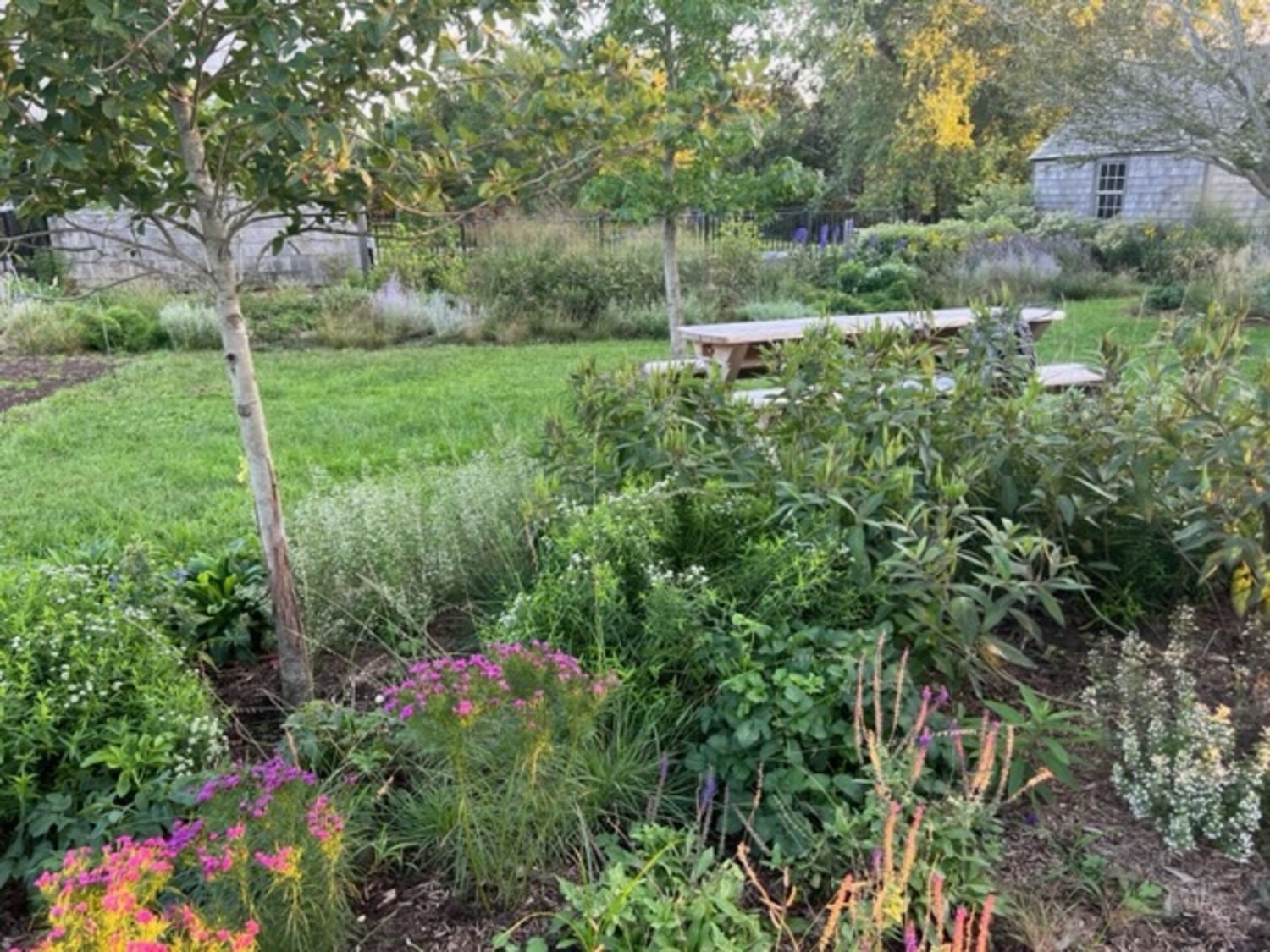
The Community Pollinator Garden at the East Hampton Town Hall. GAIL PELLETT.
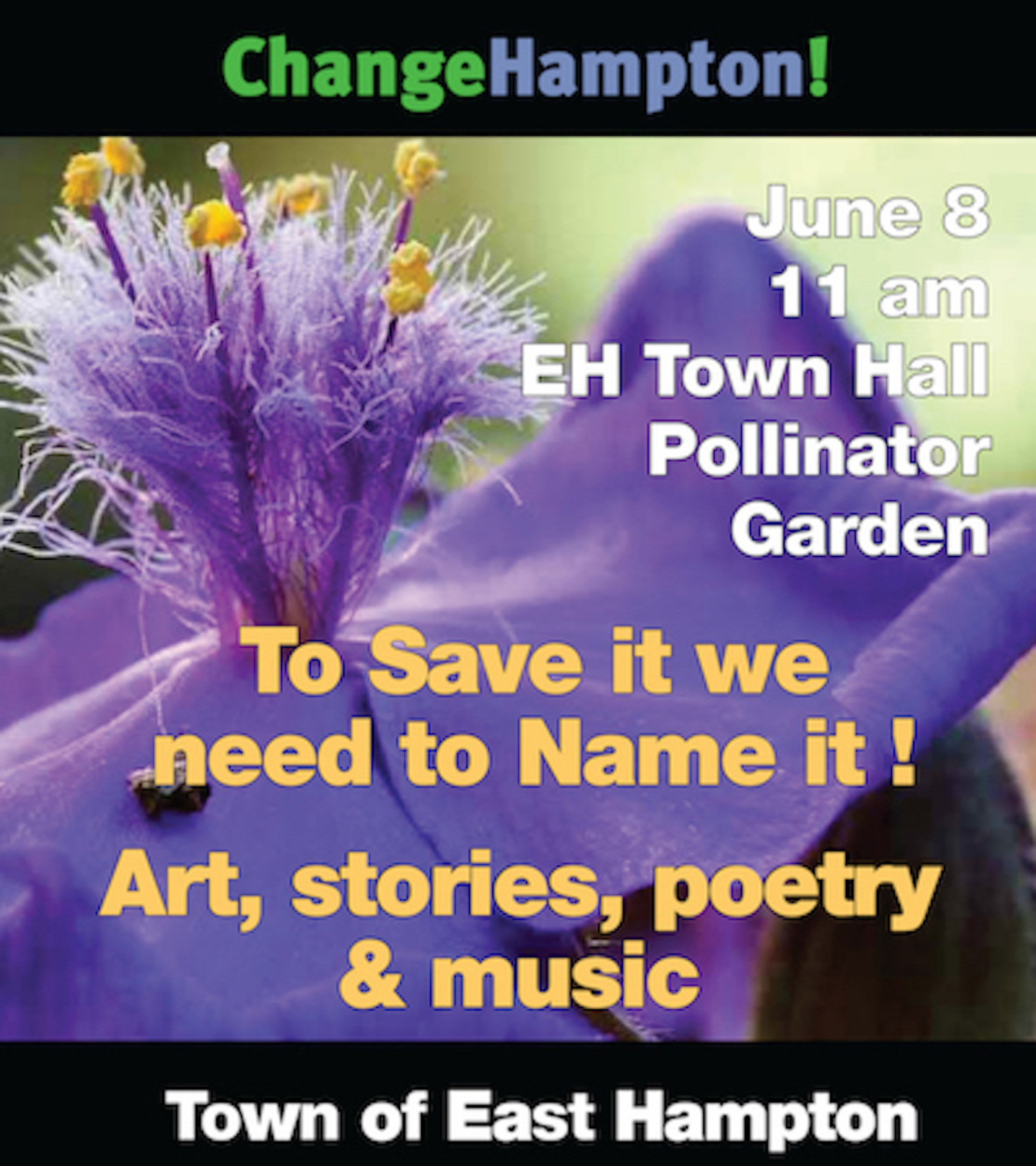
ChangeHampton Naming Names Event Poster. COURTESY GAIL PELLETT.
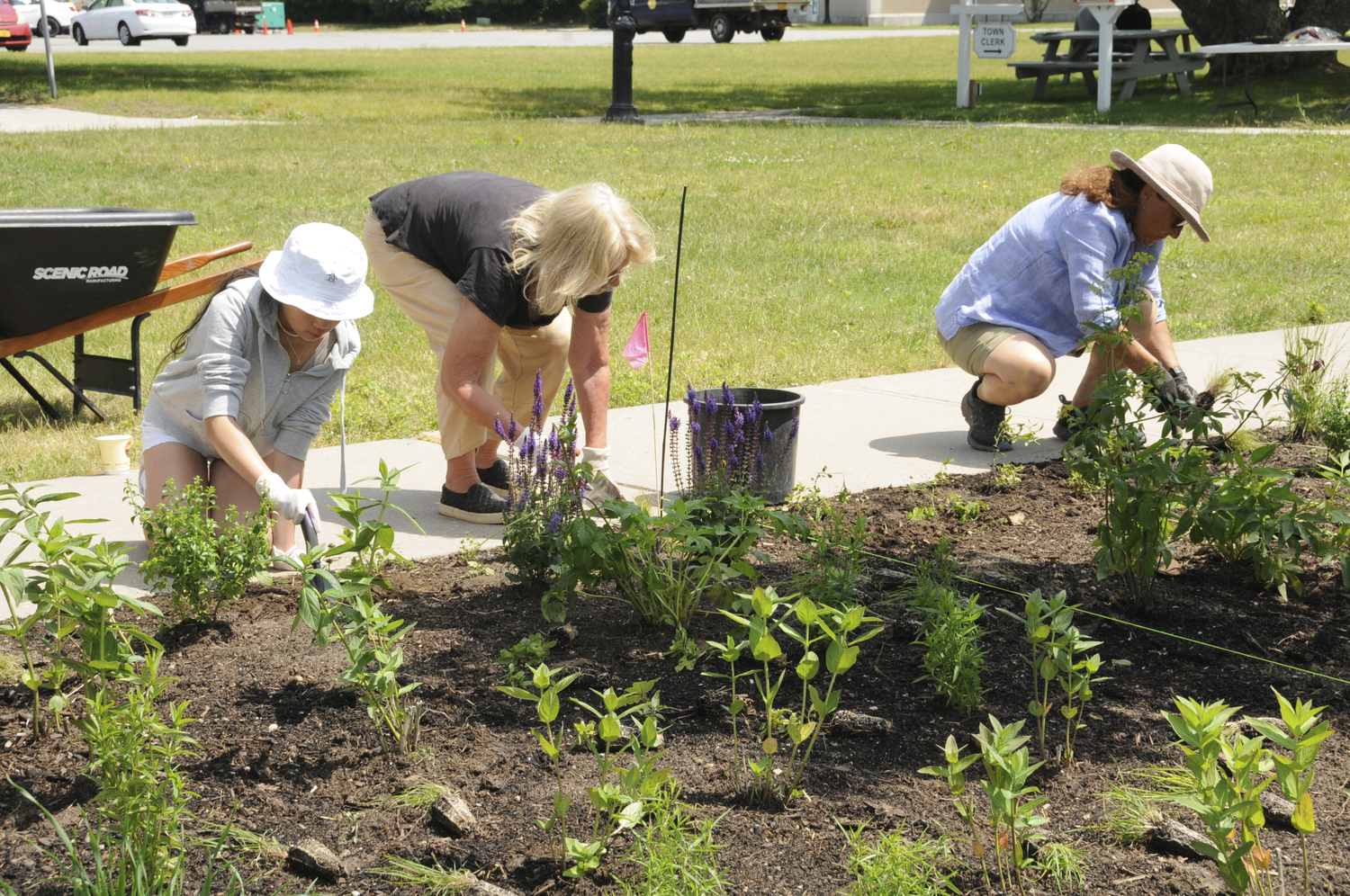
Volunteers gardeners place plats in the pollinator garden at East Hampton town Hall in June 2023. RICHARD LEWIN
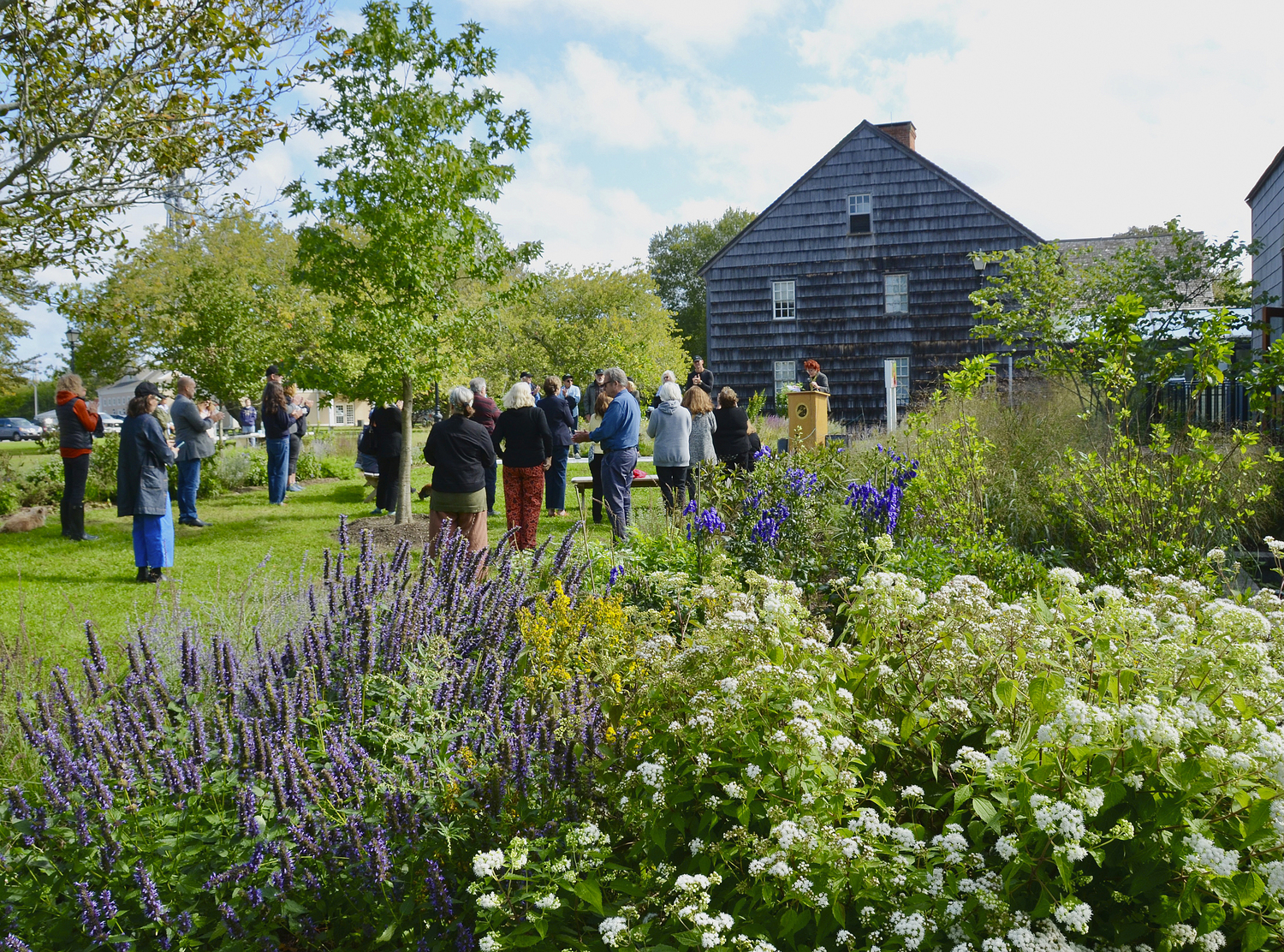
The ChangeHampton pollinator garden dedication in September 2023. KYRIL BROMLEY
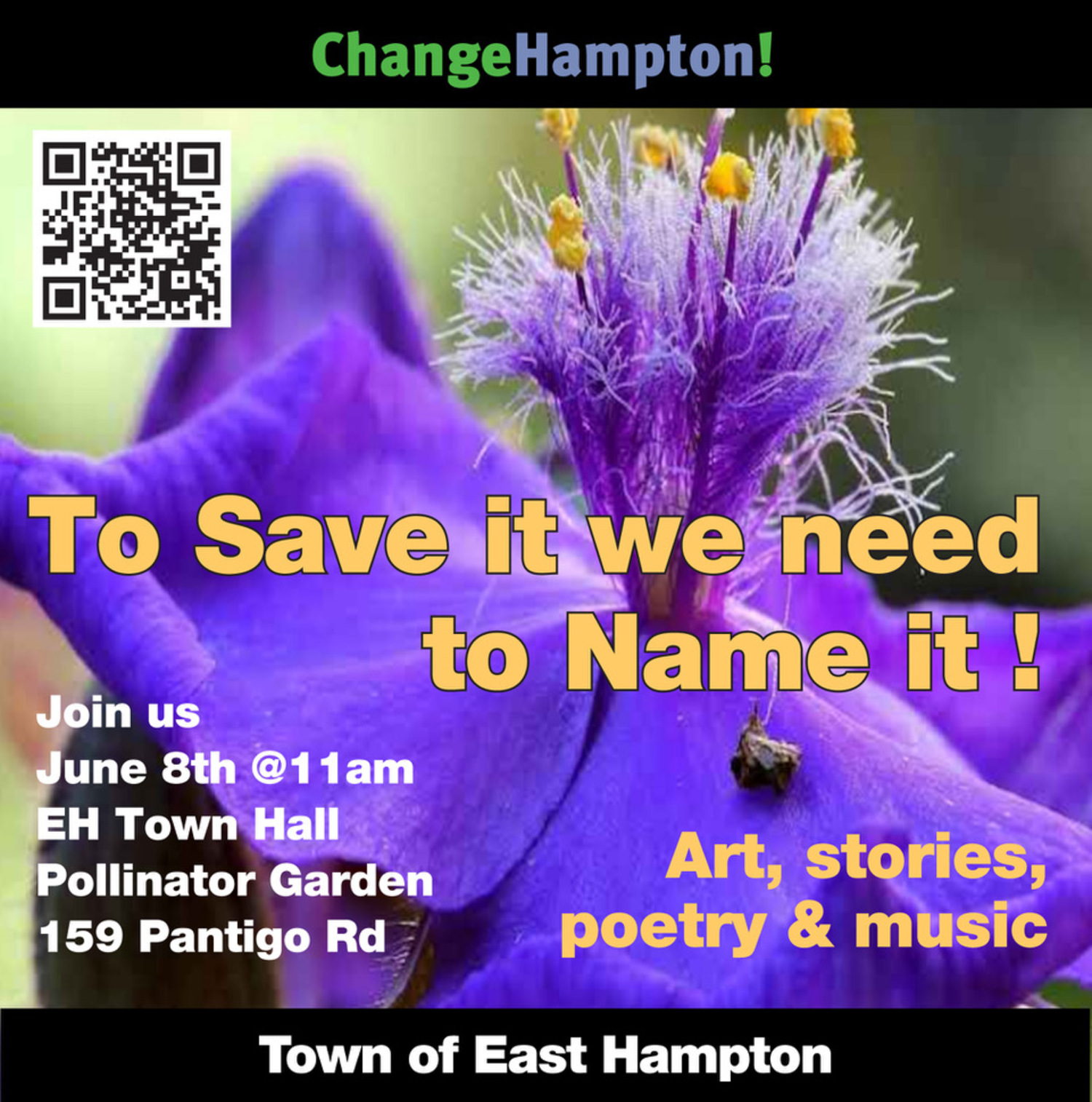
The flyer for ChangeHampton's Naming Names event. COURTESY GAIL PELLETT.
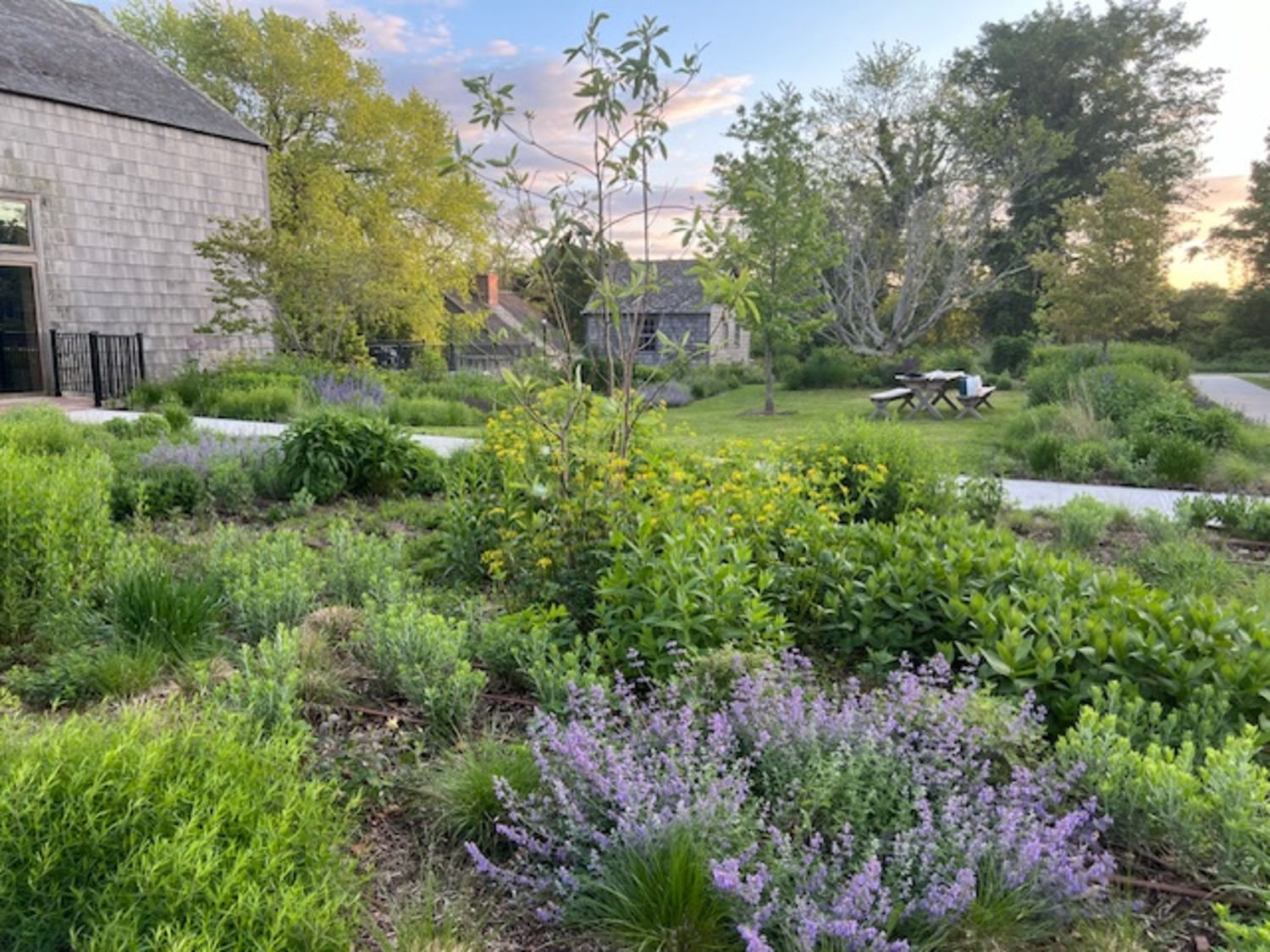
The Community Pollinator Garden as of May 30, 2024. GAIL PELLETT.
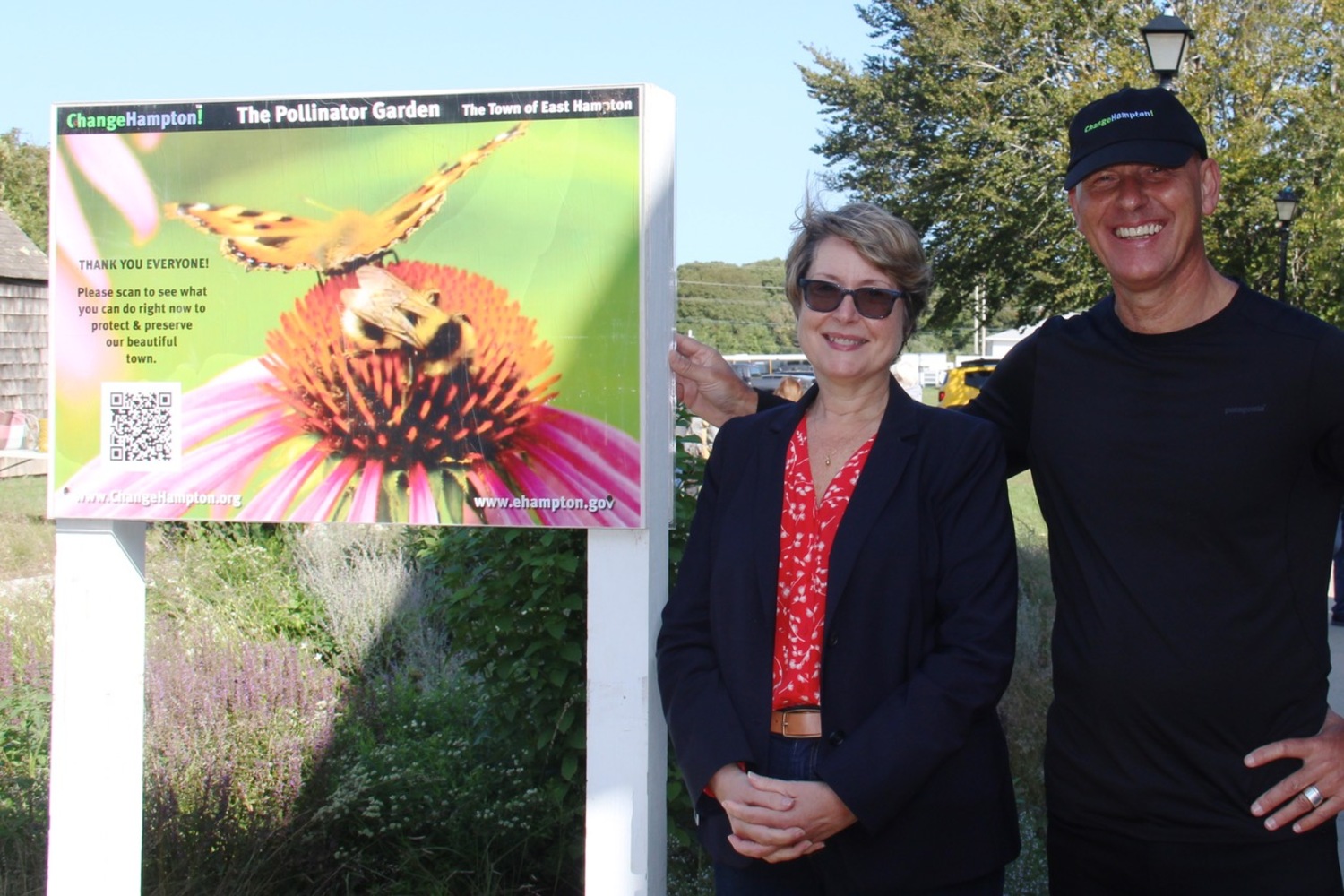
East Hampton Supervisor, Kathy Burke-Gonzalez and ChangeHampton’s Stephan Van Dam at the sign in the garden. COURTESY GAIL PELLETT.
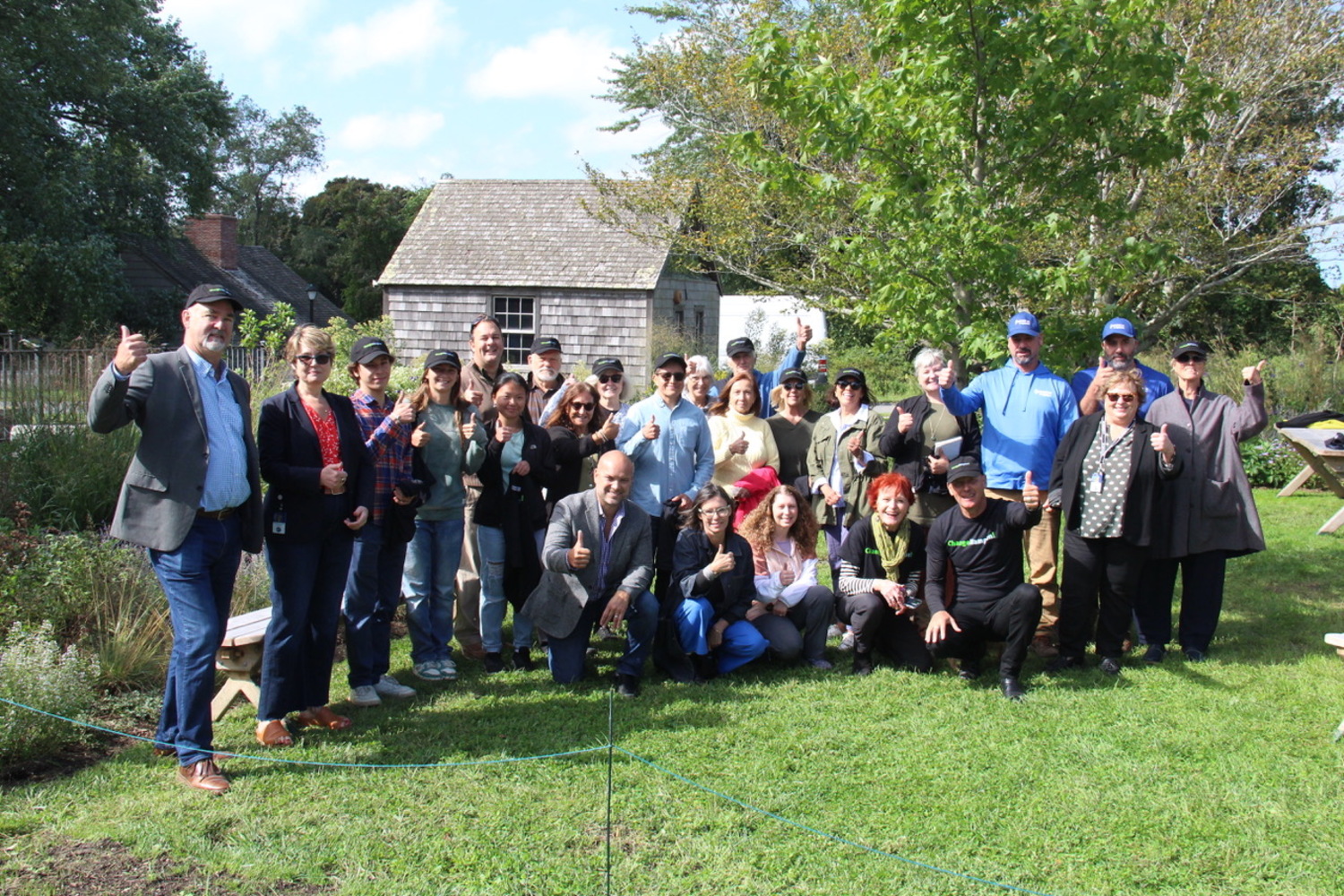
A celebration in the Community Garden in October, 2023. COURTESY GAIL PELLETT.
Ask most people to name a designer brand, a trendy product or a favorite fast-food restaurant, and chances are they’ll be able to offer a quick answer. But how many people can answer confidently when asked to name native plants?
This is the question that the environmental advocacy group ChangeHampton aims to address in its upcoming event “Naming Names: To Save It, We Need To Name It.”
The event, taking place on Saturday, June 8, at 11 a.m. at the East Hampton Town Hall, will feature readings and videos from East Hampton high school and middle school students, poetry from local poets Scott and Megan Chaskey, and music from flautist Julie Bluestone.
According to Gail Pellett, a ChangeHampton co-founder, the organization began as “a group of neighbors fed up with the deafening noise of leaf blowers and the air pollution they cause in our neighborhood in East Hampton.”
After much research, the team realized the dangers of leaf blowers and their destruction to the “hibernation of regenerating insects,” Pellett added, which led them to advocate against their use in town, by educating the public against their dangers.
“As a group, we had a choice,” she continued. “Do we begin a movement to ban blowers, or do we educate ourselves about the larger issue of our yard maintenance?” That question sparked a journey of understanding for this group, with respect to the local plant life and biodiversity of the community and also in the development of what has now become ChangeHampton.
ChangeHampton’s main focuses are educating the public, restoring natural environments and promoting healthy gardens and maintenance practices by advocating for electric leaf blowers and against pesticide use.
“Blowers are destroying the overwintering and regenerating homes of our beneficial insects,” Pellett said. “They should be banned if we want to survive.”
In 2023, the Department of Environmental Conservation put out a report that said that in 2021 Suffolk County alone used 1,700 different pesticides, the largest number of pesticides used in any county in New York.
“Pesticides, research shows us, are not only killing insects and birds, but also us with higher cancer rates,” Pellett continued.
In speaking about lawn practices, Pellett mentioned that “turf lawns are comprised of foreign grasses that serve no eco-services whatsoever … Native plants sequester carbon and process nitrogen, they clean toxins out of the soil and our groundwater. What you do in your yard ends up in our groundwater, drinking water and bays.”
Lawn practices and maintenance are very important to the organization, especially since it can often appear that East End homeowners care more about how their lawn looks than how it functions naturally.
“This aesthetic needs to change,” Pellett said. “We need to let go of this concept of tidiness, of sterility. Of control.”
ChangeHampton’s “Naming Names: To Save It, We Need To Name It” event will take place at the East Hampton Town Hall, where, in 2022, ChangeHampton created a 4,000-square-foot community pollinator garden (a garden designed to specifically attract necessary pollinators like bees and butterflies) on a previously dead patch of lawn, with a goal to “provide an ecological model to educate our community,” Pellett said.
The garden was created with the help of high school and middle school students, who helped plant, weed and ready the beds. ChangeHampton has incorporated students in their activities from the beginning.
“They are the future,” Pellett said, “and we are leaving them a terrible mess. We believe that most of us have had little education in how our ecosystems work and this is an opportunity for us to learn together. If we don’t understand how our ecosystem works, and how to name our universe, we cannot counteract the impact of climate change, or the loss of biodiversity,” she continued.
For this event, students in Latin classes will be reading the Latin names of native plants according to the “binomial” system created by Carl Linneaus in the 18th century.
In addition, Sunshine Gumbs from the Shinnecock Nation will be speaking about a new research project involving the territory, which is an effort to “resurrect Algonquin names for local plants.”
“Through the Colonial era and the suppression of Native languages, many of those names were lost,” Pellett said. “We are fortunate that there are new research projects now to restore and preserve Indigenous languages. Embedded in those languages is a perspective about living with the natural world. Not dominating it or killing it.”
The event will also include putting “plant ID signs” in the garden, featuring the Latin names of each plant. “In the future, we want to be able to put Algonquin names in the garden as well,” Pellet said.
ChangeHampton provides many resources for curious locals to get started identifying and protecting indigenous plants. The organization has a website, changehampton.org, with a page titled “What You Can Do Right Now,” along with a “Native Plant Selector,” which is a useful tool in garden planning that includes extensive information about native plants. The website also features the organization’s manifesto, newsletter and all information about ChangeHampton’s previous projects.
When asked what citizens could do to help support ChangeHampton’s efforts, Pellett responded that ChangeHampton “encourages everyone to reduce their lawns, stop using biocides that are killing all of our beneficial insects and birds and plant natives that have evolved for millions of years with insects and birds, thereby inviting pollinators.”
The first step? Naming names. “We believe that in order to love something, to nurture it, to save it, we need to name it,” Pellett said.
Naming is the first process toward educating, and that is becoming harder and harder due to the fact that, according to Pellett, dictionaries are dropping words that signify the natural world in favor of words of the digital era. ChangeHampton’s Naming Names event is an effort to come together as a community, educate the public and have fun doing so.
“We can build a movement and educate ourselves about our ecosystem,” Pellett concluded. “We can change what we’re doing, and we can make a difference.”


