


 6 Photos
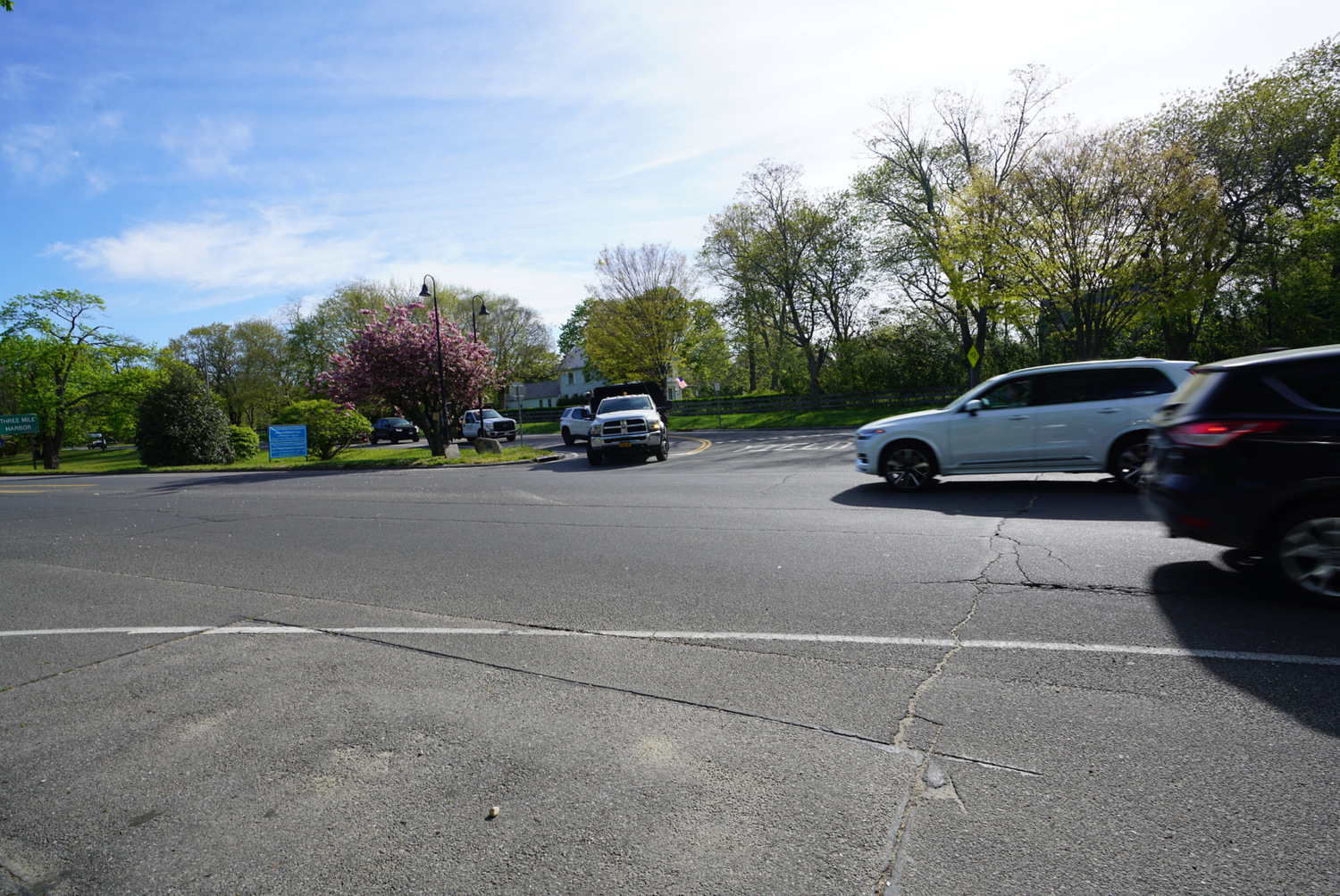
Residents of East Hampton told Suffolk County engineers that a roundabout is needed to relieve chronic traffic congestion at the merge of Three Mile Harbor Road and Springs-Fireplace Road. Engineers said that they are still working on how to address the traffic problem at the merge as part of a major repaving of Three Mile Harbor Road coming in 2026 but that a roundabout is not currently in the list of considerations. DOUG KUNTZ
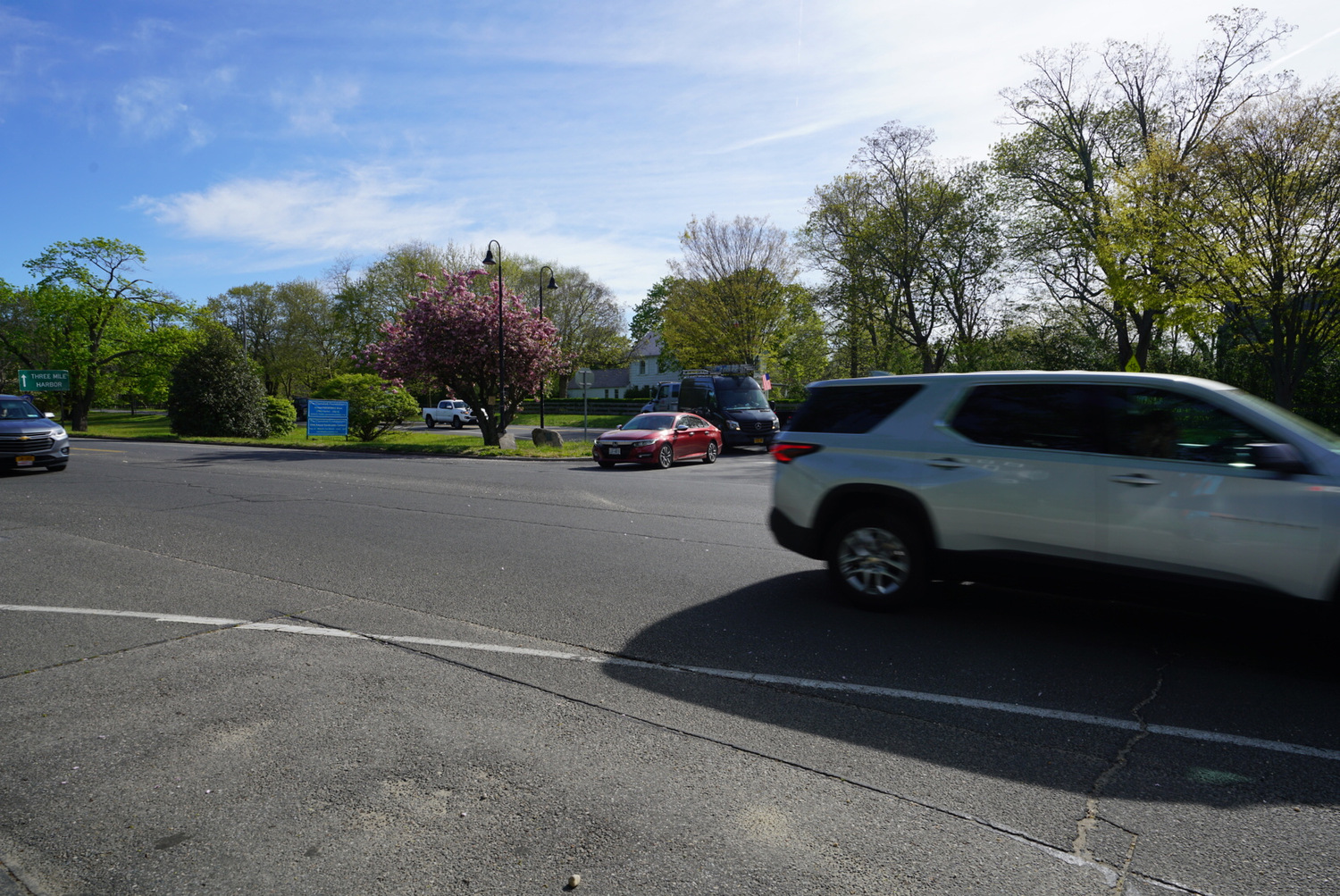
Residents of East Hampton told Suffolk County engineers that a roundabout is needed to relieve chronic traffic congestion at the merge of Three Mile Harbor Road and Springs-Fireplace Road. Engineers said that they are still working on how to address the traffic problem at the merge as part of a major repaving of Three Mile Harbor Road coming in 2026 but that a roundabout is not currently in the list of considerations. DOUG KUNTZ
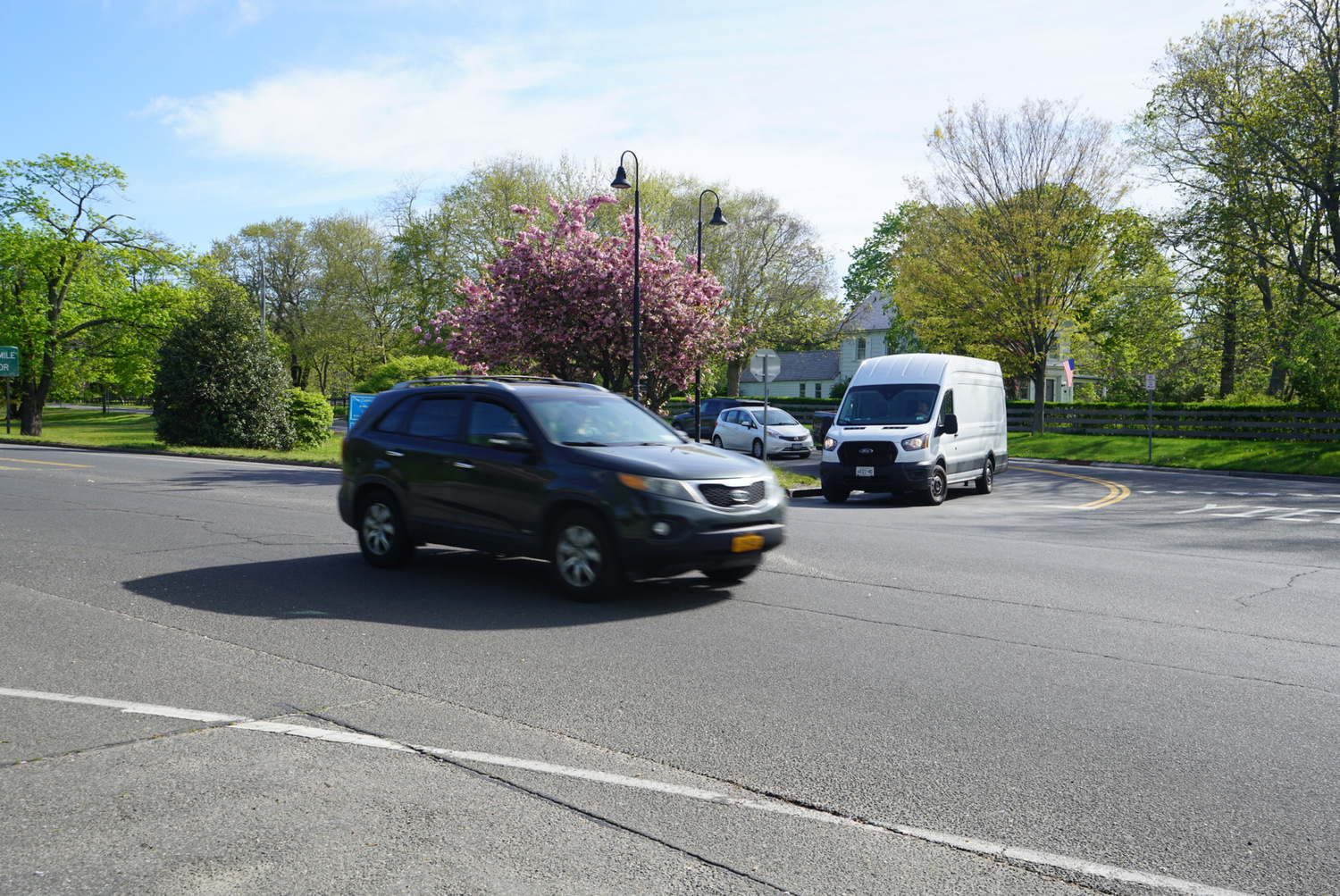
Residents of East Hampton told Suffolk County engineers that a roundabout is needed to relieve chronic traffic congestion at the merge of Three Mile Harbor Road and Springs-Fireplace Road. Engineers said that they are still working on how to address the traffic problem at the merge as part of a major repaving of Three Mile Harbor Road coming in 2026 but that a roundabout is not currently in the list of considerations. DOUG KUNTZ
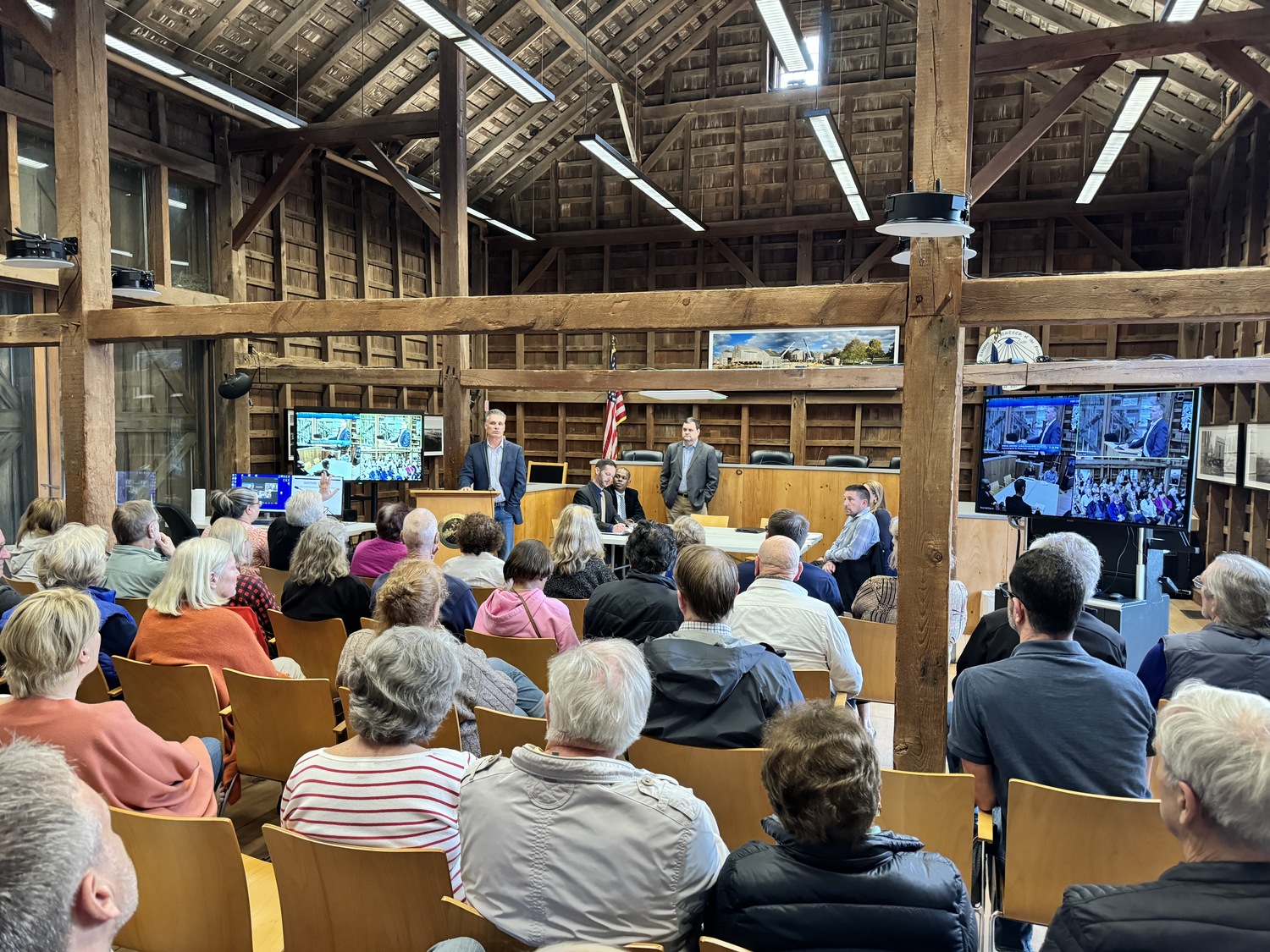
Engineers from Suffolk County heard an earful last week from residents who use Three Mile Harbor Road, most of whom pleaded with them to construct a roundabout at the merge with Springs-Fireplace Road. MICHAEL WRIGHT
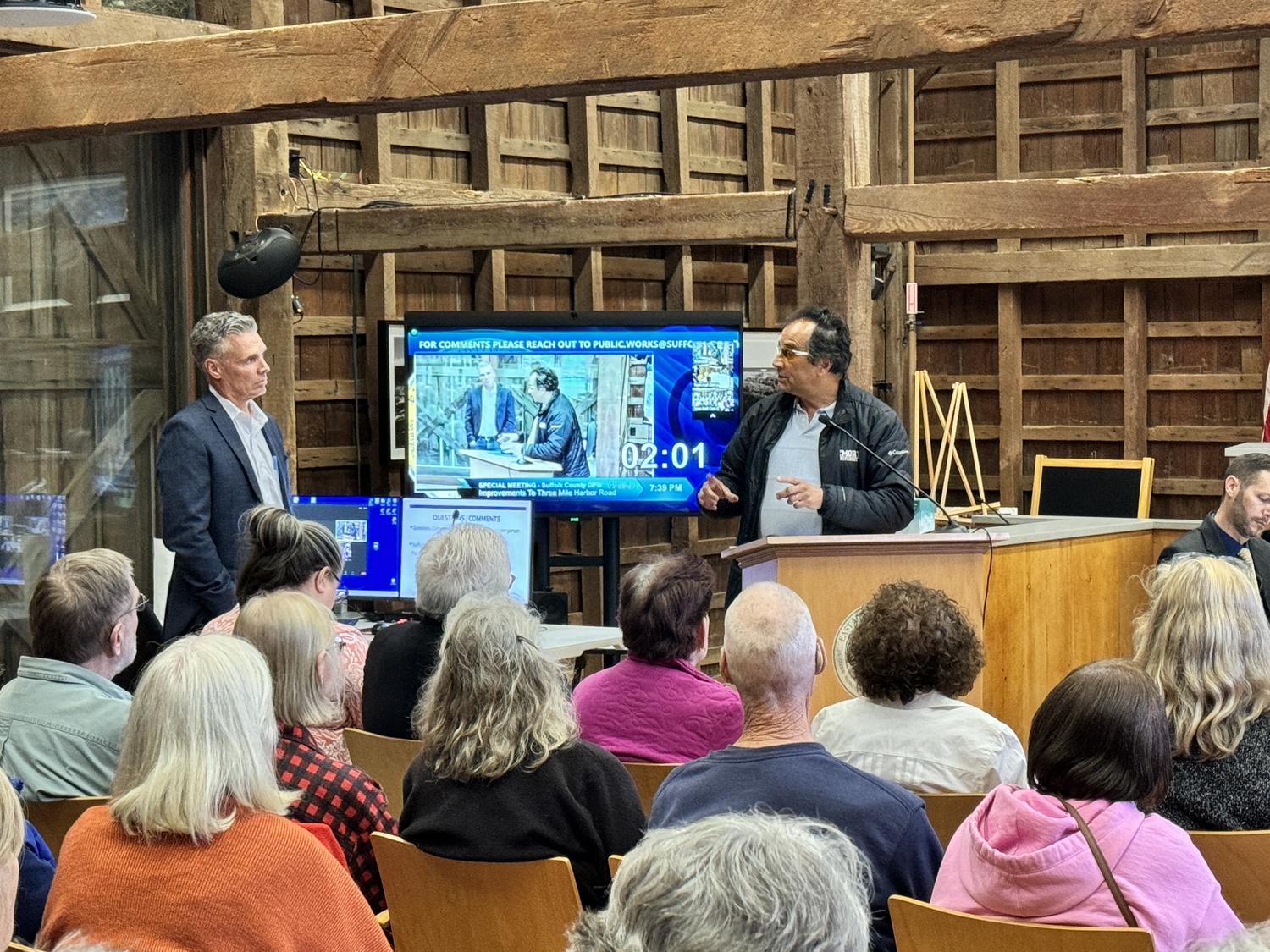
Engineers from Suffolk County heard an earful last week from residents who use Three Mile Harbor Road, most of whom pleaded with them to construct a roundabout at the merge with Springs-Fireplace Road. MICHAEL WRIGHT
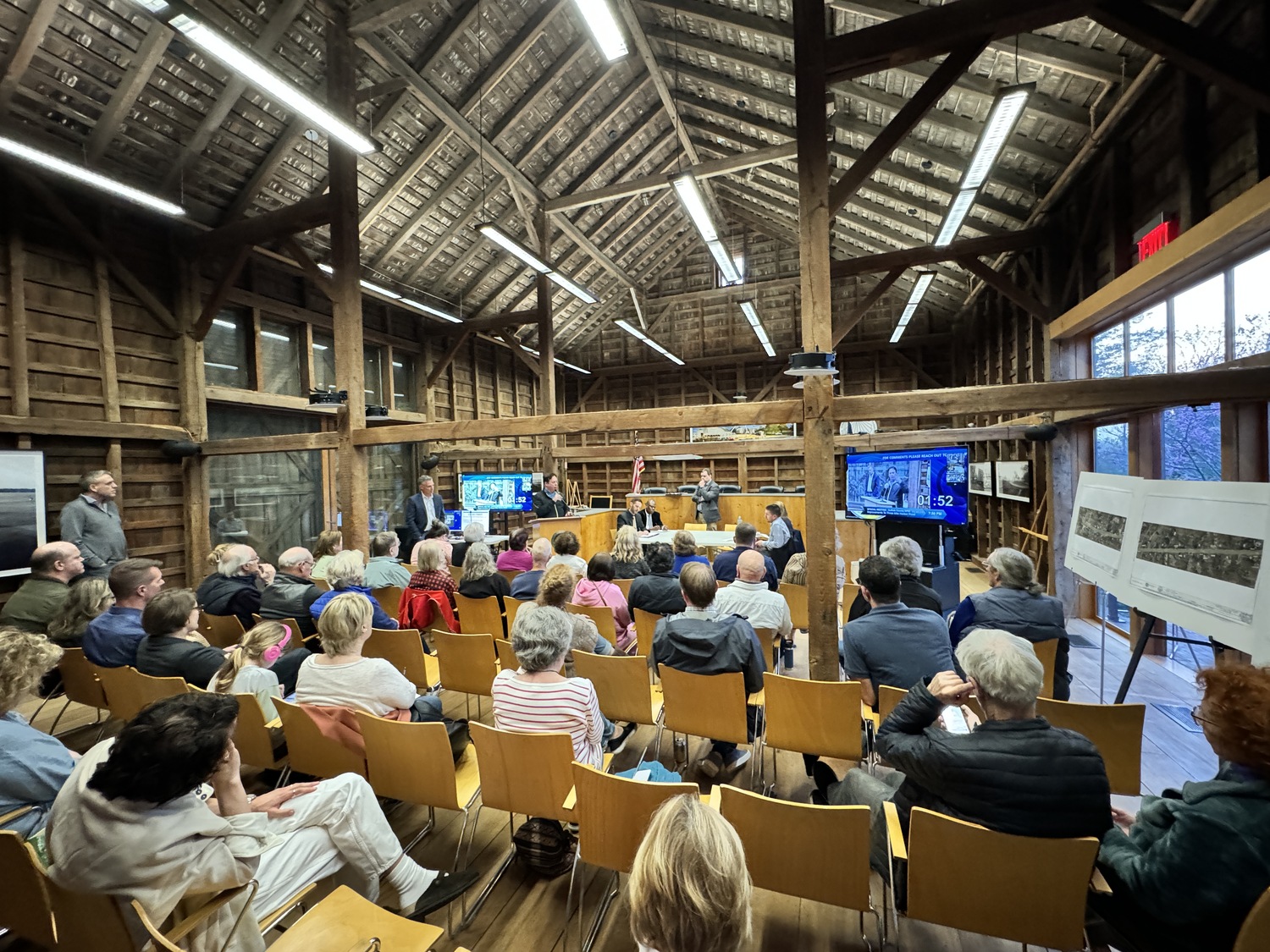
Engineers from Suffolk County heard an earful last week from residents who use Three Mile Harbor Road, most of whom pleaded with them to construct a roundabout at the merge with Springs-Fireplace Road. MICHAEL WRIGHT
Engineers for Suffolk County asked East Hampton residents to voice their ideas for the remaking of Three Mile Harbor Road, where the county plans to begin work in 2027.
They heard an earful, but the main message sent by residents at Town Hall last Thursday, May 9, was that the thing most needed is something that is not in the county’s playbook.
For all the desperately needed improvements to drainage, to sidewalks and crosswalks and intersections and paving that the county and residents agreed upon, a roundabout at the merge of Three Mile Harbor Road and Springs-Fireplace Road was the most important, the standing-room-only audience told the team of engineers.
“We need a roundabout,” said J.B. DosSantos. “You just did Springs-Fireplace Road, and there is a line of 50 cars, 50 cars. A traffic light is not going to solve the problem. Do it once. If you have to delay the project, do it. But we must have a roundabout.”
The county engineers said that they are still only in the preliminary stages of the planning for the road work, which is not slated to begin until the spring of 2027 and wouldn’t be completed until spring of 2028. The $14.5 million project will repave all of the 2.5 miles of roadway from the intersection of North Main Street and Collins Avenue to Copeces Lane, with bike lanes heading in both directions.
There will be extensive upgrades to drainage systems to alleviate chronic flooding in several places, curbing and new ADA-compliant sidewalks constructed along the full length of both sides of the road, new traffic signals at the inspections with Collins and at Cedar Street, and lower speed limits — down from 40 to 35 mph.
“You people live here, you drive this road all the time, the insight you can provide us is essential to us providing a good project,” Bill Hillman, the chief engineer for the county Department of Public Works, told the crowd.
And the crowd offered extensive insights.
Katy Casey said that the timing of the stop lights at Collins Avenue is dangerous for pedestrians who must cross North Main Street at the same time that a lineup of cars is rushing to make right turns through the intersection, and across the crosswalk. Hillman said that is an issue that can be looked at immediately.
Bruce Nalipinski suggested that more crosswalks were needed along the entire length of the roadway, not just at the downtown intersections.
Hillman said that putting crosswalks on a high-speed roadway like Three Mile Harbor Road raises safety concerns, because they can give a pedestrian a false sense of security that a motorist traveling at speed may not recognize. But he encouraged Nalipinski and others to put their detailed thoughts into writing and email it to the engineers for them to examine further.
They also heard a lot about the various places around the southern end of Three Mile Harbor that are infamously hazardous.
“Where Springs-Fireplace empties onto Three Mile Harbor Road, that left turn there, that is one of the most problematic intersections in the entire town,” said Hy Mariampolski. “You are turning left and you can barely see cars coming in from Three Mile Harbor to the right, and to the left there is a constant stream of cars, and you don’t know whether they’re turning right onto Springs-Fireplace or left onto Three Mile Harbor. I’ve had near accidents there several times.”
“I hear accidents at least once a month,” added Eric Scoppetta, who lives near the intersection of Jackson Avenue and Three Mile Harbor, where traffic seeking to avoid the long backups caused by the manic merge Mariampolski was describing cuts through between the two roads, to an only marginally less complicated turn. “This has to be the second-most dangerous intersection in the town, after the one up the street. It’s an extremely dangerous intersection.”
The merge of what the engineers call CR 41, Springs-Fireplace, and CR 40, Three Mile Harbor Road, has been the subject of much debate on how to make it safe and less of a traffic backup for decades. In the 2016 hamlet studies, traffic engineers hired by the town proposed either a roundabout or an extensive “channeling” design that would take some of the guesswork out for motorists trying to turn onto the main roadway.
A roundabout is complicated because of its size. Building one would require the town abandoning a triangle of grass that divides the two roads, which is technically a park and would have to be “alienated,” a lengthy process that requires approval from the State Legislature.
Casey suggested that with two years before the design plans have to be finalized, the county and town should get together now to get that process started.
While Hillman welcomed that suggestion and said that getting the property cleared for use as part of traffic calming would provide some flexibility in the long term, a roundabout is a much more involved process than just clearing the space.
“It’s a much larger study that is not part of this project — but that doesn’t preclude it from moving forward in the future,” he said. “It would delay this project. And a roundabout is very costly. We’re already in to this for $14.5 million.
“We’re not saying we’re not going to improve that intersection, what we’re saying is that the complications of a roundabout preclude it from being part of this project,” he added. “A traffic signal can very easily do the same thing a roundabout can do and it can be installed very quickly, at a tenth of the cost.”
Hillman said that the county has the town’s roundabout study and other proposals for ways to make the merge safer and improve the flow of traffic and would fold it into their thinking.
“We are in the preliminary engineering phase, no final decisions have been made, so it’s a good time for us to hear from the community,” he said — though he again applied the phrase “for future consideration.”
The engineers said that the overall roadwork along Three Mile Harbor Road, when completed, will look very much like the remake of Springs-Fireplace Road that was completed last year, with narrow travel lanes for cars, paved and marked bike lanes and sidewalks, and brick-faced retaining walls in some places — in the Head of the Harbor region, primarily — where grade rises steeply from the roadway.
“If you liked what we did on [Springs-Fireplace], we’re going to replicate that on this roadway,” Hillman said.
Rick Whalen praised the work on Springs-Fireplace as a much needed modernization of the roadway.
But his sentiments were not shared universally.
“I’m not particularly crazy about what you did on Springs-Fireplace Road — it looks like western Suffolk,” Nalipinski told the engineers, most of whom had traveled from western Suffolk to hear from the East Hampton residents. “I don’t think most of East Hampton wants to look that way.”


 Michael Wright on May 15, 2024