


 1 Photo
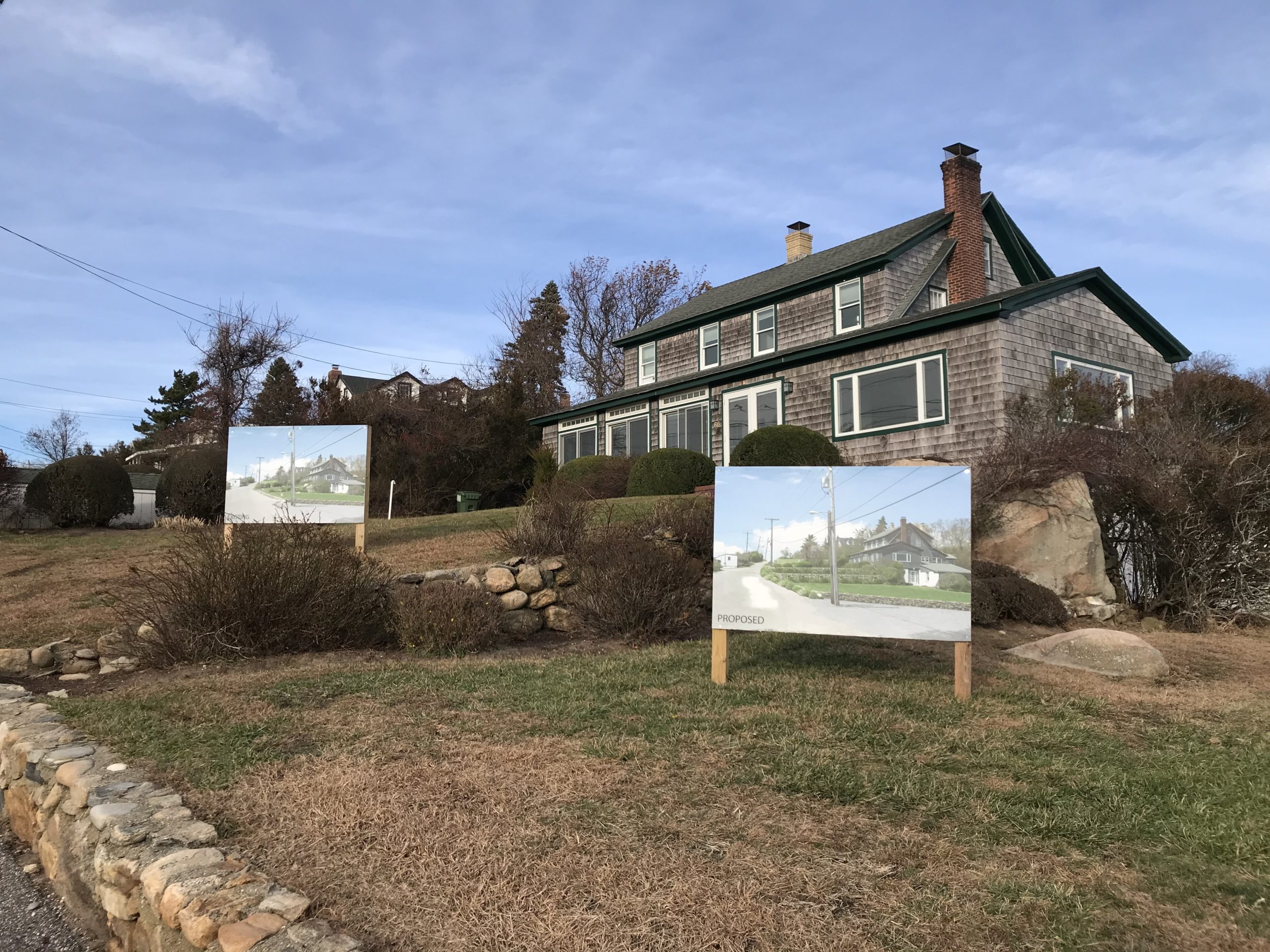
The residential property where the upgraded septic system for Duryea's Lobster Deck would go. The signs argue that the property would appear virtually the same after the new septic system is installed. VIRGINIA GARRISON
Attorneys for Duryea’s Lobster Deck in Montauk have filed another lawsuit against the East Hampton Town Building Department over its refusal to let the popular restaurant install a new septic system while its owner fights out a host of other issues with the town in court.
It becomes the eighth lawsuit that Marc Rowan’s company has pending against various agents of the town regarding the disposition of the Duryea’s property, and the second that specifically focuses on the replacement of the property’s septic system.
In October and again in November, as she did last spring, Chief Building Inspector Ann Glennon denied requests from attorney Michael G. Walsh for a building permit to install a low-nitrogen waste treatment system in an area of the property that is now the front yard of the former Duryea family home, across Tuthill Road from the waterfront restaurant itself.
Mr. Walsh has pointed, in both of his lawsuits over the septic system, to town codes adopted in 2017 to incentivize the installation of modern nitrogen-reducing waste treatment systems, like the one proposed. They call for expedited permitting of such applications at commercial properties without the typical Planning Board review.
But in two letters to Mr. Walsh this fall, Ms. Glennon said the law does not exempt the systems from planning review but merely gives her office the discretion to issue expedited permits under certain specific circumstances. Because the plans propose putting the system on a portion of the property that is zoned residential — which is prohibited — Ms. Glennon said the entire site must go through planning review first and obtain a variance from the Zoning Board of Appeals.
Mr. Walsh claims in the suit that the denial is simply a tactic to reduce the number of seats at the restaurant, which has been a point of contention between the town and the restaurant’s representatives.
“The town is attempting to force [Duryea’s] into a broad site plan review, which will give the town the opportunity to cut back the longstanding food service on the property,” Mr. Walsh says in the claim filed with State Supreme Court. “Rather than allow [Duryea’s] to replace an old septic system that runs along waterfront with an environmentally sensitive system that will be set back from and will protect wetlands — as town code encourages — Inspector Glennon is opportunistically holding up petitioner’s upgrade to force petitioner into an unnecessary site plan review.”
Neighbors have objected to the waste treatment proposal because, they say, it is the area of the property closest to neighboring homes and would be unsightly.
Representatives of Sunrise Tuthill LLC, the corporation through which Mr. Rowan, a billionaire investor, owns the waterfront eatery, have said that once the system is installed in the ground and the area is re-landscaped, there will be minimal aesthetic difference.
On Thursday, December 19, the East Hampton Town Board approved increasing the amount paid to law firm Sokoloff Stern, which is representing the town in all the cases with Sunrise Tuthill LLC, to $420,000.


 Michael Wright on Dec 17, 2019