


 1 Photo
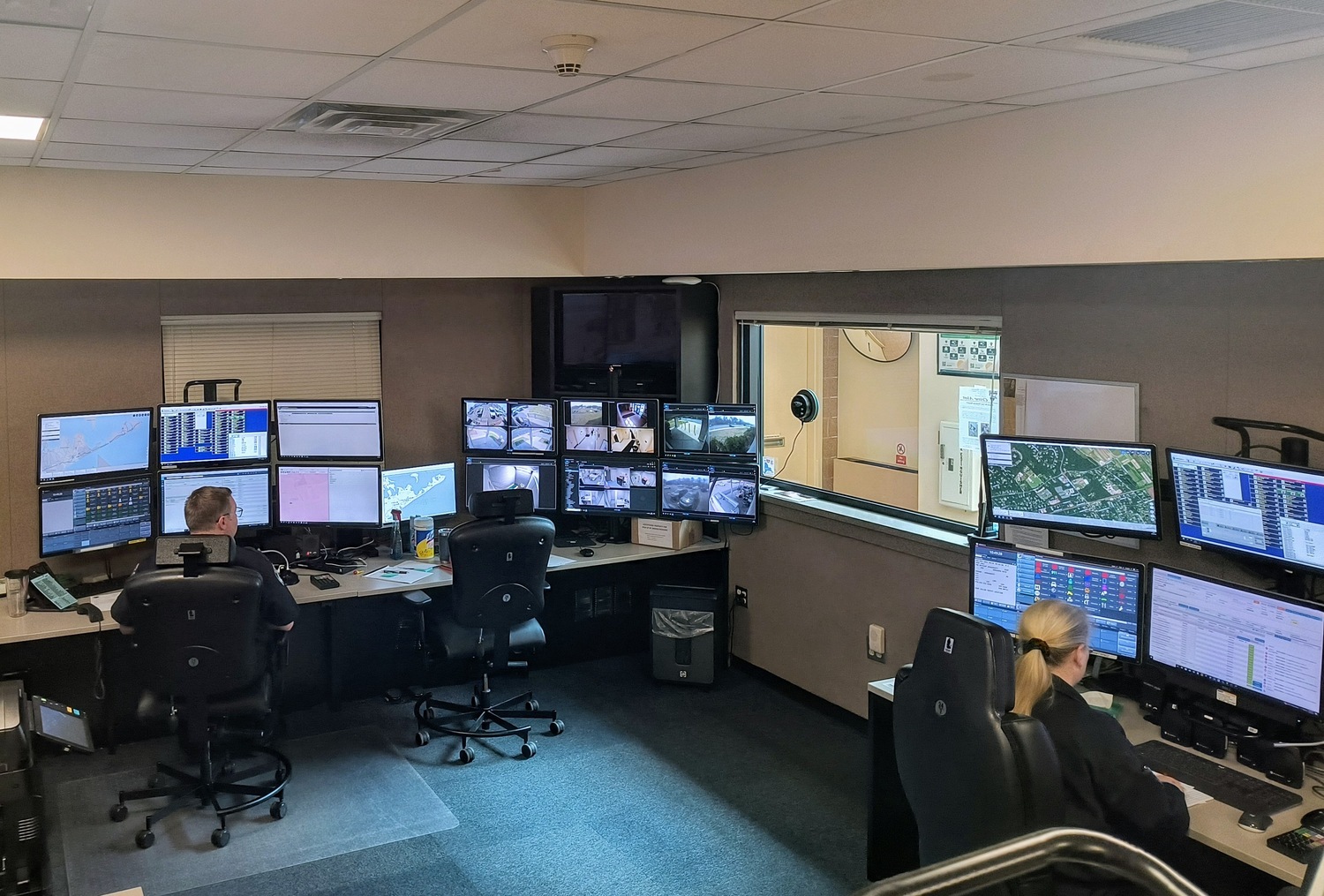
East Hampton Town will become its own primary public safety dispatcher after it failed to reach an agreement with East Hampton Village to continue an existing arrangement dating back to the mid-1990s. COURTESY EAST HAMPTON TOWN
The East Hampton Town and East Hampton Village governments went head to head over police dispatching responsibilities recently, prompting a split over 911 call reception — and an end to a 30-year arrangement.
For the past three decades, the village has served as the primary answering point for 911 calls originating from within the town. In this arrangement, the village forwarded police calls to town dispatchers. The arrangement cost the town nothing, meaning the village did not make money — nor recoup its costs.
However, this agreement has now been axed after months of negotiations, and the town will become the primary answering point for its own police dispatch calls starting in 2026, which town spokesman Patrick Derenze said will save $2.5 million in town taxpayer money over 10 years.
As it stands, the village will continue to handle dispatch for fire and EMS on behalf of the town, but Derenze said the town is looking at transferring that responsibility to town dispatch as well.
In February, the village government contacted the town about restructuring the agreement for police-related calls, offering a five-year, $1 million contract to continue as the primary call receiver.
During negotiations, the town thought $200,000 was “fair,” though the village “never got much of an answer,” Mayor Jerry Larsen said. However, he “certainly didn’t agree” with that number.
The village then countered with an $800,000 starting offer that would increase by 3 percent annually.
From the village’s perspective, the town accounts for about 75 percent of incoming dispatch call volume.
With that, the town takes up 42 percent of the village’s $3.6 million dispatch budget, said Village Administrator Marcos Baladron. Town Police — the issue at hand — account for 30 percent of that total.
The village, then, arrived at the $1 million offer by taking 30 percent of the $3.6 million budget. That is, essentially, the village wished to recoup the town’s end of the arrangement.
“We can’t give gifts to other municipalities, so we kind of brought it up to their attention,” Baladron said in a phone conversation, and he described the village as being at a “crossroads” with retirements pending. If the village continued the arrangement, it would need to “backfill” positions that it doesn’t “really need.”
The town then agreed that the issue could be subject to discussion.
Larsen discussed the issue in relation to Southampton: In Southampton Town, 911 police calls go to the town, and in Southampton Village, 911 police calls go to the village. Right now, in East Hampton, both go first to the village.
In the 1990s, there was some “handshake deal” between the two municipalities, which “may have been fine” then, but with the rise of cell phones, “now it is super busy,” Larsen said.
“We’ve been doing this for free for 30 years,” he went on. The village’s proposed number was equivalent to about four dispatchers, the mayor said, which would have shouldered the town’s slice, and Larsen considered that a “fair deal.”
The town has its own dispatch center, the mayor continued, so “there’s no reason they can’t do this.” Over the next few months, with the right training, the town “should be able to handle it.”
“It’s been a long time that the village has done this at no compensation,” Larsen said. “The workload is just going to be getting bigger, and having to hire more and more personnel, it’s just not a fair, equitable deal.”
Baladron added: “Everything’s going up.”
Right now, the village has 17 dispatchers, with the optimal staffing being about 15, he went on. Over time, the village is looking to slowly cut back “through attrition.” This month, for instance, one dispatcher will retire, with three more retirements planned over the next two years.
With that, the village will try to maintain a steady number of 11 to 13 dispatchers, now that the town plans to move on with its own system.
For its part, the town currently has 12 public safety dispatchers, but it hopes to reach a total of 17, Derenze said.
In the past, Town Police Chief Michael Sarlo said, the percentage of calls was “extremely tilted” toward fire and EMS over police. Over time — with the proliferation of cellphones and the population boom — the call balance has evened out.
“It’s still a far cry from Southampton or Riverhead volume, but it is much higher,” Sarlo said.
To make a smooth transition, the department is currently working on “making all necessary adjustments,” such as issuing training updates, instituting protocol changes and beginning a previously-planned dispatcher station.
Like Larsen, the chief drew a comparison to Southampton, noting the change is “a reversal of the transfer process” to be more in line with the neighboring township and Suffolk County.
Before any change, though, Sarlo said Suffolk County will have to approve the new arrangement.


 Jack Motz on May 7, 2025