


 1 Photo
New East Hampton Airport restrictions are set to take effect on May 17, but the Federal Aviation Administration has expressed support for a temporary restraining order sought by opponents of the new rules.
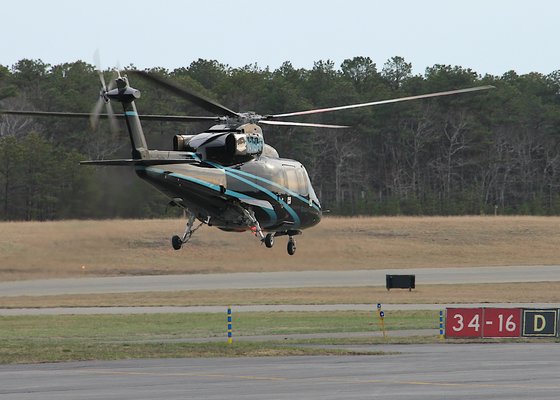
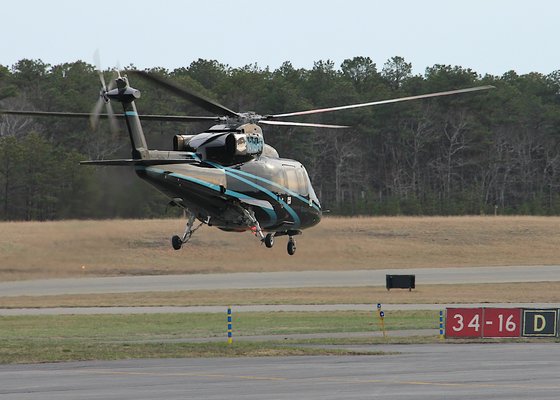
The temporary restraining order, or TRO, would block East Hampton Town from implementing curfews and restricting certain aircraft from landing at the East Hampton Airport. The restrictions were adopted by the Town Board last month to alleviate noise in response to complaints from residents.
A judge is expected to decide on May 14 whether or not to issue the TRO.
The FAA informed the Friends of the East Hampton Airport, a group that represents aviation businesses, of its support of the TRO, according to a letter from the Friends to U.S. District Court Judge Sandra Feuerstein. An FAA spokesman did not return a request for comment.
Kathleen Cunningham, the chair of the Quiet Skies Coalition, said the FAA’s support of a TRO implies the agency’s unwillingness to defend a 2005 settlement agreement, which cleared the way for the town to enforce new access restrictions at the airport. As part of that settlement, the FAA had agreed to waive certain grant obligations that required the East Hampton Airport to abide by FAA rules, allowing them to expire early, at the end of December 2014.
“To go back to try to undo the foundation of these policies is the worst sort of big government interference,” Ms. Cunningham said in a statement. “And, for whom? Some out-of-state helicopter companies that are unhappy they cannot have 24/7/365 access to our community.”
The Friends filed suit against the FAA in January, challenging the FAA’s ability to waive the grant assurances that had been blocking the East Hampton Town Board from restricting access at the airport by certain aircraft.
In April, the group again filed suit, but this time it was against the Town of East Hampton for adopting the new restrictions designed to reduce noise generated by air traffic at the airport. In that suit, they requested a TRO to block the town from putting the restrictions into effect. The group has asked that the court consolidate the two lawsuits since they involve common issues of law.
Last week, the National Business Aviation Association joined the Friends in its latest lawsuit.
Starting this summer, if the regulations go forward, there would be a curfew banning all flights between 11 p.m. and 7 a.m., year-round. Aircraft classified as “noisy” would not be permitted to take off or land between 8 p.m. and 9 a.m., year-round. Furthermore, aircraft classified as “noisy” would be allowed only one takeoff and landing per week between May and September.
The Town Board has defined “noisy” aircraft as any airplane or helicopter that has an Effective Perceived Noise in Decibels (EPNdB) approach level of 91.0 or greater based on noise characteristics published by the Federal Aviation Administration or the European Aviation Safety Agency.
Ms. Cunningham said that the FAA shouldn’t go back on its word and should defend the agreement it made in 2005 to allow the grant restrictions to expire at the end of December 2014.
But Peter Kirsch, the attorney representing the town on its airport issues, said that the FAA has not taken a position on the merits of the Friends of the East Hampton Airport’s request, only that a TRO is often used as a way to buy time.
“Every plaintiff wants the status quo to be maintained during litigation,” Mr. Kirsch said on Monday. “Every plaintiff wants time to develop its position. Every government agency would like more time to deliberate.” But, he added, “A TRO is not designed just to give some more time to think things over.”
He said that a temporary restraining order is issued only in extraordinary circumstances, including when a party can show irreparable injury. “The FAA does not assert that there is any injury at all,” he added.


 Shaye Weaver on May 5, 2015