


 5 Photos
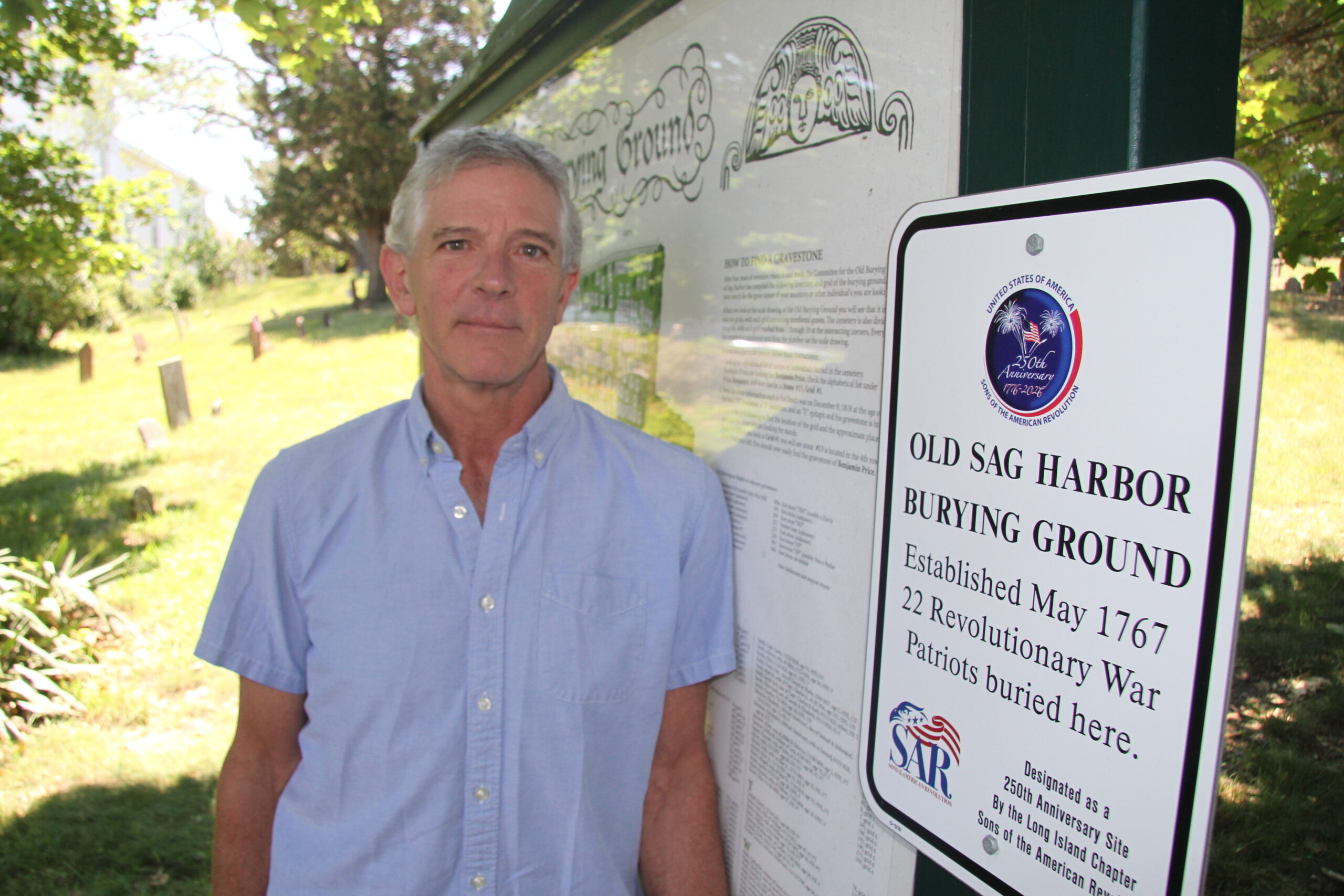
Kurt Kahofer, a North Sea resident and descendent of one of the patriots who fought at the Battle of Lexington, is a member of the Sons of the American Revolution, which is posting signs alerting visitors to the presence of the graves of patriots at cemeteries and burying grounds throughout Long Island.
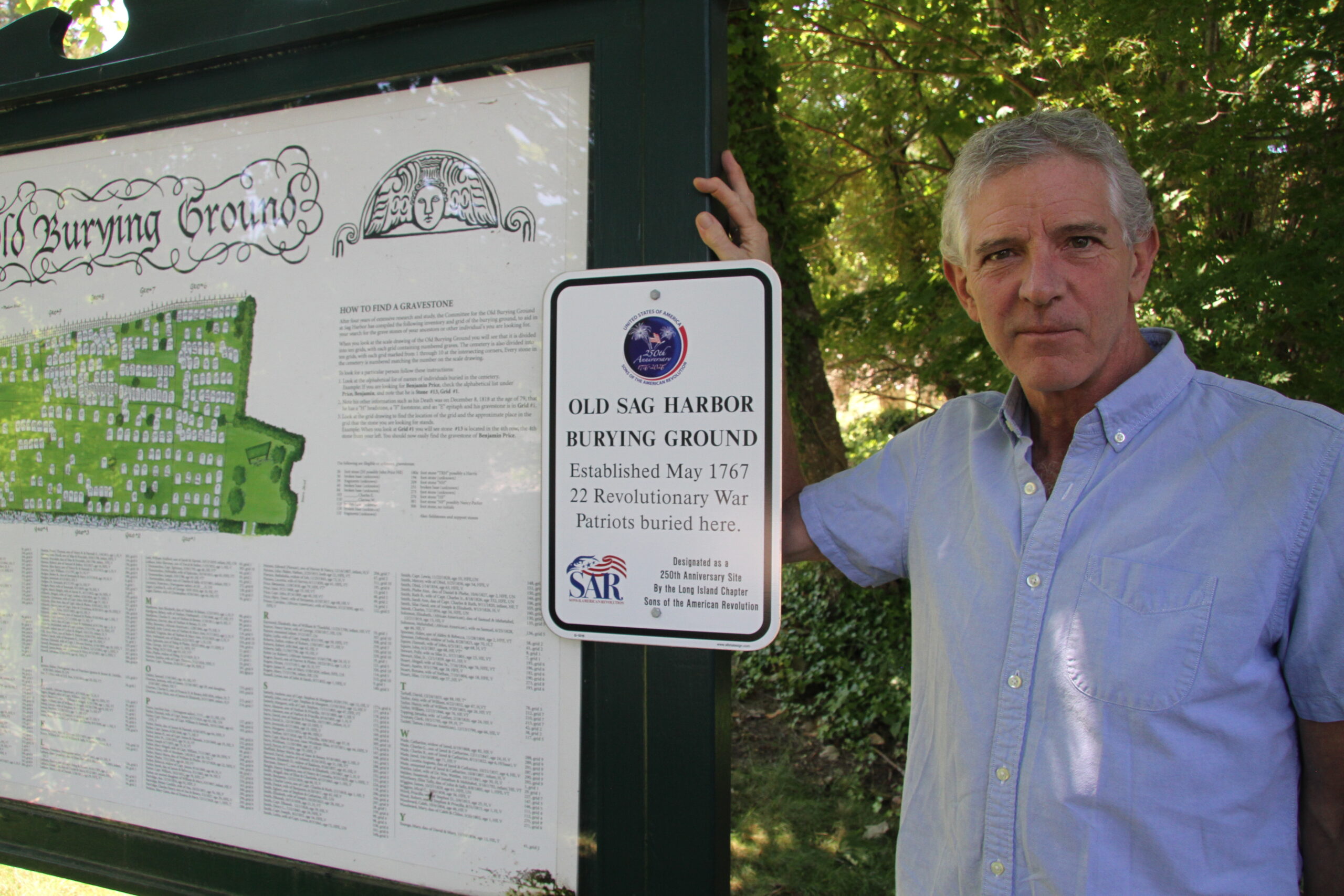
Kurt Kahofer, a North Sea resident and descendent of one of the patriots who fought at the Battle of Lexington, is a member of the Sons of the American Revolution, which is posting signs alerting visitors to the presence of the graves of patriots at cemeteries and burying grounds throughout Long Island.
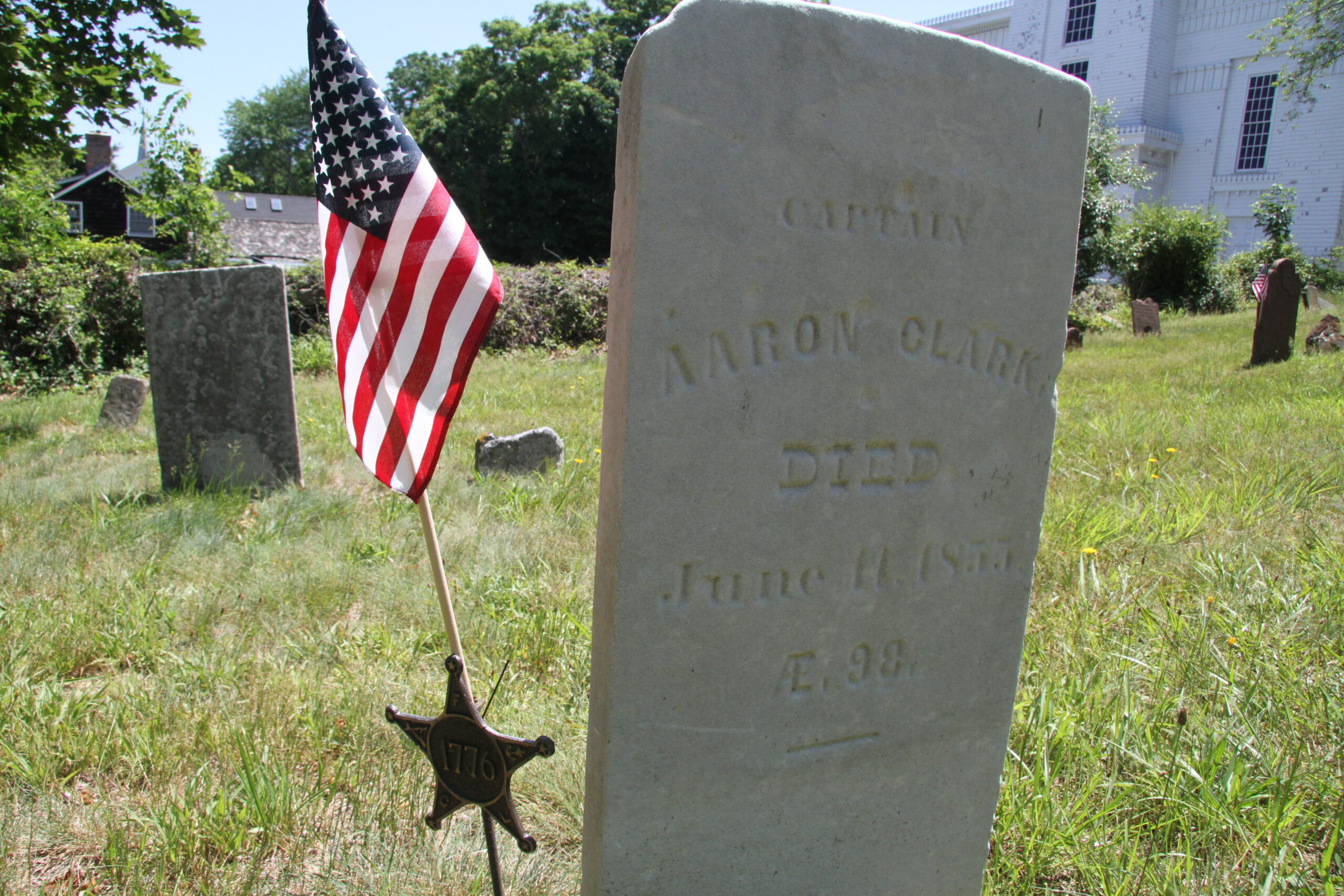
One of the 22 graves of confirmed patriots buried at the Old Burying Ground in Sag Harbor.
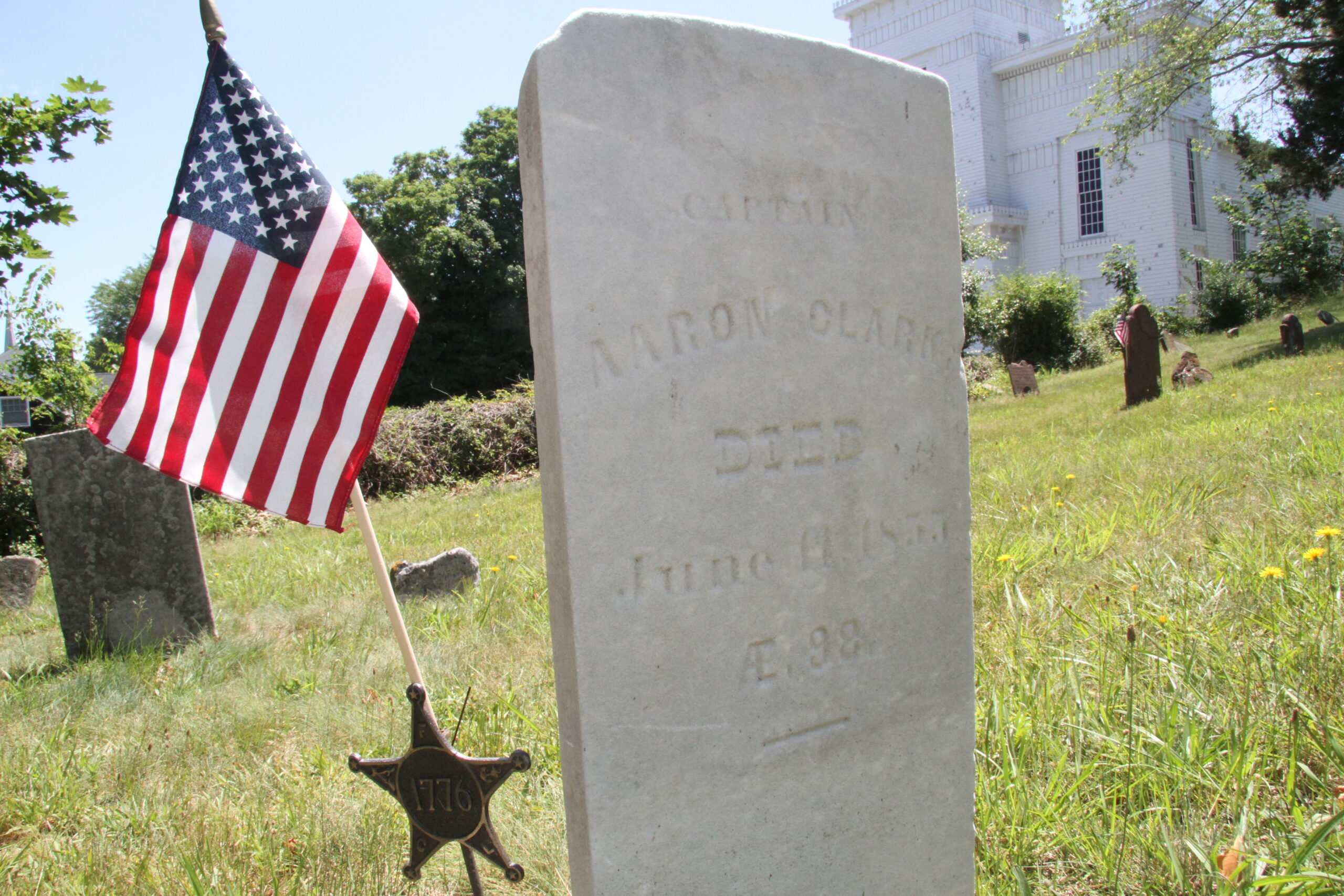
One of the 22 graves of confirmed patriots buried at the Old Burying Ground in Sag Harbor.
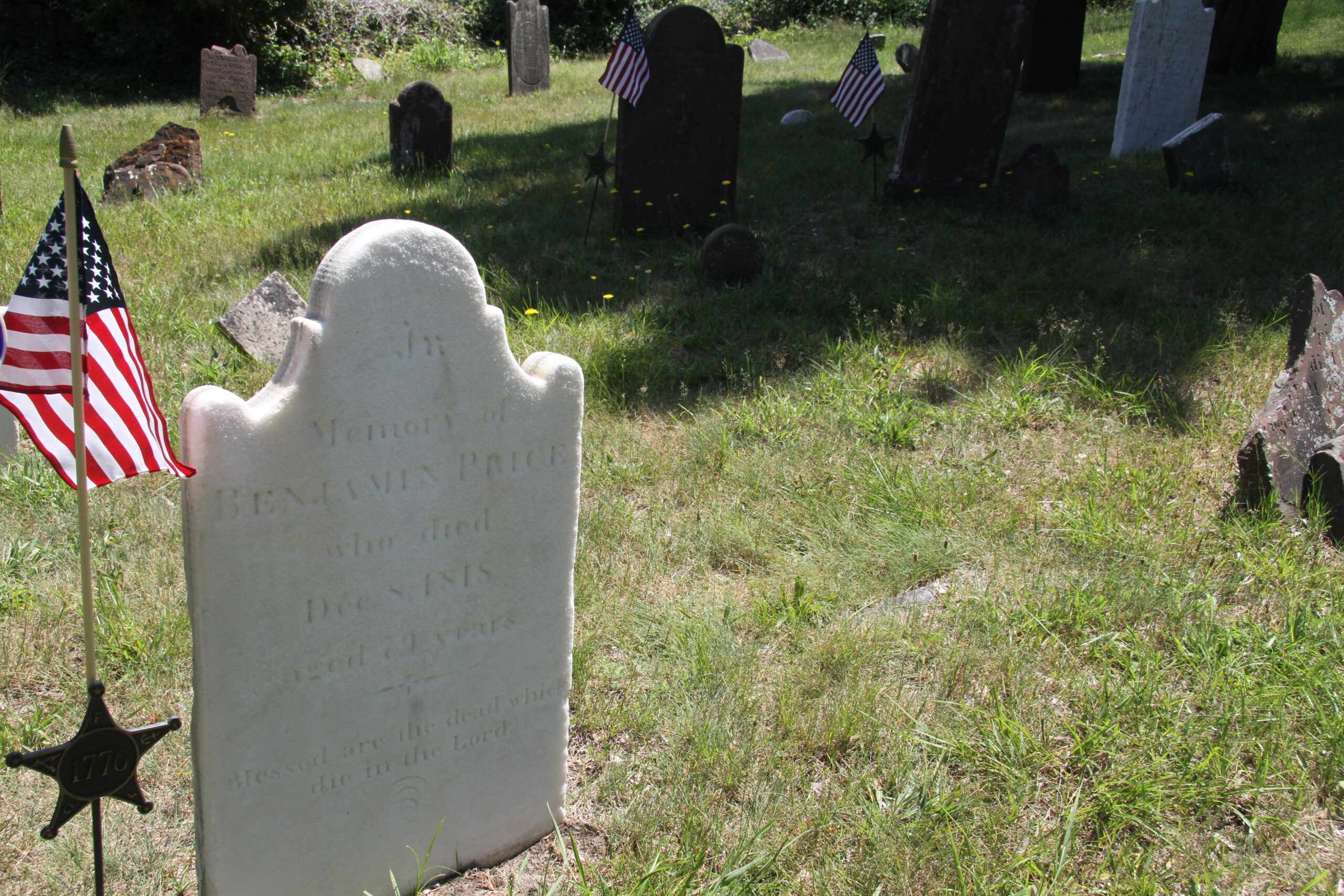
One of the 22 graves of confirmed patriots buried at the Old Burying Ground in Sag Harbor.
The term “patriot” is thrown out casually a lot these days. Sometimes it’s used to describe someone who has fought for American interests on battlefields or in diplomatic chambers. Other times, perhaps most often, it’s used to broadly describe someone who displays some form of devotion to America and espouses support for its values of freedom and democracy — perceptions of which can be quite varied, depending on whom you are talking to.
But a patriot is actually a very specific person, defined by a very, very narrow definition. A patriot, by definition, is only someone who fought with or aided the American militias and the Continental Army during the Revolutionary War.
They can be the men who took arms and fought in the battles from Lexington to Yorktown, or the men, women and children who fed, clothed, armed, hid and ferried them in the effort to drive the British from American soil.
There are thousands of patriots buried on Long Island, and probably hundreds on the South Fork, some in local cemeteries and some sequestered in tiny burial grounds scattered throughout local hamlets.
In four short years, the country will celebrate the 250th anniversary of its founding, on the backs of those true patriots, and those who trace their lineage back to those original revolutionaries are embarking on an effort to call attention to the those in each community that played a role in the fight for freedom from tyranny.
The Sons of the American Revolution, a group whose members can all trace their own lineage back to true patriots, has long led an effort to mark the gravesites of all the patriots buried in Long Island’s cemeteries, and is now putting in the process of adding signs that alert passersby to the presence of patriot graves.
The first such local sign went up recently at the Old Burying Ground in Sag Harbor, where the Daughters of the American Revolution and the Robert David Lion Gardiner Foundation recently funded a restoration of the 22 patriot graves that are among the more than 300 centuries-old gravestones on the shaded hilltop property off Union Street.
“A patriot is someone who aided the cause of the Revolution in one way or another,” said Kurt Kahofer, a member of the Sons of the American Revolution, or SAR. “They could have fought, those are veterans, or they may have supplied food or arms to the militias, or carried messages to the troops, or hid things in their barns.”
In 1775, as war loomed, many signed “articles of association” pledging their support and dedication to helping the cause of the Revolution. The articles were distributed by local towns and were usually kept on record, a key tool now to identifying who the patriots buried in local cemeteries are.
It’s a painstaking effort, Kahofer said, because they both want to be sure they don’t miss someone who contributed, but also to not misapply recognition.
The Old Burying Ground in Sag Harbor is a rare gem for history buffs because the graves have already been identified and mapped, on display at the entrance to the property, and the graves of known patriots long ago marked with little flags. In other corners of the community, identifying the graves of those who served from among a small collection in a family burying plot will take much more work, Kahofer said, but is a chore worth the effort.
Kahofer’s own ancestor, William Munroe, was the proprietor of a tavern in Lexington, Massachusetts, and fought in the first two battles of the Revolution, in Lexington and in nearby Concord.
“It’s the people in these communities who helped the Revolution on the ground and made it a success,” Kahofer said. “So that’s what we’re trying to do with these signs — call attention to the patriots that were in our communities and noting their contributions.”


 Michael Wright on Jun 29, 2022