


 2 Photos
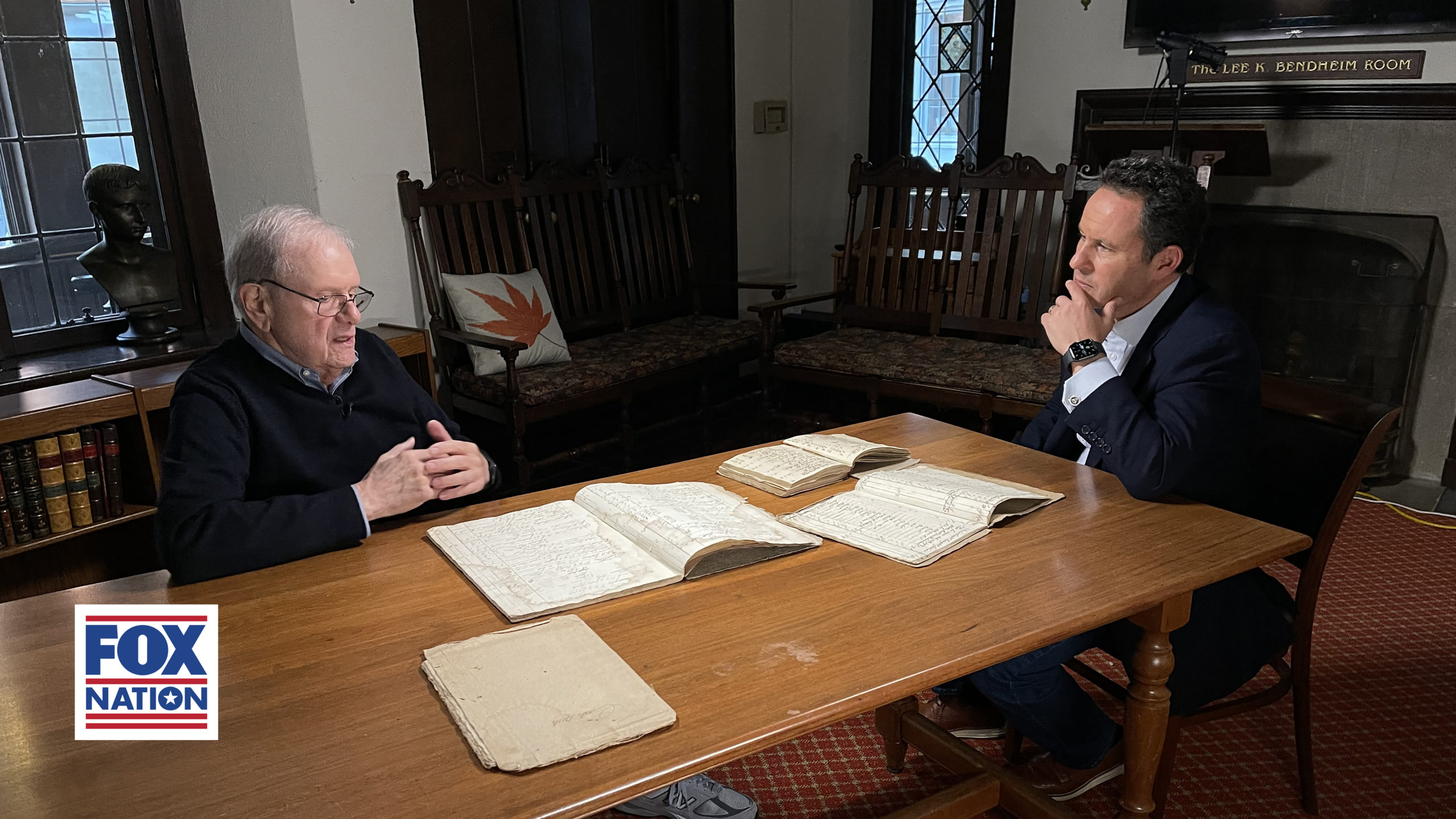
FOX Nation's Brian Kilmeade visited the East Hampton Library for a segment on the George Washington secret spy ring, now streaming online as part of his historical series, "What Made America Great."
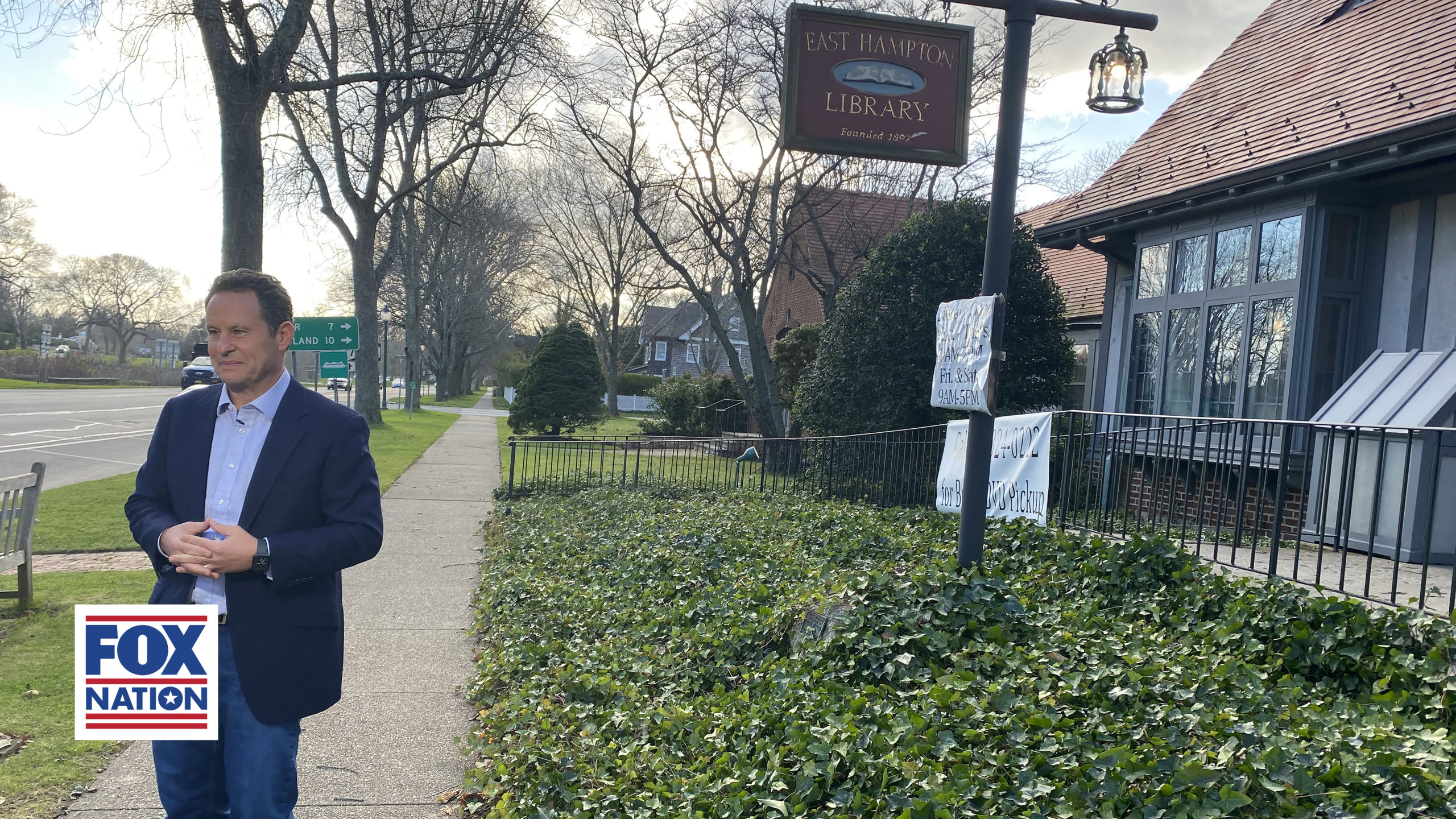
FOX Nation's Brian Kilmeade visited the East Hampton Library for a segment on the George Washington secret spy ring, now streaming online as part of his historical series, "What Made America Great." COURTESY FOX NATION
At first glance, AMC’s “Turn: Washington’s Spies” seemed like the perfect Sunday night show for Brian Kilmeade.
After all, the FOX News host and lifelong history buff had already written his own book on the subject, “George Washington’s Secret Six,” which follows an unlikely group of Long Island-based spies called the Culper Ring who eventually helped turn the tide of the American Revolutionary War.
But even he couldn’t get through the first episode.
“It was well acted — you know, congratulations on capturing the characters — but you totally screwed the story up in order to make it like a soap opera,” he said. “I know what really happened and I think ‘Turn’ hurt the story — even though it brought attention to the story.”
Years later, Mr. Kilmeade will help correct that narrative with two new episodes in the sixth season of his historical series, “What Made America Great,” which premiered Monday on the subscription-based streaming service FOX Nation.
The pair of mini-documentaries makes several stops across Long Island, breaking down the players and mechanics of the secret spy ring — a story that ends, at least for now, at the East Hampton Library, where historian Morton Pennypacker donated his vast history collection and, in the 1930s, unearthed the missing pieces of the entire scheme.
“For 150 years, it was all top secret,” Mr. Kilmeade said of the spy ring. “Pennypacker put it together. So to get to Pennypacker, you have to go to the East Hampton Library.”
From late summer through the fall, Mr. Kilmeade — who co-hosts Fox News Channel’s morning show “Fox & Friends” and hosts the daily national radio show, “The Brian Kilmeade Show” — carved out time for five shoots that took him and his crew to East Setauket, Oyster Bay, Huntington, East Hampton and Manhattan in order to tell the spy ring story, which naturally fit into his passion project, he said.
So far, in season six, Mr. Kilmeade treks down to the Washington Monument with former Secretary of the Interior David Bernhardt and gives a behind-the-scenes tour of President Harry Truman’s Little White House in Key West, Florida. Past episodes, which are now in the dozens, all go beyond the history books to take viewers inside the pivotal places, coast to coast, that made the United States what it is today, he said.
“What they do is they drop the velvet ropes. They always try to give us something that people don’t normally get,” Mr. Kilmeade said. “In Mount Vernon, they brought us to a library, to a group of books, that they still have not put out as George Washington’s personal handwriting. With The Hermitage, we got a chance to go into the study of Andrew Jackson. With Mount Rushmore, we were able to show people the chamber back there, where they were supposed to keep the original Constitution. At the last minute, they said, ‘We’re not putting it there, we’re keeping it in Washington.’ That passageway, that was cut out of the mountains, sits open.”
What sets the Washington spy ring apart, though, is its everyday accessibility — its legacy in plain sight, plotted with historical markers up and down Long Island that date the story back to 1778, when Washington and Major Benjamin Tallmadge organized the spy ring, led by Abraham Woodhull and Robert Townsend using the aliases of “Samuel Culper Sr.” and “Samuel Culper Jr.,” respectively.
Here’s how it worked. After the British captured New York, Americans who wanted to stay signed loyalty oaths to the crown — and those who didn’t, like Washington, fled to Connecticut.
Mr. Townsend, who was a merchant working in Manhattan, listened for intelligence from the British who occupied the area. He would write it in letters, using tactics like encryption and invisible ink, and stuff them in goods that tavern owner Austin Roe delivered to Mr. Woodhull, who owned a farm in Setauket. He would then store them in cylinders and leave them for Caleb Brewster, who rowed them across the Long Island Sound in his whale boat, navigating the British navy, to be delivered to Washington. The location would depend on the number of handkerchiefs that Anna Strong hung on her laundry line on the New York side.
Other players were newspaperman James Rivington, who ran pro-Tory articles to reinforce the guise, and a woman known as Agent 355, who infiltrated social circles.
Their work proved to be indispensable, most notably foiling a British ambush of a newly arrived French army in Rhode Island by alerting Washington, who immediately ordered his army into an offensive position, effectively canceling the attack.
The Culper Spy Ring continued its work through 1783, having achieved more than any other American or British intelligence network during the war. And their identities were not known to anyone — not even to Washington at the time.
Nearly two centuries later, enter Mr. Pennypacker, who brought his exhaustive collection to the East Hampton Library for safekeeping in 1930. Nine years later, he published “George Washington’s Spies,” the story of the Culper Ring that he uncovered by matching Townsend’s beautiful, distinctive handwriting to that of “Culper Jr.,” unveiling the scheme’s lynchpin.
During his visit to the East Hampton Library, Mr. Kilmeade visited with archivist Andrea Meyer — head of the Long Island Collection that currently houses Mr. Pennypacker’s collection — who showed him the letter that authenticates the match.
“If there’s an MVP to the unwinding of the George Washington spy story, it has to be Morton Pennypacker,” Mr. Kilmeade said to Ms. Meyer.
“I think that’s a very fair statement, yeah,” she replied. “I think without Pennypacker, we really wouldn’t have anybody who knew enough about who these people were, what they did, that they were even members of this project or organization.”
“And still, there’s so much mystery, too,” Mr. Kilmeade said.
“There is still parts that are debated and unsure and unclear,” she said, “and we still have a lot that we’re trying to figure out.”
In that effort, volunteer Frank Sorrentino is transcribing Mr. Townsend’s account books from the Revolutionary War, attempting to match up letters with deliveries, he explains in the episode, referring to them as “the Bibles of the past.”
The collection itself is a gateway, Mr. Kilmeade said, which is also what he hopes the historical series will be.
“In a time in which we’re questioning our history, my hope is in this small way, ‘What Made America Great’ will reaffirm how unlikely our country was to make it, to survive and to become the number one economic and military power in the world,” he said. “Little by little, through all 27 features, you see how close we came to total destruction because the whole world wanted us to fail, and we’ve defied all expectations.
“For people that are caught up in the current political climate and are getting depressed, don’t be,” he continued. “It’s been a lot worse, we weren’t even supposed to get here — and we’ll get through this no problem.”


 Michelle Trauring on Feb 9, 2021