



 8 Photos
The Bridge on Bridge Lane
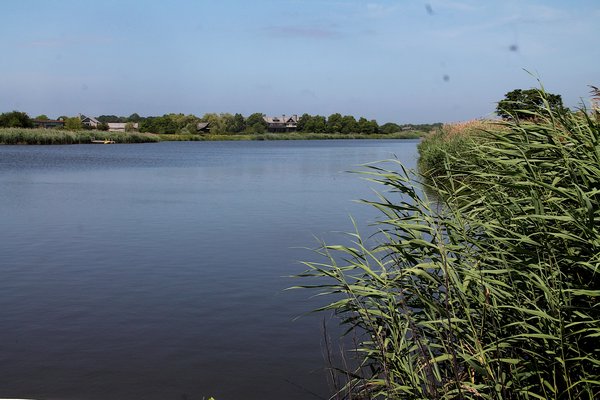
which connects Sagaponack and Bridgehampton over Sagg Pond. KYRIL BROMLEY
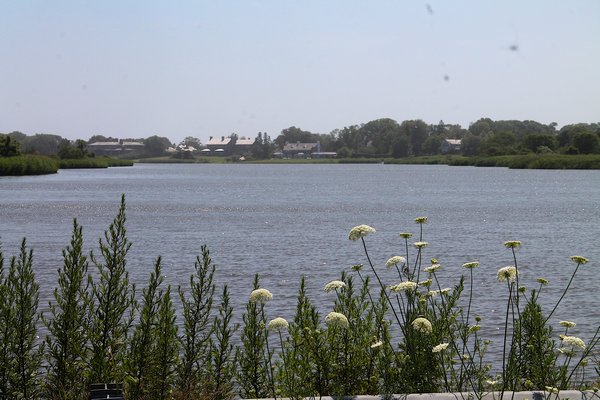
A blue-green algae bloom was recently discovered in Sagg Pond

pictured here.
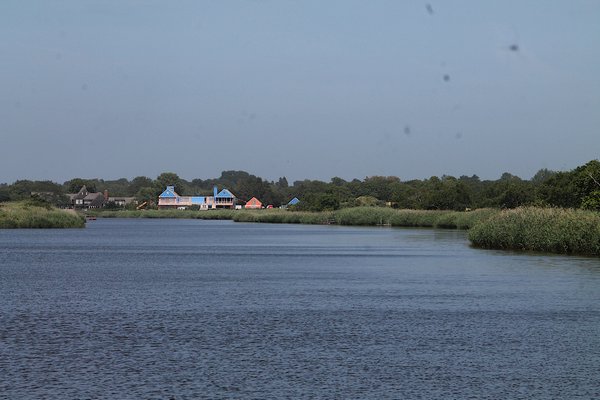
Sagg Pond
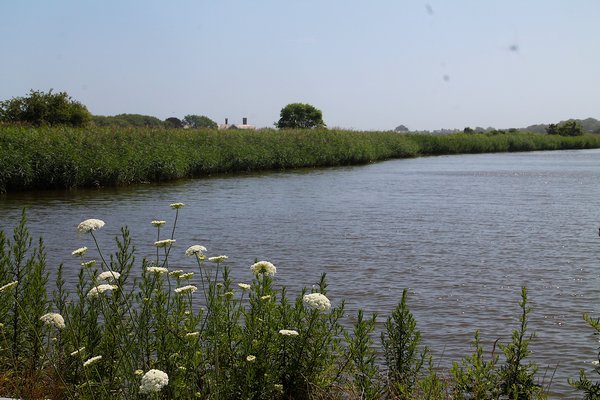
in Sagaponack
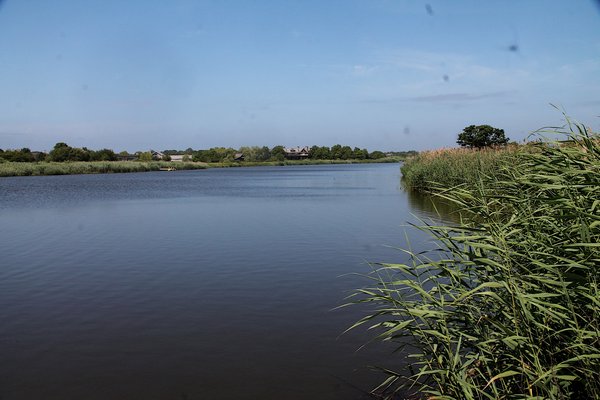
was recently found to contain a new bloom of blue-green algae. Georgica Pond and Wainscott Pond also have the algae. KYRIL BROMLEY
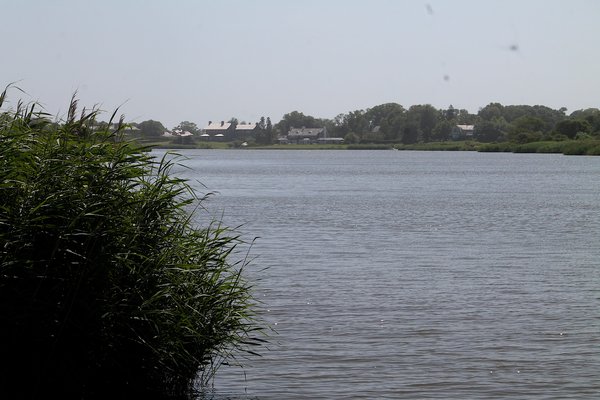
On Bridge Lane
A list of East End ponds affected by harmful cyanobacteria blooms just got bigger.
Both Georgica Pond in Wainscott and Sagg Pond in Sagaponack, were confirmed to contain the algae, a result found after extensive testing was conducted by a team of ecologists from Stony Brook University in conjunction with the Suffolk County Department of Health. Both ponds previously had evaded the blooms, which are common in the summer, but on Friday the Suffolk County Health Department reported that blooms had been discovered in both ponds.
Cyanobacteria algae, more commonly known as blue-green algae, is natural in small quantities and on the bottom of water bodies. When the algae form blooms, they become harmful to humans and other life. In 2012, a Jack Russell terrier died after coming into contact with the algae in Georgica Pond.
Since the blooms became more persistent in recent years, Dr. Christopher Gobler, a professor at Stony Brook University, has worked with Friends of Georgica Pond to measure nutrient and algae levels in an effort to better understand what can be done to prevent the blooms from growing.
“This is a good lesson in how quickly the situation can change,” said Sara Davison, director of Friends of Georgica Pond. Earlier last week, no blooms were detected and Dr. Gobler said data collection his team had performed did not suggest a trend toward blue-green algae growth.
Ms. Davison added that no new immediate measures will be imposed to amend the problem of toxin-secreting blooms. Opening up the pond to the ocean would increase salinity, and lower blue-green algae levels, said Ms. Davison, but to dig a cut to the ocean would disturb land protected for piping plover populations.
Dr. Gobler, who leads the Stony Brook team responsible for water sampling, said that “the past week represents the levels going from very low to above that threshold” at which officials report the presence of the blooms.
Friends of Georgica Pond will continue to lead efforts to harvest macroalgae and seaweed from the pond, a practice that might coincide with “mitigating the bloom,” said Dr. Gobler. But with warmer weather looming, the blue-green algae blooms may nonetheless be primed for more growth.
Suffolk County Health officials are requesting that residents refrain from swimming or wading in the affected waters and suggest that people keep pets away from the water as well. There are also health risks associated with consuming crabs or other creatures caught in Georgica and Sagg ponds.
Other water bodies on the list of affected areas include Wainscott Pond in Wainscott, and Lake Agawam and Mill Pond in Southampton.


