


 1 Photo
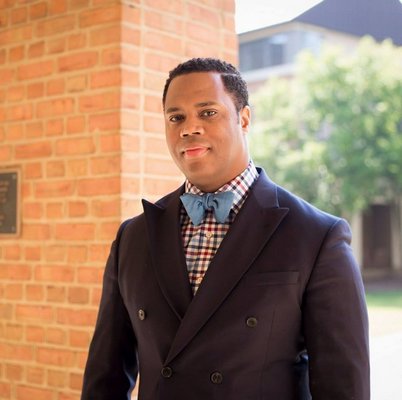
Professor Gregory Parks. COURTESY GREGORY PARKS
Gregory Parks keeps busy. The 43-year-old professor of law at Wake Forest University in North Carolina spends his days teaching classes dealing with the intersections of race and the law. Outside of class, Mr. Parks helps conduct training sessions for HazingPrevention.org. He also works for his local division of the National Urban League, a civil rights organization.
So why the busy schedule?
“It keeps me engaged,” he said recently. “It makes me think of the practical effects of what engages me and helps me connect with a broader population. If you’re going to contemplate law and action, you have to get out and see the world.”
Mr. Parks has a little less time to see the world now that he’s a member of the U.S. Supreme Court Bar. Sworn in on March 26, Mr. Parks joined 10 other lawyers admitted that day who were members of the American Bar Association who can now try cases in front of the U.S. Supreme Court. Bar members also enjoy access to special seating before the justices who weigh landmark cases in the Supreme Court courtroom.
Mr. Parks certainly has a stacked resume to fit the bill of a bar member, thanks to his Juris Doctor degree from Cornell University, his Ph.D. in clinical psychology from the University of Kentucky and a master’s degree in forensic psychology from CUNY John Jay College of Criminal Justice.
And it all leads back to East Hampton. Born on May 2, 1974, at Southampton Hospital, Mr. Parks grew up in East Hampton with his mother, Queen, his father, Leon, older sisters Aleta and Amy, and younger sister Tiffany.
Mr. Parks admitted to having high hopes for a career path in his childhood: He wanted to be a “stunt man” or a “movie star.” He even got close to becoming the latter, as he had a bit part in the 1985 comedy “Compromising Positions,” starring Susan Sarandon.
He worked as a cook at the Quiet Clam restaurant, recently known as the Service Station, when he was a teenager before graduating from East Hampton High School.
“I did decent in school,” Mr. Parks said. “I can’t say I was truly dedicated until my sophomore year of college. I went to a historically black college, I wanted a different experience from East Hampton.”
That college was Howard University, from which he graduated cum laude in 1996 with a bachelor’s degree in science and psychology. Though he started with psychology as his education focus, he later switched to law after a bit of odd circumstance.
“I had a crush on a young lady in my freshman year whose father was a lawyer,” Mr. Parks said. “He sparked my interest.”
Later still, a mentor he had in law school pushed him to combine his old study with his new study.
“The intersection of law and psychology allows me to ask more interesting questions,” Mr. Parks said, specifically mentioning how subconscious racial bias can influence decisions in cases of tort law, or civil laws covering unreasonable actions performed by others.
Though Mr. Parks has good memories of East Hampton, he said that his schedule only allows him to return once a year. But he said that he remembers being with his family throughout his childhood in East Hampton—which makes it all the more fitting that he celebrated his admission to the Supreme Court Bar with his father in the U.S. Supreme Court.


 Jon Winkler on Apr 23, 2018