


 1 Photo
The recent heatwave and the effects of the coronavirus epidemic have spiked South Fork demand for electricity to record levels for weekdays to levels nearly as high as all-time peaks on a weekend.
The heat wave and the effects of the coronavirus epidemic drove power consumption on the South Fork to record levels on several occasions over past 10 days — setting new peak demand records for weekday usage on consecutive days this week.
With the heat index on Monday and Tuesday of this week as high as 106 degrees on the South Fork, fewer second homeowners heading back to New York City for work after the weekend, and fewer people traveling long distances this summer, PSEG-Long Island said it saw an all-time high demand for power supply in the Hamptons on Monday at 272 megawatts and then smashed that record on Tuesday with a peak demand of 279 megawatts — just 3 megawatts shy of the all time peak demand for the region of 282 megawatts set on a hot weekend afternoon last summer.
Last Monday, July 20, demand hit 271 megawatts, but prior to that, the all time high demand for any weekday was 265 megawatts, set in 2018.
“The recent high electric demands on the South Fork are driven by the current period of hot weather conditions experienced throughout the region and we believe, by the increased number of weekday visitors in response to travel restrictions and concerns about safety,” PSEG spokeswoman Elizabeth Flagler said on Tuesday.
Weekends, on the other hand, have not seen especially high demand. Last Saturday and Sunday saw peak demands of just 252 megawatts and 266 megawatts, respectively.
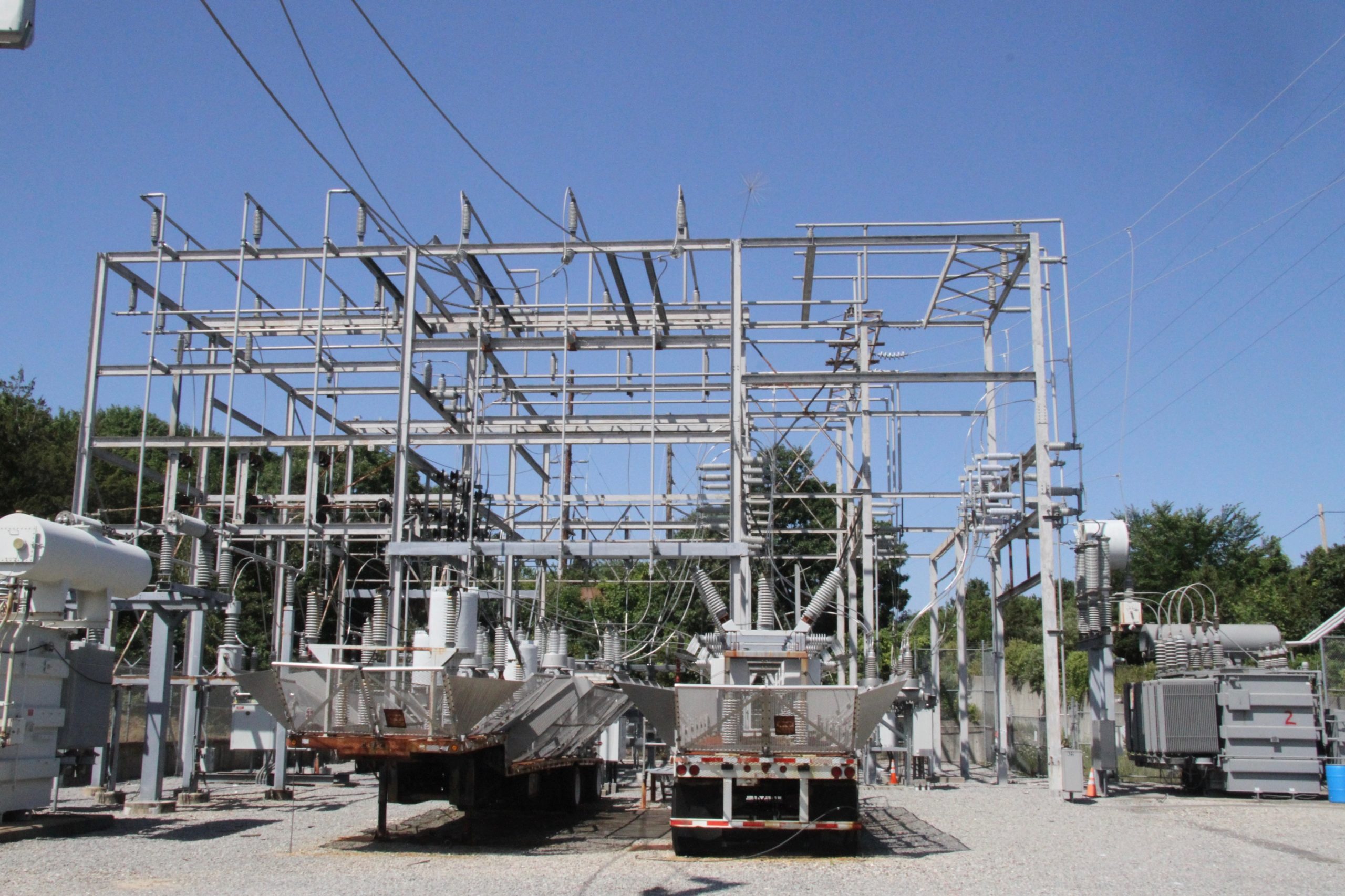
Despite the record demands, Ms. Flagler said that PSEG has not had to call on the mobile emergency generators at its substation in Montauk yet this summer.
The utility has called on the South Fork Peak Savers program four times, however, to utilize generators owned by East Hampton Town to help offset demand. In addition to running the town’s generators — an arrangement the program inked when efficiency improvements proved insufficient to meet the load reduction goals in its agreement with PSEG — Peak Savers can control thermostats in homes that have signed on to the program to dial down air conditioning usage during times of peak demand.
While much of Long Island is experiencing reductions in overall demand, largely because of more efficient major appliances and home construction, the East End and the South Fork in particular are still forecast to see growing demand thanks to new development and redevelopment toward much larger homes.
Last year, a new power transmission line was installed between the Shinnecock Canal and the Southampton Village substation, boosting power supplies to the region that Ms. Flagler said has eased the need for emergency generators to the east. LIPA is also counting on the 130 megawatts from the proposed South Fork Wind Farm to come online sometime early this decade, to boost the longterm supply to the region.


 Michael Wright on Jul 29, 2020