


 2 Photos
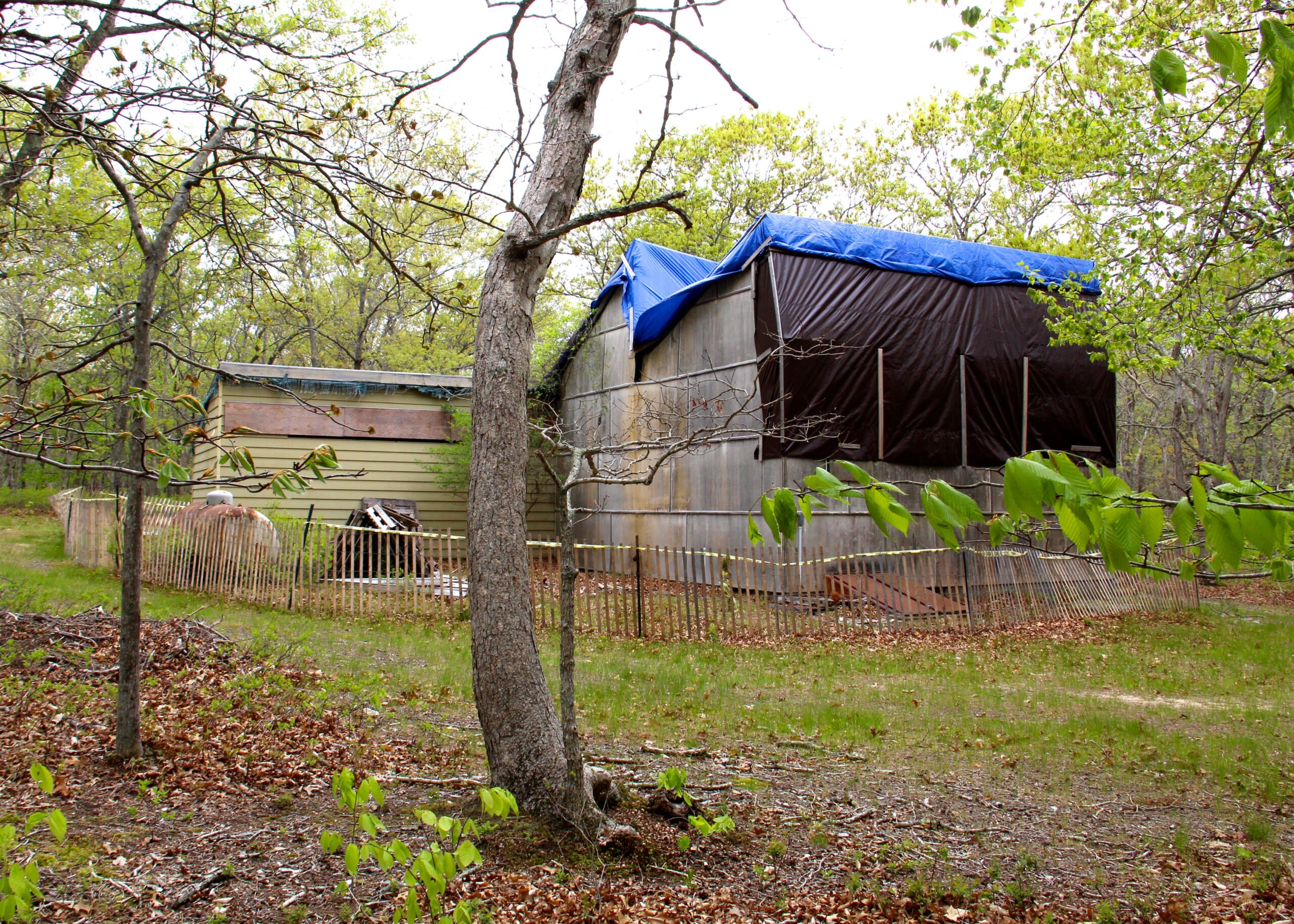
The former studio of James Brooks is one of several buildings on the property where he and his wife and fellow abstract expressionism pioneer Charlotte Park lived in the 1950s. The crumbling buildings have recently been spotlighted as in danger of being lost by two historic preservation groups.
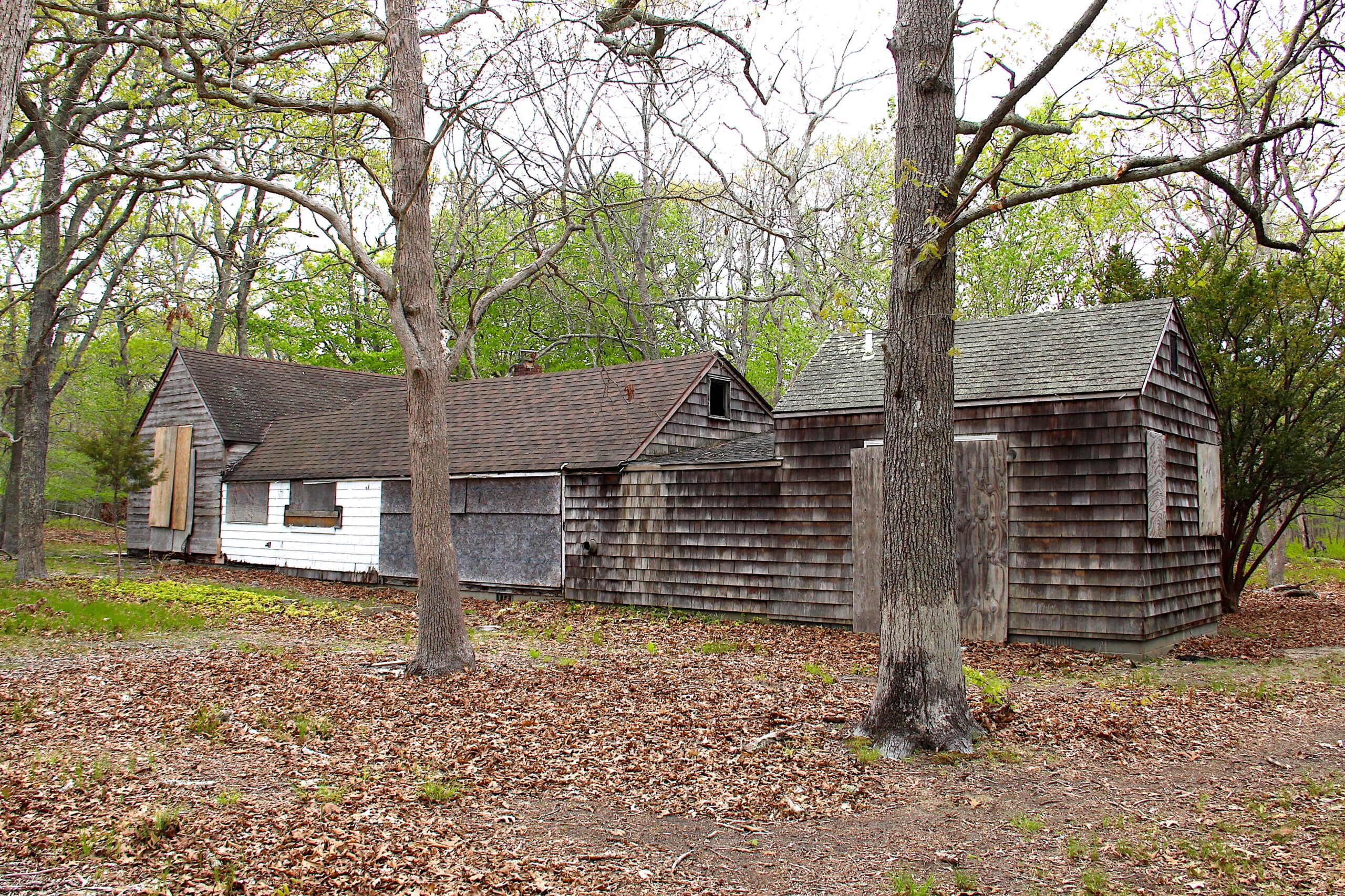
The former studio of Charlotte Park is one of several buildings on the property where she and her husband and fellow abstract expressionism pioneer James Brooks lived in the 1950s. The crumbling buildings have recently been spotlighted as in danger of being lost by two historic preservation groups.
Two historic preservation organizations have listed the former studios and home of early abstract impressionist artists James Brooks and Charlotte Park in Springs as historic assets that should be saved.
The listings by the Preservation League of New York State and the National Trust for Historic Preservation have highlighted the complicated circumstances surrounding the crumbling buildings tucked in the trees of Neck Path.
The National Trust earlier this month listed the two artists’ studios, a small guest cottage and their low-slung home as among the nation’s 11 most “endangered” historic places. And this week the Preservation League listed the structures as one of its “Seven to Save,” a biennial list of historic properties that are in danger of being lost.
“This has really shined a spotlight on the historical importance of the Brooks-Park structures, so, hopefully, this momentum will continue,” said Marietta Gavaris, one of the founders of the Brooks-Park Arts and Nature Center, a nonprofit formed last year to work with East Hampton Town on the logistics of preservation, with plans to ultimately manage the property once the structures are restored.
“We hope to restore all four structures,” she added. “Losing James Brooks’s studio would be tragic, and nonsensical. It’s such an important site.”
The listings, however, do not make the logistics of preserving the structures any easier, or cheaper.
The town purchased the 11-acre property in 2013 for $1.1 million, unaware of the significance of the former owners — Charlotte Park died in 2010 — intending only to preserve the woodlands. After art historians spotlighted the importance of Brooks’s and Park’s role in abstract impressionism, the town landmarked the property and pledged $850,000 to restore the structures.
But the project languished through years of wrestling with the logistical and legal hurdles of how the property could be restored and managed for a public use, as required by the Community Preservation Fund bylaws, under which the property was purchased.
In 2019, town officials announced that a new assessment of the structures — Brooks’s self-built studio, in particular — showed they were too deteriorated to be restored. The town announced plans to raze three of the four structures, which it said were becoming a safety hazard.
The demolition was put on hold again, however, after a local preservation group pledged to shepherd a new restoration and management plan. But in early 2021, the town revoked the licensing agreement with the group, Peconic Historic Preservation, after financial donors raised questions about how funds that had been contributed to the project were being spent. The town referred the matter to the state attorney general’s office.
Now, the new Brooks Park Arts and Nature Center group and the endorsements of multiple historic preservation groups has revived hope for saving the studio and cottages.
But the logistical difficulties of restoring the crumbling buildings remains. The town has ordered a new engineering assessment of the buildings, which will dictate what saving them would entail, and what it would cost.
Town Supervisor Peter Van Scoyoc said that he is encouraged by what he sees as broadening support in the community for preserving the structures, even at significant cost.
“I’ve definitely seen a change in the awareness of Brooks-Park, which to me is an indication that there’s sincere interest in preserving this,” he said this week. “It’s been a long saga. We’ve been very clear about the condition of the buildings and the National Trust came and toured the property, so they are certainly aware of its condition. But we have an interested and enthusiastic group that is willing to take this on if we can get the buildings restored.”
The supervisor said the Arts Center at Duck Creek is the model for what the town will need to organize if the buildings can be restored: a private nonprofit that will manage the property for the town and oversee the necessary public uses and upkeep.
Gavaris said her group is eager to have the chance.
“It’s been such a debacle for going on nine years,” she said. “It’s an important thing for Springs. How many places in the world can claim the origins of a major art movement? We want to be able to tell the full story of what went on here.
“Not many endangered sites get this kind of recognition at the local, state and national level,” she added. “It’s exciting, but there is a lot of work to be done.”


 Michael Wright on May 18, 2022