


 2 Photos
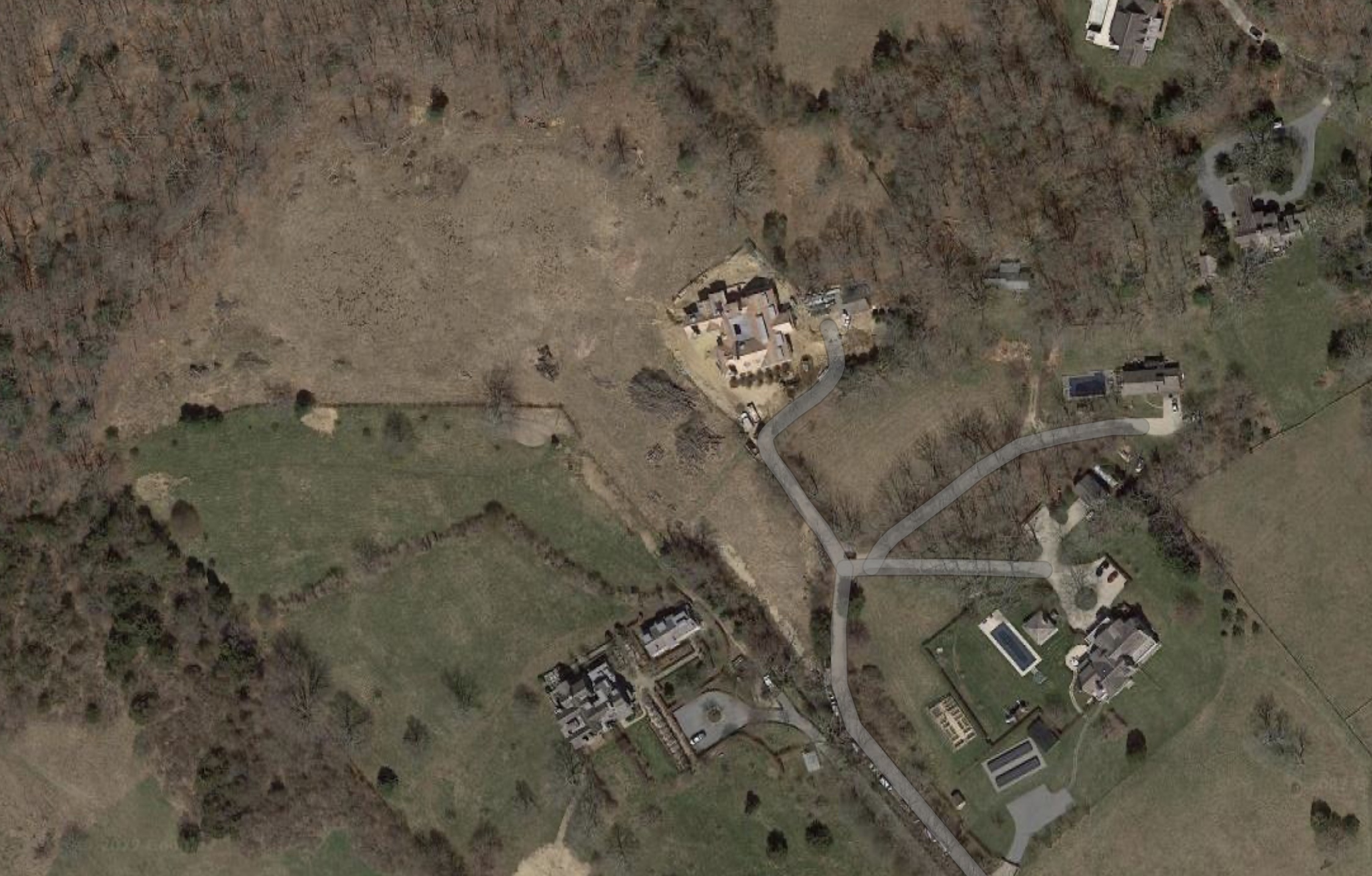
Randy Lerner owns the two residential properties on either side of the reserve area, where trees were cleared to broaden a pasture. Lerner said he intends to establish an orchard in the open space, like the one that fills the southern end of his property along Town Lane.
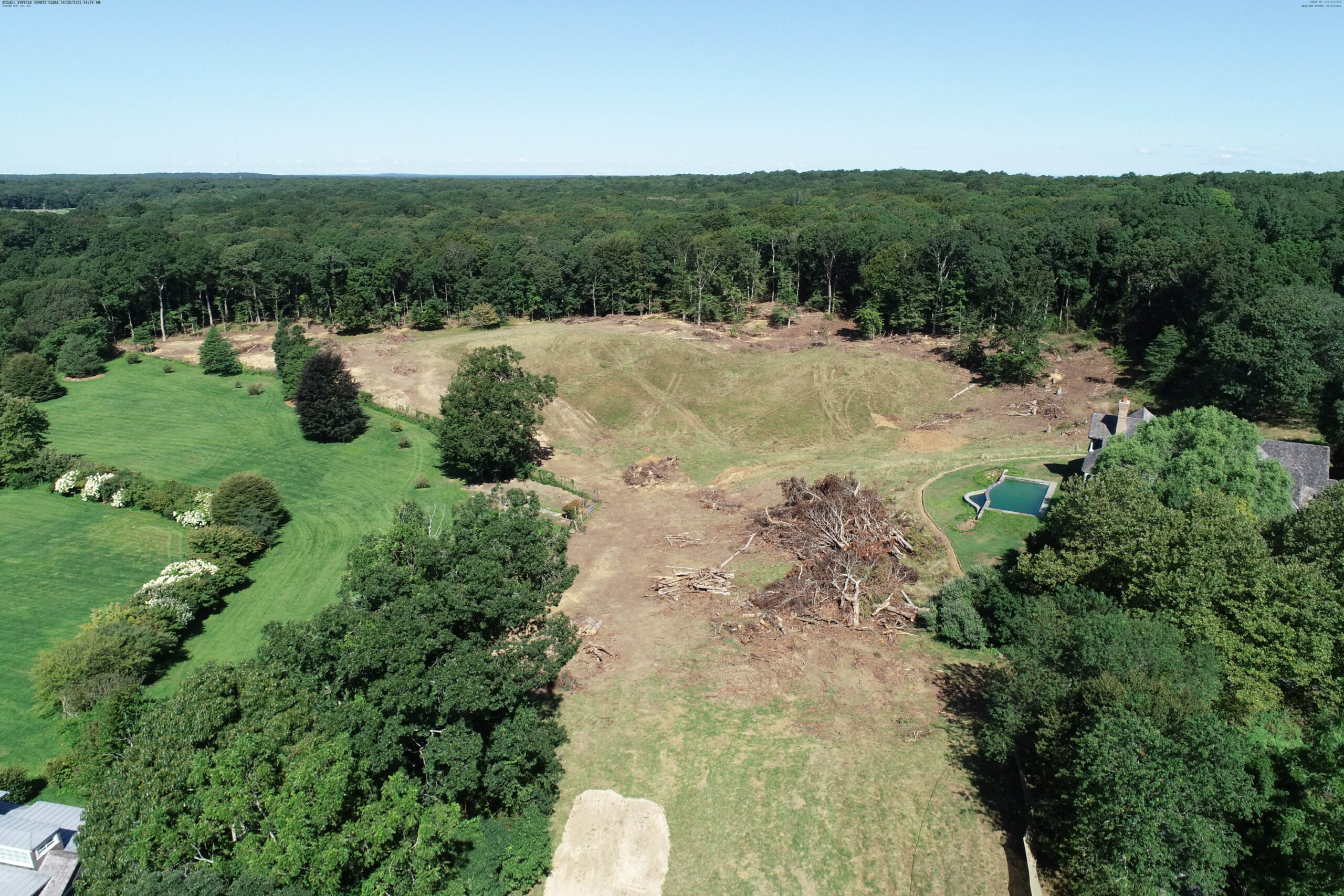
The Peconic Land Trust sued Randy Lerner in 2019 after Lerner cut down trees around a pasture on land he purchased adjacent to his house on Town Lane. He says he plans to use the land, which is part of the agricultural reserve for the Stony Hill subdivision, as an orchard or to grow pumpkins but the Trust says an easement precluded the removal of trees regardless of the purpose. COURTESY PECONIC LAND TRUST
The judge handling the much ballyhooed lawsuit by the Peconic Land Trust against Amagansett resident Randy Lerner has dismissed Lerner himself from the case, possibly dampening much of the threat of mountainous financial damages that the trust had sought for the clearing of woodlands on an agricultural reserve.
But the trust says the crux of the matter remains at issue before the court, and the billionaire landowner being absolved of personal liability is of little consequence to the principle of the legal stand.
“It’s really not about Randy, and the fact the judge released him from being personally named doesn’t really change anything,” PLT President John v.H. Halsey said this week of the ruling, which was handed down last month. “There are so many easements out there in subdivisions, we do not want the enforceability of this tool undermined by people violating them with impunity.”
When it filed the lawsuit against Lerner in August 2019, the land trust had asked the court for monetary damages of $1 million per tree that had been cut down on the approximately 6-acre property in Amagansett, which constitutes one house lot and swath of agricultural reserveland. The trust estimated that as many as 120 trees had been felled — and the potential of $120 million in damages from the former banking exec and NFL team owner caught national headlines.
State Supreme Court Justice Vincent Martorana put an end to Lerner’s potential personal liability with his ruling that the PLT’s claims could not “pierce the corporate veil” of the limited liability corporation through which the property at 341 Town Lane was purchased in 2019.
“Although the allegations in the second amended complaint more emphatically assert that Lerner was the person making the decisions for the LLC, this alone is insufficient to pierce the corporate veil,” Martorana wrote. “If it were otherwise, there would be no purpose for any individual to form a business entity to limit their liability.”
The trust had claimed in its suit that Lerner’s intention in the clearing was to create an “elaborate, ornamental park-like 2,000-foot-long private security fence system comprised of more than 1,000 ornamental trees of soaring height.”
Because this would be for his personal benefit — Lerner owns homes on either side of the reserve land — he should be seen as having overstepped the bounds of the LLC protections, the trust’s attorneys had argued.
Attorneys for Lerner said the trust’s characterizations were wholly inaccurate and that the owners’ intentions were solely to farm the land.
In their own description of the work that was conducted in the days following the purchase of the land, the attorneys described it as intended “to prepare the land for its intended agricultural use, including by removing underbrush and trees within the farm fields and headland areas, saving and relocating more desirable trees to a designated grove area on the agricultural reserve, and planting a perimeter of hundreds of evergreens (hollies), hornbeams and beech trees. This preparatory work was estimated at a cost of about $1.5 million.”
Lerner paid $12.5 million for the wedge-shaped property, which included a residential lot with a large existing house and the triangular agricultural reserve area, which was one of several reserve areas designated when the Stony Hill subdivision was created in 1995.
Agricultural or nature reserves are a common requirement in local subdivision maps intended to preserve farmlands or open space amid or adjacent to residential developments with legal covenants that protect their historic state.
The property Lerner bought, aside from the house, had primarily been used as pasture land, originally for dairy cows and then for horses. But Lerner, who grew up in Cleveland and has an affinity for farming himself — made a go of farming in the 1990s, maintains orchards and various row crops on another of his Town Lane properties, and has a large collection of tractors and farm equipment — said he plans to plant an orchard and some rotating crops in the meadow.
Lerner has said that the clearing, which basically rimmed the existing meadow and expanded the amount of open field by about 2 acres, was intended to create “headland” — un-farmed space where tractors can turn around at the edges of a farm field.
The trust said that regardless of his farming intentions and the fact that the property was designated as an agricultural reserve in the subdivision map, a previous conservation easement expressly prohibited the removal of any native trees from the land, unless they were diseased, and only with the trust’s knowledge and consent.
Lerner’s attorneys have countered that the inclusion of the land that was originally encumbered with the easement was superseded by the creation of the agricultural reserve area, and that the definitions of an agricultural reserve in the East Hampton Town code say that trees may be cleared from agricultural lands without any required permission.
The lawsuit, which is still in the relative legal infancy stage of discovery, turns on whether that interpretation of the subdivision designation and the language in town code take precedence over the trust’s original easement and were correct.
The “intentions” of the original easements by the grantor, Job Potter — one of the original land owners who granted the initial easement to the trust in exchange for a tax benefit, and ultimately subdivided the land, placing the portion that was under the original easement into one of the agriculture reserve areas — and his family, are key to the enforceability of the easement, Halsey acknowledged this week.
“This is simply a case of what we believe is a violation of the easement and the intent that the donor had when they gave the easement in the first place,” he said.
But Lerner’s attorneys, the Riverhead firm Esseks Hefter Angel DiTalia & Pasca, have accused the trust and its attorneys of having concealed email exchanged between Halsey and Potter. In the memo, Potter, a former East Hampton Town councilman, had offered to the trust his assessment that, while critical of Lerner himself, and doubtful of his farming intentions, the clearing of the trees was within the new owner’s rights under the tenets of the various agreements in the subdivision.
“My general understanding without reviewing the easement document, is that the landowner would be entitled to clear the trees [within] the agricultural reserve,” Potter, a former member of the Town Planning Board and the Town Board, wrote in the September 1, 2019, email to Halsey that was not obtained by Lerner’s attorneys until 2021. “As an owner of other agricultural reserves in the subdivision, I would not have thought to contact the trust prior to clearing brush or trees … This is not to suggest that I would take the same action, just to say that I believe Lerner was within his rights to clear the land.”
Potter goes on to say that he thinks “what was done was wasteful and a brutal disregard of the value of the forest,” but he also advised the trust that deposing him would likely not help their side of the lawsuit. “If it comes to testimony,” he wrote in a subsequent note that is now part of the record in the case, “I’m not sure if my words would do more harm than good.”
The arguments from Lerner’s attorneys, which were amended and greatly expounded upon this year in the wake of the revelation of Potter’s note to the Trust, spotlight in detail numerous instances in which the plaintiffs in the case failed to disclose — and possibly even improperly concealed — the existence of the written opinion. The memo was only shared with them by Potter himself when he was subpoenaed to testify in the case.
The lead attorney for Lerner, Anthony Pasca, said that his client was unfairly attacked by the plaintiffs, in what would seem a misplaced assumption about his intentions, and that despite being released from the case by the judge, being vindicated in court is worthwhile.
“He’s got his name to clear,” Pasca said. “They went after him pretty hard. It was sort of unusual. We have disputes like this all the time. It’s property stuff — it’s not personal like this. But they really tried to make it about Randy. I don’t know if that was because of … donors, or what, but it was gratuitous and rather vicious.”


 Michael Wright on Sep 28, 2022