


 2 Photos
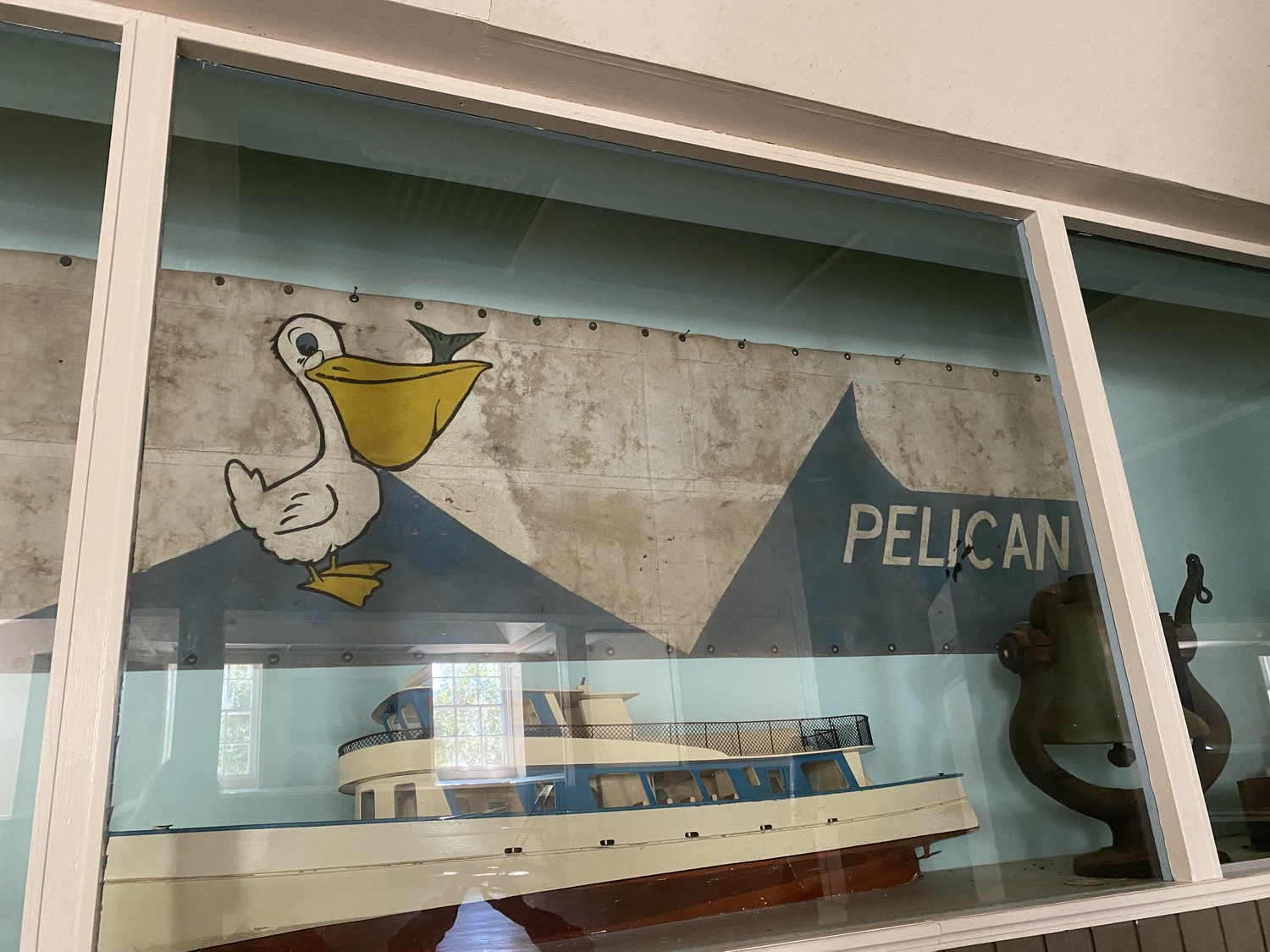
The Pelican's original banner is on display at the East Hampton Town Marine Museum in Amagansett. MONTAUK HISTORICAL SOCIETY
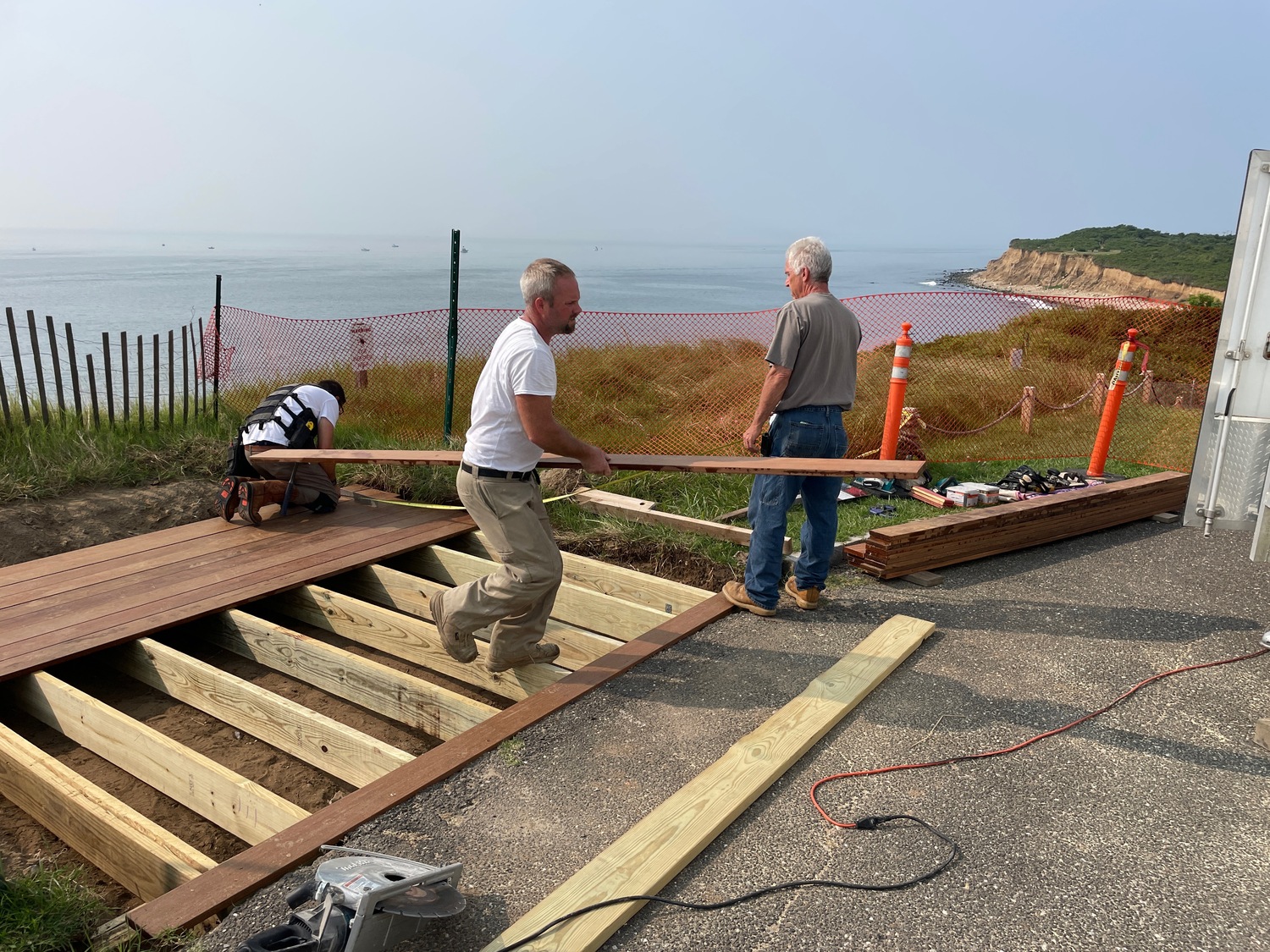
A "dock" constructed at the Montauk Lighthouse will support the glass memorial that will be unveiled memorializing those who died when the Pelican capsized on Labor Day weekend in 1951. DIANE SHERIDAN
It was on another Labor Day Weekend, this one 73 years ago, when tragedy struck around one mile off the coast of Montauk Point.
A 42-foot fishing vessel called the Pelican, with 64 people on board, had left Montauk’s Fort Pond Bay on what began as a sunny, clear day, September 1, 1951.
At the time, captains could carry as many passengers as they had life preservers, and it was common for boats to be overloaded, especially on a holiday weekend. Captain Eddie Carroll’s fishing vessel left the dock with about twice as many fishermen as would be allowed today.
An unanticipated storm suddenly appeared and enveloped the overcrowded vessel. One of its two engines failed. On its way back to the Fishangri-la dock in Fort Pond Bay, the Pelican was battered, and ultimately capsized, throwing everyone who had been on deck into the water, and trapping those in the cabin.
Of the 64 aboard, many of them from the greater New York City area who had risen early to catch the Long Island Rail Road’s “Fishermen’s Special” express train to Montauk, 45 would die, including Carroll, the vessel’s captain. Just 19 were pulled from the ocean to safety. The bodies of 18 of those who perished were never recovered.
This year will see the fourth annual commemoration of the tragedy. But on Saturday, August 31, at 5 p.m., a glass monument in memory of the Pelican will be unveiled at the Montauk Lighthouse, “on the cliff overlooking where it capsized,” said Mia Certic, executive director of the Montauk Historical Society. “It will look as though the Pelican is still on the water,” she said.
The gathering will begin at around 4 p.m., she said, with the event starting at 5 p.m.
In the summer of 1951, six years after World War II had been won, New Yorkers were prospering. Recreational fishing “was hot, and anglers from the city could find plenty of it in even half a day at Montauk,” the author and columnist Tom Clavin wrote in “Dark Noon: The Final Voyage of the Fishing Boat Pelican.”
On that fateful first morning of September, “the breeze freshened a bit, heralding dawn, but it remained from the southwest, a sign of settled summer weather,” Clavin wrote. The forecast was good enough: A cold front would not arrive until late afternoon, and winds ahead of it would build slowly, allowing captains sufficient time to return to land and safety.
Until 2021, the Pelican tragedy had largely faded from living memory. Certic said that she learned of its upcoming 70th anniversary that year, and felt a commemoration was in order.
“What we didn’t expect,” at that first event, “were all of these relations of the victims. That was really important, because all these people were the fishermen’s special people, and they didn’t know one another. It was a disparate group of people who went out for a day’s fishing,” Certic said.
After the tragedy, their loved ones “had no group resolution. There was nothing, no memorial.”
The U.S. Coast Guard, she said, “washed their hands instantly after an inquest that took place days after accident. It was very clear to us, there was something that people wanted. So we’ve had them every year, and then realized we had to create a memorial.”


