


 13 Photos
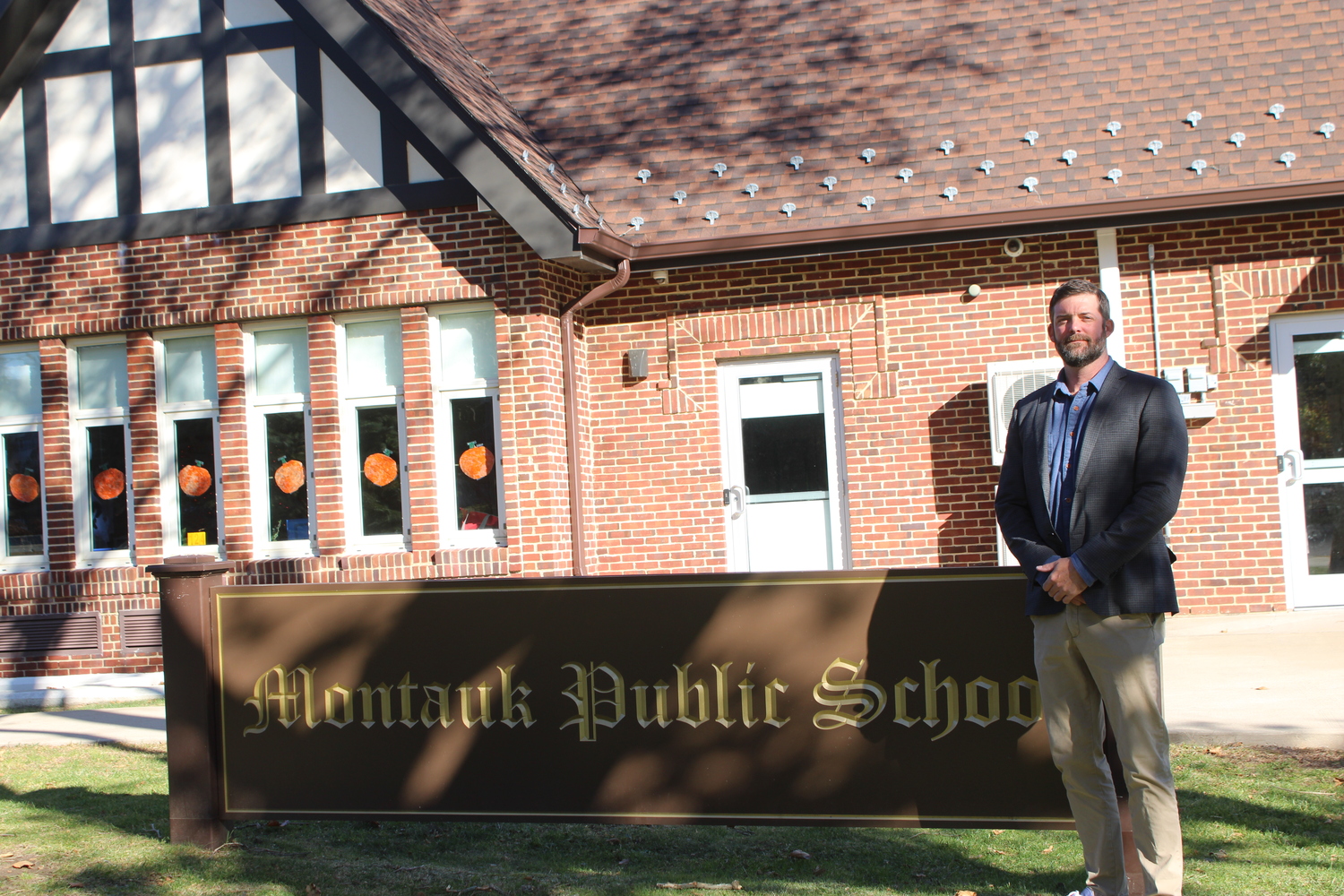
Montauk Superintendent Josh Odom outside the school on Monday. JACK MOTZ
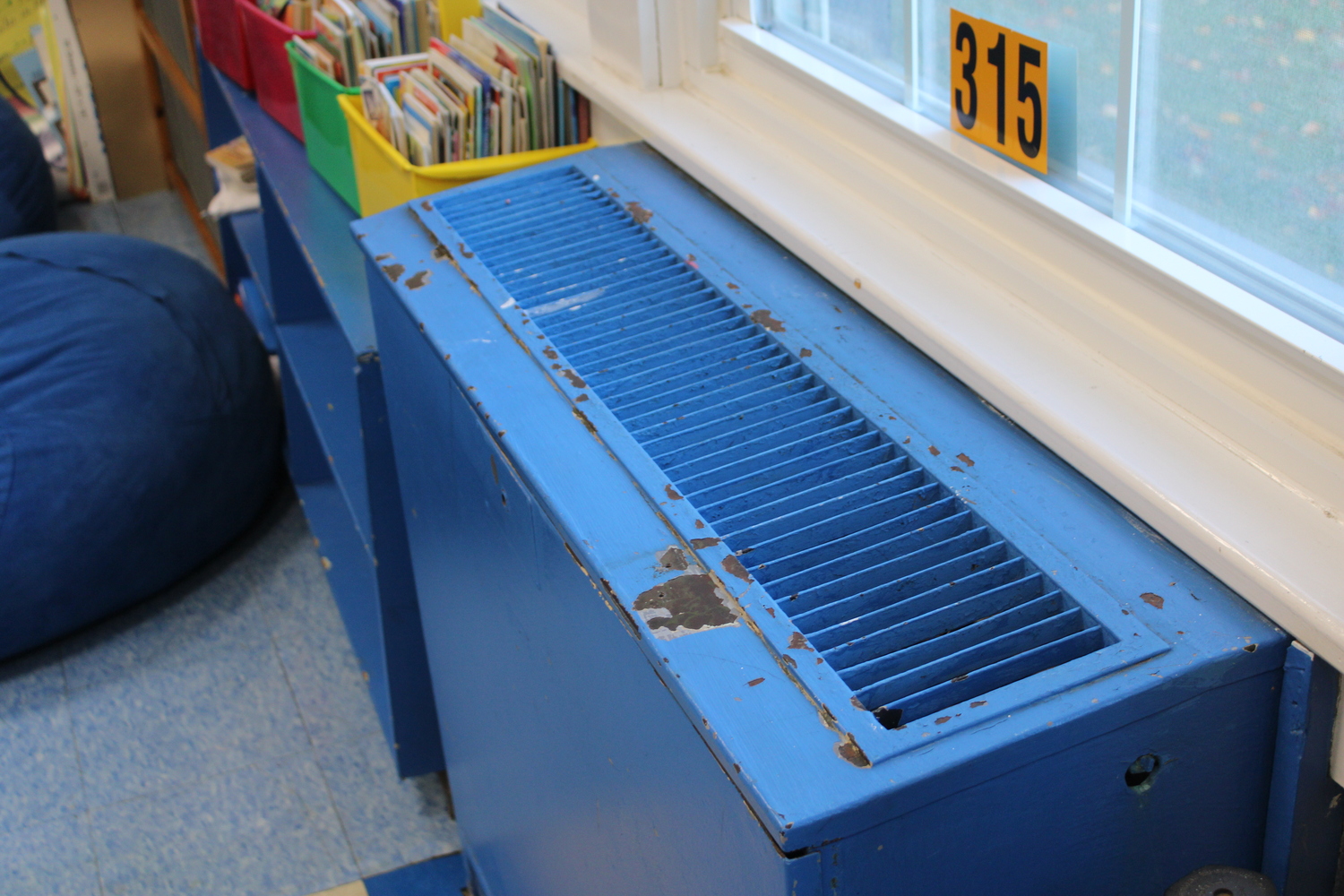
Montauk School's HVAC systems date to the mid 20th century. A $2.9 million savings expenditure would seek to replace the aging systems. JACK MOTZ
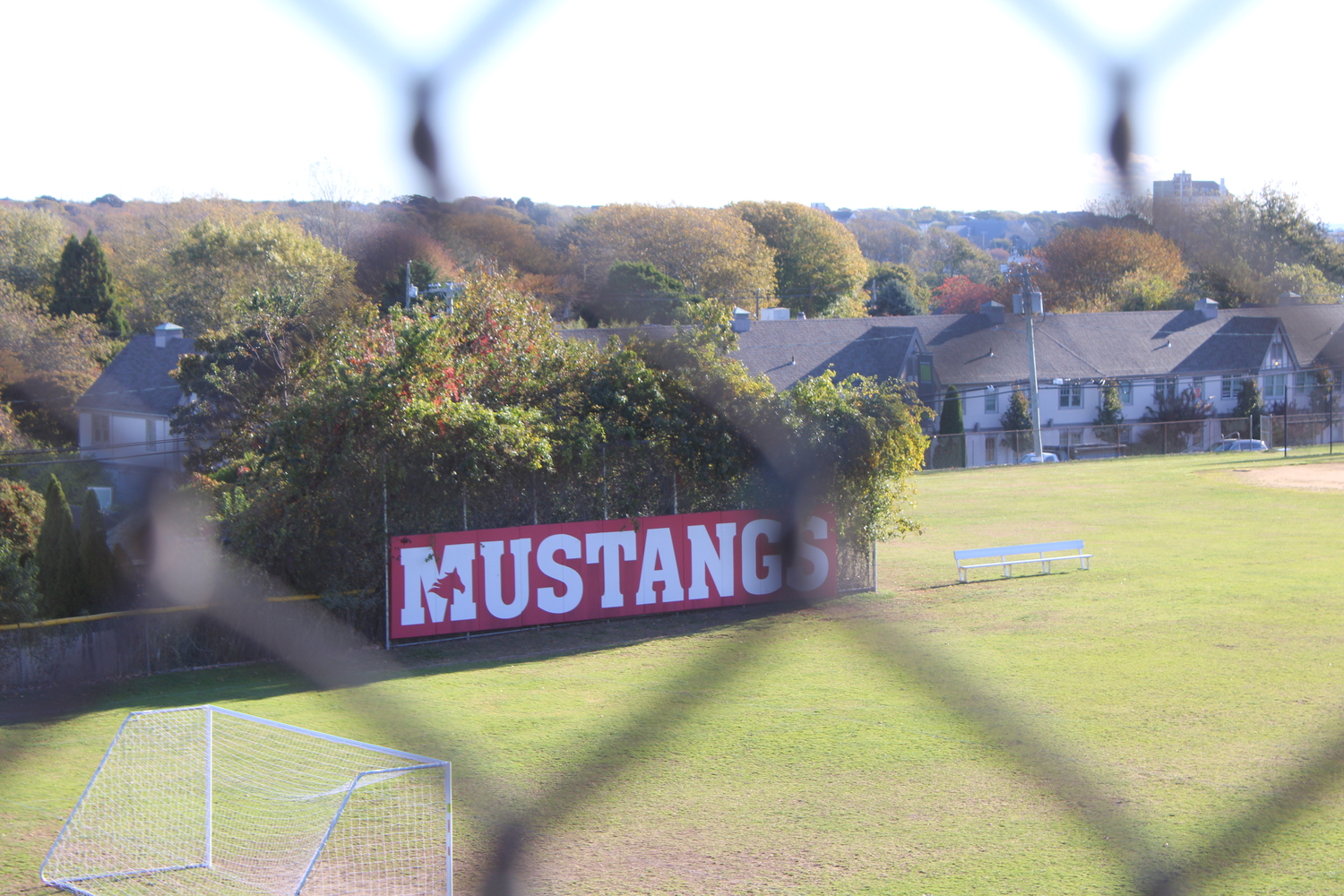
The view from the school out onto the adjacent fields. JACK MOTZ
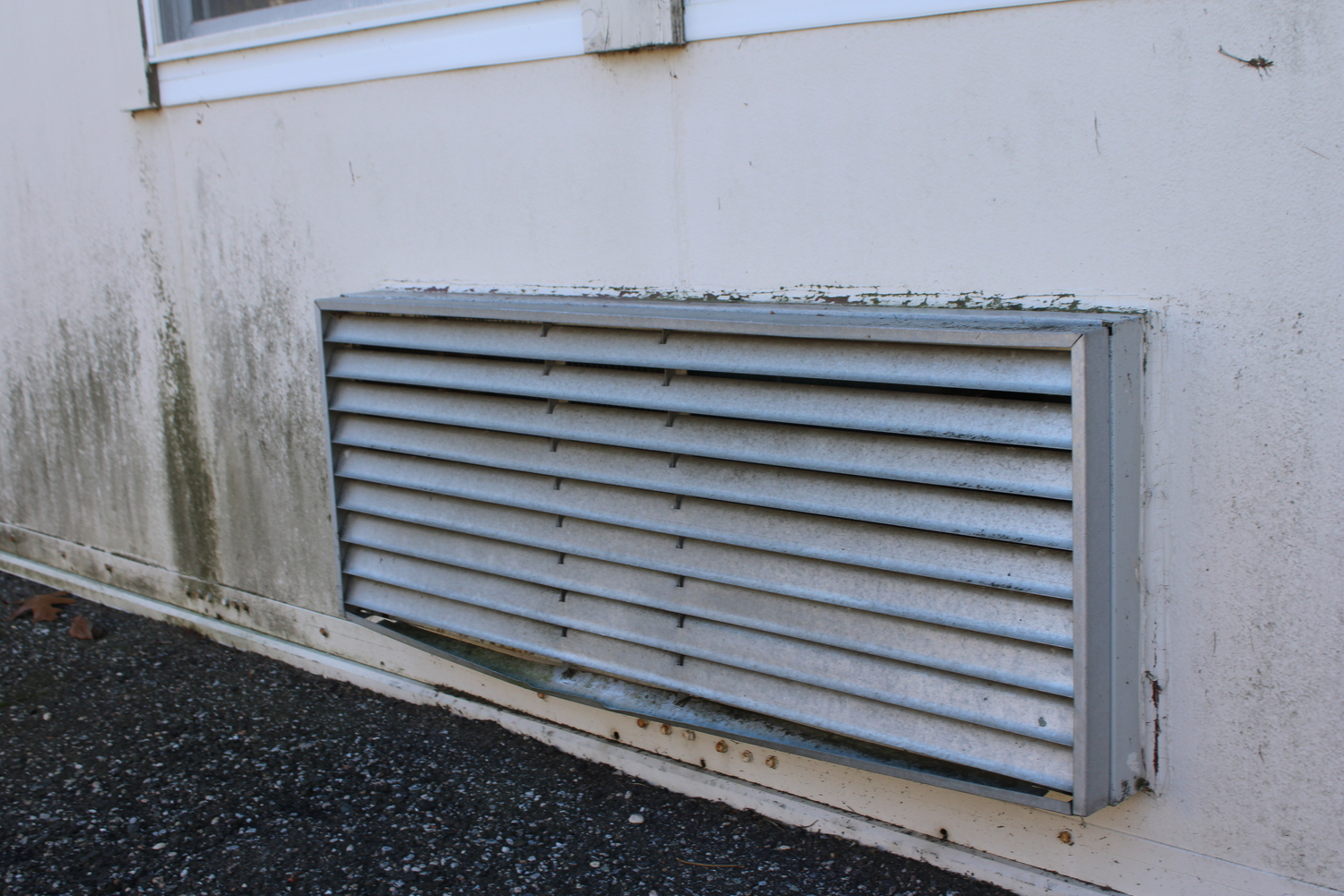
Attached to the portable classrooms is a dated ventilation system. JACK MOTZ
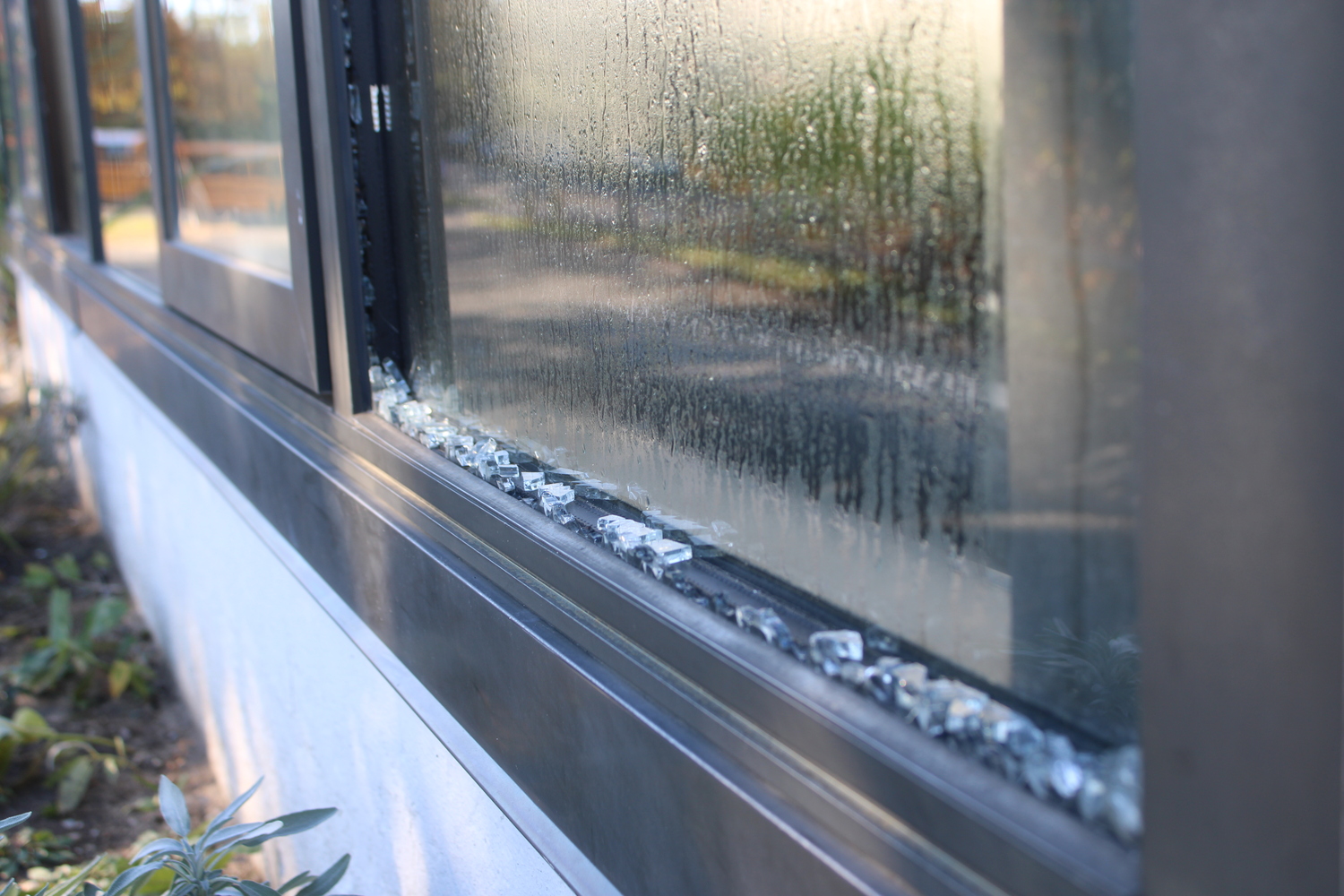
Outside Montauk School's greenhouse, Superintendent Josh Odom put a new addition onto the school's wish list. "Good catch," he told a reporter. JACK MOTZ
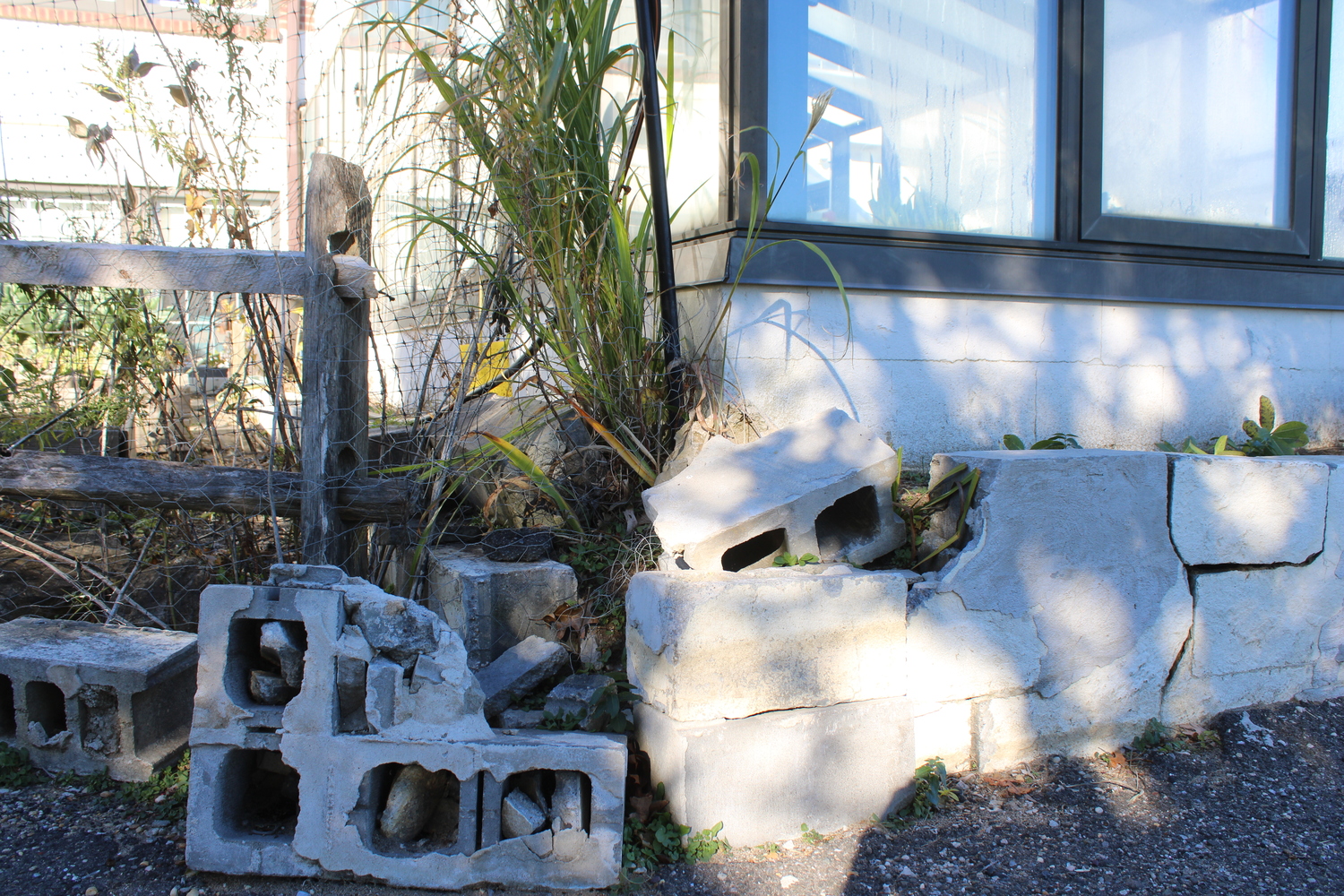
Cinder blocks are crumbling outside Montauk School's greenhouse. JACK MOTZ
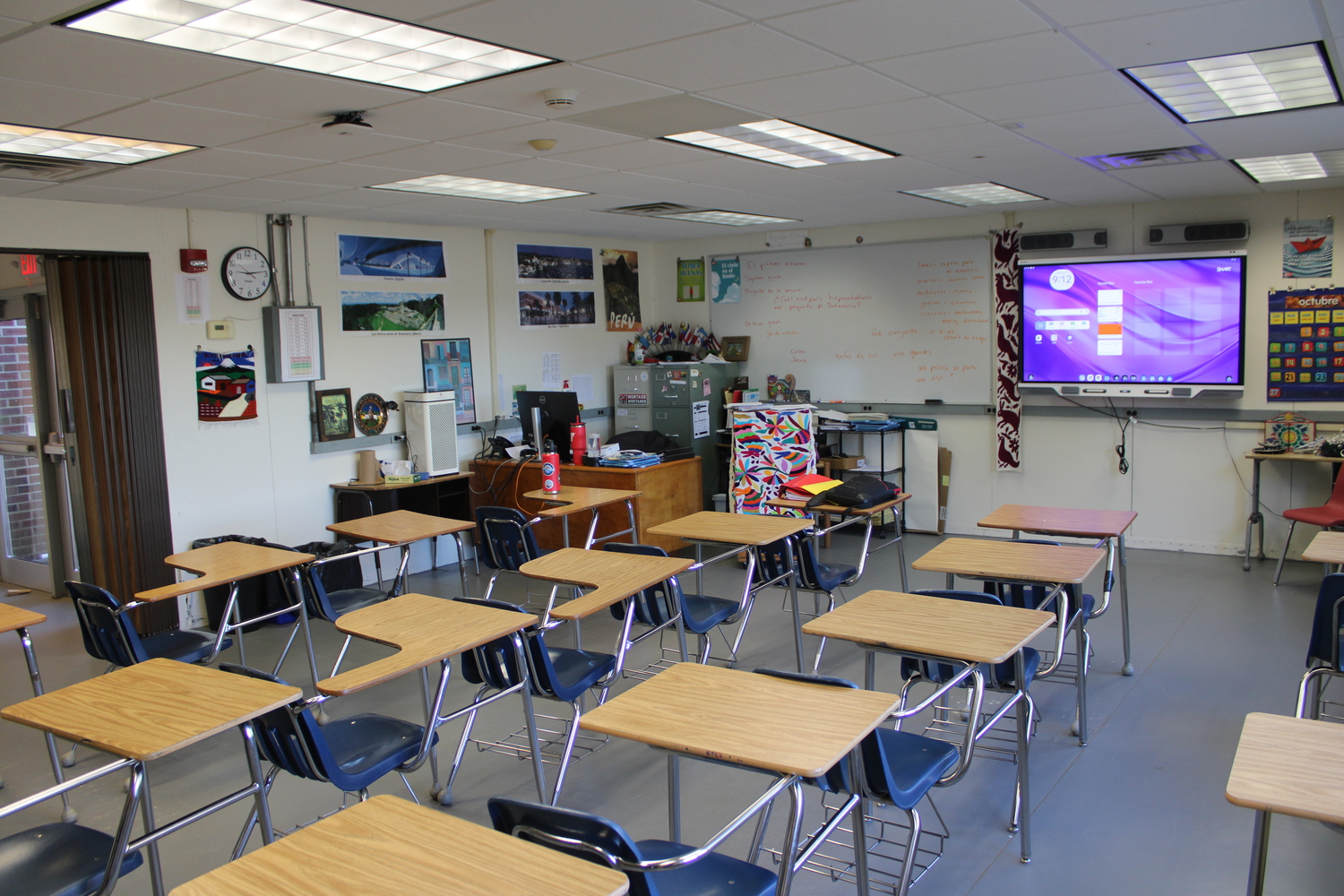
A typical classroom at Montauk School. JACK MOTZ
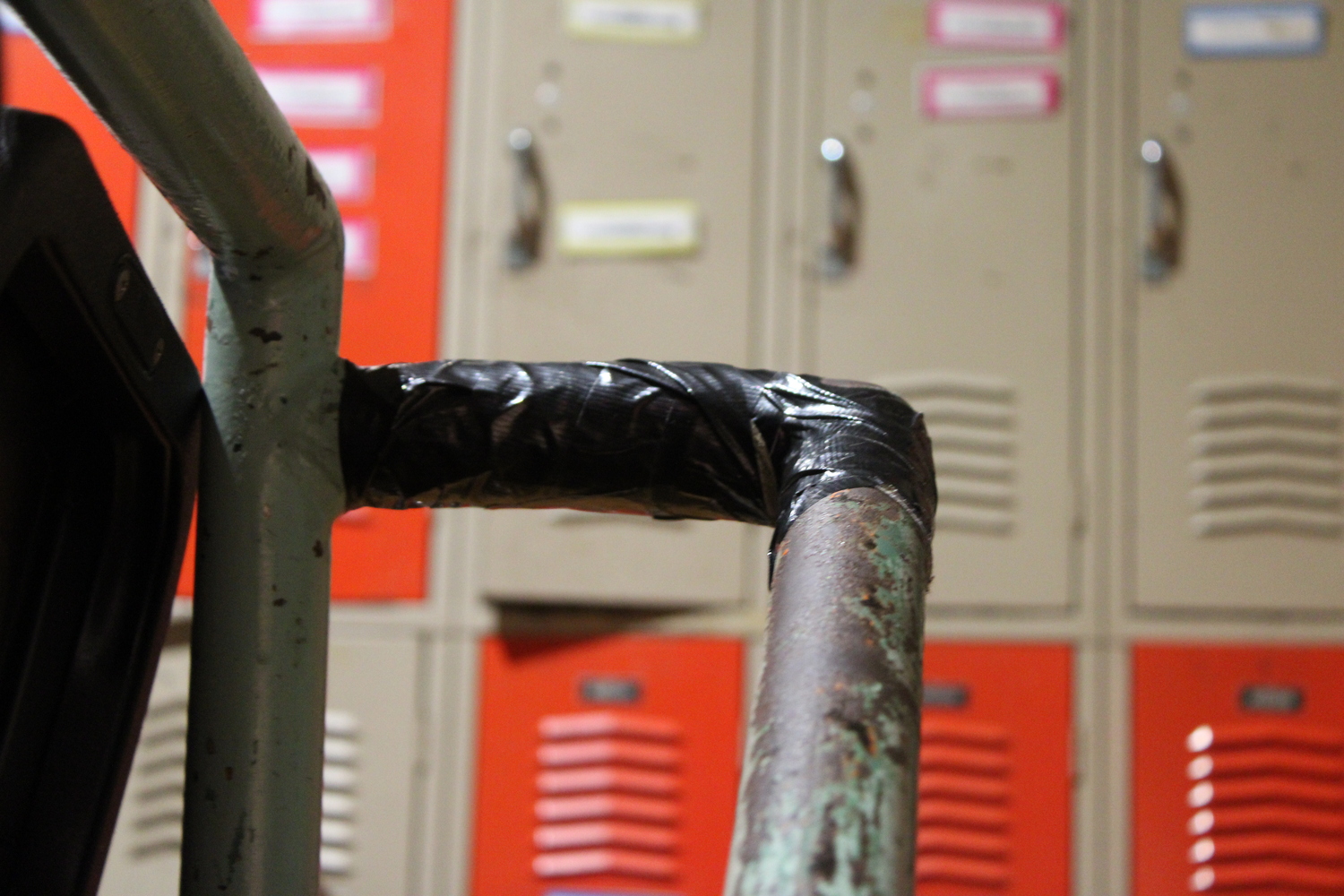
A portion of Montauk School is being held together with duct tape. JACK MOTZ
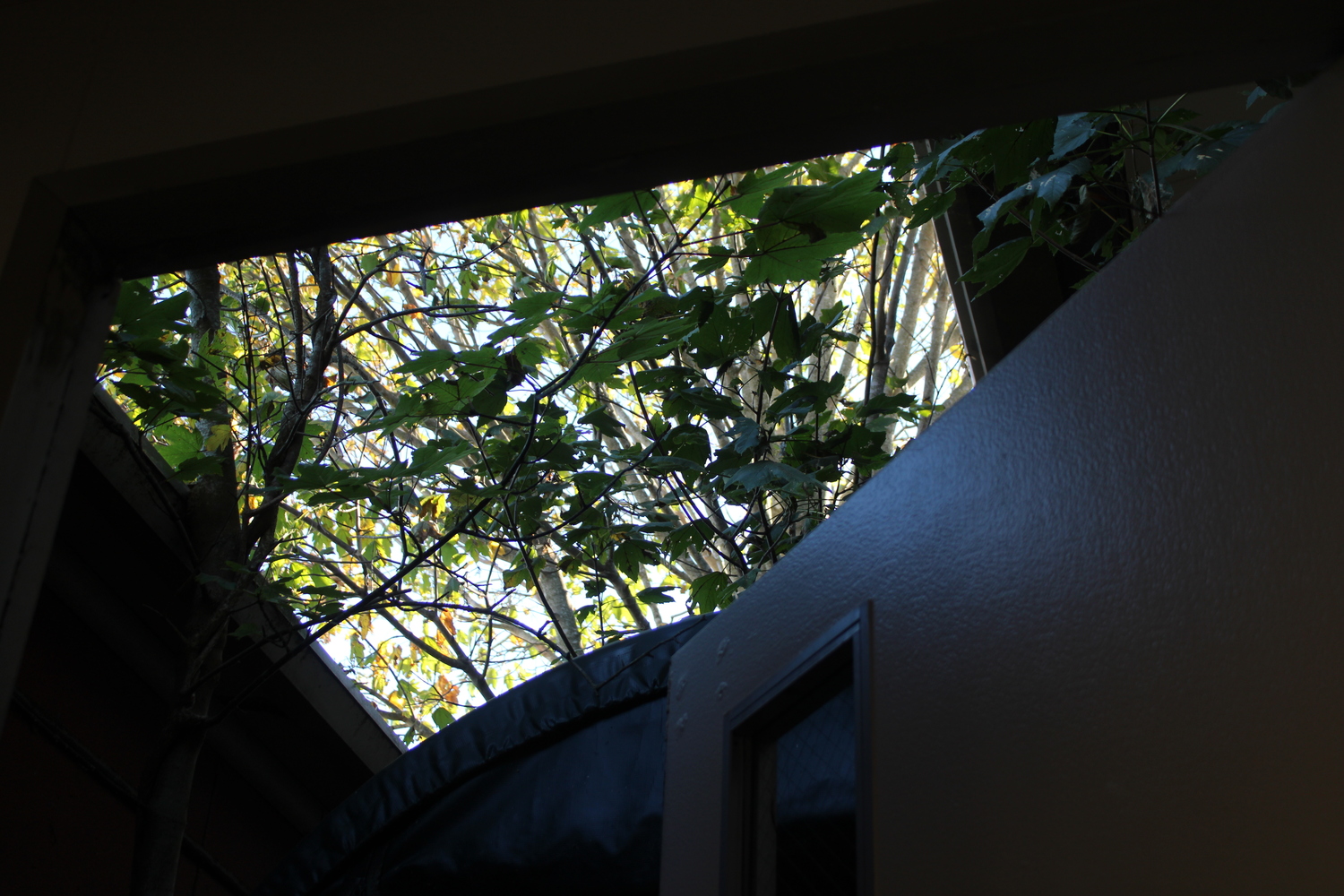
Right now, a tree is growing through a portable storage area on the Montauk School grounds. JACK MOTZ
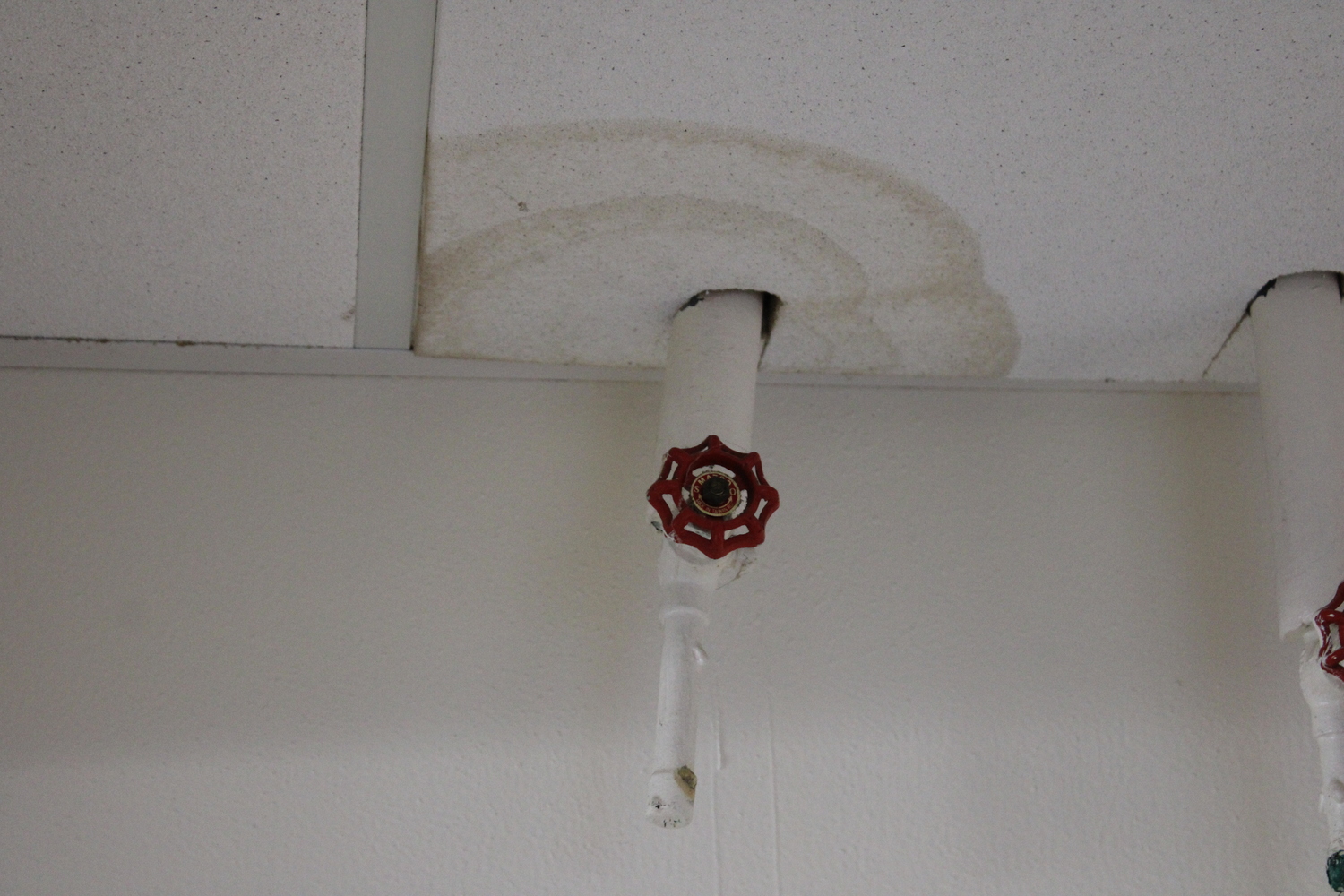
Water damage is a frequent sight at Montauk School. JACK MOTZ
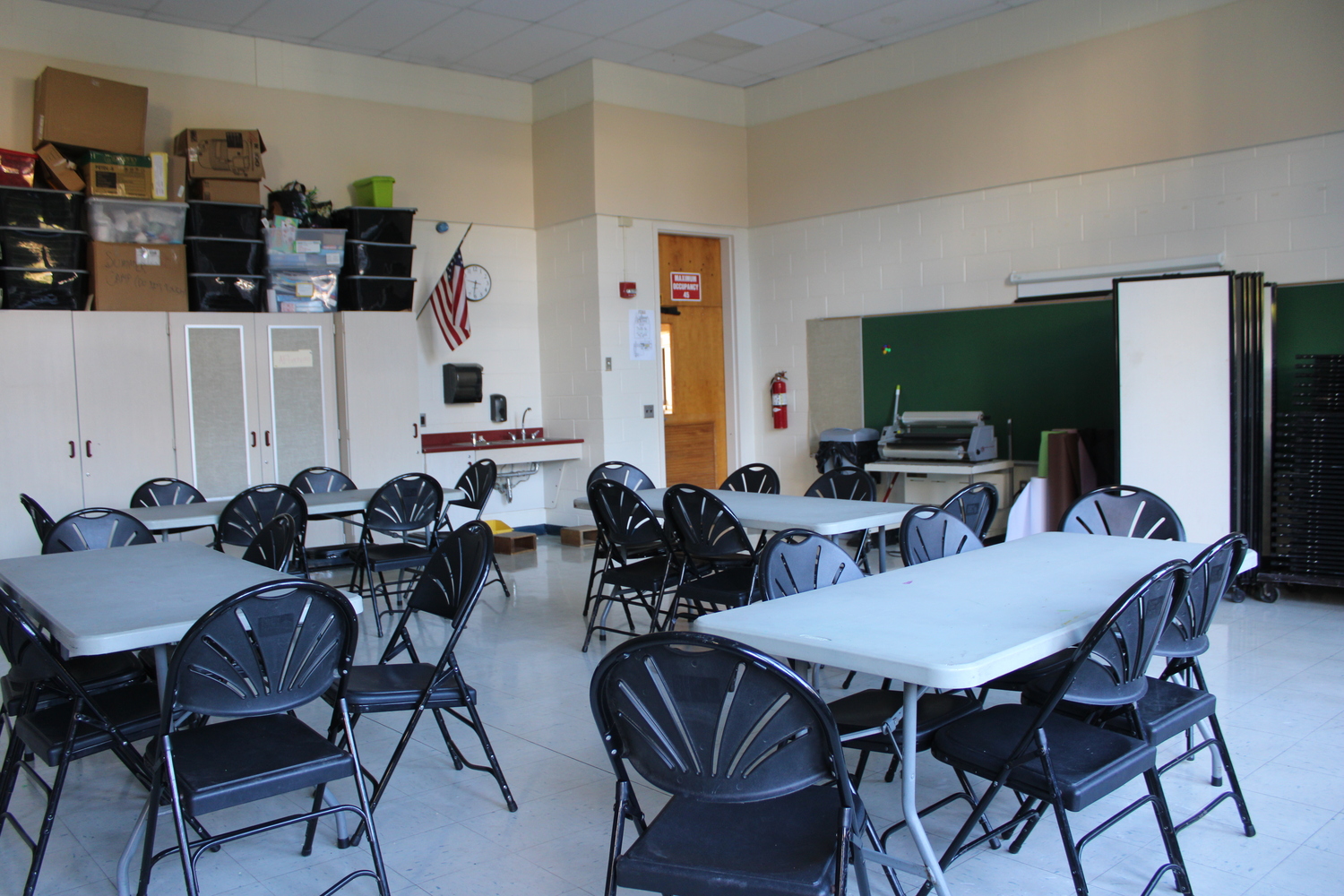
A classroom at Montauk School. JACK MOTZ
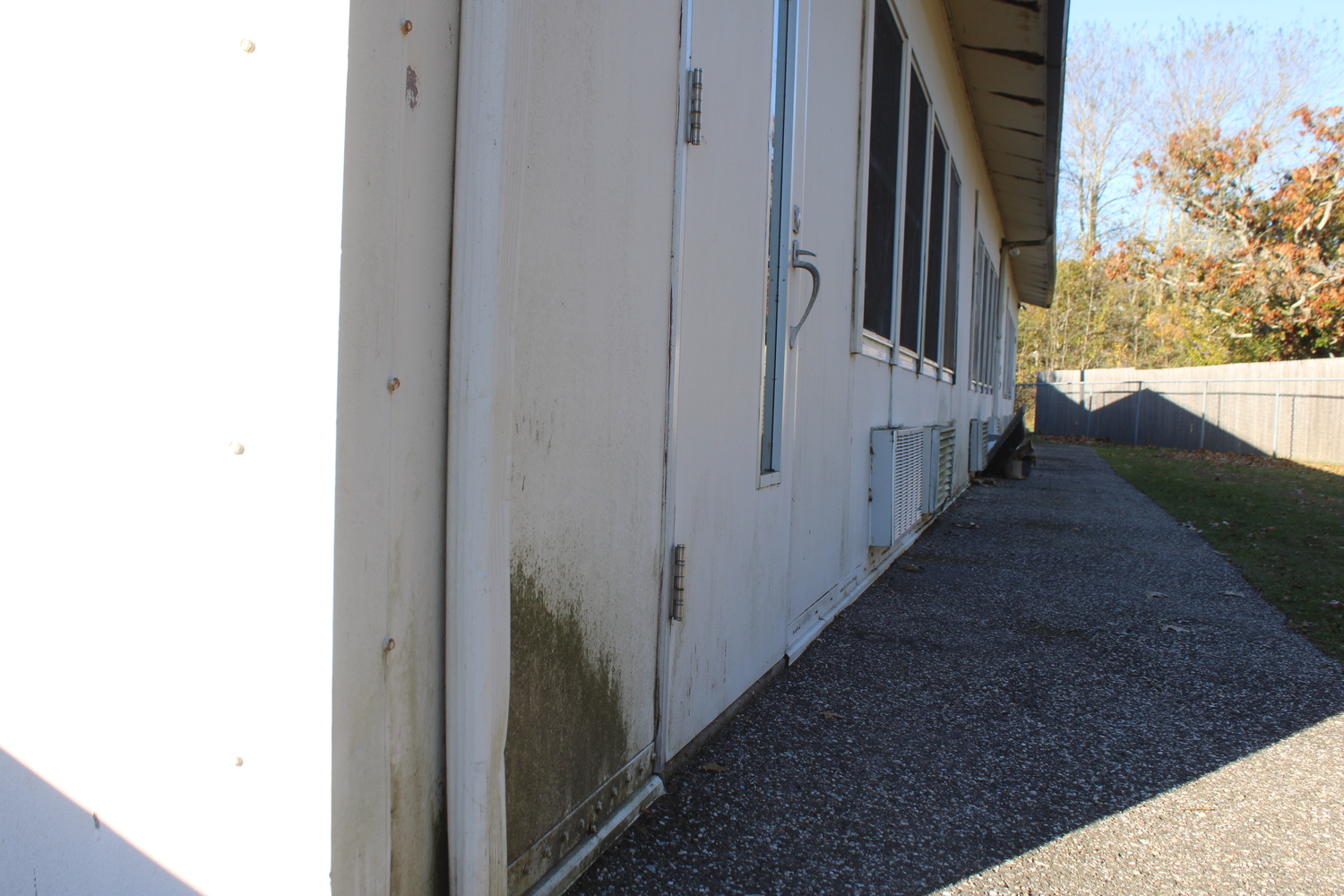
Replacing the portable classrooms is one of the highest priorities in Montauk School's planned renovation. The classrooms date to 1972, and they were only meant to have a life expectancy of 20 to 30 years, at most. The revised $34.8 million bond, if passed, would seek to remedy the issue. When Superintendent Josh Odom asked a class about the biggest challenges of learning in a portable classroom, one student spoke up immediately: "Surviving." JACK MOTZ
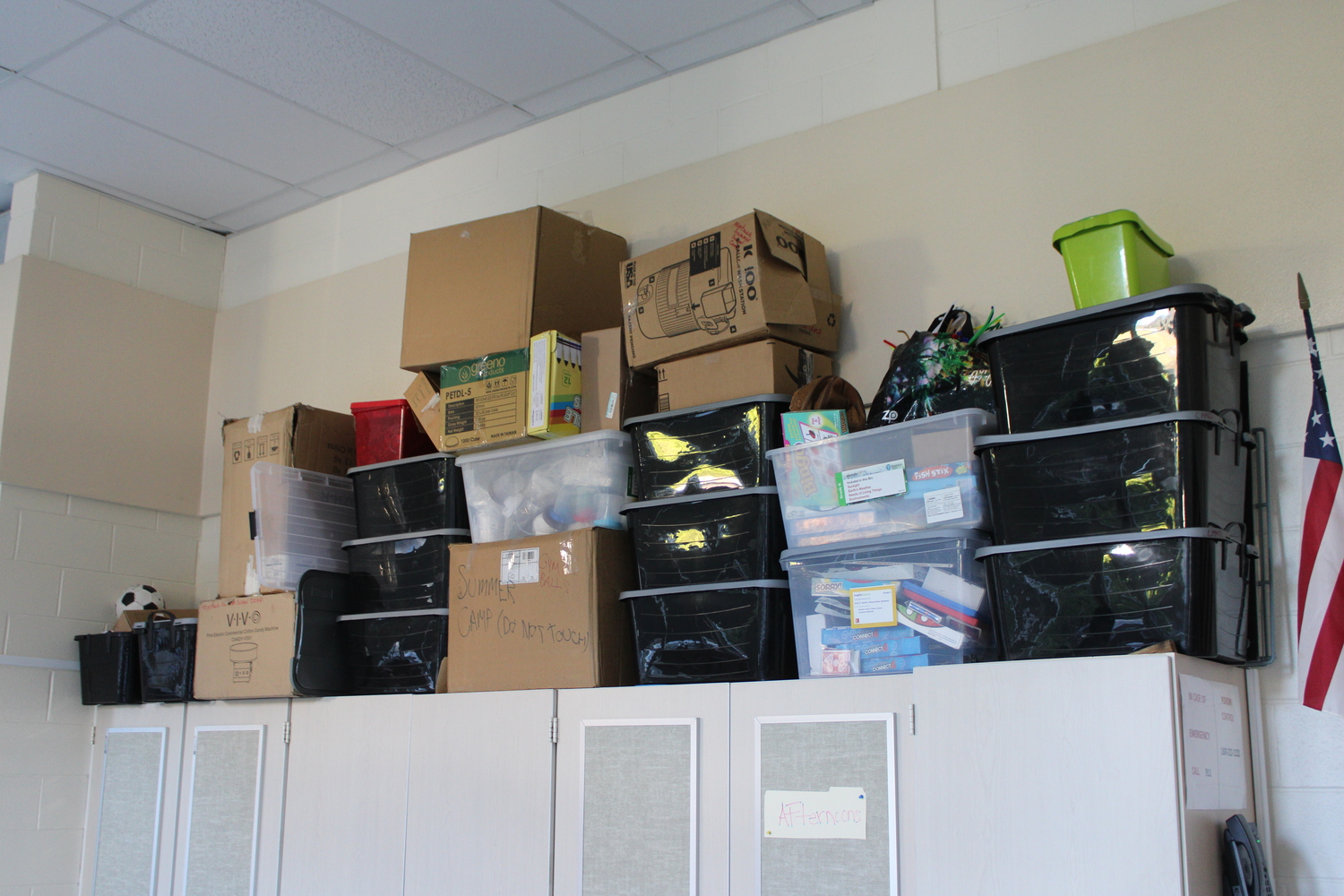
Storage is currently at a premium in Montauk School. Here, the multi-purpose room is being used for storage. JACK MOTZ
When Montauk School District Superintendent Josh Odom asked a classroom of middle school students about the challenges of learning in a portable classroom, one student spoke up immediately: “Surviving.”
Other students were more specific — though perhaps less humorous. One said it was hard to focus because the class can hear another classroom located two doors down. Another said it gets cold in the class. Yet another said it feels like the ceiling tiles will fall down. Puddles can seep up through the floor. Bugs, mold and the occasional rodent were other common issues.
Both heating and cooling fail to work properly. When a student in Lauren Walsh’s reading class said it is either a million degrees or negative 55 degrees, Odom took the chance to give a brief lesson on hyperbole.
The portable classrooms, which are essentially double-wide trailers, date to 1972. At that time, when the school installed them, they were meant to have a lifespan of 20 to 30 years. Over 50 years later, they are still standing and undertake heavy use.
But the district hopes that won’t be the case much longer.
In a pair of renovation proposals that went to a vote in May, the district included a plan to replace the portable classrooms. But when the proposals — one a $38 million bond, the other for $2.9 million from savings — hit ballots, voters elected to sink the former in a vote of 361-318, and the latter in a vote of 342-334.
The district hoped the $38 million bond would provide a slew of upgrades to the school, including a new gymnasium, a new science classroom and designated spaces for elementary and middle school students, among other improvements.
The May failure didn’t mark the end, though. Earlier in October, Odom unveiled a revised proposal, which would require a $34.8 million bond and a $2.9 million savings expenditure. That vote is scheduled for December 9.
Dangling above all of this is a New York State “unsatisfactory” grade for school facilities. If the district fails to address the issue, the state could withhold aid for as long as it goes unaddressed. And a collateral consequence, per Odom, is that the health and safety issues open the district up to liability.
“I remember being a student and feeling like it was disconnected from the rest of the school — then, as a kid,” Walsh, the reading teacher, said of the portable classrooms. “Now, working in it with the same furniture from when I was a kid, it still feels that way — and it’s deteriorating around us.”
The district held its first public workshop for the revised referendum on Tuesday, which grew contentious at times, as some pushed back on the projected tax burden, particularly for senior citizens on a fixed income, and the necessity of certain aspects of the plan. In response, others argued that it falls on the community to ensure its school doesn’t fall into disrepair.
The average Montauk taxpayer would see a hike of around $30 per month — or $360 per year — a reduction from $37 per month increase in the previous bond proposal. Right now, school taxes account for around 48 percent of Montauk resident’s taxes. The bond would entail a 10 percent increase in school taxes, which would mean a 5 percent increase in total taxes for Montauk taxpayers.
A 20-year bond, the $34.8 million number represents the maximum amount legally allowable, but Odom and district officials have been the first to point out that a recent bond in the Springs School District came in lower than the maximum amount.
The first bond meeting on Tuesday saw Odom give an impromptu tour of the portable classrooms, walking Montauk taxpayers through the space that he has characterized as in dire need of replacement. Murmurs from the crowd confirmed what had already been known: The space has not changed for decades.
To drum up support for the new bond measure, Odom has sought to carve out the space that the school occupies in the community.
“This is the only facility in town that’s just for people who live in Montauk,” Odom said at the meeting. “All the rest of them are shared, and that, to me, feels important; that, to me, feels like a worthwhile investment.”
On the more practical end, Odom has frequently said the district will continue to chase its tail, so long as it continues on the path it is headed down — meaning the cost of repairs will continue to add up, without addressing the underlying issues.
“We’re going to chase our tail,” he said. “You’re going to pay for it with tomorrow’s dollars or today’s dollars. We have to get ahead of the problem, not duct tape it.”
And the duct tape isn’t purely figurative. Walking around the school on Monday, Odom pointed to duct-taped handrails, decrepit HVAC systems that date back to the mid 20th century, a tree growing through a portable storage tent and a greenhouse with newly discovered broken glass lining a window.
Constructed around 1927 or 1928, the school is now approaching its 100th anniversary. In 1955, it saw its first expansion, and then the portable classrooms arrived in 1972. Another expansion came in the early 2000s, which is the section of the school that most members of the community see.
If approved, the tentative plan would be for construction to begin in 2027 — the school’s 100th anniversary — with completion ideally coming in fall 2028.
The savings expenditure seeks to address ventilation, the faulty HVAC systems, carbon dioxide detection devices, fire alarms, security cameras and boiler leaks. This is part of the measure is unchanged from May’s referendum.
On the bond revisions, the district opted for change, such as axing a plan for a greenhouse addition. Instead, the pitch calls for the greenhouse to be rebuilt in its current space. This would allow the district to make the nurse’s office ADA compliant, which it is not currently, and create a new faculty room.
The district also scrapped an outdoor classroom that would have, had the last referendum passed, affected the historic front facade of the building. Instead, the district plans to convert its multi-purpose room, located in that area, into two classrooms.
And the current gymnasium, which lacks air conditioning, would have air conditioning installed and become a designated music space. Right now, the school holds band instruction in a cramped space on a stage in the gymnasium.
“I think it was a shock to people,” Odom said in his office of the previous bond pitch. “It’s a big number. The previous plan was for $38 million, and I think that was very difficult for people to wrap their heads around.”
With the new bond on the table, Odom is hopeful.
Facilities Manager Luke Stein, who has worked at the school for 15 years, said the building needs a lot of work. Like many at the workshop, Stein went to Montauk School, and he said not much has changed since he left in 1991. Asked what he thinks needs the most work, Stein said: “Pretty much all of it.”
“The building needs an upgrade. It really does,” Stein said. “It’s just been put off for so long that it’s falling apart, and it’s time to get it back to the way it should be.”


 Jack Motz on Oct 29, 2025