


 2 Photos
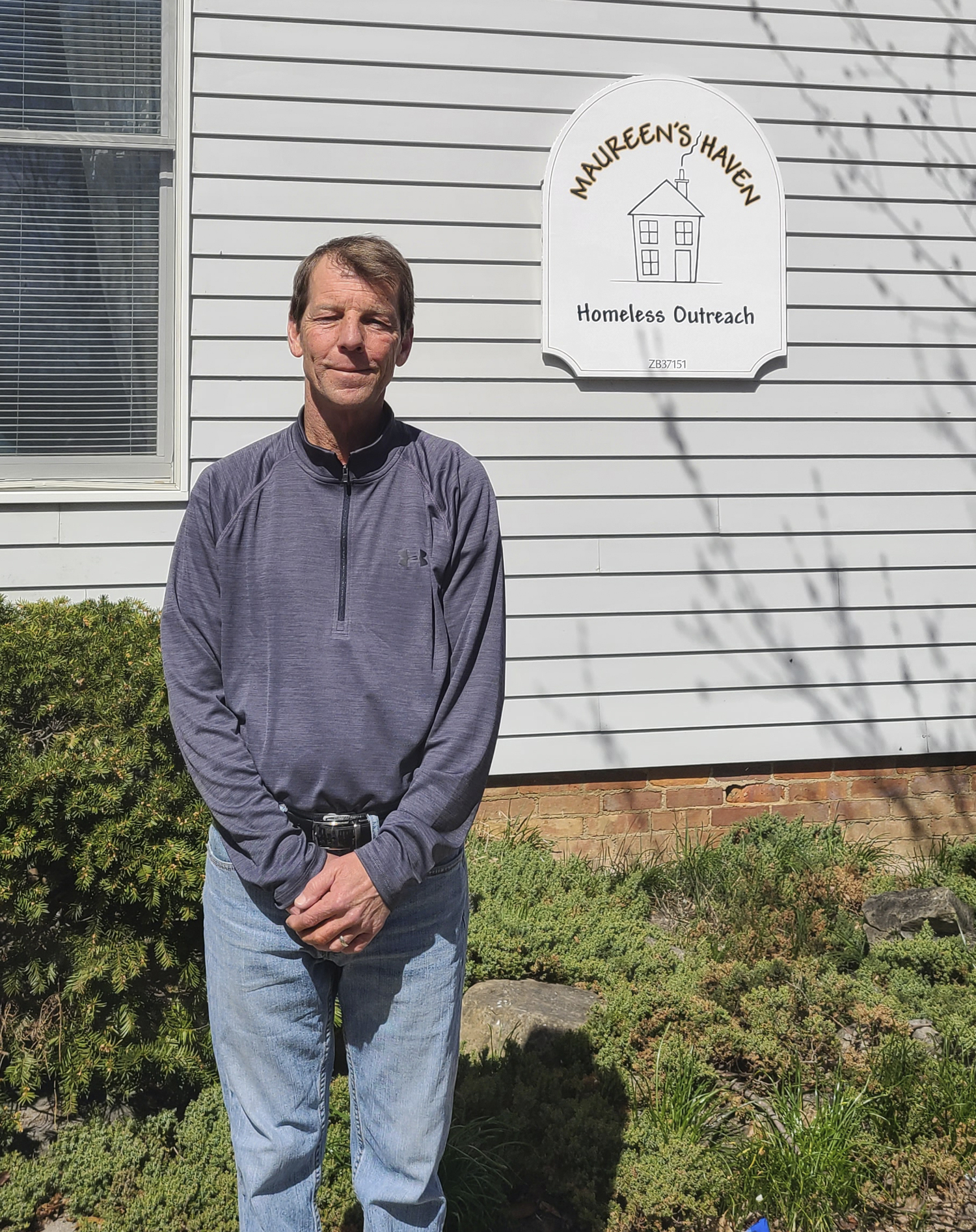
Executive Director of Maureen's Haven Homeless Outreach, Daniel O'Shea, MS.
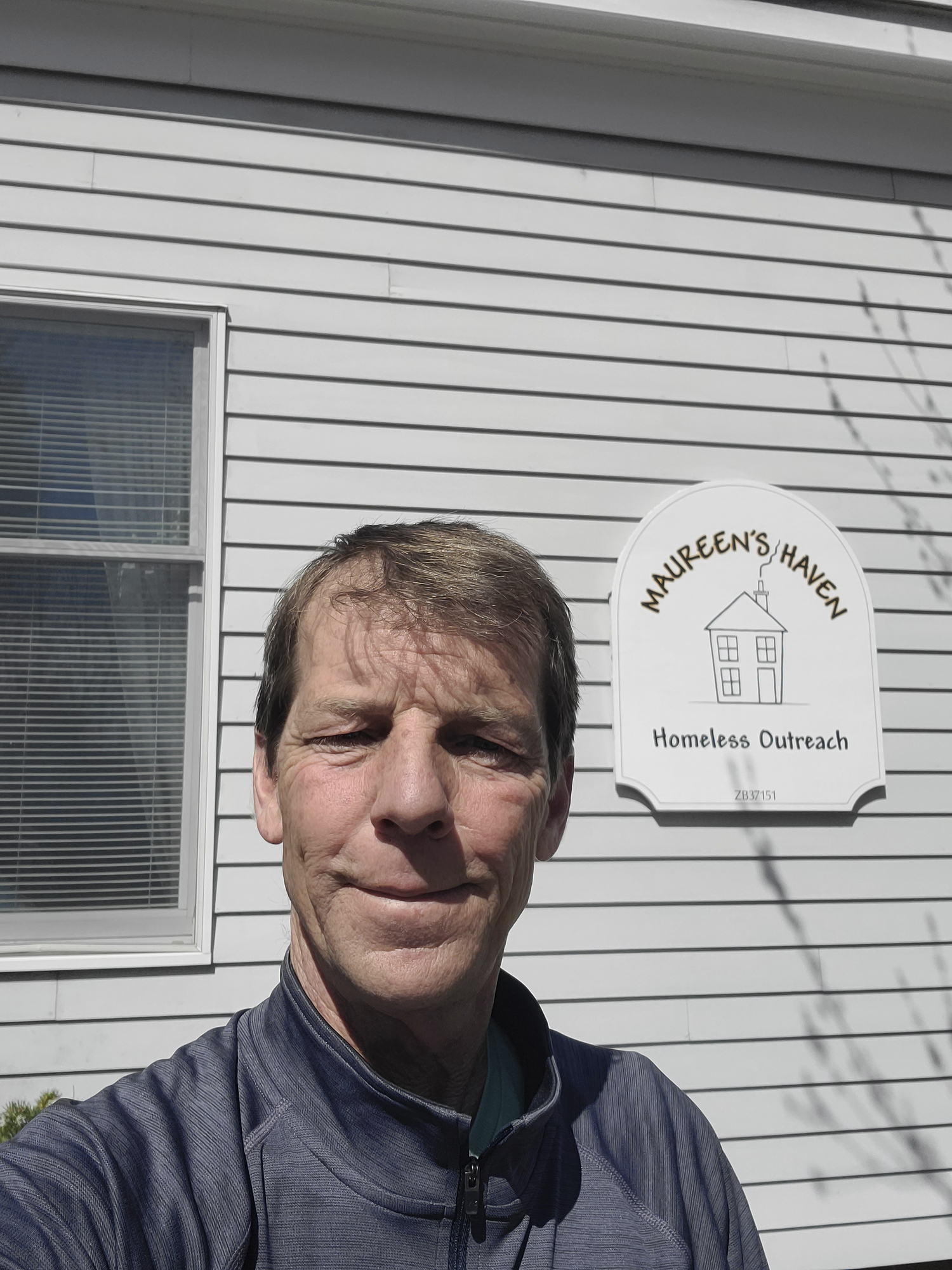
Executive Director of Maureen's Haven Homeless Outreach, Daniel O'Shea, MS.
Maureen’s Haven, a Riverhead-based homeless services group, recently ended its seasonal winter emergency overnight shelter services, which operate free, seven nights a week. Local houses of worship and other locations are typically utilized on a rotating basis, with volunteers helping to set up shelter and provide donated meals.
Dan O’Shea, the executive director of Maureen’s Haven, spoke recently about the turn of season and how the organization’s focus changes in providing services to the region’s homeless population. The interview has been lightly edited for length and clarity.
Q: What kind of winter season was it for the organization? Did you see higher numbers than usual? What are the trends?
Since the start of the COVID pandemic, we’ve seen a pretty steady increase in homelessness throughout the entire East End, and that number has stayed pretty steady, say, year over year. So we’ve seen similar numbers as we’ve seen in the past couple of years. We’ve had probably close to 450 individuals that we’ve provided some form of direct support services.
Q: On a weekly basis, how many people did you actually provide housing for at various points at your emergency locations?
We typically have capacity for 30 to 35 individuals per evening, and we do that, as many people know, on a rotating basis with many houses of worship and organizations throughout the entire East End. So that one night we could be at the Methodist Church in Southampton, another night we could be at the St. Agnes up in Greenport or the Presbyterian Church in Mattituck. So it’s a rotating basis.
We try to accommodate 30 to 35 individuals per night, and that’s our shelter program. During the day, we operate our day center, where people will come in and use it as a drop-in center or get access to donations.
And most importantly, we work very closely with people on case management and homeless support services — try to elevate them and lift them out of homelessness. And we typically see, again, about 40 or so individuals per day, and many of those people are using my shelter program as well.
Q: Is the problem worsening? I don’t think it’s getting better, right?
I don’t think it’s getting better. I don’t. I think we’ve, again, seen a pretty noticeable increase, especially since the start of the pandemic. I do see some subtle shifts or trends in the demographics, but they’ve stayed pretty consistent.
We typically service or provide services for approximately one-third African American, one third Caucasian, and typically one-third Hispanic or other, Asian Pacifics, and so on.
Q: And what’s the shift in demographics that you’re seeing?
Well, we’ve seen, again, very moderate shifts in that. So, for example, when COVID was happening, especially when a lot of the relief funding was drying up and going away, there were a lot of people who were losing housing. And certainly, with the lack of not even affordable housing but just the availability of housing on the East End, we saw a lot of people who weren’t traditionally displaced finding themselves displaced and homeless.
You have people who were in the community — for generations, at times — and for some reason the house got sold, or a family member passed away and they couldn’t up keep a house, especially with the cost of living growing so dramatically. Many of them find themselves displaced and unfortunately homeless. We’ve seen a pretty significant shift in that. Fortunately, this last winter, we’ve seen a little bit of a decrease in that, which I think is a good thing.
And a lot of that is really trying to access these individuals to different wraparound support services that really, again, will try to get them out of homelessness. So that’s a good example of a shift we’ve seen.
Fortunately this year, I think I’ve seen a slight decrease in the average age. Again, during the pandemic, I could have 35, 40, 45 percent of my population over the age of 55. This year, that number’s gone down a little bit, which is a good thing to see. There are fewer older people struggling with homelessness. So it’s those types of subtle shifts that you see.
Q: Does that then mean that there are more younger people that we’re talking about, too?
I would say it’s usually the adult age. We don’t see a very high increase in youth, 18 to 22. We don’t see a lot of those people in general. Typically, you would see an increase in the adult age individuals.
Q: Let me ask you: Do you think there’s a long-term solution to this problem on the East End, and the South Fork in particular? Is there some type of a long-term strategy that, rather than seeking to try and address the homeless problem on a case-by case basis, as you so admirably do, do you see a solution somewhere on the horizon to try to actually reduce the problem?
It really does come down to a lack of available housing, as well as different support services and access to basic opportunity. And that’s not something that’s solely an East End thing. That’s pretty much a national consistency right there, in that just the lack of housing and then those additional wraparound services is always a challenge.
So you do face those same challenges here on the East End that you would be facing nationally.
I do think that, yes, we could be doing more with affordable housing, whether it is make more units or different voucher programs that could get these people, these individuals, off the streets.
It’s really unfortunate. You do always see a percentage of these individuals will remain chronically homeless. A lot of it is mental illness. So you need to have those access to the mental health providers, and that’s oftentimes a challenge here on the East End as well.
… You do look at certain examples, with certain types of housing, especially supportive housing, and it doesn’t mean that you have to have high levels of oversight, in that you give these individuals an opportunity to actually find a place that’s affordable and manageable and give them the resources to move forward. Help them not only pay the rent but maybe keep that cellphone on. Because if the cellphone is not on, they can’t make a doctor’s appointment. If they can’t make a doctor’s appointment, then they go to the emergency room — and then it just clogs up the system further.
So I think, again, it really goes back down to those basic concepts: access to housing, access to opportunities, access to support services, access to transportation. I think those things are really important.
That’s some of the things that Maureen’s Haven has really been fortunate to try our best to fill in those gaps. We are a privately funded agency, and because of that we’re not very restricted or limited into the very detailed services that we provide.
So, for example, if somebody needs a ride to a doctor’s appointment, we put them in the van and go. I’ve just recently — and we do this throughout the year — reconnected people with family members. We will buy the bus ticket or the plane ticket, we’ll drive them to the airport. We’ll give them bus fare or train fare if they have to get to Manhattan.
So we do a lot of those things to help fill in those gaps and go around the obstacles and barriers that are presented. And I think there needs to be more models like that, that gives a little bit more flexibility with the service providers to, again, kind of fill in those gaps and do some of those sometimes intangible things.
We spend a tremendous amount of time just helping people get identification, because even in order to get a license, you need six, eight points, and you need a birth certificate and a Social Security card and four forms of ID. And when you don’t have that, you can’t get a license. And if you can’t get a license, you can’t drive. And it’s even more difficult to get a job, because you don’t have access to transportation.
So it’s a lot of those small, often intangible things that really make a big impact on the individual.
Q: It seems like your organization can cut through the red tape and get those issues addressed directly.
We try. We always pride ourselves on being a very agile agency. For example, throughout the whole time with COVID, we were constantly making very important decisions, not quickly, but we were able to make an informed decision and actually go ahead and execute it. There was no up and down the chain.
So when there was an immediate lack of food, we went right into doing a food program. When we realized that we couldn’t really operate the day center and the shelter program that we did, we went and did more outreach efforts and kind of went more to where the individuals were.
So we’re able to kind of adapt our services the best of our ability, certainly with the limited resources that we have to try and again, fill in those gaps.
Q: When we start to enter the summer season, do the demographics change? Do we see more people who are undomiciled because of the weather and there are more opportunities to take advantage of as far as housing? It’s less limited by the weather. How does it change?
It’s unfortunate because when my shelter ends, there’s going to be a core group of individuals who really relied on that overnight shelter. However, a lot of people will, hopefully, again, not be in that situation. We work really hard to bring our numbers down, so we’re not telling a lot of people at the end of the season that we can no longer house them. So we do our best to minimize that.
But it’s unfortunate because when the weather is nice, people oftentimes, if they’re chronically homeless or [have] mental illness, or even addiction, they might go back to the streets, they might go back to the woods. Hopefully, they’ll go ahead and find work. There’s usually more work opportunities. But it’s a challenge. It really is.
A lot of people who, especially, again, the chronically homeless and the people who struggle with stable housing, they struggle. Oftentimes, Suffolk County, perhaps because the weather gets a little bit nicer and the demand gets a little bit easier on them, they start cutting back on shelter beds. So now, suddenly, they become even more difficult to access.
So there’s a number of factors. But it is unfortunate that a lot of people will go into the woods or go to places that they were comfortable with, go back to the communities that they know.
That’s a very common thing. It’s very common here on the East End, and I have people who have grown up in these communities for years or decades and raised families, and they find themselves homeless — but everything they know is in that community.
If you grow up in Sag Harbor and you find yourself homeless, all you know is Sag Harbor — you’re not going to want to go to a DSS shelter or some facility out in Coram or Amityville. Everything you know — your resources, your doctors, your friends, your network — is in that community. And that’s unfortunately something that happens fairly commonly as well.
Q: Are you still getting adequate buy-in from the houses of worship? And are you getting enough support from the community to keep this service going?
I have to say, the community is just amazing. The houses of worship, the civic associations, the caring community individuals across the entire East End have been amazing. It was certainly a challenge at the beginning of COVID, but now we’re really toward the tail end of that. And we have 17 physical host sites, including the Bridgehampton Child Care & Recreation Center. I always include that, because they’re the only agency right now that’s not technically a house of worship, but they are simply amazing. And not only is it these houses of worship, those 17 sites, it’s the entire community that rallies behind that.
And a great example is that we use some of these host sites several times, and different congregations and community members shift and rotate their volunteering as well. So we may have the Methodist Church one evening — we may have the Unitarian Church volunteering at the same site. Oftentimes, there’s multiple congregations coming together.
So it’s been a wonderful, wonderful program. And we are not only extremely grateful for the support of the volunteers and the houses of worship, and, again, those civic groups and the youth groups, we are truly blessed to have them support us in our mission.
Q: Is there anything people need to know about the organization that they might not know?
Yeah, we certainly are, and remain since our founding in 2002, a very grassroots agency. And as I mentioned earlier, we’re a private and a privately funded agency, and only about 12 to 15 percent of our annual operating budget comes from either the county or the far East End. So we don’t receive that much actual support in terms of local government.
So we always rely very heavily on financial support, which is always key for us to keep this program operating and to continue to provide those valuable services.
And on that note, keep an eye out. Event season is happening: There’s a 5K on April 13 at Mattituck High School. The event is called Kim’s Kindness, our first of an annual marathon or 5K. Kim Pawlowski was a supporter of Maureen’s Haven, and unfortunately she passed away about a year and a half ago, and her family started a foundation. And that family has been simply, simply amazing. They have been supporters for us, especially since Kim’s unfortunate passing, and they continue to this day. And proceeds from that, a portion of those proceeds will be going to Maureen’s Haven.
And then I’m excited to say that on April 20 at Polish Hall in Riverhead, we’ll be hosting the 15th annual Rocking for the Homeless event. That is a fantastic event. And tickets will be going quick.
So keep an eye out for those, and, hopefully, we’ll get to see that and other future events coming up out here on the East End. That’s a wonderful way to support us.


