


 3 Photos
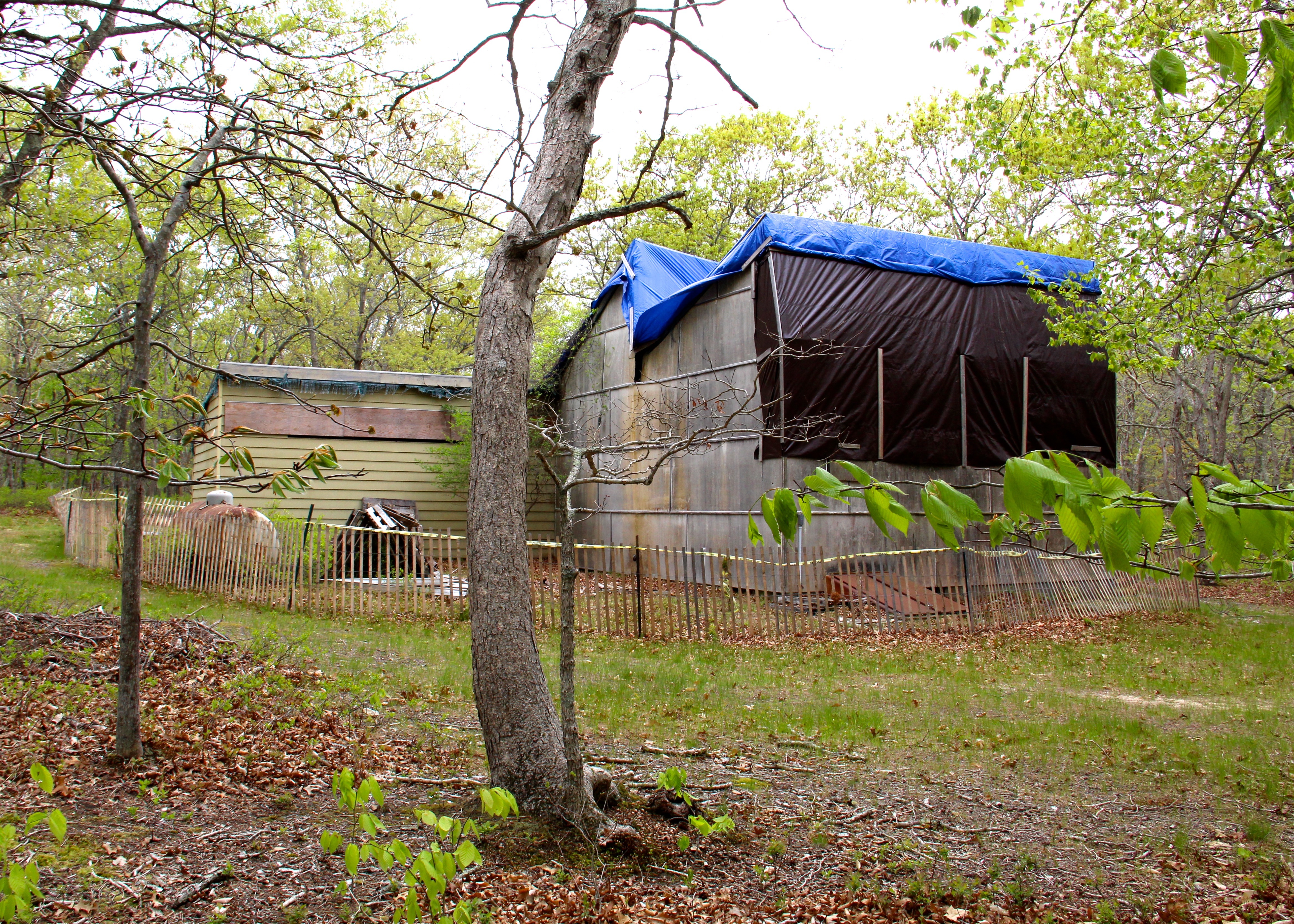
Restoration consultants to the Town Board that all four of the structures at the former home and studio of artists James Brooks and Charlotte Park can be saved to some extent. KYRIL BROMLEY
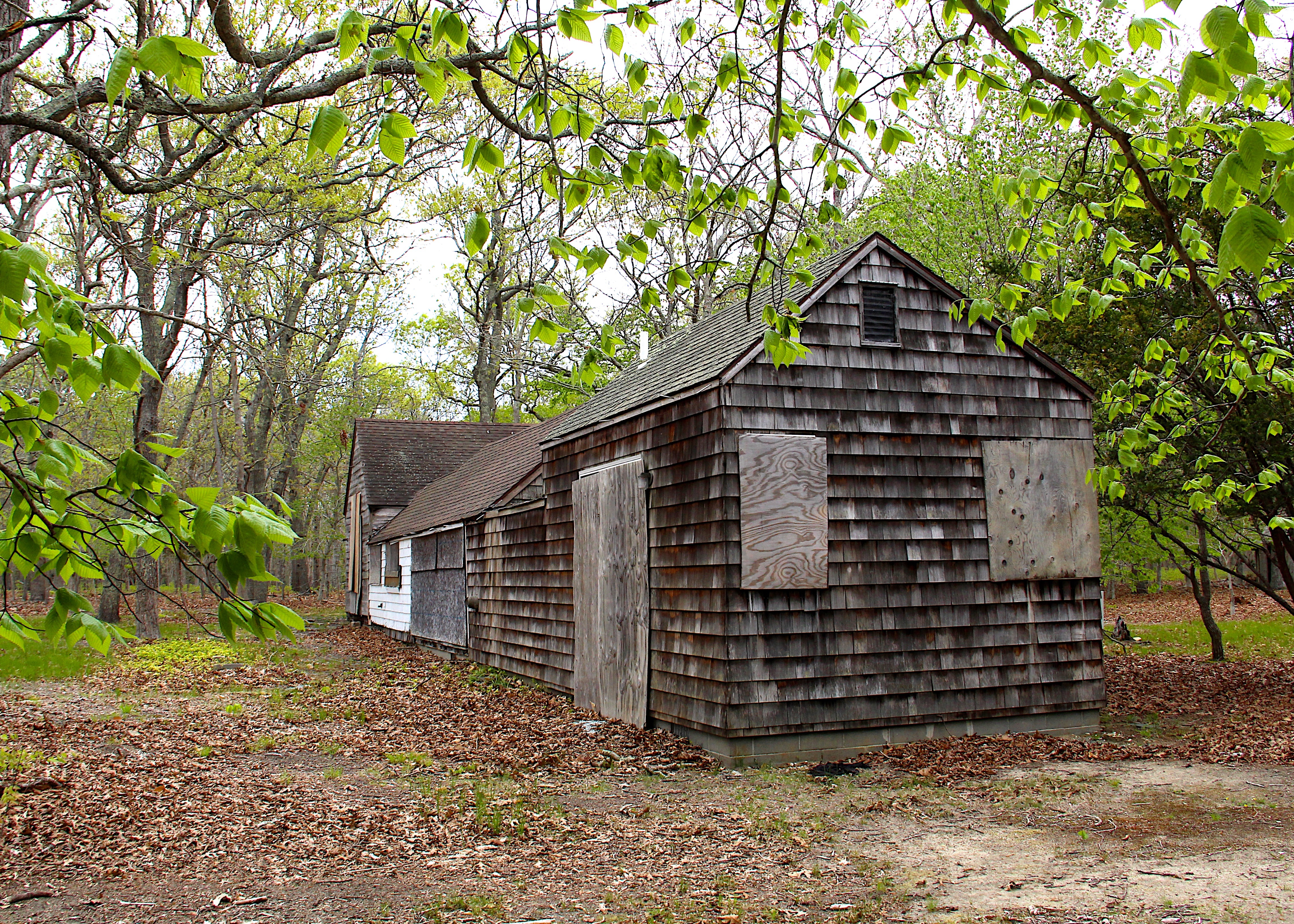
Restoration consultants to the Town Board that all four of the structures at the former home and studio of artists James Brooks and Charlotte Park can be saved to some extent. KYRIL BROMLEY
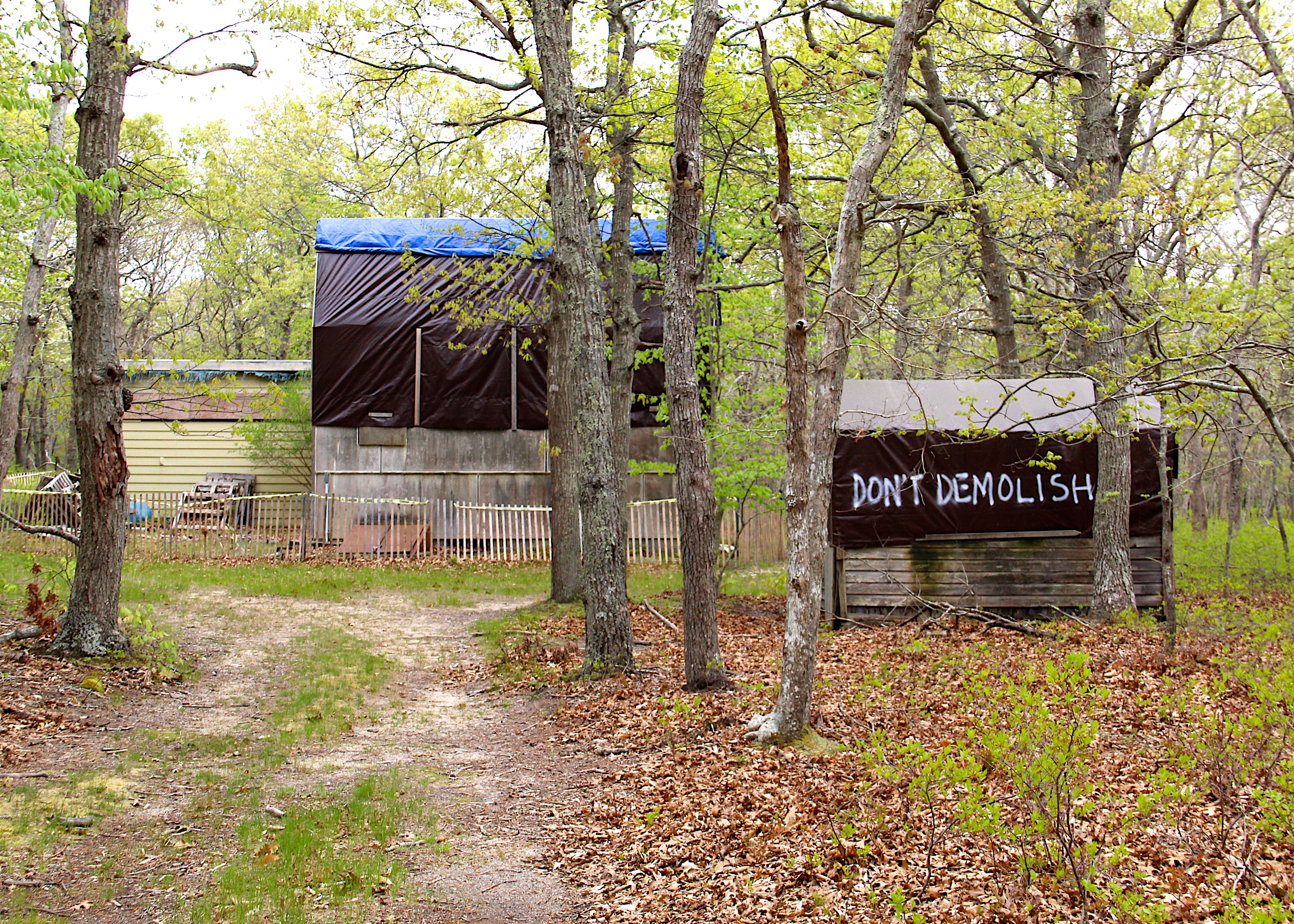
Restoration consultants to the Town Board that all four of the structures at the former home and studio of artists James Brooks and Charlotte Park can be saved to some extent. KYRIL BROMLEY
The Springs studio of the late abstract expressionist artist James Brooks can be saved from destruction and refurbished, historic preservation consultants told the East Hampton Town Board this week.
The studio, which Brooks had built himself and which has been substantially deteriorated by vandalism and poor maintenance in the 12 years since East Hampton Town purchased it, had been feared beyond salvage.
But preservationist Michael Devonshire assured town officials on Tuesday, March 21, that the structural engineer his company hired to examine the building has said that the uniquely shaped building can largely be saved. The saw-toothed roof will have to be removed and a new one constructed, but the structural walls of the building are sound, Devonshire said.
“Our structural engineer has assured us that it is within the realm of possibility to essentially lift the roof, disassemble it and establish a new roof on the existing walls — the building does not have to be demolished,” Devonshire said. “At the interior, the essence of the genius of Brooks is still palpable within the studio. This is where he created his work. His paint materials are still there in some places. Elements of the studio, the walls, the facade windows can all be salvaged, restored and reset in a restored building.”
The studio is one of four structures on the 11-acre Neck Path property where Brooks and his wife, Charlotte Park, lived and painted as part of the abstract expressionist school of art that swirled around Springs and the couple’s close friends Jackson Pollock and Lee Krasner in the 1950s.
Among the other buildings, the couple’s low-slung residence, Charlotte Park’s small studio and a guest cottage that is most significant because Pollock and Krasner had frequently been guests, are all salvageable and can be refurbished in ways that will be illustrative of the lives the two artists lived at the site.
“It’s not too difficult to imagine Jackson Pollock sleeping off a bender in this cabin,” Devonshire said with a chuckle while going through the renovation work needed for the tiny guest cottage.
Park’s studio, despite having accumulated cluttered debris on its interior remains evocative to this day of its former owner’s life and work — right down to her red painting smock, which still hangs on the back of a door.
“Although there has been some vandalism, it’s not difficult to imagine that she’s only temporarily left the studio,” consultant Kurt Hirschberger, who also led the restoration of the Nathan Rogers House in Bridgehampton, said, noting that structural deterioration is repairable. “The interior is the most compelling space at the site. Carefully cataloging artifacts, removing debris, selective repair of the interior and repainting could easily bring the space back to life again.”
The restoration work will need, most immediately, to secure all the structures and any archaeologically important artifacts — the consultants and Councilman David Lys noted that simply the notations in the report that Park’s smock and some of Brooks’s paints are still sitting on the shelves he constructed for them, could attract further vandalism or souvenir hunters. And the rudimentary weatherproofing that was done hastily as the buildings deteriorated is itself in need of replacement to stave off further structural rot.
The consultants’ report estimated that the refurbishment work will cost about $3 million.
The Town Board noted that while Community Preservation Fund money could be used to help fund the renovations themselves, the property still poses substantial complications for its long-term purpose, protection from vandalism and general upkeep.
A group of preservationists and artists have formed a nonprofit group called the Brooks Park Arts and Nature Center with the intention of taking over the property once the buildings are renovated and using the property as a new focal point for abstract expressionist history and study.
Supervisor Peter Van Scoyoc said the report gives hope for a light at the end of the tunnel in the long route to preservation for the property — which the town had originally purchased with the intention of razing the structures, whose provenance was not understood at the time.
Councilwoman Sylvia Overby recalled the son of another famed abstract expressionists, Sid Solomon, saying once that there are only three things that are uniquely American: jazz, baseball and abstract expressionist art.
“We are at the forefront in East Hampton as part of that history,” she said. “It’s a privilege to be there and we should make sure we embrace it.”


 Michael Wright on Mar 22, 2023