


 1 Photo
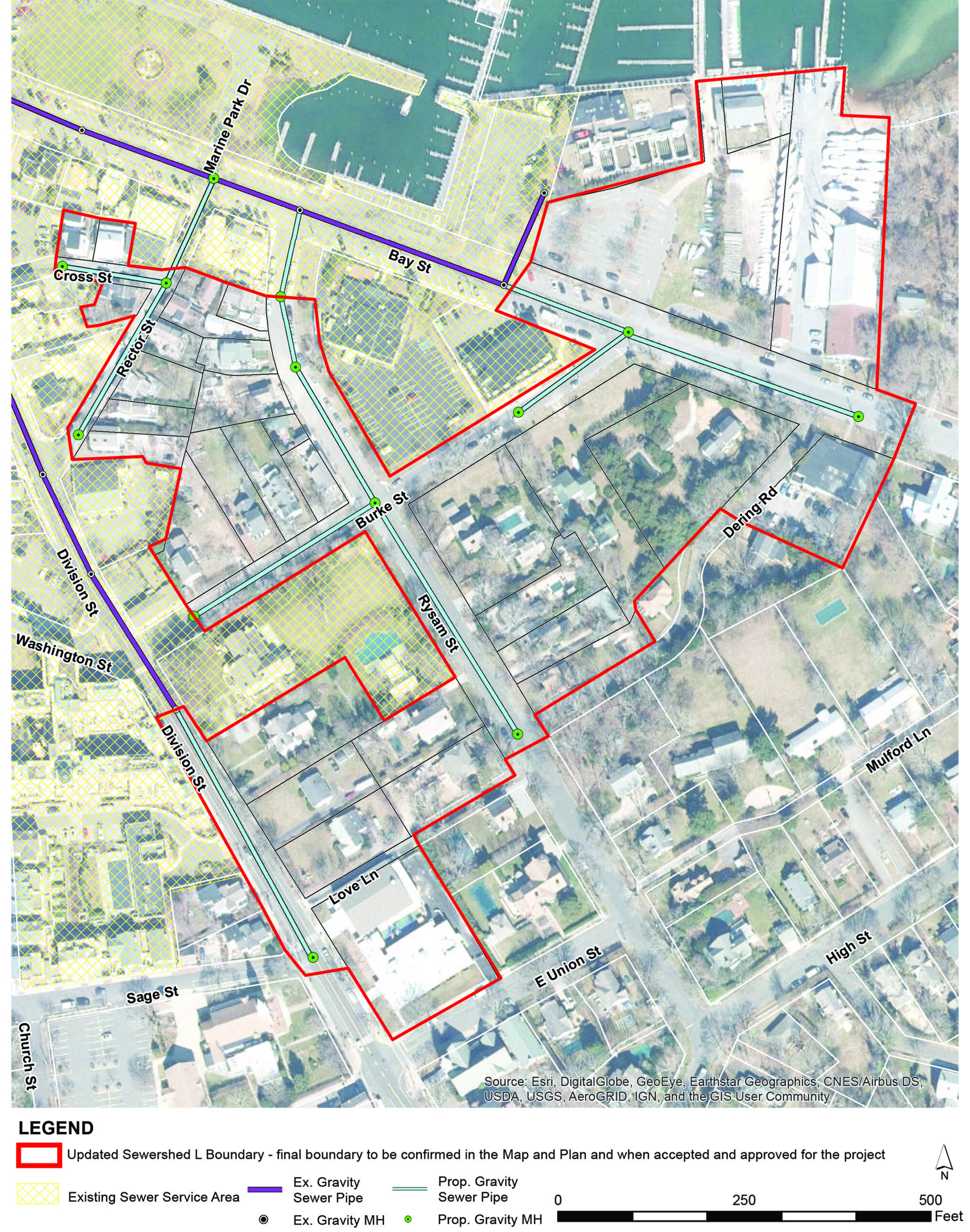
Sag Harbor Village plans to extend its sewer system into a neighborhood between Rysam and Division streets where homes currently have cesspools that leach nitrogen into groundwater and the nearby harbor.
An East Hampton Town water quality committee last week recommended that the Town Board approve a grant of more than $1 million to Sag Harbor Village from the Community Preservation Fund to help pay for the expansion of its sewer network to 33 additional properties on and around Rysam Street near the village’s waterfront.
The committee, which reviews projects and scores them with a detailed points system according to their costs and various benefits to water quality, said that the sewer extension would be a major boost to water quality in Sag Harbor Bay.
“This would remove 33 properties from conventional cesspools,” Melissa Winslow, an environmental analyst with the town’s Natural Resources Department and a member of the review committee, told the Town Board on September 20. “This is a large-source reduction in a priority area that would lead to a reduction of 2,234 pounds of total nitrogen per year removed from Sag Harbor Cove and the Peconic Estuary.”
The sewering on the East Hampton Town side of the village would include connecting four commercial properties between Rysam and Division streets to the village’s sewage treatment plant on Bay Street, but the targeted area is developed by mostly small houses that were built with only the most basic cesspools that collect waste and leach nitrogen into groundwater that flows quickly into the harbor.
Another seven houses on the Southampton Town side of Division Street would also be connected to the sewer system as part of this project, and the village has applied to Southampton for additional CPF funding for it.
The East Hampton grant must still be approved by the Town Board, which is expected to act by the end of October. In August, after the water quality committee belatedly added the project to a list of recommendations for funding, the board did not approve it.
That rejection led to some consternation among village officials, who, at the time, said they feared the move could jeopardize approximately $6.2 million in state funding that the village was counting on as part of a project totaling $10.4 million. It would include a similar, but separate, plan to connect 44 parcels in the vicinity of Bridge and Spring streets on the Southampton Town side of the village to the sewer system.
This week, Trustee Aidan Corish, who serves as the Village Board’s liaison to both the sewer treatment plant and its grant-writing efforts, conceded he was disappointed when East Hampton Town first turned down the village’s grant request. “I thought we had done the work and submitted a good application,” he said.
But Corish said he was pleased with the turn of events that saw the water quality committee recommend the grant for a second round of funding to be awarded later this year, and added he was optimistic the board would approve the allocation. “We had a short presentation before the board,” he said. “I think we got a very positive reception.”
He said if the Town Board approves the grant, the village will immediately inform the state that it had received the matching funds, but he said it was possible it may now be too late to win the state funding this year. If the project is delayed another year, Corish said he feared inflation could result in higher prices, requiring the village to seek yet additional grant money.
In the meantime, the village continues to seek $2.34 million in funding from Southampton Town to connect the 44 parcels in the Bridge and Spring street part of the village. Corish said he was optimistic the Southampton Town Board would approve the request as well.
Separately, the village has received a $250,000 grant from Suffolk County for the two projects.
The treatment plant is much more efficient in removing nitrogen from wastewater, Winslow said, lowering it to 5 milligrams per liter or less. A typical home cesspool system releases 55 to 65 milligrams per liter.
The $1,002,523 that the committee recommended the East Hampton Town Board give to the village would be by far the largest grant the water quality improvement program has issued to a single project since it was begun in 2019.
The sewering project would proceed in two phases. The first would be the installation of the sewer pipes themselves, the second the connections between the mains and individual homes.
Winslow suggested that the connections between the new sewer lines and homes, which would total about $650,000, could be funded with a second round of CPF grants in 2023. Or, she suggested, the town could amend its current septic upgrade incentive program, which helps homeowners pay to install so-called I/A septic systems that reduce nitrogen in a home’s wastewater, to include the connection costs of a home to a sewer — a step that would have long-term implications as other areas such as Montauk and East Hampton Village explore creating sewer systems.


 Michael Wright on Sep 21, 2022